Neuromodulation for Tremor: When Devices Are Considered and What to Expect
Neuromodulation is usually considered when tremor significantly affects daily life and medicines do not provide enough relief or cause side effects. Deep brain stimulation is the most established neuromodulation option for essential tremor and some tremor related to Parkinson’s disease.
Key Takeaways
- Neuromodulation is usually considered when tremor significantly affects daily life and medicines do not provide enough relief or cause side effects.
- Deep brain stimulation is the most established neuromodulation option for essential tremor and some tremor related to Parkinson’s disease.
- Not every tremor responds equally well, so diagnosis and specialist assessment are essential before treatment decisions are made.
- Treatment planning includes brain imaging, neurological evaluation, and discussion of benefits, risks, expectations, and follow-up needs.
- Many patients experience meaningful improvement, but neuromodulation does not cure the underlying neurological condition.
Neuromodulation for tremor refers to device-based treatments that can reduce troublesome shaking when symptoms remain disabling despite medication. These procedures are usually considered after careful evaluation by a movement disorder team and can improve daily function for selected patients.
Overview
Neuromodulation for tremor is a treatment approach that changes abnormal brain signaling to reduce involuntary shaking. It is most often used for people whose tremor interferes with everyday activities such as eating, drinking, writing, dressing, or using a phone. The goal is not necessarily to remove every symptom, but to improve function, independence, and quality of life.
The best-known form of neuromodulation is deep brain stimulation, often called DBS. In this procedure, thin electrodes are placed in carefully selected brain areas and connected to a small device that sends controlled electrical pulses. Other technology-based procedures may also be considered in some centers, depending on the type of tremor, the patient’s health, and local expertise.
Neuromodulation is typically not the first treatment for tremor. Doctors usually begin with medication, lifestyle adjustments, and treatment of any underlying cause. When tremor remains disabling despite these steps, or when medicines cause limiting side effects, a specialist may discuss device-based options.
When Devices Are Considered
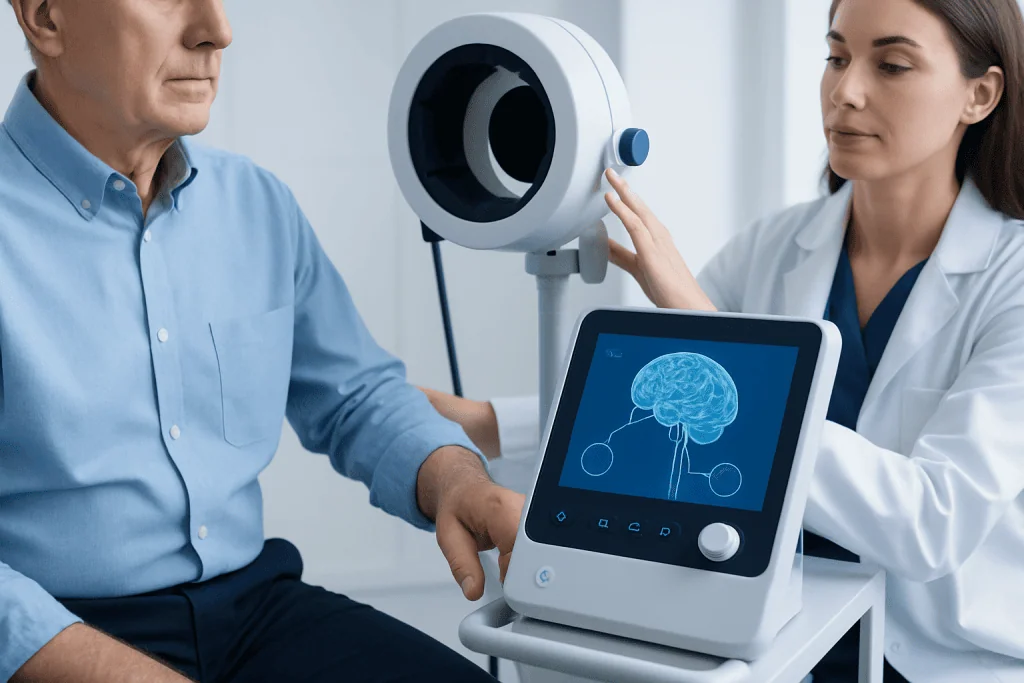
Doctors consider neuromodulation when tremor is severe enough to affect daily living, work, social activities, or emotional well-being. A person may have difficulty holding utensils, signing documents, applying makeup, buttoning clothes, or speaking clearly if the voice is involved. These practical effects often matter as much as the tremor’s visible appearance.
Another common reason to consider a device is that medication no longer gives enough benefit or causes side effects such as sleepiness, dizziness, low blood pressure, or mental clouding. Some people cannot take certain tremor medicines because of other medical conditions. In these situations, a non-drug procedure may offer a better balance between symptom control and day-to-day comfort.
Careful diagnosis is especially important because tremor has several causes. Neuromodulation may be considered for essential tremor and for selected people with Parkinson’s disease who have tremor that is difficult to control. It is not appropriate for every tremor type, so the movement disorder team must confirm what kind of tremor is present before recommending any procedure.
How Neuromodulation Works
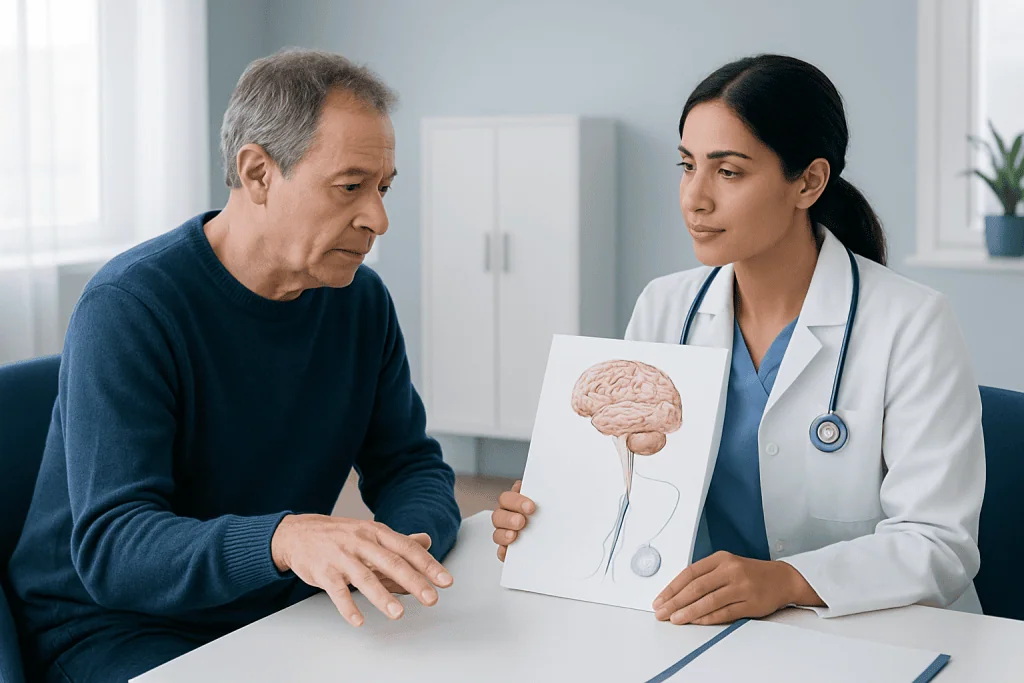
Tremor develops when communication within movement-related brain circuits becomes abnormal. Neuromodulation aims to interrupt or rebalance these signals. In DBS, the brain electrode is placed in a target involved in movement control, and the stimulation settings are adjusted over time to reduce tremor while limiting side effects.
DBS is often described as adjustable and reversible compared with procedures that create a permanent lesion. After implantation, the device can be programmed in clinic visits. Settings may be changed as symptoms evolve, which can be helpful in long-term management. Battery-powered systems may be rechargeable or non-rechargeable, and the care team explains what maintenance each type involves.
Some patients may also hear about other procedure-based options that use focused energy rather than an implanted stimulator. Depending on the center, selected patients may be evaluated for Gamma Knife radiosurgery or MR-guided focused ultrasound for certain tremor patterns. These options differ from DBS in how they are performed, whether they are adjustable later, and who is eligible.
Because each method has different strengths and limitations, treatment choice is individualized. Factors such as age, general health, hand dominance, symptom pattern, work needs, and whether tremor affects one or both sides of the body all play a role in the final recommendation.
Evaluation Before the Procedure
Before neuromodulation is offered, the person usually undergoes a detailed assessment by a neurologist with expertise in movement disorders. The doctor reviews when the tremor started, what makes it better or worse, how medicines have worked, and whether there are other neurological symptoms. The examination helps distinguish tremor from problems such as stiffness, slowness, involuntary movements, weakness, or poor coordination.
Imaging tests are commonly used to plan treatment and to rule out other causes. Brain MRI is often part of the workup, especially before surgery. Some patients also need blood tests, heart evaluation, or medication review to make sure the procedure can be done as safely as possible.
Cognitive and mental health screening may be included because memory problems, depression, anxiety, or untreated psychiatric illness can affect outcomes and recovery. The specialist team also discusses realistic expectations. For example, DBS can be very effective for tremor, but it may not improve every symptom of a neurological disease, and benefits can vary from person to person.
Many centers use a multidisciplinary model that includes neurology, neurosurgery, imaging specialists, anesthesia, rehabilitation, and nursing support. This team-based process helps confirm whether a patient is likely to benefit and whether the expected gains outweigh the possible risks.
What the Procedure and Recovery Are Like
The exact treatment experience depends on the type of neuromodulation used. For DBS, the procedure generally involves placing one or more electrodes in carefully mapped brain targets and connecting them to a pulse generator implanted under the skin, usually in the chest area. Some parts of the operation may be performed with the patient awake, while others may be done under anesthesia, depending on the surgical plan and the center’s practice.
After implantation, the stimulator is not always fully optimized right away. Programming appointments are a key part of treatment. During these visits, clinicians adjust the settings step by step to find the best balance between tremor control and side effects. This process may take several sessions over weeks or months.
Recovery varies, but many people return home within a short period after the procedure if there are no complications. Mild discomfort, swelling near incision sites, or temporary fatigue can occur. Patients are usually advised to follow wound care instructions carefully, avoid strenuous activity for a time, and attend all scheduled follow-up visits.
For non-implant procedures such as focused ultrasound or radiosurgical approaches, recovery may be different because there is no implanted hardware. However, these options still require careful preparation and follow-up, and they are not suitable for everyone. The care team explains what to expect based on the chosen treatment.
Benefits, Limitations, and Possible Risks
The main benefit of neuromodulation for tremor is improved control of involuntary shaking that has not responded well enough to medication. This may help with writing, eating, drinking, using tools, personal care, and social confidence. For many patients, the most meaningful outcome is being able to perform ordinary activities more comfortably and independently.
However, neuromodulation is not a cure. The underlying condition remains, and some symptoms may continue or change over time. In Parkinson’s disease, for example, a device may help tremor very well but may not fully address all movement or non-movement symptoms. In essential tremor, hand tremor may improve more than head or voice tremor, depending on the individual case.
Every procedure has risks. With DBS, possible concerns include infection, bleeding, hardware problems, speech or balance changes, tingling, mood changes, or unwanted stimulation effects. Other procedures can have their own side effects, such as numbness, imbalance, or weakness. Serious complications are uncommon but important to discuss in advance.
Because of these trade-offs, treatment decisions should be made with a specialist who can explain likely benefits in relation to the patient’s own symptoms and health status. Clear expectations and ongoing follow-up are central to a good outcome.
Living With a Tremor Device and Long-Term Care
Long-term success with neuromodulation depends on regular follow-up. DBS systems need programming checks, and the battery will eventually need replacement or recharging depending on the device type. Symptoms can also change over time, so settings may need to be adjusted periodically. This makes ongoing partnership with the neurology and neurosurgery team especially important.
People living with a device also receive guidance about daily life, travel, and medical procedures. They may need to carry device information, ask about MRI compatibility, and inform other healthcare professionals before certain treatments. Most patients adapt well once they understand these practical points.
Rehabilitation and self-care can still play a valuable role after the procedure. Occupational therapy may help with hand function and adaptive strategies. Good sleep, stress management, limiting caffeine if it worsens symptoms, and managing the underlying neurological condition remain important even when tremor improves.
For international patients seeking evaluation, Acibadem International’s multidisciplinary specialists and JCI-accredited hospitals diagnose and treat tremor disorders with coordinated neurological and neurosurgical care. Regardless of where treatment is received, long-term follow-up is a key part of safe and effective neuromodulation.
When to See a Doctor
A person should see a doctor if tremor is new, getting worse, affecting one side differently, or making everyday tasks difficult. Medical assessment is also important if tremor appears along with slowness, stiffness, balance problems, weakness, numbness, changes in speech, or memory concerns. These details can help identify the cause and guide the right treatment.
Anyone already diagnosed with tremor should ask about specialist referral if medicines are no longer helping enough or are causing troubling side effects. A movement disorder neurologist can confirm whether neuromodulation is worth discussing and whether the expected benefit is likely to be meaningful.
Urgent medical attention is needed if shaking starts suddenly with symptoms such as facial drooping, severe headache, confusion, chest pain, or loss of consciousness. Those symptoms can point to conditions that are not related to a chronic tremor disorder and need immediate care.
Frequently asked questions
What is neuromodulation for tremor?
Neuromodulation for tremor is a group of treatments that changes abnormal brain activity to reduce shaking. The most established example is deep brain stimulation, which uses implanted electrodes and a pulse generator to deliver controlled electrical signals.
Who may be a candidate for a tremor device?
Candidates are usually people whose tremor significantly affects daily life and does not improve enough with medication, or who cannot tolerate medicine side effects. A movement disorder specialist evaluates the tremor type, overall health, and expected benefit before recommending a procedure.
Is deep brain stimulation a cure for tremor?
No, deep brain stimulation does not cure the underlying neurological condition. It can reduce tremor and improve function, but symptoms may still change over time and ongoing follow-up is usually needed.
How long does it take to see results after DBS?
Some improvement may be noticed soon after implantation, but the best results often come after several programming visits. Fine-tuning the device can take weeks or months because settings are adjusted gradually to maximize benefit and reduce side effects.
Are there risks with neuromodulation procedures?
Yes, all procedures carry some risk, although serious complications are uncommon. Risks vary by treatment and may include infection, bleeding, balance or speech changes, hardware issues, or temporary neurological side effects.
Can both essential tremor and Parkinson’s tremor be treated with neuromodulation?
In selected patients, yes. Neuromodulation is most commonly used for essential tremor and for some people with Parkinson’s disease whose tremor remains disabling despite medication, but suitability depends on detailed specialist assessment.
References
- National Institute of Neurological Disorders and Stroke
- National Institute for Health and Care Excellence
- American Academy of Neurology
- International Parkinson and Movement Disorder Society
- National Health Service
This article is for general information only and is not a substitute for professional medical advice. Please consult a qualified doctor about your individual situation.
Neuromodulation in Turkey — costs, top hospitals & a free quote
JCI-accredited · board-certified surgeons · reply within 24h
Add us as a Preferred Source to see more of our trusted health content across Google Search, AI Overviews and Discover.
Check your numbers in seconds
BMI, calories, due date, blood pressure and 30+ more clinical calculators — free, instant, doctor-reviewed ranges.