Migraine MRI: When Brain Imaging Is Really Needed
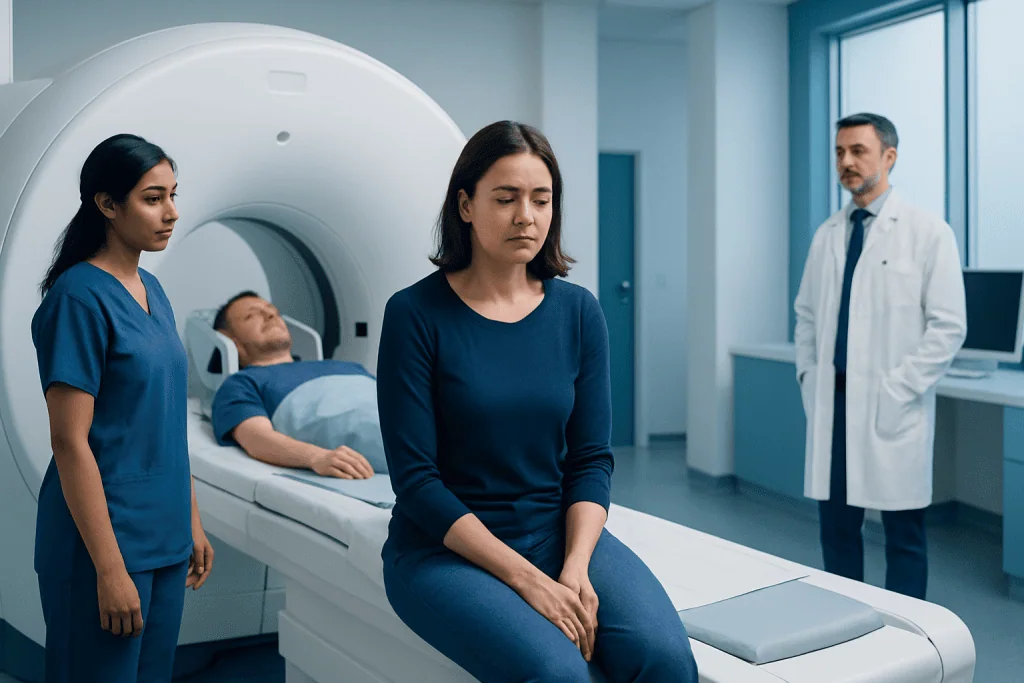
Most people with a typical migraine pattern do not need an MRI. Doctors consider MRI when headaches are new, unusual, worsening, or linked to neurological symptoms.
Key Takeaways
- Most people with a typical migraine pattern do not need an MRI.
- Doctors consider MRI when headaches are new, unusual, worsening, or linked to neurological symptoms.
- MRI does not diagnose migraine itself, but it can help rule out other causes of headache.
- Red-flag symptoms such as weakness, seizures, confusion, or sudden severe headache need urgent medical evaluation.
- The decision to order brain imaging depends on medical history, physical examination, and individual risk factors.
A migraine MRI is not routinely required for everyone with headaches. It is usually recommended only when symptoms, examination findings, or headache patterns raise concern for another condition that needs brain imaging.
Overview: What a Migraine MRI Can and Cannot Show
A migraine MRI is a magnetic resonance imaging scan of the brain that may be used when a doctor needs to look for causes of headache other than migraine. Migraine is mainly a clinical diagnosis, which means it is usually identified from the person’s symptoms, headache pattern, medical history, and neurological examination. In many cases, no imaging is needed when symptoms fit a familiar migraine pattern and the examination is normal.
MRI does not confirm migraine in the way a blood test might confirm another illness. Instead, it helps exclude structural or neurological problems such as a brain tumor, stroke, bleeding, inflammation, certain infections, or conditions affecting blood vessels. This is why doctors do not routinely order an MRI for every person with migraine.
Compared with some other imaging methods, MRI gives very detailed pictures of the brain and surrounding tissues without using ionizing radiation. It may be especially helpful when symptoms are atypical, when there are concerning neurological signs, or when the headache story has changed in an important way. The goal is to identify whether the headache is likely a primary headache disorder such as migraine or whether another diagnosis should be investigated.
When MRI Is Usually Not Needed
For many adults and older children with a long-standing history of headaches that clearly match migraine, brain imaging is often unnecessary. This is especially true when headaches have stable features over time, there are no new symptoms, and the neurological examination is normal. In these situations, the chance of finding a serious structural problem on MRI is generally low.
Typical migraine features may include one-sided or throbbing head pain, nausea, sensitivity to light or sound, and worsening with physical activity. Some people also have an aura, such as temporary visual symptoms, before the headache begins. When these symptoms follow a familiar pattern and there are no warning signs, doctors usually focus on migraine management rather than imaging.
Avoiding unnecessary scans can reduce stress, cost, and the chance of incidental findings. Incidental findings are unexpected changes seen on imaging that are often harmless but may lead to more tests and anxiety. This is one reason why specialists reserve MRI for cases where the results are likely to guide care in a meaningful way.
Symptoms and Situations That May Prompt Brain Imaging

Doctors are more likely to recommend a migraine MRI when a headache does not behave like a person’s usual migraines or when neurological symptoms suggest a different problem. A new headache pattern, a sudden major increase in frequency or severity, or headaches that do not respond as expected to treatment can all justify a closer look.
Imaging may also be needed if a headache is associated with red-flag features. These can include weakness, numbness, trouble speaking, confusion, seizures, fainting, personality change, persistent fever, cancer history, or a weakened immune system. A severe “worst headache of life” that reaches maximum intensity very quickly needs urgent medical assessment because it can signal bleeding or another emergency.
Doctors also think about MRI in certain life stages or medical situations, such as new headaches during pregnancy, headaches triggered by coughing or exertion, headaches that wake a person from sleep, or headaches after head injury. Visual symptoms that are unusual, prolonged, or different from a person’s known migraine aura may need imaging as well, particularly when there is concern about stroke or another neurological condition.
- New headache after age 50
- Sudden, explosive onset of severe pain
- Progressively worsening headaches over days or weeks
- Abnormal neurological examination
- Headache with seizures, confusion, or loss of consciousness
- Headache with fever, stiff neck, or signs of infection
- Headache in someone with cancer or immune suppression
How Doctors Decide If MRI Is Appropriate
The decision to order MRI starts with a detailed conversation. The doctor asks when the headaches began, how often they occur, what the pain feels like, how long attacks last, and what other symptoms appear before, during, or after the headache. It is also important to know about medicines, family history of migraine, past head injuries, and any other medical conditions.
A neurological examination is a key part of the assessment. This may include checking vision, eye movements, strength, sensation, reflexes, speech, balance, and coordination. If the history and examination are fully reassuring and support a diagnosis of migraine, MRI may not add useful information. If something is unclear or concerning, imaging becomes more relevant.
Doctors may also consider whether MRI or another test is best. In emergency settings, a CT scan may be used first because it is fast and helpful for detecting acute bleeding. MRI may then follow for more detailed evaluation. Depending on the symptoms, specialists may also use advanced imaging or vascular studies such as MR angiography to look at the brain’s blood vessels when there is concern about aneurysm, narrowing, dissection, or other vascular causes of headache.
What to Expect During a Migraine MRI
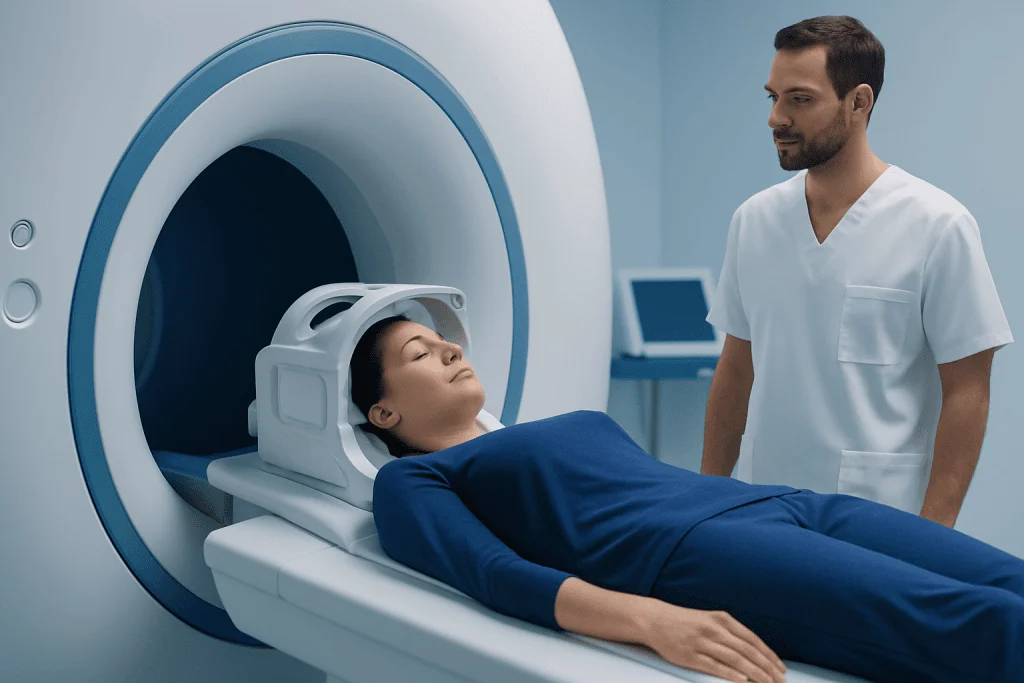
A brain MRI is a noninvasive scan that uses a strong magnetic field and radio waves to create detailed images. During the test, the person lies still on a table that slides into the MRI machine. The scan is painless, but the machine can be noisy, and staying still is important to keep the images clear.
Some MRI studies are done without contrast, while others use a contrast dye to improve visibility of certain tissues or blood vessels. Contrast is not needed in every case. The radiologist and referring doctor decide whether it is helpful based on the symptoms being investigated. People should tell the medical team about kidney problems, implanted devices, pregnancy, or past reactions to contrast agents before the scan.
For people who feel uncomfortable in enclosed spaces, support options may be available. The imaging team can explain what the test involves and how to prepare. In some situations, doctors may arrange a more tailored evaluation using brain MRI as part of a broader workup, especially if the headache pattern raises questions beyond typical migraine.
Possible Findings and What They Mean
Many migraine MRIs come back normal, and that can be reassuring. A normal result supports the idea that there is no major structural brain problem causing the headaches. However, a normal MRI does not mean the headaches are not real or not significant. Migraine can be very disabling even when imaging is normal.
Sometimes MRI shows nonspecific white matter spots or other incidental findings. These changes can be seen in some people with migraine, especially over time, but they do not by themselves prove the diagnosis or explain every symptom. In many cases they have little practical significance, though the interpreting doctor will consider them in the full clinical context.
If MRI shows another cause of headache, next steps depend on the finding. For example, treatment may focus on blood vessel problems, inflammation, pressure changes, tumors, or other neurological disorders. When needed, doctors may combine imaging information with specialist assessment in neurology consultation to make a safe and appropriate care plan.
Treatment, Self-Care, and Follow-Up After Imaging
If MRI does not show another cause, treatment usually focuses on migraine itself. This may include lifestyle adjustments, identifying triggers, acute medicines for attacks, and preventive treatment for frequent or disabling migraines. Good sleep, regular meals, hydration, exercise, and stress management can all support migraine control. A headache diary may help reveal patterns and improve treatment decisions.
If imaging finds a different problem, care is guided by that diagnosis. This is why MRI can be helpful in selected cases: it can change treatment when the headache is not actually caused by migraine alone. Follow-up may involve repeat examinations, further blood tests, or referral to a neurologist or another specialist.
Anyone with a known diagnosis of migraine should still seek medical advice if the pattern changes significantly. A person can have migraine and also develop another condition later. Near the end of the diagnostic journey, some patients may benefit from multidisciplinary care; Acibadem International’s specialists in JCI-accredited hospitals diagnose and treat neurological and imaging-related conditions for international patients.
When to See a Doctor Urgently
Urgent medical attention is important for headaches that start suddenly and severely, especially if the pain peaks within seconds or minutes. Emergency evaluation is also needed when headache comes with weakness on one side, facial drooping, difficulty speaking, seizures, confusion, fainting, or a major change in alertness. These symptoms can point to serious conditions that need immediate care.
A doctor should also assess headaches associated with fever, neck stiffness, recent head injury, pregnancy-related concerns, new visual loss, or a dramatic change from a person’s usual migraine pattern. Headaches that become steadily worse, occur with cancer or immune suppression, or begin later in life also deserve prompt medical review.
Even when the cause turns out to be migraine, getting timely help is worthwhile if symptoms are unusual, frightening, or hard to control. Early assessment can reassure the patient, guide the need for MRI, and make sure urgent causes are not missed.
Frequently asked questions
Does everyone with migraine need an MRI?
No. Most people with a typical migraine pattern and a normal neurological examination do not need brain imaging. MRI is usually reserved for cases with warning signs, unusual features, or a change in the usual headache pattern.
Can an MRI diagnose migraine?
Not directly. Migraine is usually diagnosed based on symptoms, medical history, and examination. MRI is mainly used to rule out other causes of headache rather than to confirm migraine itself.
What symptoms are considered red flags for a headache MRI?
Examples include sudden severe headache, weakness, numbness, trouble speaking, seizures, confusion, fainting, fever, or headaches that steadily worsen. New headaches after age 50 or headaches in someone with cancer or immune suppression also need careful evaluation.
Is MRI better than CT for migraine evaluation?
MRI often provides more detailed images of the brain and does not use radiation. However, CT may be preferred in emergencies because it is quick and can detect acute bleeding well. The best test depends on the situation and the symptoms.
What if the MRI is normal but headaches continue?
A normal MRI can be reassuring because it lowers concern for many serious structural problems. If headaches continue, the doctor usually focuses on migraine treatment, trigger management, and follow-up rather than more imaging right away.
Can migraine cause changes on MRI?
Sometimes MRI shows small nonspecific white matter changes in people with migraine. These findings are not the same as proving migraine, and they often do not change treatment. The meaning of any MRI finding should be discussed with a qualified doctor.
This article is for general information only and is not a substitute for professional medical advice. Please consult a qualified doctor about your individual situation.
Migraine in Turkey — costs, top hospitals & a free quote
JCI-accredited · board-certified surgeons · reply within 24h
Add us as a Preferred Source to see more of our trusted health content across Google Search, AI Overviews and Discover.

More from the Health Library

Neuroimmunology Testing: MRI, Spinal Fluid, and Antibody Tests Explained
Image-Guided Biopsy: How Tissue Samples Are Taken Safely

Lab Test Results: What Abnormal Values Mean and When to Follow Up

Cardiac CT Before Coronary Bypass Surgery: Why Imaging Matters

Cerebral Angiography Risks and Recovery: What Patients Should Expect