Spinal Fusion vs Disc Replacement: How Doctors Choose
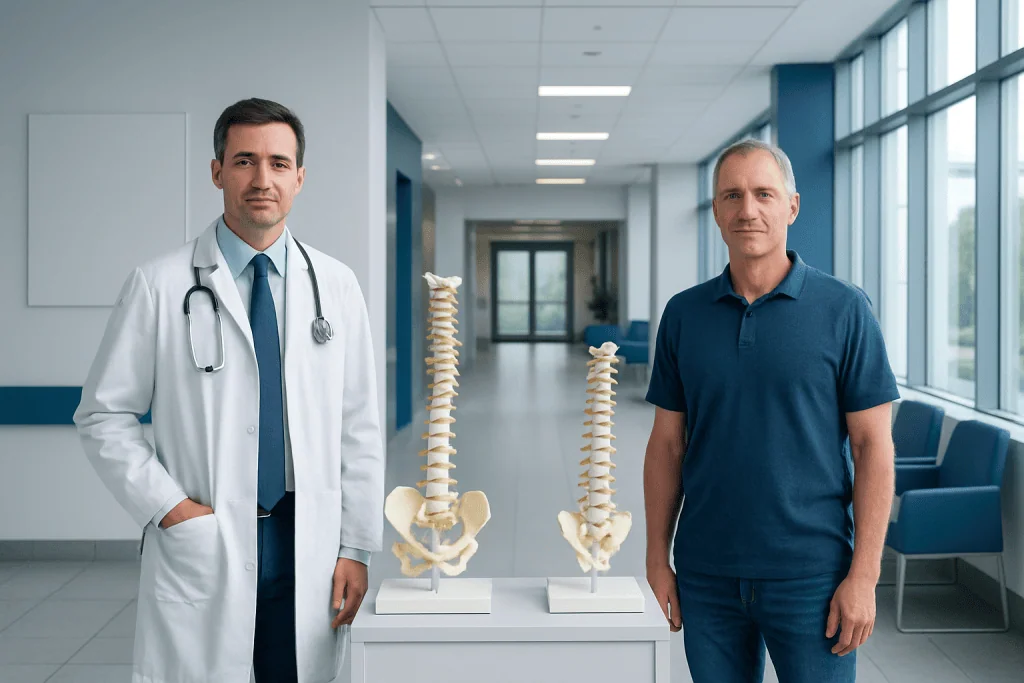
Spinal fusion joins two or more vertebrae to stop painful motion, while disc replacement removes a damaged disc and replaces it with an artificial one to preserve some movement. Neither procedure is automatically better for everyone; the best choice depends on anatomy, diagnosis, age, bone quality, and the condition of nearby joints.
Key Takeaways
- Spinal fusion joins two or more vertebrae to stop painful motion, while disc replacement removes a damaged disc and replaces it with an artificial one to preserve some movement.
- Neither procedure is automatically better for everyone; the best choice depends on anatomy, diagnosis, age, bone quality, and the condition of nearby joints.
- Disc replacement is usually considered only in carefully selected patients with limited disc disease and good spinal stability.
- Fusion may be preferred when there is spinal instability, deformity, advanced arthritis, fracture, or multilevel degeneration.
- A careful exam, imaging, and discussion of goals and risks help the surgeon recommend the most suitable option.
Spinal fusion and disc replacement are two surgical options for certain types of neck or back pain when non-surgical care has not helped. Doctors choose between them by looking at the exact cause of pain, the condition of the disc and nearby joints, spinal stability, overall health, and the patient’s activity goals.
Overview: What Is the Difference?
When people hear about surgery for persistent neck or back pain, two names often come up: spinal fusion and disc replacement. Both are established procedures, but they solve different mechanical problems in the spine. Doctors do not choose between them by preference alone. They choose based on what is causing symptoms and which operation is most likely to relieve pain safely and support long-term function.
Spinal fusion joins two or more vertebrae so they heal into one solid segment. This stops movement at a painful or unstable level. Disc replacement, also called artificial disc replacement, removes a damaged disc and places an implant designed to maintain some motion at that level. In simple terms, fusion aims to eliminate painful movement, while disc replacement aims to preserve controlled movement.
Either operation may be used in the cervical spine (neck), and in selected cases in the lumbar spine (lower back). However, not every painful disc is suitable for replacement. The surgeon must consider the condition of the disc itself, the nearby facet joints, spinal alignment, nerve compression, and whether the spine is stable. This is why the same MRI result can lead to different recommendations in different patients.
Many people improve without surgery through medication, physical therapy, exercise, posture changes, injections, or time. Surgery is usually considered only after non-surgical treatment has been tried for an appropriate period, or when there are serious neurological symptoms such as progressive weakness. The goal is not simply to treat an image finding, but to match the treatment to the person’s symptoms and daily limitations.
When Surgery May Be Considered
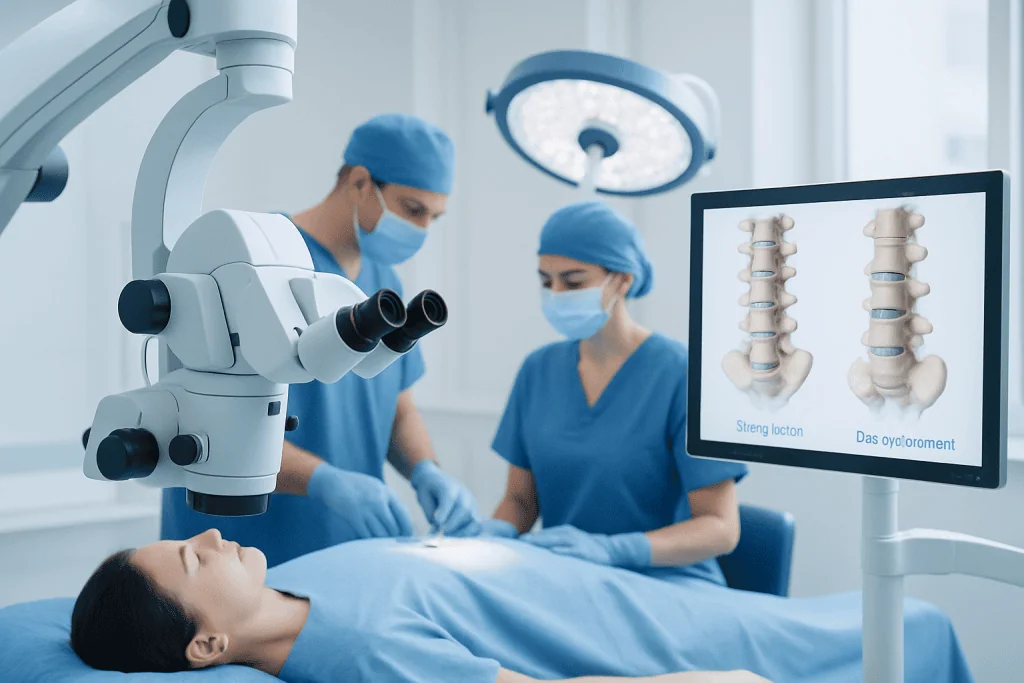
Doctors may discuss surgery when neck or back pain continues despite structured non-surgical care and clearly affects work, sleep, mobility, or quality of life. Surgery can also be considered earlier if a disc problem is compressing a nerve or the spinal cord and causing persistent arm or leg pain, numbness, weakness, balance problems, or loss of function.
Common conditions that may lead to either fusion or disc replacement include degenerative disc disease, certain types of herniated discs, and nerve compression caused by disc collapse. In the neck, artificial disc replacement is often considered for selected patients with one- or sometimes two-level disc disease causing nerve symptoms. In the lower back, replacement is more selective and depends heavily on anatomy and surgeon assessment.
Fusion is more often recommended if there is spinal instability, such as vertebrae slipping out of place, abnormal movement seen on imaging, deformity, advanced wear in the facet joints, or when a larger decompression procedure would otherwise make the spine less stable. It may also be used for fractures, some tumors, infections, or after prior surgery. These situations often require the stability that fusion can provide.
By contrast, disc replacement is generally best suited to patients with a more localized disc problem, preserved alignment, and no major instability. It is not designed for every cause of back or neck pain. The key question is whether the pain is mainly coming from the disc and whether the rest of the motion segment is healthy enough to support an artificial disc.
How Doctors Decide Between Fusion and Disc Replacement
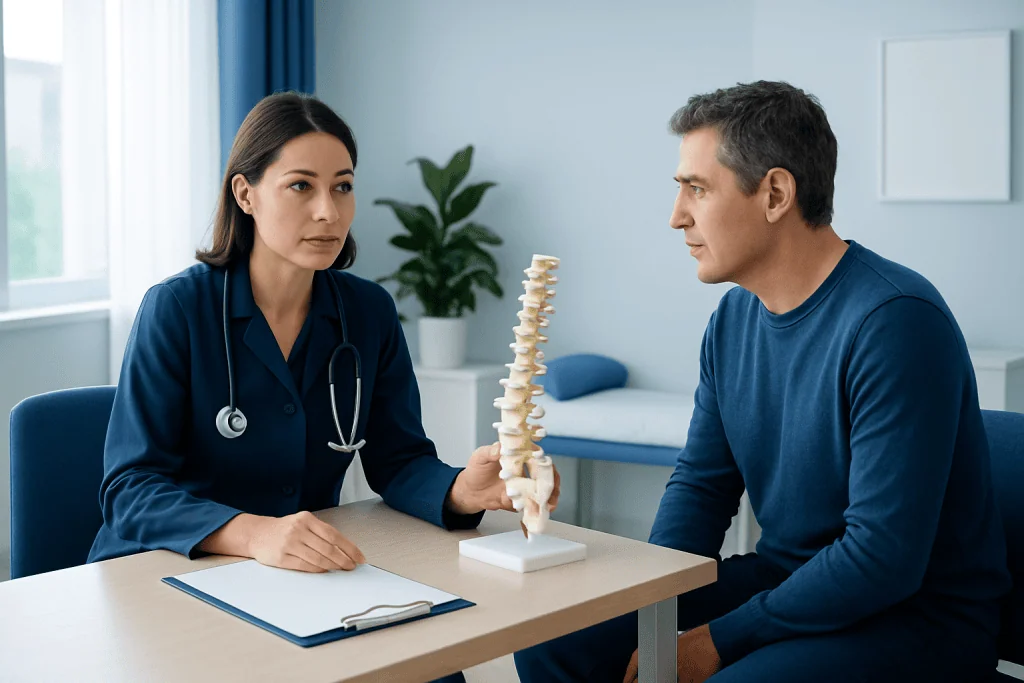
The first step is confirming the pain source as accurately as possible. Spine pain can come from discs, facet joints, nerves, muscles, ligaments, or a combination of these. A surgeon will review the patient’s symptoms, neurological findings, physical examination, and imaging rather than relying on one test alone. Pain patterns, weakness, reflex changes, and how symptoms behave with movement all help build the full picture.
Age by itself does not automatically rule in or rule out either surgery, but it can influence decision-making. Bone quality, daily activity level, smoking status, body weight, and other medical conditions matter because they affect healing and implant durability. Patients with osteoporosis, significant arthritis, inflammatory disease, or poor bone stock may not be ideal candidates for disc replacement.
The condition of the facet joints is especially important. These small joints at the back of the spine guide movement. If they are already severely arthritic, preserving motion with an artificial disc may continue to cause pain. In that setting, fusion may be the better option. Alignment also matters: if the spine has significant deformity or abnormal motion, stabilization with spinal fusion surgery may be more appropriate than trying to preserve motion.
Disc replacement is considered when preserving movement may be helpful and the segment is otherwise suitable. Surgeons look for a single main pain-generating disc, healthy enough surrounding structures, and no major contraindications. If there is advanced multilevel degeneration, instability, prior destructive surgery, or marked narrowing affecting multiple structures, fusion may offer a more reliable mechanical solution than artificial disc replacement.
Conditions, Tests, and Findings That Influence the Choice
Several diagnoses can affect the decision. In a person with isolated disc degeneration and nerve compression but good stability, disc replacement may be discussed. In someone with degenerative disc disease plus collapsed disc height, facet arthritis, or segmental instability, fusion may be more likely. If the pain is mostly from muscular strain or widespread age-related changes without a clear surgical target, neither procedure may be the best answer.
Imaging usually includes X-rays and MRI, and sometimes CT scans. Dynamic X-rays taken in flexion and extension can help show instability. MRI provides detail about discs, nerves, and soft tissues, while CT can show bony anatomy more clearly. These tests help the surgeon understand whether a worn disc is the true problem and whether nearby joints can tolerate motion preservation.
Neurological symptoms also matter. If a disc is pressing on a nerve root and causing arm or leg pain, numbness, or weakness, surgery may be aimed at decompressing that nerve. The choice of fusion or replacement then depends on what remains after decompression and whether the spine will still be stable. In some situations, preserving motion is possible; in others, stability becomes the priority.
Prior surgery can also influence planning. Scar tissue, altered anatomy, or previous hardware may make one option more practical than the other. Likewise, patients with inflammatory arthritis, spinal fracture, significant scoliosis, infection, or tumors usually need individualized planning. A spine specialist may also discuss other procedures, such as microdiscectomy, if the main issue is a disc herniation without a need for fusion or replacement.
Benefits and Limits of Each Procedure
Spinal fusion has a long track record and can be very effective when painful motion or instability is the main problem. By stopping movement at the diseased segment, it can reduce pain and protect nerves. It is also versatile and can be used in many complex situations where artificial disc replacement would not be suitable. For that reason, it remains a standard treatment for many spinal conditions.
The main trade-off of fusion is loss of motion at the treated level. Most patients still move well overall, especially when only one level is fused, but the fused segment no longer bends or rotates. Over time, the levels above and below may experience extra mechanical stress, though this does not happen to everyone and does not always cause symptoms. Healing also depends on the bone successfully fusing, which is one reason surgeons focus on bone health and smoking cessation.
Disc replacement may preserve more natural movement at the treated level and may reduce stress on nearby segments in some patients. Recovery of motion can feel appealing, especially to active individuals. But preserving motion is helpful only when the rest of the segment is healthy enough for it. If there is advanced arthritis, deformity, or instability, movement preservation may not solve the problem and can even worsen pain.
Like all surgeries, both procedures carry risks such as infection, bleeding, nerve injury, blood clots, persistent pain, and the possibility that symptoms do not improve as expected. Implants can also have device-specific issues. The surgeon’s role is to balance likely benefit with safety, anatomy, and long-term durability. Patients should feel comfortable asking why one operation is being recommended over another in their specific case.
Recovery, Rehabilitation, and Long-Term Outlook
Recovery depends on the part of the spine treated, the number of levels involved, the surgical approach, and the patient’s overall health. In general, both fusion and disc replacement require a period of activity modification, wound care, and gradual return to movement. Early walking is often encouraged, while lifting, twisting, and strenuous exercise may be limited for a time based on the surgeon’s instructions.
Fusion recovery may take longer because the bone must heal into a solid bridge. During this period, surgeons may monitor healing with follow-up imaging. Disc replacement does not require the vertebrae to fuse, but it still requires careful rehabilitation so the tissues around the implant recover properly. Neither procedure should be viewed as an instant fix; both work best when paired with structured recovery.
Physical therapy is often an important part of rehabilitation. Therapy may focus on posture, core strength, flexibility, body mechanics, and a gradual increase in endurance. Good rehabilitation supports pain control and can improve confidence with movement. Patients who understand how to protect their spine during daily tasks often do better over time.
Long-term outlook varies. Some patients achieve major relief of nerve pain and improvement in function, while others may have partial improvement, especially if pain has multiple causes. Realistic expectations matter. Surgery can address structural problems, but it does not always remove every source of discomfort. A successful result usually means better function, reduced pain, and improved quality of life rather than a guarantee of a completely symptom-free spine.
Questions to Ask and When to Seek Specialist Care
Anyone considering spine surgery may benefit from asking a few key questions: What exactly is causing the pain? Why is one procedure recommended over the other? Is the goal pain relief, nerve decompression, improved stability, or all three? What non-surgical options remain, and what are the likely benefits and limitations of surgery in this particular case?
It is also reasonable to ask how many levels are involved, whether the facet joints are healthy, whether bone quality affects the plan, and what recovery is expected. A second opinion can be helpful, especially if imaging findings are complex or if the recommendation is not fully understood. Good decision-making in spine care depends on clear communication and shared understanding.
People should seek prompt medical evaluation if back or neck pain is accompanied by progressive weakness, trouble walking, loss of balance, bowel or bladder changes, fever, unexplained weight loss, or pain after a major injury. These symptoms do not always mean surgery is needed, but they do require timely assessment. Persistent arm or leg pain, numbness, or tingling that does not improve should also be checked by a qualified doctor.
For international patients who need specialist evaluation, Acibadem International’s multidisciplinary spine teams in JCI-accredited hospitals assess surgical and non-surgical options for complex spinal conditions. A thorough review by orthopedics, neurosurgery, imaging, pain, and rehabilitation specialists can help clarify whether fusion, disc replacement, or another approach is most appropriate.
Frequently asked questions
Is disc replacement better than spinal fusion?
Not automatically. Disc replacement may be a good option for selected patients with a limited disc problem, healthy nearby joints, and stable spinal alignment. Fusion may be better when the spine is unstable, the joints are arthritic, or multiple structures are involved.
Who is a good candidate for artificial disc replacement?
A good candidate usually has symptoms linked to one clearly diseased disc, relatively preserved spinal stability, and no major facet joint arthritis. Bone quality, age, overall health, and the part of the spine being treated also matter. Final suitability is determined by a spine specialist after examination and imaging.
Why would a doctor recommend fusion instead of disc replacement?
Fusion may be recommended when painful motion needs to be stopped or when the spine needs more support. This can happen with instability, deformity, advanced arthritis, fracture, or multilevel degeneration. In these settings, preserving motion may not be safe or helpful.
Can spinal fusion and disc replacement treat the same symptoms?
Yes, both may be used to treat symptoms such as nerve pain, numbness, weakness, or disc-related pain in certain patients. However, they do so in different ways. The best choice depends on the underlying structure of the spine, not just the symptom list.
How long does recovery take after these surgeries?
Recovery varies from person to person and depends on the spinal level, the extent of surgery, and general health. Fusion often requires a longer healing period because the bones must grow together. Disc replacement may allow earlier motion, but it still requires careful rehabilitation and follow-up.
Can surgery completely cure back or neck pain?
Surgery can help when pain is coming from a structural problem that matches the imaging and examination findings. It often improves function and reduces pain, especially nerve-related symptoms, but it does not guarantee complete relief. Setting realistic goals with the surgeon is an important part of planning.
References
- American Academy of Orthopaedic Surgeons
- North American Spine Society
- National Institute of Arthritis and Musculoskeletal and Skin Diseases
- National Institute for Health and Care Excellence
- MedlinePlus
This article is for general information only and is not a substitute for professional medical advice. Please consult a qualified doctor about your individual situation.
Spinal Fusion in Turkey — costs, top hospitals & a free quote
JCI-accredited · board-certified surgeons · reply within 24h
Add us as a Preferred Source to see more of our trusted health content across Google Search, AI Overviews and Discover.