Endovascular Treatment for Brain Aneurysms: Coiling, Flow Diversion, and Stents

Endovascular treatment reaches a brain aneurysm through the blood vessels, usually from the wrist or groin. Main techniques include coiling, stent-assisted coiling, and flow diversion.
Key Takeaways
- Endovascular treatment reaches a brain aneurysm through the blood vessels, usually from the wrist or groin.
- Main techniques include coiling, stent-assisted coiling, and flow diversion.
- Not every aneurysm needs immediate treatment; decisions depend on rupture risk, symptoms, and aneurysm features.
- Careful imaging and specialist evaluation help determine whether endovascular treatment or surgery is more suitable.
- Follow-up imaging is important because some aneurysms need long-term monitoring after treatment.
Endovascular treatment for brain aneurysms is a minimally invasive way to treat selected aneurysms from inside the blood vessels. Common options include coiling, stent-assisted techniques, and flow-diverting devices, with the best choice depending on the aneurysm’s size, shape, and location.
Overview
Endovascular treatment for brain aneurysms is a minimally invasive procedure used to reduce the risk that an aneurysm will grow, leak, or rupture. A brain aneurysm is a weak or bulging area in the wall of a blood vessel in the brain. Instead of opening the skull, doctors guide very thin tubes called catheters through the blood vessels to reach the aneurysm from inside the body.
This approach is commonly performed by specialists in interventional neuroradiology, endovascular neurosurgery, or interventional neurology. Depending on the aneurysm’s anatomy, doctors may place soft platinum coils inside the aneurysm, use a stent to support the treatment, or insert a flow-diverting device in the parent artery to redirect blood away from the aneurysm.
Endovascular treatment is not the right option for every patient or every aneurysm. Some aneurysms are small and can be safely monitored, while others may be better treated with microsurgical clipping. A personalized plan is important, and it is usually based on aneurysm size, neck width, location, whether it has ruptured, the patient’s age, and overall health.
When Brain Aneurysms Need Treatment
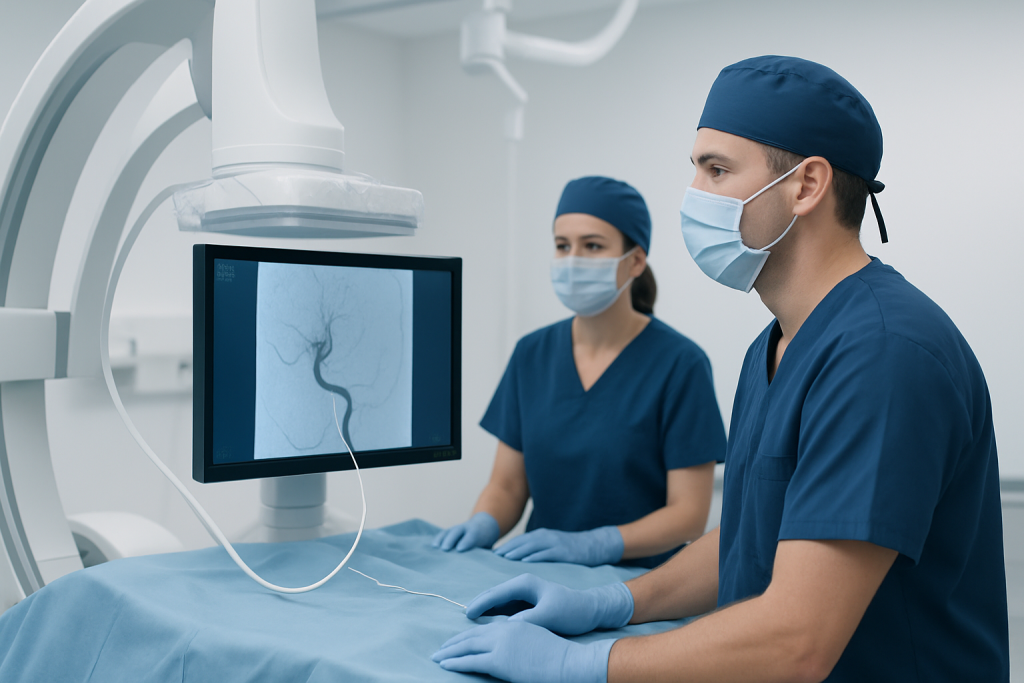
Not all brain aneurysms need immediate intervention. Many are discovered incidentally during scans performed for headaches, dizziness, or other unrelated reasons. In these cases, the medical team considers how likely the aneurysm is to rupture over time and balances that risk against the risks of treatment.
Treatment is more strongly considered when an aneurysm has already ruptured, is causing symptoms, is growing on follow-up imaging, or has features linked to a higher rupture risk. Symptoms can include a sudden severe headache if rupture occurs, or pressure-related symptoms such as double vision, facial pain, or weakness if the aneurysm presses on nearby structures.
The decision-making process often includes a detailed discussion about benefits, risks, and alternatives. Patients may hear terms such as brain aneurysm or subarachnoid hemorrhage when doctors explain the condition and why treatment may be recommended. The goal is to choose the safest strategy for both short-term protection and long-term vessel health.
Types of Endovascular Treatment

Coiling is one of the best-known endovascular options. In this technique, the doctor guides a microcatheter into the aneurysm and places very small soft coils inside it. These coils help the blood clot within the aneurysm sac, which reduces blood flow into the bulge and lowers the chance of rupture. This approach may be especially useful for certain small or medium aneurysms with favorable anatomy.
Some aneurysms have a wide neck, which means coils alone may not stay securely in place. In these cases, stent-assisted coiling or balloon-assisted coiling may be used. A tiny stent can be placed in the parent artery to support the coils and help keep them inside the aneurysm. This can improve stability and allow treatment of more complex aneurysm shapes.
Flow diversion is another important option, particularly for larger, wide-necked, or difficult-to-treat aneurysms. A flow-diverting stent is placed across the aneurysm opening inside the parent blood vessel. Rather than filling the aneurysm itself, the device changes blood flow patterns so that the aneurysm gradually seals off over time while the artery remains open. Patients exploring these options may also encounter broader information about interventional neurology techniques used for complex vascular conditions.
In selected situations, additional devices may be used, including intrasaccular flow-disruption implants. The best choice depends on the aneurysm’s location, shape, and relationship to nearby blood vessels. Treatment planning is highly individualized and based on detailed imaging and specialist expertise.
How the Procedure Is Performed
Endovascular aneurysm treatment usually takes place in a specialized angiography suite. Before the procedure, the care team reviews imaging, medical history, allergies, medications, and bleeding risks. Some patients, especially those receiving stents or flow diverters, may need specific blood-thinning medicines before and after treatment to reduce the risk of clot formation on the device.
During the procedure, the patient is typically under general anesthesia or deep sedation, depending on the case and the center’s practice. The doctor inserts a catheter through an artery, commonly in the wrist or groin, and navigates it to the blood vessels of the brain using live X-ray guidance. Contrast dye helps the team see the vessels and the aneurysm in detail.
Once the catheter is in position, the chosen treatment is delivered. This may involve packing the aneurysm with coils, placing a supporting stent, or deploying a flow-diverting device. The team then checks the final result with angiographic images to make sure the aneurysm is excluded as much as possible and that normal blood flow is preserved.
Afterward, patients are monitored closely in a recovery area or intensive care setting, especially if the aneurysm was ruptured. Hospital stay varies depending on the complexity of treatment and the patient’s condition. Those interested in minimally invasive vascular care may also read about brain aneurysm treatment approaches used in multidisciplinary centers.
Benefits, Risks, and Possible Complications
A major benefit of endovascular treatment is that it avoids open brain surgery in many cases. Because the procedure is done through the blood vessels, recovery may be faster and there is no large scalp incision or skull opening. For some aneurysms, especially those located deep in the brain or in difficult surgical positions, endovascular methods can offer a valuable and less invasive alternative.
However, every procedure carries risks. Potential complications include bleeding, stroke, vessel injury, blood clots, reaction to contrast dye, or incomplete closure of the aneurysm. In coiled aneurysms, there can sometimes be a small amount of residual filling or later reopening, which is why follow-up imaging is important.
Stents and flow diverters have additional considerations because they may require antiplatelet medicines for a period of time. These medicines help prevent clotting on the device but can increase bleeding risk in some patients. The team carefully weighs these factors, particularly in people who have recently had a hemorrhage or who may need other procedures.
Although complications are not common in experienced centers, understanding them is an important part of informed decision-making. Patients should feel comfortable asking why a particular technique is recommended, what the alternatives are, and what the likely follow-up plan will be.
Recovery and Follow-Up Care
Recovery after endovascular treatment depends on whether the aneurysm was unruptured or ruptured and on the complexity of the procedure. Patients treated for an unruptured aneurysm may return home within a short time if they remain stable. Mild tiredness, bruising at the catheter insertion site, or temporary activity restrictions are common in the early recovery period.
When the aneurysm has ruptured, recovery can be longer and may involve treatment of complications related to bleeding in the brain. In that setting, the aneurysm procedure is only one part of care, and monitoring in a neurocritical care unit may be needed. Rehabilitation may also be part of recovery if the hemorrhage caused neurologic symptoms.
Follow-up imaging is a routine and important part of long-term care. Doctors may recommend magnetic resonance angiography, computed tomography angiography, or repeat catheter angiography at scheduled intervals to confirm that the aneurysm remains sealed and to assess the parent artery. Some aneurysms need retreatment if they reopen or continue to fill.
Follow-up visits also help the care team review medications, manage vascular risk factors, and monitor for any new symptoms. If a center offers comprehensive care, patients may be evaluated by experts across neurosurgery and endovascular specialties to ensure that future decisions remain individualized.
Who May Be a Candidate
Candidacy for endovascular treatment depends on many factors rather than a single rule. The aneurysm’s size, location, neck width, shape, and whether it has ruptured are all important. So are the patient’s age, general medical condition, kidney function, and ability to take blood-thinning medication if a stent or flow diverter is being considered.
Some aneurysms are especially well suited to coiling, while others are more suitable for flow diversion or open surgery. For example, wide-necked aneurysms in certain artery segments may be treated effectively with stent-assisted techniques, while branch-vessel anatomy in other cases may make microsurgical clipping more appropriate. This is why treatment planning often involves review by a multidisciplinary team.
Advanced imaging helps guide these decisions. The team may use CT angiography, MR angiography, or catheter angiography to understand the aneurysm in three dimensions. In some cases, doctors compare endovascular treatment with surgical clipping, especially when durability, anatomy, and patient-specific risks must all be considered carefully.
When to Seek Medical Advice
Anyone diagnosed with a brain aneurysm should discuss the finding with a qualified specialist, even if the aneurysm was discovered incidentally and is not causing symptoms. A careful review helps clarify whether monitoring is reasonable or whether preventive treatment should be considered. Seeking expert advice can also help patients understand the meaning of scan results and the expected follow-up plan.
Urgent medical attention is needed if symptoms suggest a ruptured aneurysm. These can include a sudden severe headache often described as the worst headache of a person’s life, fainting, vomiting, neck stiffness, seizures, confusion, or new neurologic weakness. These symptoms require emergency evaluation right away.
People who have already undergone treatment should contact their medical team if they develop concerning new symptoms, increasing headache, weakness, speech changes, vision changes, or signs of bleeding or infection at the catheter site. Ongoing communication with the care team supports safe recovery and timely follow-up.
For international patients seeking specialist evaluation, Acibadem International’s multidisciplinary teams in JCI-accredited hospitals diagnose and treat complex cerebrovascular conditions using both endovascular and surgical approaches when appropriate.
Frequently asked questions
What is endovascular treatment for brain aneurysms?
It is a minimally invasive treatment that reaches the aneurysm through the blood vessels rather than through open brain surgery. Doctors use catheters to place coils, stents, or flow-diverting devices to reduce blood flow into the aneurysm and lower the risk of rupture.
Is coiling better than surgical clipping?
Neither option is universally better for every patient. The best treatment depends on the aneurysm’s size, shape, location, whether it has ruptured, and the patient’s overall health. A specialist team can explain which approach is safer and more suitable in a specific case.
How does a flow diverter work?
A flow diverter is a special stent placed in the parent artery across the aneurysm opening. It redirects blood flow away from the aneurysm, which encourages the aneurysm to gradually seal off while maintaining circulation through the main vessel.
Will a brain aneurysm be completely cured after endovascular treatment?
Many aneurysms are successfully secured with endovascular treatment, but long-term follow-up is still important. Some aneurysms can reopen or continue to fill slightly over time, which is why repeat imaging may be recommended.
How long is recovery after aneurysm coiling or stenting?
Recovery varies from person to person and depends partly on whether the aneurysm was ruptured or unruptured. People treated for an unruptured aneurysm often recover more quickly, while recovery after rupture may take longer and can involve rehabilitation.
Do stents and flow diverters require medication afterward?
Yes, many patients need antiplatelet medication after stent placement or flow diversion to help prevent clot formation on the device. The type and duration of treatment depend on the device used and the patient’s medical situation, so the prescribing doctor should give specific instructions.
References
- World Health Organization
- American Heart Association
- National Institute of Neurological Disorders and Stroke
- Brain Aneurysm Foundation
- Society of NeuroInterventional Surgery
This article is for general information only and is not a substitute for professional medical advice. Please consult a qualified doctor about your individual situation.
Heart care in Turkey — expert evaluation and treatment
JCI-accredited · board-certified surgeons · reply within 24h
Add us as a Preferred Source to see more of our trusted health content across Google Search, AI Overviews and Discover.

More from the Health Library



Related Specialists

Prof. Dr. Gündüz Tezeren
Orthopedic Surgery & Traumatology
Dt. Sardar Fettahzade
Oral & Dental Health
Assoc. Prof. Dr. Murat İçen
Check Up & Wellness Center
Dr. Müge Koçak
Neurology