Breast Cancer Symptoms: Early Signs and Changes
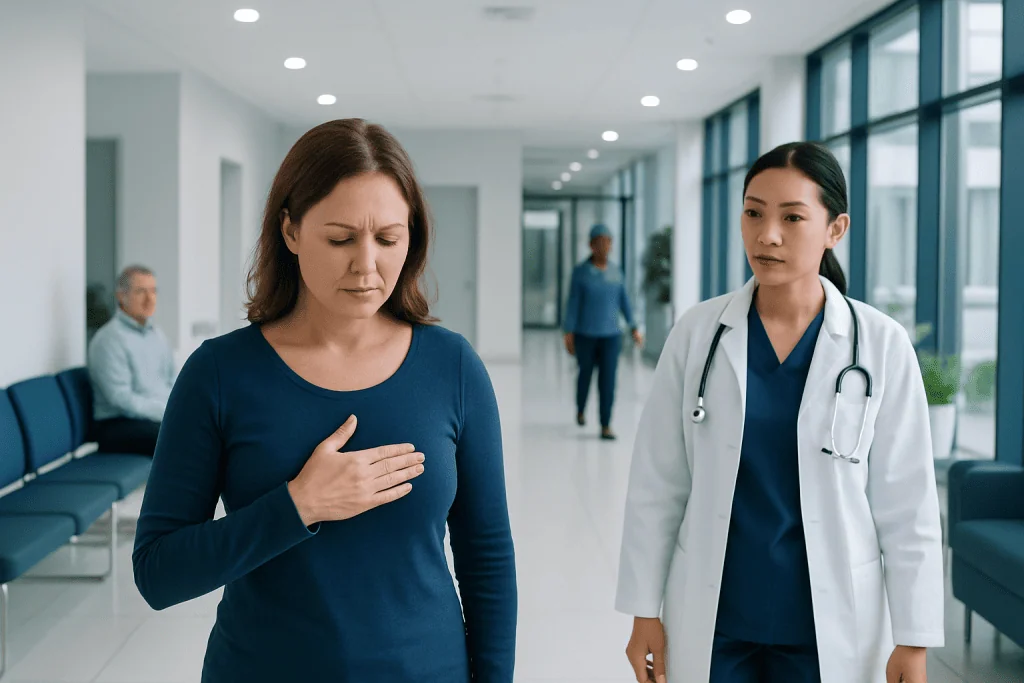
A new breast lump is a common sign, but breast cancer can also appear as skin, nipple, or breast shape changes. Many breast changes are not cancer, but any new or persistent change should be checked by a doctor.
Key Takeaways
- A new breast lump is a common sign, but breast cancer can also appear as skin, nipple, or breast shape changes.
- Many breast changes are not cancer, but any new or persistent change should be checked by a doctor.
- Breast cancer may not cause pain early on, and some cases are found only on screening mammograms.
- Prompt assessment usually includes a clinical exam, imaging, and sometimes a biopsy.
- Regular screening and breast awareness are both important for early detection.
Breast cancer symptoms can vary widely, and some people have no symptoms at all in the early stages. Knowing what changes to look for can help a person seek medical advice promptly and support earlier diagnosis.
Overview
Breast cancer symptoms are changes in the breast or nearby underarm area that may suggest cancer and should be assessed by a healthcare professional. These changes can include a new lump, thickening, skin dimpling, nipple changes, or discharge. However, not every symptom means cancer, and many breast changes are caused by benign conditions such as cysts, hormonal changes, or infections.
One important point is that early breast cancer does not always cause noticeable symptoms. Some people feel completely well and only learn about a problem after a routine mammogram or other imaging test. This is why both breast awareness and recommended screening are important.
Breast cancer can affect women and, less commonly, men. It can develop in different parts of the breast tissue, so symptoms are not always the same from one person to another. A person does not need to identify the exact cause of a change before seeking help; it is enough to notice that something is new, unusual, or persistent.
Common Symptoms and Early Signs
A new breast lump is one of the best-known breast cancer symptoms. The lump may feel hard or firm, have an irregular shape, and may or may not be painful. Still, not all cancerous lumps feel the same, and some are soft, round, or difficult to detect without imaging.
Other early signs of breast cancer can involve visible changes rather than a lump. A person may notice swelling in part of the breast, a change in breast size or shape, skin thickening, dimpling that resembles orange peel, redness that does not go away, or a nipple that turns inward when it did not before. The nipple or surrounding skin may also become scaly or irritated.
Nipple discharge can also be important, especially if it happens without squeezing, comes from one breast only, or is bloody or clear. Swelling or a lump in the armpit or near the collarbone may also occur if lymph nodes are involved. These changes do not confirm cancer, but they should not be ignored.
- New lump in the breast or underarm
- Breast thickening or a firm area
- Change in breast size, shape, or contour
- Skin dimpling, puckering, or redness
- Nipple inversion or new nipple asymmetry
- Unusual nipple discharge
- Persistent pain in one area, especially if paired with other changes
Changes That Can Be Subtle

Not all breast cancer symptoms are obvious. Some changes are subtle and easy to overlook, especially if a person is not familiar with how their breasts normally look and feel. A small area of fullness, slight skin tethering, or one breast gradually looking different from the other may be the only clue.
Breast pain alone is usually not the most typical sign of cancer, and most breast pain is linked to hormones, muscle strain, or benign breast conditions. Even so, persistent pain in one spot, particularly if it is new or associated with a lump or skin change, deserves medical attention.
Inflammatory breast cancer is a less common type that may not present as a distinct lump. Instead, it can cause rapid swelling, warmth, redness, tenderness, or skin thickening over a large part of the breast. Because these symptoms can resemble an infection, prompt evaluation is especially important if they do not quickly improve.
Causes and Risk Factors
Breast cancer begins when cells in the breast grow in an uncontrolled way. Doctors cannot always explain why one person develops it and another does not, but several risk factors are known. Increasing age is one of the strongest risk factors, and a personal or family history of breast cancer can also raise risk.
Inherited gene changes, including BRCA1 and BRCA2 mutations, can significantly increase the likelihood of developing breast cancer. Hormonal and reproductive factors may also contribute, such as early menstruation, late menopause, having no children, or having a first pregnancy later in life. Dense breast tissue can make cancer harder to detect on mammograms and may also be linked to higher risk.
Lifestyle and environmental factors can play a role as well. These may include alcohol use, obesity after menopause, low physical activity, and some forms of hormone replacement therapy. Still, many people with risk factors never develop breast cancer, while others diagnosed with breast cancer have no obvious risk factors at all.
Some noncancerous breast conditions can cause symptoms that overlap with cancer, including cysts, fibroadenomas, mastitis, and breast cysts. Because the signs can be similar, a professional evaluation is the safest way to understand what a new change means.
How Doctors Diagnose Breast Changes
If someone has possible breast cancer symptoms, the evaluation usually starts with a medical history and physical examination. The doctor may ask when the change began, whether it has changed over time, and whether there is pain, discharge, fever, or a family history of breast disease. A clinical breast exam helps identify where the change is and whether lymph nodes feel enlarged.
Imaging tests are often the next step. A diagnostic mammogram can look more closely at an area of concern, and breast ultrasound is commonly used to help distinguish a solid mass from a fluid-filled cyst. In some situations, breast MRI may be recommended, especially for dense breasts or when more detail is needed. Mammography remains a key tool for detecting breast cancer, even before symptoms appear.
If imaging shows a suspicious area, a biopsy may be needed to confirm whether cancer is present. During a biopsy, a small sample of tissue is removed and examined under a microscope. This is the only way to make a definite diagnosis of breast cancer.
When cancer is diagnosed, further tests may help determine the type and stage. This information guides treatment planning and may include receptor testing, additional imaging, and pathology review. People who need more advanced imaging may also benefit from breast MRI as part of a personalized assessment.
Treatment Options if Breast Cancer Is Found
Treatment depends on the type of breast cancer, its stage, whether it has hormone receptors or HER2 expression, and the person’s overall health and preferences. In many cases, treatment involves a combination of therapies rather than just one. The main options include surgery, radiation therapy, systemic drug treatments, or a tailored combination of these.
Surgery may involve removing only the tumor and a margin of healthy tissue or removing the entire breast. Some patients may be candidates for breast-conserving surgery, while others may need mastectomy depending on the size and location of the cancer and other factors. Lymph nodes may also be assessed to see whether cancer has spread.
Drug treatments can include hormone therapy, chemotherapy, targeted therapy, or immunotherapy, depending on the cancer subtype. Radiation therapy is often used after breast-conserving surgery and sometimes after mastectomy. Patients with confirmed breast cancer usually have care planned by a multidisciplinary team to match treatment to the biology of the tumor as well as the patient’s needs and goals.
Near the end of the diagnostic and treatment pathway, some international patients choose centers with coordinated oncology, surgery, radiology, and pathology services. Acibadem International’s multidisciplinary specialists in JCI-accredited hospitals diagnose and treat breast cancer for international patients as part of individualized care planning.
Prevention, Screening, and Self-care
There is no guaranteed way to prevent breast cancer, but some steps may help lower risk and support earlier detection. Maintaining a healthy weight, staying physically active, limiting alcohol, and discussing the risks and benefits of hormone therapy with a doctor are all sensible measures. These steps also benefit general health.
Screening is one of the most effective ways to find breast cancer before symptoms develop. The right screening plan depends on age, family history, breast density, and other personal factors. Many people are advised to have regular mammograms, while those at higher risk may need earlier or additional screening.
Breast self-awareness is different from a formal self-exam schedule. It means being familiar with the normal look and feel of one’s breasts and noticing new changes such as a lump, skin dimpling, or nipple discharge. If a change appears and does not quickly resolve, it is wise to arrange a medical evaluation rather than wait and watch for too long.
When to See a Doctor
A person should see a doctor if they notice a new breast lump, underarm lump, change in breast shape, nipple inversion, unusual discharge, or skin changes that do not go away. Redness, swelling, or warmth that is persistent also needs prompt review, especially if it affects a large area of the breast. Seeking assessment does not mean the change is definitely cancer; it simply allows the cause to be clarified.
It is especially important not to delay if symptoms are getting worse, if there is bloody nipple discharge, or if a breast change persists after a menstrual cycle. People with a strong family history of breast or ovarian cancer, or known genetic risk, should speak with a healthcare professional about personalized screening and prevention strategies.
Any person who has already been treated for breast cancer should report new breast or chest wall changes, arm swelling, or unusual symptoms during follow-up. Reassuringly, many breast concerns turn out to be benign, but timely evaluation gives the best chance of early diagnosis and appropriate care.
Frequently asked questions
What are the earliest breast cancer symptoms?
Early breast cancer symptoms may include a new lump, a thickened area in the breast, skin dimpling, nipple inversion, or unusual nipple discharge. However, some people have no symptoms at all, and the cancer is found on routine screening.
Does breast cancer always cause a lump?
No, breast cancer does not always cause a lump. Some cases present with skin changes, nipple changes, breast swelling, or abnormalities seen only on mammography or other imaging.
Is breast pain a sign of breast cancer?
Breast pain by itself is more often related to benign causes such as hormonal changes or muscle strain. Still, persistent pain in one area, especially with other changes like a lump or skin change, should be checked by a doctor.
Can breast cancer symptoms come and go?
Some benign breast changes may vary with the menstrual cycle, but a cancer-related change is more likely to persist or gradually worsen. Any symptom that is new, unusual, or does not resolve should be medically assessed.
What does nipple discharge mean?
Nipple discharge can happen for many reasons and is often not caused by cancer. It is more concerning if it is spontaneous, from one breast only, or bloody or clear, and in these cases a medical evaluation is recommended.
Can men have breast cancer symptoms too?
Yes, men can develop breast cancer, although it is less common. Symptoms may include a lump under or near the nipple, nipple changes, skin changes, or discharge.
What should someone do if they notice a breast change?
They should arrange an appointment with a qualified doctor or breast specialist for an examination. The doctor may recommend imaging tests and, if needed, a biopsy to find the cause of the change.
References
- World Health Organization
- American Cancer Society
- National Cancer Institute
- Centers for Disease Control and Prevention
- National Health Service
This article is for general information only and is not a substitute for professional medical advice. Please consult a qualified doctor about your individual situation.
Breast Cancer in Turkey — costs, top hospitals & a free quote
JCI-accredited · board-certified surgeons · reply within 24h
Add us as a Preferred Source to see more of our trusted health content across Google Search, AI Overviews and Discover.

Medical Oncology Department
Medical treatment of cancer with chemotherapy, immunotherapy and targeted therapies under a multidisciplinary tumor board.
60 specialists in this unitMore from the Health Library



Related Specialists
Prof. Dr. Yılmaz Büyükuncu
General Surgery
Assoc. Prof. Dr. Emre Bozkurt
General Surgery
Dr. Atilla Damlacık
Radiology
Dr. Kumsal Kurucu
Acibadem Life Clinical Service