Scoliosis in Adults: Symptoms, Progression, and When Surgery Is Considered

Adult scoliosis can be mild and stable, or it can progress over time and affect balance, comfort, and mobility. Common symptoms include back pain, uneven shoulders or hips, loss of height, stiffness, and sometimes leg pain or numbness.
Key Takeaways
- Adult scoliosis can be mild and stable, or it can progress over time and affect balance, comfort, and mobility.
- Common symptoms include back pain, uneven shoulders or hips, loss of height, stiffness, and sometimes leg pain or numbness.
- Diagnosis usually involves a physical exam and standing spine X-rays, with MRI or CT scans used when nerve compression or detailed anatomy must be assessed.
- Treatment often starts with non-surgical options such as physical therapy, pain management, activity changes, and sometimes bracing.
- Surgery is generally considered when symptoms are severe, the curve progresses, daily function declines, or nerves are compressed.
Adult scoliosis is a spinal curve diagnosed in adulthood or carried over from adolescence. It may stay stable for years, but some people develop pain, posture changes, stiffness, or nerve-related symptoms that need medical evaluation.
Overview of adult scoliosis
Adult scoliosis is a condition in which the spine curves sideways and may also rotate. It can be present from adolescence and continue into later life, or it can develop in adulthood as the spine and discs change with age. In adults, the condition is often discussed in two broad groups: idiopathic scoliosis that began earlier in life, and degenerative scoliosis that develops as the joints and discs wear over time.
The spine is designed to have gentle curves when viewed from the side, but scoliosis creates an abnormal curve when viewed from the front or back. Some adults have only a small curve and few symptoms. Others notice gradual changes in posture, shoulder level, waist shape, or how evenly they stand and walk.
Adult scoliosis is not always a medical emergency, and many people live well with it for years. However, symptoms can change over time, especially if arthritis, disc degeneration, osteoporosis, or nerve compression are also present. This is why regular follow-up is important when a spinal curve is known or suspected.
Symptoms and how the condition may affect daily life
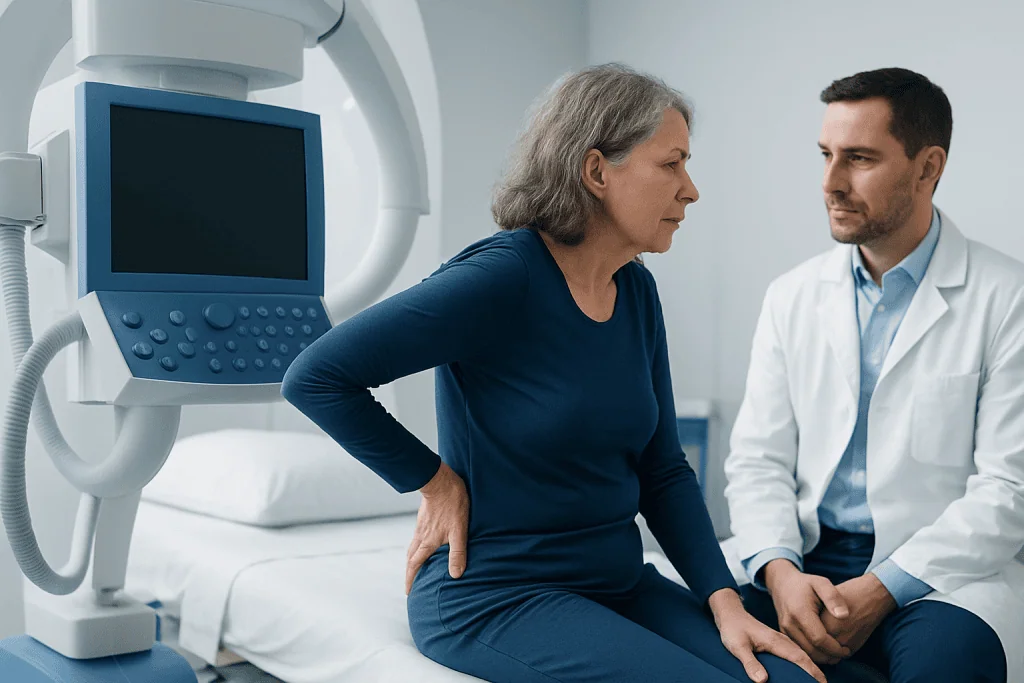
The symptoms of adult scoliosis vary widely. Some people mainly notice back pain or muscle fatigue after standing or walking. Others see visible changes such as one shoulder appearing higher than the other, a rib prominence, an uneven waistline, or a shift of the body to one side.
As the condition progresses, the spine may become less balanced. This can lead to stiffness, difficulty standing upright for long periods, reduced walking tolerance, and a feeling that the body is leaning forward or sideways. Some adults also report a gradual loss of height over the years.
When scoliosis narrows the spaces around the nerves, symptoms may extend beyond the back. These can include leg pain, numbness, tingling, or weakness. In more advanced cases, symptoms may resemble those seen with sciatica or spinal stenosis, especially if nerve roots are irritated or compressed.
- Back pain or aching
- Muscle fatigue after activity
- Uneven shoulders, hips, or waist
- Stiffness and reduced flexibility
- Loss of balance or posture changes
- Leg pain, numbness, or weakness when nerves are affected
Causes, types, and risk factors
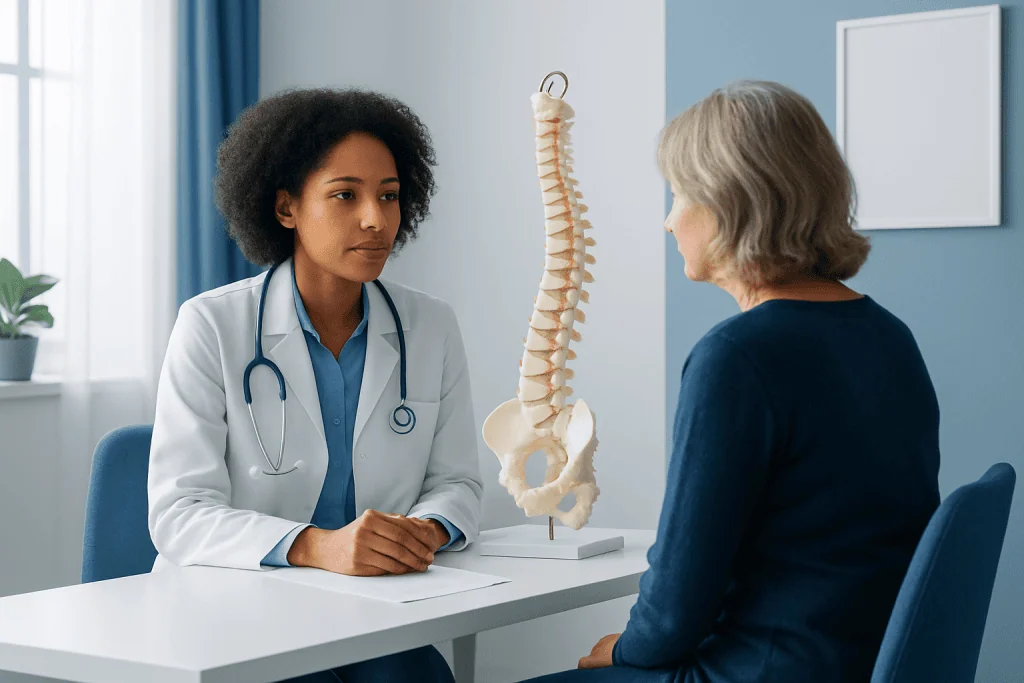
Adult scoliosis can arise for different reasons. One common type is adult idiopathic scoliosis, which begins during adolescence but remains mild and unnoticed until later years, or slowly worsens with aging. Another common type is degenerative scoliosis, which develops in adulthood as spinal discs lose height and facet joints develop arthritis.
Several factors can increase the likelihood of progression or symptoms. Age-related wear and tear, osteoporosis, previous spinal surgery, a family history of scoliosis, and poor overall spinal alignment can all play a role. Weak core muscles and reduced physical conditioning may not cause scoliosis directly, but they can make symptoms more noticeable.
In some people, adult scoliosis occurs alongside other spine conditions such as herniated disc disease or degenerative disc changes. These overlapping problems can contribute to pain and nerve-related symptoms, which is why a full spine assessment is often needed rather than focusing only on the curve itself.
How adult scoliosis progresses
Progression means that the spinal curve increases, the body’s alignment worsens, or symptoms become more limiting over time. Not every curve progresses quickly, and in many adults the main issue is not the size of the curve alone but the impact on comfort, function, and balance.
Degenerative scoliosis may progress as discs collapse, joints stiffen, and spinal alignment shifts. This can create a cycle in which asymmetric loading of the spine leads to further wear. When the spine leans forward or sideways, muscles must work harder to keep the body upright, which can increase fatigue and pain.
Doctors monitor progression with symptoms, physical examination, and imaging over time. Warning signs include worsening pain, increasing difficulty walking or standing, new nerve symptoms, visible posture changes, and a decline in daily activities. These changes do not automatically mean surgery is needed, but they do suggest the spine should be reassessed.
Diagnosis and evaluation
Diagnosis starts with a medical history and physical examination. The doctor asks about pain, walking tolerance, numbness, weakness, past spine problems, and how symptoms affect daily life. The exam may include posture assessment, spinal range of motion, balance testing, and a neurologic examination of strength, sensation, and reflexes.
Standing spine X-rays are the main imaging test for scoliosis. They help measure the curve, assess balance, and show how the spine aligns from the front and side. Because adult scoliosis often involves more than one part of the spine, full-length standing images are especially helpful.
If nerve compression is suspected, an MRI may be recommended to examine discs, spinal stenosis, or pressure on the spinal cord and nerve roots. In selected cases, CT scans or bone density tests are also used. A careful evaluation helps distinguish pain coming from the curve itself from pain related to arthritis, a disc problem, or spinal stenosis.
Treatment options for adult scoliosis
Treatment depends on the person’s symptoms, curve pattern, spinal balance, age, bone quality, and overall health. For many adults, care begins with non-surgical treatment. This may include physical therapy to improve posture, flexibility, and core strength; activity modification; weight management when appropriate; and medicines to help manage pain. Some patients also benefit from targeted injections when inflammation or nerve irritation is present.
Bracing does not usually correct the curve in adults, but in selected cases it may provide short-term support or symptom relief. A structured rehabilitation program can also help improve endurance and confidence in movement. When osteoporosis is present, addressing bone health is important because bone strength affects both progression risk and future treatment planning.
Surgery may be considered when pain remains severe despite appropriate non-surgical care, the curve is clearly progressing, posture and balance worsen, or nerve compression causes significant leg pain, weakness, or loss of function. Surgical planning is individualized and may involve decompression, spinal stabilization, and spinal fusion surgery. In some cases, surgeons may also discuss scoliosis surgery specifically to correct alignment and improve stability.
Because adult scoliosis can be complex, treatment decisions often involve orthopedic spine surgeons, neurosurgeons, physiatrists, pain specialists, and rehabilitation teams. In carefully selected patients, procedures such as spine surgery aim to reduce pain, protect nerve function, and improve overall alignment rather than create a perfectly straight spine.
Prevention, self-care, and living well with adult scoliosis
There is no guaranteed way to prevent all adult scoliosis, especially when aging changes of the spine are involved. Still, healthy habits can support spinal function and may help limit symptoms. Regular low-impact exercise, core and back strengthening, flexibility work, and attention to posture can all be useful.
Daily self-care often focuses on pacing activities, avoiding long periods in one position, and using supportive movement strategies. Walking, swimming, and guided exercise programs are often well tolerated. People with osteoporosis risk should speak with a doctor about bone health, since fractures and bone loss can worsen spinal alignment.
Self-care should not replace medical assessment when symptoms change. New numbness, weakness, rapidly increasing pain, or a noticeable decline in function should be evaluated. Near the end of the treatment journey, some international patients choose multidisciplinary assessment at centers such as Acibadem International, where JCI-accredited hospitals evaluate and treat complex spine conditions.
When surgery is considered and when to see a doctor
Surgery is usually considered only after a full evaluation and a trial of non-surgical treatment when appropriate. The main reasons include persistent pain that meaningfully limits life, worsening spinal imbalance, documented curve progression, and nerve-related symptoms such as leg pain, weakness, or walking intolerance caused by compression.
Doctors also consider a person’s general health, bone density, other medical conditions, and personal goals. In older adults, the decision is especially individualized because the expected benefits of surgery must be balanced with recovery demands and surgical risk. A detailed discussion helps patients understand what surgery can and cannot realistically achieve.
A doctor should be consulted if there is ongoing back pain, visible posture change, reduced height, new trouble walking, or numbness and weakness in the legs. Urgent medical attention is needed for severe or rapidly worsening neurologic symptoms, or for sudden changes in bladder or bowel control, because these may suggest significant nerve compression.
Frequently asked questions
Can scoliosis start in adulthood?
Yes. Some adults have scoliosis that first appeared in adolescence, while others develop degenerative scoliosis later in life as discs and joints wear down. Both types can cause symptoms, but the pattern of pain and progression may differ.
Is adult scoliosis always painful?
No. Some adults have a spinal curve with very little pain or limitation. Others develop back pain, stiffness, muscle fatigue, or nerve-related symptoms depending on the shape of the curve and whether the nerves are affected.
Does adult scoliosis always get worse over time?
Not always. Some curves remain fairly stable for years, especially if they are mild. Progression is more likely when there are age-related spinal changes, imbalance, osteoporosis, or increasing symptoms, so regular follow-up can be helpful.
What tests are used to diagnose adult scoliosis?
Doctors usually begin with a physical examination and standing spine X-rays. MRI may be added if there is leg pain, numbness, weakness, or concern about nerve compression, and CT scans are sometimes used for more detailed planning.
Can exercise help adult scoliosis?
Exercise often helps manage symptoms, improve endurance, and support posture and core strength. It does not usually straighten the curve in adults, but it can be an important part of non-surgical treatment when guided by a qualified professional.
When is surgery considered for adult scoliosis?
Surgery is considered when pain remains significant despite conservative care, the curve progresses, spinal balance worsens, or nerves are compressed and causing weakness or severe leg symptoms. The decision is individualized and based on overall health, imaging findings, and daily function.
References
- Scoliosis Research Society
- American Academy of Orthopaedic Surgeons
- National Institute of Arthritis and Musculoskeletal and Skin Diseases
- National Health Service
- American Association of Neurological Surgeons
This article is for general information only and is not a substitute for professional medical advice. Please consult a qualified doctor about your individual situation.
Joint and spine care in Turkey — expert assessment & treatment
JCI-accredited · board-certified surgeons · reply within 24h
Add us as a Preferred Source to see more of our trusted health content across Google Search, AI Overviews and Discover.

More from the Health Library



Related Specialists
Prof. Dr. Kemal Özyurt
Dermatology
Assoc. Prof. Dr. Abdülhak Hamit Karayağız
General Surgery
Dr. Özgür Yaşar
Internal Medicine
Assoc. Prof. Dr. Şafak Yıldırım Dişli
Medical Oncology