Dental Crown vs Implant: How Dentists Choose the Right Option
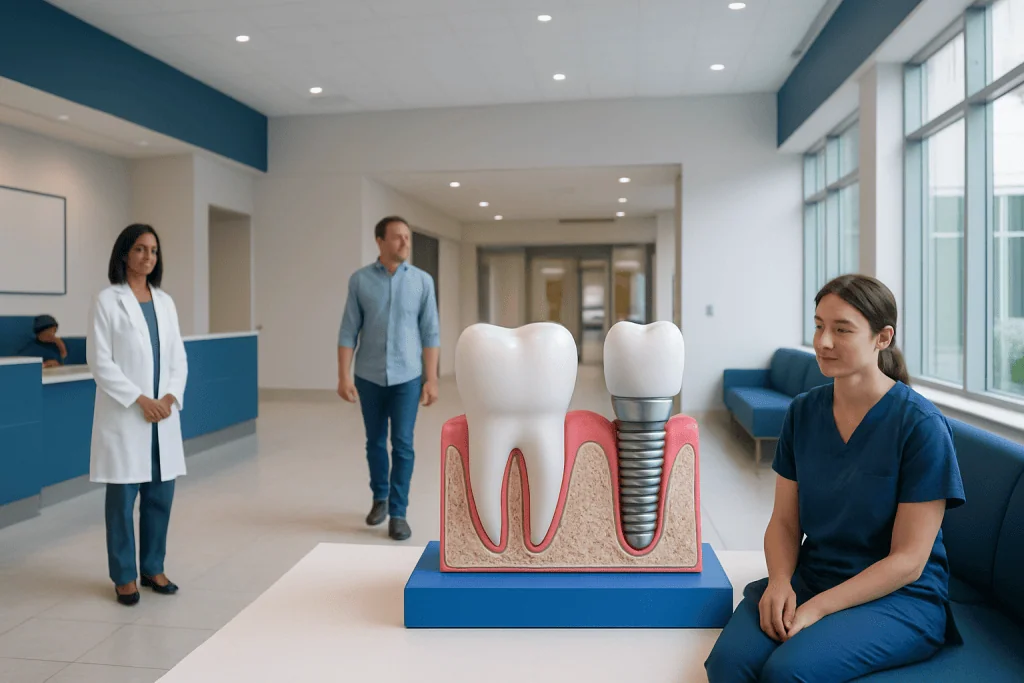
A crown is used to restore and protect a damaged tooth that still has a healthy root. An implant replaces a missing tooth root and supports a crown when a tooth cannot be saved.
Key Takeaways
- A crown is used to restore and protect a damaged tooth that still has a healthy root.
- An implant replaces a missing tooth root and supports a crown when a tooth cannot be saved.
- Bone quality, gum health, bite forces, overall health, and budget all affect the decision.
- Preserving a natural tooth is usually preferred when it can be treated predictably.
- Implants can help maintain jawbone in an area where a tooth has been lost.
- A dental evaluation with X-rays or 3D imaging helps determine the safest and most durable option.
Choosing between a dental crown and a dental implant depends on what remains of the tooth, the health of the gums and jawbone, and the patient’s long-term needs. Dentists use exams and imaging to recommend the option that best protects function, comfort, and appearance.
Overview: What Is the Difference Between a Crown and an Implant?
When comparing a dental crown vs implant, the main difference is what each treatment is designed to restore. A dental crown is a custom-made cap placed over a damaged or weakened tooth. It covers the visible part of the tooth above the gum line, helping restore strength, shape, appearance, and chewing function.
A dental implant is used when a tooth is missing or cannot be saved. It usually includes a small titanium or ceramic post placed in the jawbone to act like an artificial root. After healing, the implant supports a crown, creating a replacement tooth that looks and functions much like a natural one.
Dentists do not usually view these options as competitors in every case. Instead, they answer different clinical needs. If a natural tooth can be preserved with a filling, root canal treatment, or crown, that may be the best path. If the tooth is severely damaged, fractured below the gum line, or already lost, an implant may offer the more stable long-term solution.
When a Dental Crown Is Usually Recommended
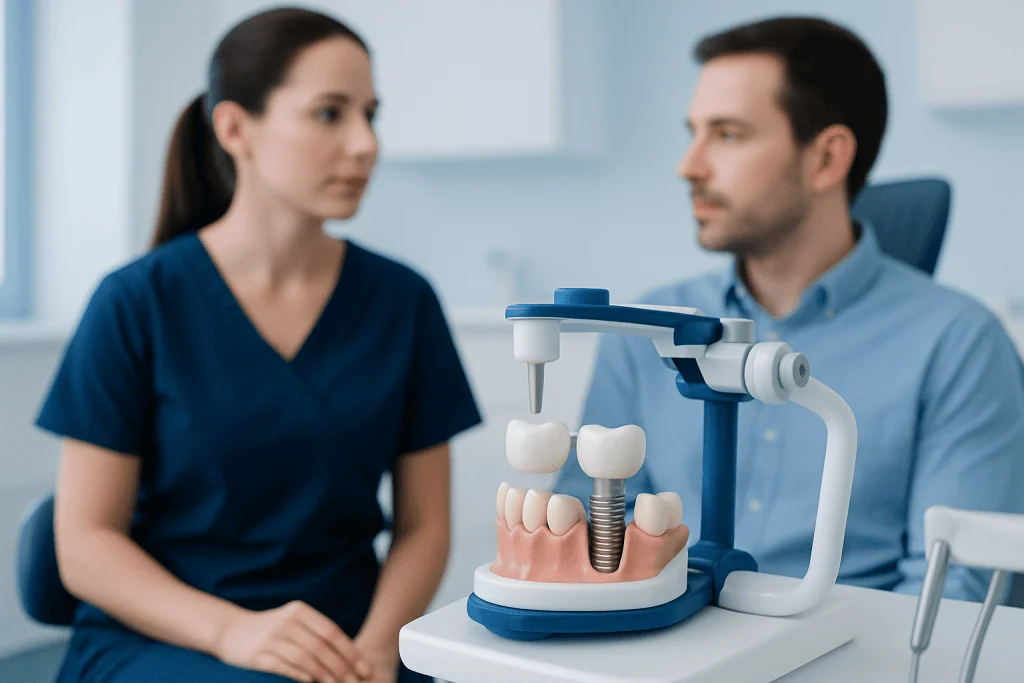
A crown is often recommended when a tooth is still present but has been weakened. This may happen after a large cavity, a cracked tooth, severe wear, or root canal treatment. In these situations, the remaining tooth structure may not be strong enough to handle daily biting forces without extra protection.
A crown can seal and support the tooth while improving its shape and appearance. It may also be used to cover a dental implant or to anchor part of a bridge. Materials vary and may include porcelain, ceramic, metal, or combinations of these, depending on where the tooth is located and how much strength is needed.
Dentists usually consider a crown when the tooth has enough healthy structure and a stable root. A crown may be a good choice if:
- the tooth is damaged but not beyond repair
- the root is healthy and well supported by bone
- gum health is reasonably good
- the patient wants to keep the natural tooth whenever possible
In many cases, conservative care through general dentistry can help preserve a tooth and avoid extraction. Keeping a natural tooth is often beneficial for bite control, chewing sensation, and overall oral function.
When a Dental Implant May Be the Better Option
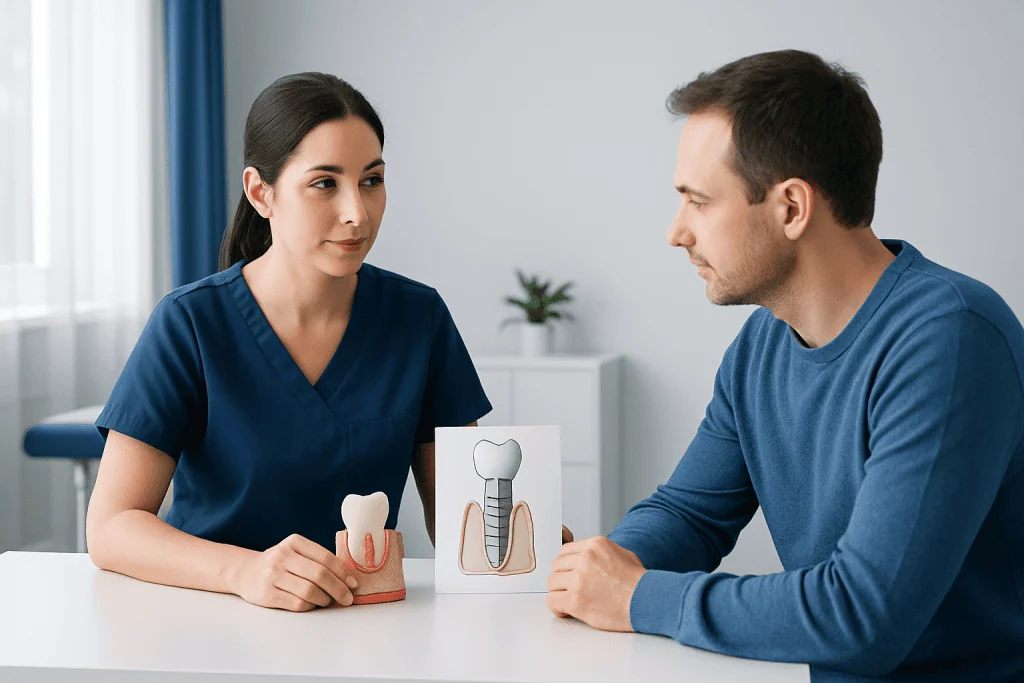
An implant is generally considered when a tooth is already missing or is unlikely to be saved. Common reasons include severe decay below the gum line, advanced infection, major trauma, vertical root fracture, or extensive bone loss around the tooth. If the tooth cannot support a crown predictably, replacing it may be safer than trying to restore it.
Unlike a crown placed on a natural tooth, an implant replaces the root as well as the visible tooth. This can help preserve the jawbone, because the bone continues to receive stimulation during chewing. Without a tooth root, the bone in that area may shrink over time.
Dental implants may be especially helpful when the teeth next to the gap are healthy and should not be prepared for a bridge. They can also provide strong support for single missing teeth or more complex reconstructions. Modern dental implant treatment is planned carefully with imaging, bite analysis, and an assessment of healing capacity.
Some patients need additional procedures before implant placement. For example, if bone volume is limited, dental bone grafts may be recommended to improve support. This is one reason why treatment planning can take more time for implants than for crowns.
How Dentists Decide: Key Factors They Evaluate
The choice between a crown and an implant starts with one central question: can the natural tooth be saved in a reliable way? Dentists examine the amount of remaining tooth structure, the condition of the root, gum support, bone levels, and whether there is active infection. They also look at how the upper and lower teeth meet, because heavy bite forces can affect long-term success.
Imaging is important. Standard dental X-rays may show decay, infection, and bone support, while 3D scans can give more detailed information about root fractures, jawbone thickness, and nearby anatomical structures. Digital planning tools used in digital dentistry can improve precision when complex treatment is needed.
Several patient-related factors also influence the recommendation:
- overall health, including diabetes control and healing ability
- smoking or tobacco use
- gum disease history
- night grinding or clenching, sometimes linked with bruxism
- age-related dental needs and oral maintenance ability
- treatment timeline, preferences, and budget
Dentists also think long term. A crown may be less invasive and faster if the tooth is restorable. An implant may offer better durability if the existing tooth has a poor prognosis. The goal is not simply to fix today’s problem, but to choose the option most likely to remain stable and comfortable over time.
Diagnosis and Planning Before Treatment
Careful diagnosis helps avoid unnecessary treatment and improves outcomes. The dentist usually begins with a clinical exam, asking about pain, swelling, chewing difficulty, sensitivity, previous root canal treatment, and any history of trauma. The tooth and surrounding gums are checked for cracks, mobility, deep pockets, and signs of infection.
If a tooth appears restorable, the dentist assesses whether enough healthy tooth remains above or below the gum line to support a crown. In some situations, additional procedures may be needed before a crown can work well. If the tooth is questionable, a second opinion from a restorative dentist, endodontist, periodontist, or oral surgeon may be helpful.
If an implant is being considered, the jawbone and gum tissue must be evaluated carefully. Dentists check whether the site has enough height and width of bone and whether the bite leaves enough room for a natural-looking replacement. Existing gum problems, such as gum recession, may need treatment first because healthy surrounding tissues are important for both appearance and stability.
For some international patients seeking a comprehensive dental plan, Acibadem International’s multidisciplinary specialists in JCI-accredited hospitals evaluate restorative, surgical, and gum-related factors together before recommending crown or implant treatment.
Pros, Limitations, Recovery, and Costs
Both treatments have advantages and limitations. A crown often requires less time than an implant and may allow a patient to keep their natural tooth. Recovery is usually shorter, especially when no surgery is needed. However, a crown depends on the health of the underlying tooth and root. If decay, fracture, or gum disease progresses, the crowned tooth may later fail.
An implant does not rely on a damaged natural root and can be an excellent replacement for a missing tooth. It can support chewing, help maintain bone, and avoid affecting neighboring teeth. On the other hand, implant treatment usually involves surgery, a healing period, and in some cases additional procedures such as grafting. It may also cost more upfront than a crown.
Recovery differs between the two. After crown preparation, some people have temporary sensitivity for a short time. After implant placement, mild swelling or soreness is common during early healing, and the final crown may be placed only after the implant has integrated with bone. The total treatment time may range from a few weeks to several months depending on the case.
Cost is part of decision-making, but dentists generally advise patients to think beyond the initial fee. The better question is which option is most likely to function well and remain maintainable over the years. A lower-cost treatment may not be the best value if the tooth has a limited long-term outlook.
Prevention and Self-care After a Crown or Implant
Good oral care is essential no matter which option is chosen. Crowns can still develop decay at the margin where the crown meets the natural tooth, especially if plaque control is poor. Implants cannot get cavities, but the gums and bone around them can become inflamed if cleaning is inadequate.
Daily brushing with fluoride toothpaste, cleaning between the teeth, and regular dental checkups help protect both crowns and implants. Dentists may recommend floss, interdental brushes, water flossers, or other tools based on the patient’s dental work and dexterity. Professional dental hygiene visits are important for monitoring gum health and detecting problems early.
Patients should also reduce habits that increase stress on teeth and restorations. These include chewing ice, opening packages with the teeth, and untreated nighttime grinding. A custom night guard may be advised for some people. Smoking cessation is strongly encouraged, because tobacco can impair healing and increase the risk of gum disease and implant complications.
Healthy gums are a foundation for long-term success. Bleeding during brushing or flossing should not be ignored, as it can point to inflammation that threatens both natural teeth and implants. Early care for gum problems is often simpler than waiting until damage becomes more advanced.
When to See a Dentist and Questions to Ask
A person should see a dentist if they have a broken tooth, a missing tooth, persistent tooth pain, swelling, repeated infections, difficulty chewing, or a loose crown. These symptoms do not always mean an implant is needed, but they do mean the tooth should be assessed promptly. Early treatment can sometimes save a tooth that would otherwise be lost.
It is reasonable for patients to ask why a crown or implant is being recommended and what alternatives exist. Useful questions include whether the tooth can realistically be saved, how long each option may last, what maintenance is required, and what the risks are if treatment is delayed. Patients may also ask whether additional imaging or specialist review is needed.
There is no single answer that fits everyone in the dental crown vs implant decision. The right choice depends on the tooth, the surrounding tissues, the person’s health, and their goals. A thoughtful, evidence-based treatment plan offers the best chance of a durable and comfortable result.
Frequently asked questions
Is it better to save a tooth with a crown or replace it with an implant?
If a tooth can be saved predictably, dentists often prefer preserving the natural tooth. A crown may be a good option when the root and surrounding support are healthy. An implant is usually considered when the tooth cannot be restored safely or has a poor long-term prognosis.
How long does a crown last compared with an implant?
Both crowns and implants can last many years with good care, but longevity varies from person to person. Oral hygiene, gum health, bite forces, smoking, and regular dental follow-up all affect durability. A dentist can estimate likely outcomes based on the condition of the tooth and surrounding bone.
Does getting an implant hurt more than getting a crown?
A crown usually involves less recovery because it is often placed on an existing tooth without surgery. Implant placement is a surgical procedure, so some swelling or soreness can occur during healing. However, many patients find discomfort manageable with routine post-procedure care and guidance from their dental team.
Can a crowned tooth still need to be extracted later?
Yes, this can happen if the tooth develops a root fracture, recurrent decay, severe infection, or progressive gum and bone loss. A crown protects and restores a tooth, but it does not make the tooth immune to future disease. Regular checkups help catch problems early.
Who may not be an ideal candidate for dental implants?
Some people need careful assessment before implant treatment, especially if they have uncontrolled medical conditions, active gum disease, poor bone support, or heavy tobacco use. These factors do not always rule out implants, but they may require treatment or risk reduction first. A full dental and medical review is important.
Why would a dentist recommend imaging before choosing a crown or implant?
Imaging helps show what cannot be seen during a routine visual exam. It can reveal infection, hidden decay, root fractures, bone loss, and the amount of bone available for an implant. This information helps the dentist choose the safest and most appropriate treatment.
References
- American Dental Association
- National Institute of Dental and Craniofacial Research
- European Federation of Periodontology
- American Association of Endodontists
- International Team for Implantology
This article is for general information only and is not a substitute for professional medical advice. Please consult a qualified doctor about your individual situation.
Explore treatments in Turkey — costs, top hospitals & a free quote
JCI-accredited · board-certified surgeons · reply within 24h
Add us as a Preferred Source to see more of our trusted health content across Google Search, AI Overviews and Discover.

Dental & Oral Health
Full-scope dental care from implants and aesthetics to oral and maxillofacial surgery.
151 specialists in this unitRelated Treatments
More from the Health Library



Related Specialists

Assoc. Prof. Dr. Ferit Bayram
Oral & Dental Health
Assoc. Prof. Dr. Yeliz Çavuşoğlu Yüce
Oral & Dental Health
Assoc. Prof. Dr. Mutlu Keskin
Oral & Dental Health
Prof. Dr. Ülkü Noyan
Oral & Dental Health