Cystoscopy in Men: What Happens Before, During, and After

Cystoscopy in men allows a urologist to see the inside of the urethra and bladder directly. It may be recommended for blood in the urine, recurrent urinary symptoms, blockage, stones, or follow-up of bladder conditions.
Key Takeaways
- Cystoscopy in men allows a urologist to see the inside of the urethra and bladder directly.
- It may be recommended for blood in the urine, recurrent urinary symptoms, blockage, stones, or follow-up of bladder conditions.
- The procedure can be done with local gel or anesthesia, depending on the reason for the test and the type of cystoscope used.
- Mild burning with urination, light bleeding, and urinary frequency for a short time afterward can be normal.
- Patients should seek medical advice promptly if they develop fever, severe pain, heavy bleeding, or inability to urinate.
Cystoscopy in men is a common urology procedure used to examine the urethra and bladder with a thin camera. Understanding what happens before, during, and after the test can help patients feel more prepared and reassured.
Overview of cystoscopy in men
Cystoscopy in men is a procedure that allows a urologist to look inside the urethra and bladder using a thin instrument called a cystoscope. The cystoscope has a light and camera, so the doctor can examine the lining of the urinary tract in real time. This helps identify problems that may not be clear from symptoms, urine tests, or imaging alone.
In men, the cystoscope passes through the penis and along the urethra before entering the bladder. Because the male urethra is longer than the female urethra, some men worry that the test will be very painful. In practice, many cystoscopies are brief and well tolerated, especially when numbing gel is used and the patient knows what to expect.
Cystoscopy may be performed in a clinic, day-procedure unit, or hospital. Some examinations use a flexible cystoscope, which is thinner and commonly used for diagnostic checks. Others use a rigid cystoscope, which may be preferred when the doctor needs to take a biopsy, remove a small growth, treat a narrowing, or perform another minor procedure at the same time.
Why a doctor may recommend it
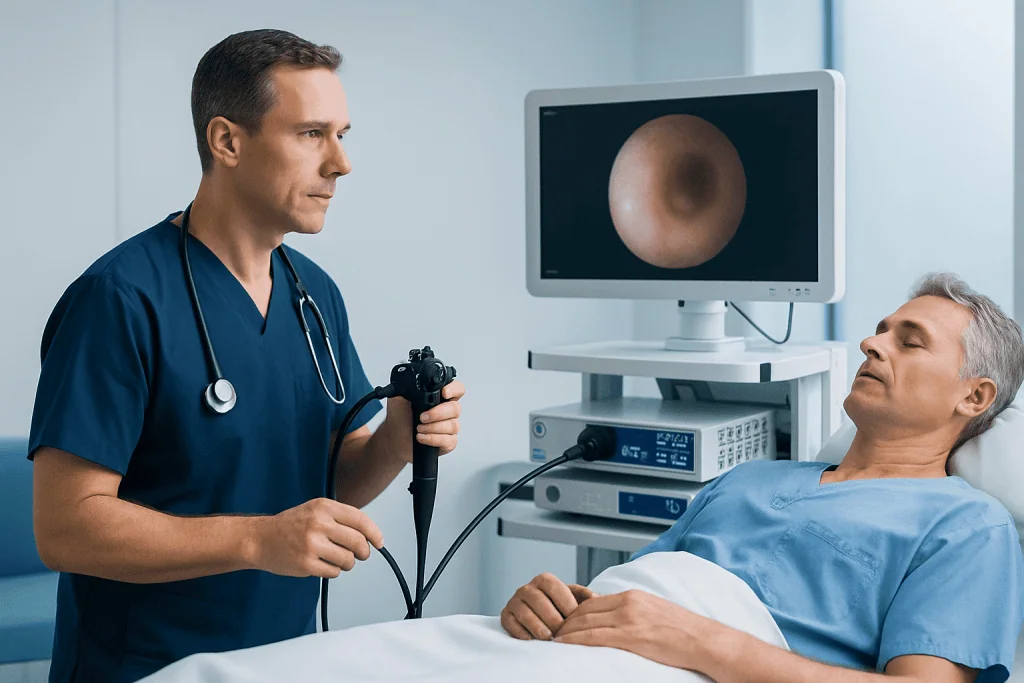
A doctor may recommend cystoscopy in men to investigate symptoms or to monitor a known urologic condition. It is often used when a man has blood in the urine, repeated urinary tract infections, painful urination, trouble starting the urine stream, weak flow, urgency, frequency, or a feeling that the bladder does not empty fully.
The procedure can also help evaluate structural problems such as urethral narrowing, bladder stones, enlarged prostate effects on urine flow, or changes in the bladder lining. In some cases, imaging tests such as CT or MRI for urology or renal ultrasonography are used alongside cystoscopy to provide a fuller picture.
Men with certain conditions may need cystoscopy as part of ongoing care. For example, it can be used in the assessment of neurogenic bladder or to investigate repeated or complicated urinary infections such as complicated UTI. It is also commonly used for bladder biopsies and follow-up after treatment of bladder tumors.
What happens before the procedure

Before cystoscopy, the urologist reviews the patient’s symptoms, medical history, allergies, previous urinary problems, and current medicines. It is especially important to mention blood thinners, bleeding disorders, implanted heart devices, or a history of urinary retention. The doctor may order a urine test beforehand to check for infection, because active infection may need treatment before the procedure goes ahead.
Preparation depends on where and how the cystoscopy will be performed. For a simple office-based flexible cystoscopy, many men can eat and drink normally unless told otherwise. If sedation or general anesthesia is planned, the care team usually gives fasting instructions and explains what medications should or should not be taken on the day.
Patients are usually asked to arrive with enough time for consent and pre-procedure checks. The doctor explains the reason for the test, what it may show, and whether a biopsy or small treatment might be performed if needed. Asking practical questions in advance can reduce anxiety, such as how long the visit will take, whether someone should accompany the patient, and when normal activities can be resumed.
Some men feel embarrassed about the intimate nature of the examination. This is a very common concern. Urology teams perform this procedure routinely and aim to maintain privacy, dignity, and clear communication throughout the process.
What happens during cystoscopy
During the procedure, the patient lies on an examination table, and the genital area is cleaned carefully. In many outpatient cystoscopies, a numbing gel is placed into the urethra to reduce discomfort. If a rigid cystoscope or a more involved procedure is planned, regional or general anesthesia may be used instead.
The urologist gently inserts the cystoscope through the urethral opening and advances it into the bladder. Sterile fluid is usually passed through the scope to fill the bladder slightly. This expands the bladder walls so the doctor can see more clearly. As this happens, the patient may feel pressure, a strong urge to urinate, or mild stinging, but these sensations are usually brief.
The doctor examines the urethra, the prostate area around the urethra, and the inside of the bladder. If something unusual is seen, small instruments can sometimes be passed through the cystoscope to take tissue samples, remove a tiny lesion, or treat a problem. The examination itself is often short, although procedures with biopsy or treatment can take longer.
Good communication during the test can make it easier. Many men find it helpful to take slow breaths, relax the pelvic muscles, and tell the doctor if discomfort increases. The team can pause, explain what is happening, and help the patient stay as comfortable as possible.
What to expect after cystoscopy
After cystoscopy, many men can go home the same day. If only local anesthetic gel was used, recovery is usually quick. If sedation or general anesthesia was used, the patient may need monitoring for a period afterward and should not drive until the care team says it is safe.
Mild burning when passing urine, needing to urinate more often, or seeing a small amount of blood in the urine for a short time can be normal after the procedure. Drinking water, unless a doctor has advised fluid restriction, may help reduce irritation and keep urine flowing. Warmth over the lower abdomen or a warm bath may also ease mild discomfort if the doctor agrees.
If a biopsy was taken or a treatment was performed, the doctor may give extra instructions about activity, hydration, medicines, and follow-up. Some patients receive antibiotics in specific situations, but this is not necessary for everyone. The team explains when results are expected and whether further tests or treatment are needed.
Near the end of the care pathway, some patients benefit from evaluation by multidisciplinary specialists, especially if symptoms are ongoing or linked to a broader urinary condition. Acibadem International’s multidisciplinary teams in JCI-accredited hospitals diagnose and treat urologic conditions for international patients and can advise on appropriate next steps when cystoscopy findings need further assessment.
Risks, side effects, and warning signs
Cystoscopy is generally considered a safe procedure, but like any medical test, it has possible risks. The most common temporary side effects are mild pain or burning with urination, a small amount of bleeding, and urinary frequency for a day or two. These usually improve without difficulty.
Less commonly, cystoscopy can lead to urinary tract infection, stronger bleeding, injury to the urethra or bladder, or difficulty passing urine afterward. Risk can vary depending on the reason for the procedure, whether a biopsy or treatment was done, the patient’s anatomy, and any underlying urinary problems.
Patients should contact a doctor promptly if they develop fever, chills, worsening pain, heavy or persistent bleeding, foul-smelling urine, inability to urinate, or symptoms that are not improving. These signs do not always mean there is a serious problem, but they should be assessed quickly to prevent complications.
Men who have had repeated urinary infections, urinary obstruction, or certain chronic bladder problems may need additional testing after cystoscopy. Depending on the findings, the doctor may recommend urine studies, imaging, medication, or another procedure to treat the cause rather than only the symptoms.
Recovery, self-care, and questions to ask
Most men return to normal daily activities soon after a simple cystoscopy, although it is sensible to take it easy for the rest of the day if discomfort is present. If anesthesia was used, rest is often recommended until the effects fully wear off. Sexual activity, vigorous exercise, and heavy lifting may need to be avoided briefly if the doctor advises it, especially after biopsy or treatment.
Helpful self-care measures include drinking fluids as advised, taking prescribed medicines correctly, and watching for signs of infection or retention. It can also be useful to keep note of urine color, pain level, and any change in urinary symptoms. This information helps the urologist interpret recovery and plan follow-up care.
Patients may want to ask: why is cystoscopy needed, will it be flexible or rigid, will biopsy be performed if something is found, what level of anesthesia is planned, and when can work or travel resume? Understanding these details often makes the experience feel more manageable.
Although cystoscopy provides direct visual information, it is only one part of urologic assessment. The results are interpreted together with symptoms, examination findings, urine tests, blood tests, and imaging so that treatment can be tailored to the individual man.
Frequently asked questions
Is cystoscopy painful for men?
Many men describe cystoscopy as uncomfortable rather than painful, especially when a flexible scope and numbing gel are used. A brief stinging sensation, pressure, or urge to urinate is common during the test. If a more complex procedure is planned, anesthesia can help keep the patient comfortable.
How long does cystoscopy in men take?
A simple diagnostic cystoscopy is often completed within a short time, although the full appointment takes longer because of preparation and recovery. If a biopsy or treatment is done at the same time, the procedure may take more time. The care team can explain the expected schedule beforehand.
Can a man drive home after cystoscopy?
If only local anesthetic gel is used, some men may be able to drive home, depending on how they feel and local advice. If sedation or general anesthesia is used, the patient usually needs someone else to drive. It is best to confirm this with the clinic before the appointment.
Is blood in the urine normal after cystoscopy?
A small amount of blood in the urine can be normal for a short time after cystoscopy, especially if tissue samples were taken. The urine should gradually clear. Heavy bleeding, clots, or bleeding that continues should be reported to a doctor.
How should men prepare for a cystoscopy?
Preparation depends on whether the procedure is done in the office or under anesthesia. A doctor may ask for a urine sample first and may give instructions about eating, drinking, or medications. Patients should also mention blood thinners, allergies, and any history of urinary infections or retention.
When should someone call a doctor after cystoscopy?
A doctor should be contacted if there is fever, chills, severe pain, inability to urinate, or worsening symptoms after the procedure. Persistent heavy bleeding or signs of infection also need medical review. Early advice can help prevent complications and provide reassurance.
References
- European Association of Urology
- American Urological Association
- National Institute for Health and Care Excellence
- National Institute of Diabetes and Digestive and Kidney Diseases
- Mayo Clinic
This article is for general information only and is not a substitute for professional medical advice. Please consult a qualified doctor about your individual situation.
Cystoscopy in Turkey — costs, top hospitals & a free quote
JCI-accredited · board-certified surgeons · reply within 24h
Add us as a Preferred Source to see more of our trusted health content across Google Search, AI Overviews and Discover.

Urology
Treatment of the urinary system and male reproductive health, including robotic and laser procedures.
60 specialists in this unit