

Gamma Knife for Brain Tumors: Who It Helps and What Recovery Is Like
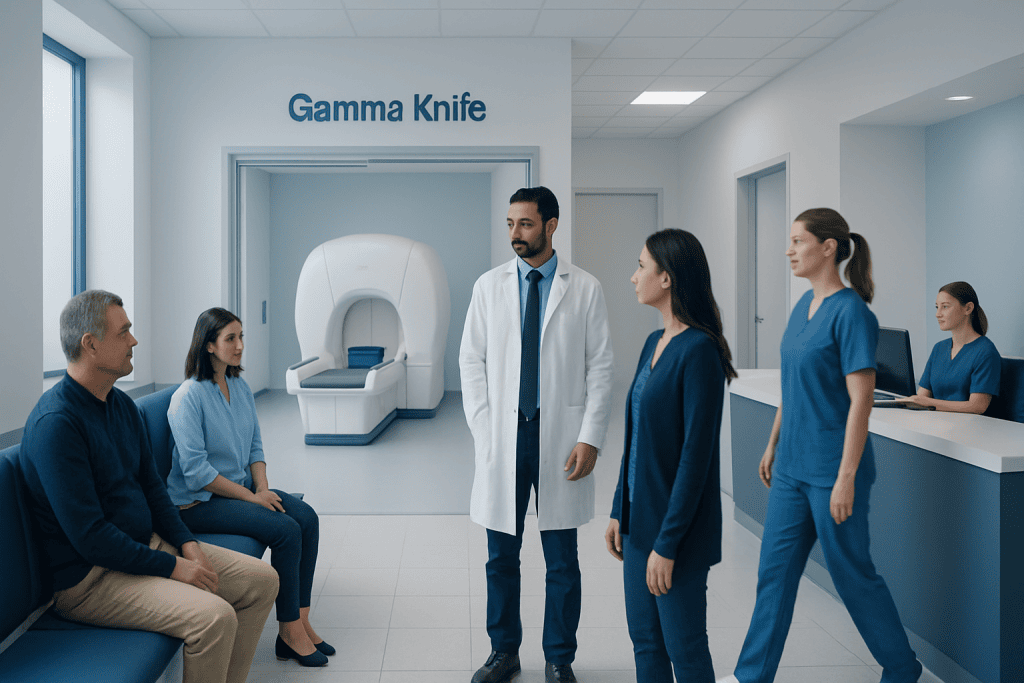
Gamma Knife is a type of stereotactic radiosurgery that treats brain tumors with focused radiation, not a scalpel. It may be used for certain benign or malignant brain tumors, especially when precise targeting is important.
Key Takeaways
- Gamma Knife is a type of stereotactic radiosurgery that treats brain tumors with focused radiation, not a scalpel.
- It may be used for certain benign or malignant brain tumors, especially when precise targeting is important.
- Recovery is usually shorter than with open brain surgery, but follow-up imaging is essential.
- Results are often gradual, with tumors shrinking or stopping growth over weeks to months.
- Treatment planning is individualized and may involve neurosurgeons, radiation oncologists, and neuroradiologists.
Gamma Knife for brain tumors is a highly focused form of radiation treatment used for selected tumors in the brain. It does not involve a surgical incision and often allows a faster return to daily life than open surgery, although suitability depends on the tumor type, size, and location.
Overview: What Gamma Knife for Brain Tumors Is
Gamma Knife for brain tumors is a specialized form of stereotactic radiosurgery. Despite the name, it is not a knife and does not involve cutting. Instead, it uses many carefully aimed beams of radiation that meet at a precise point in the brain, delivering a high dose to the tumor while limiting exposure to nearby healthy tissue.
This approach is most often used for small to medium-sized brain tumors or for tumors in hard-to-reach areas where traditional surgery may carry greater risk. It can be used as a primary treatment, after surgery to treat remaining tumor tissue, or when a tumor returns. Doctors may also consider it for patients who are not good candidates for open surgery because of age, other medical conditions, or the tumor’s location.
Gamma Knife is different from standard external beam radiation because it is much more focused and is usually given in a single session, although treatment plans vary. For many patients, it offers effective local control with minimal disruption to daily life. It is one of several options within modern oncology care and is chosen only after careful evaluation by a specialist team.
Who It Helps: Which Brain Tumors May Be Treated
Gamma Knife may help patients with a range of brain tumors, but it is not appropriate for every case. It is commonly used for certain benign tumors such as meningiomas, vestibular schwannomas, and some pituitary tumors. It is also frequently used for brain metastases, which are cancers that have spread to the brain from another part of the body.
For cancerous tumors, Gamma Knife may be considered when a lesion is limited in size and number, especially if precise treatment is needed to protect important brain structures. It may be used alone or alongside other treatments such as surgery, chemotherapy, immunotherapy, or whole-brain radiation, depending on the overall cancer plan. In some cases, it is used to treat residual disease after brain tumor surgery.
Suitability depends on several factors:
- The type of tumor and whether it is benign, malignant, or metastatic
- The size, number, and exact location of the tumor
- Whether the tumor is causing pressure or swelling
- The patient’s symptoms and overall health
- Whether previous surgery or radiation has already been used
Some tumors are better treated with open surgery, especially if they are very large or causing urgent pressure inside the skull. Others may respond better to conventional radiation or systemic cancer treatment. A multidisciplinary team helps decide whether Gamma Knife offers the safest and most effective balance of tumor control and quality of life.
How the Procedure Works

Before treatment, the care team creates a detailed plan using brain imaging such as MRI and sometimes CT. These scans show the tumor’s shape, size, and relationship to surrounding structures. The treatment plan is then designed so that radiation is shaped closely to the target, helping spare healthy brain tissue as much as possible.
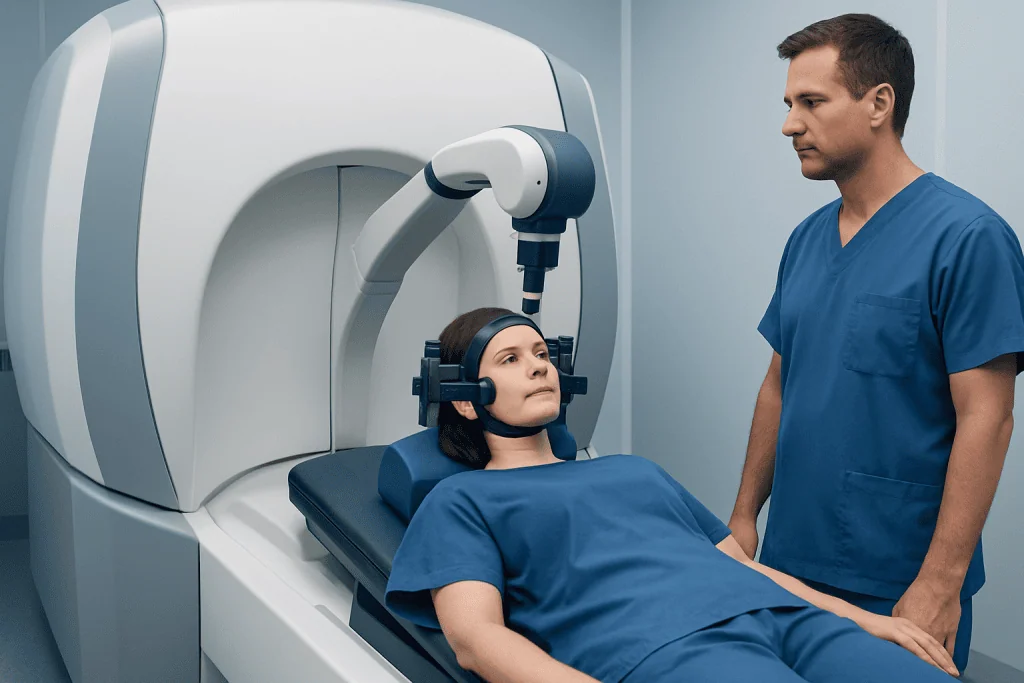
On the day of treatment, the patient may have a lightweight head frame or a custom mask used to keep the head still. The choice depends on the Gamma Knife system and the treatment plan. Local anesthetic may be used if a frame is placed, and some patients also receive medication to help them feel more comfortable.
During the session, the patient lies on the treatment couch while the machine delivers radiation. The treatment itself is painless. Most people are awake and can communicate with staff throughout. Depending on the plan, the session may last from less than an hour to several hours, including preparation time.
After the procedure, many patients go home the same day. Because there is no incision, there are no surgical stitches or wound care needs. Even so, the treatment continues to work after the session ends, and the effect on the tumor usually develops gradually over time rather than immediately.
Benefits and Limits of Gamma Knife
The main benefit of Gamma Knife is precision. By concentrating radiation at a defined target, doctors can often treat tumors near critical brain areas with less impact on surrounding tissue than would be expected with broader radiation techniques. This can be especially valuable when a tumor lies close to structures that control vision, balance, speech, movement, or hormone function.
Another important advantage is that it is non-invasive. There is no surgical incision, no general anesthesia in many cases, and usually no long hospital stay. For selected patients, this means faster recovery, less interruption to work or family life, and fewer immediate risks than open surgery.
However, Gamma Knife also has limits. It does not remove a tumor from the brain, so it may not be the best option if tissue is needed for diagnosis or if a large mass is causing significant pressure that needs urgent relief. Its effects are often delayed, and some tumors may not respond enough with radiation alone.
Like any treatment, it also carries possible side effects and risks. These may include fatigue, headache, temporary swelling in the brain, nausea, or changes related to the treated area. Rarely, delayed radiation effects can occur months later. For these reasons, patients benefit from expert evaluation and continued follow-up after treatment, including imaging and symptom review for conditions such as brain tumor.
Recovery: What to Expect After Gamma Knife
Recovery after Gamma Knife is usually shorter and simpler than recovery after open brain surgery. Many people return home the same day or after a short observation period. Mild tiredness, headache, scalp tenderness, or nausea may occur for a day or two, especially if a head frame was used, but these symptoms are often manageable and temporary.
Most patients can resume light daily activities within a day or two, depending on how they feel and their doctor’s advice. Driving, work, exercise, and travel should be discussed individually, especially if the patient has had seizures, weakness, dizziness, or medication changes. If steroids or anti-seizure medicines are prescribed, they should be taken exactly as directed and not stopped without medical guidance.
It is important to understand that recovery and treatment response are not the same thing. A patient may feel physically recovered quickly, but the tumor’s response to radiation usually takes time. Follow-up MRI scans are typically scheduled over the following weeks or months to see whether the tumor has stopped growing, shrunk, or changed in appearance.
Some patients notice temporary swelling-related symptoms after treatment, which can happen as the tumor reacts to radiation. Doctors monitor this closely and may recommend medicines such as corticosteroids if needed. Patients should contact their care team promptly if they develop worsening headache, confusion, new weakness, seizures, fever, or other concerning symptoms.
Risks, Side Effects, and Follow-Up Care
Gamma Knife is generally well tolerated, but no treatment is completely risk-free. The side effects depend on the tumor’s size and location, the radiation dose, and whether the patient has had previous surgery or radiation. Short-term effects may include fatigue, mild headache, nausea, temporary scalp discomfort, or swelling around the treated area.
In some cases, swelling in the brain can cause symptoms such as weakness, speech difficulty, imbalance, or seizures. These effects may appear days to months after treatment and can often be managed medically, but they need prompt attention. Rare late effects may include radiation injury to nearby tissue, hormonal changes if the pituitary region is treated, or changes in hearing or vision when tumors are close to those pathways.
Regular follow-up is a key part of care. MRI imaging helps the team distinguish normal post-treatment changes from true tumor progression. This can be complex, because a treated tumor may look temporarily larger due to inflammation before it stabilizes or shrinks. Ongoing assessment by specialists in neurosurgery and radiation oncology helps interpret these findings accurately.
Patients should keep all scheduled appointments and report any new or worsening neurological symptoms. Continued follow-up is particularly important when treatment is part of a broader plan for metastatic cancer or when the tumor has a known risk of recurrence.
How Doctors Decide Between Gamma Knife and Other Treatments
Choosing the right treatment for a brain tumor is highly individualized. Doctors consider whether the main goal is diagnosis, symptom relief, long-term tumor control, or treatment of recurrent disease. In some situations, open surgery may be preferred because it can remove a large mass quickly and provide tissue for laboratory testing. In others, Gamma Knife may offer excellent local treatment with less recovery time.
Other options may include standard fractionated radiation therapy, chemotherapy, targeted therapy, immunotherapy, or a combination of approaches. For metastatic tumors, the treatment plan often depends not only on the brain lesions but also on how the primary cancer is behaving elsewhere in the body. The number of lesions, prior treatments, and expected side effects all influence the decision.
A multidisciplinary tumor board may review imaging, pathology, symptoms, and overall health before making a recommendation. This team-based process helps patients understand why one option may be safer or more effective than another. The goal is not simply to treat the scan, but to support function, symptom control, and quality of life.
Near the end of the care pathway, some patients may seek treatment in specialized international centers. Acibadem International’s multidisciplinary specialists in JCI-accredited hospitals evaluate and treat brain tumors, including selected cases suitable for Gamma Knife and other advanced therapies.
When to See a Doctor
A person should see a doctor if they have symptoms that might suggest a brain tumor or another neurological condition, such as persistent headaches, seizures, new weakness, balance problems, speech changes, vision changes, or unexplained nausea and vomiting. These symptoms do not always mean a tumor is present, but they should not be ignored, especially if they are new, worsening, or affecting daily life.
For someone already diagnosed with a brain tumor, a specialist review is appropriate when exploring treatment options such as Gamma Knife. Questions to discuss include whether the tumor is a good size and location for radiosurgery, what results are realistic, what side effects are possible, and how often follow-up imaging will be needed.
After treatment, urgent medical advice is needed for severe headache, confusion, drowsiness, seizure, fever, new numbness or weakness, difficulty speaking, or worsening balance. Prompt assessment helps doctors determine whether these symptoms relate to swelling, medication effects, or another cause that needs treatment.
Early evaluation often gives patients more choices and can make treatment planning more effective. Anyone considering Gamma Knife should speak with a qualified neurosurgeon, radiation oncologist, or neuro-oncology team for advice tailored to their specific diagnosis.
Frequently asked questions
Is Gamma Knife actual surgery?
No. Gamma Knife is called stereotactic radiosurgery, but it does not involve a surgical incision or a blade. It uses highly focused radiation to treat a precise area in the brain.
How long does it take to recover from Gamma Knife for brain tumors?
Many patients recover quickly and go home the same day. Mild fatigue, headache, or scalp discomfort may last a short time, but most people resume light activities within a day or two if their doctor agrees.
Does Gamma Knife remove the brain tumor?
Gamma Knife does not physically remove a tumor. Instead, it damages tumor cells so the tumor may stop growing or gradually shrink over time. The response is usually seen on follow-up scans over weeks to months.
Who is a good candidate for Gamma Knife?
Good candidates often include people with small or medium-sized brain tumors in locations where precise treatment is important. The final decision depends on the tumor type, size, number, location, previous treatments, symptoms, and overall health.
What are the side effects of Gamma Knife treatment?
Common short-term side effects may include fatigue, mild headache, nausea, or temporary discomfort where a head frame was placed. Some patients can also develop swelling in the treated area, which is why follow-up and prompt reporting of new symptoms are important.
Is Gamma Knife better than open brain surgery?
Not always. Gamma Knife can be an excellent option for selected tumors, especially when a non-invasive approach is preferred, but open surgery may be better for large tumors, urgent pressure relief, or when tissue is needed for diagnosis. The best choice depends on the individual case.
References
- World Health Organization
- National Cancer Institute
- American Cancer Society
- National Comprehensive Cancer Network
- American Association of Neurological Surgeons
This article is for general information only and is not a substitute for professional medical advice. Please consult a qualified doctor about your individual situation.
Brain Tumors in Turkey — costs, top hospitals & a free quote
JCI-accredited · board-certified surgeons · reply within 24h
Add us as a Preferred Source to see more of our trusted health content across Google Search, AI Overviews and Discover.

Medical Oncology Department
Medical treatment of cancer with chemotherapy, immunotherapy and targeted therapies under a multidisciplinary tumor board.
60 specialists in this unitMore from the Health Library



Related Specialists

Yaren Kasal
Physical Medicine & Rehabilitation
Assoc. Prof. Dr. Emir Çapkınoğlu
General Surgery
Prof. Dr. Zehra Serpil Ustalar
Anesthesiology
Assoc. Prof. Dr. Emine Acar Akkaya
Nuclear Medicine