

Parkinson Disease Treatment: When Deep Brain Stimulation May Be Considered

Deep brain stimulation does not cure Parkinson disease, but it can help control selected symptoms in carefully chosen patients. It is most often considered when medication benefits wear off, symptoms fluctuate, or side effects such as dyskinesia become difficult to manage.
Key Takeaways
- Deep brain stimulation does not cure Parkinson disease, but it can help control selected symptoms in carefully chosen patients.
- It is most often considered when medication benefits wear off, symptoms fluctuate, or side effects such as dyskinesia become difficult to manage.
- A thorough evaluation by a movement disorders team is essential to decide whether DBS is likely to help.
- DBS can improve quality of life for many patients, but it still requires ongoing medication adjustments and follow-up care.
- Not every symptom responds equally well; tremor, stiffness, slowness, and motor fluctuations often improve more than balance, speech, or dementia-related problems.
Parkinson disease treatment usually begins with medicines, exercise, and supportive therapies. Deep brain stimulation may be considered for some people when symptoms remain disruptive despite well-managed medication.
Overview
Parkinson disease is a progressive neurological condition that affects movement. It commonly causes tremor, stiffness, slowness, and changes in walking or balance. Many people also experience non-motor symptoms such as sleep problems, constipation, mood changes, or a reduced sense of smell. Treatment is individualized and often changes over time as symptoms evolve.
For most patients, Parkinson disease treatment starts with medication, especially medicines that help replace or mimic dopamine. These treatments can work very well, particularly in the earlier stages. Regular exercise, physical therapy, speech therapy, and occupational therapy also play an important role in maintaining function and independence.
Over the years, however, some people begin to notice that medications do not last as long as they used to. They may cycle between periods when symptoms are well controlled and periods when stiffness, slowness, or tremor return. Others develop involuntary movements called dyskinesias. When these issues begin to interfere with daily life despite careful medication management, deep brain stimulation, often called DBS, may be considered as part of Parkinson disease treatment.
What Deep Brain Stimulation Is
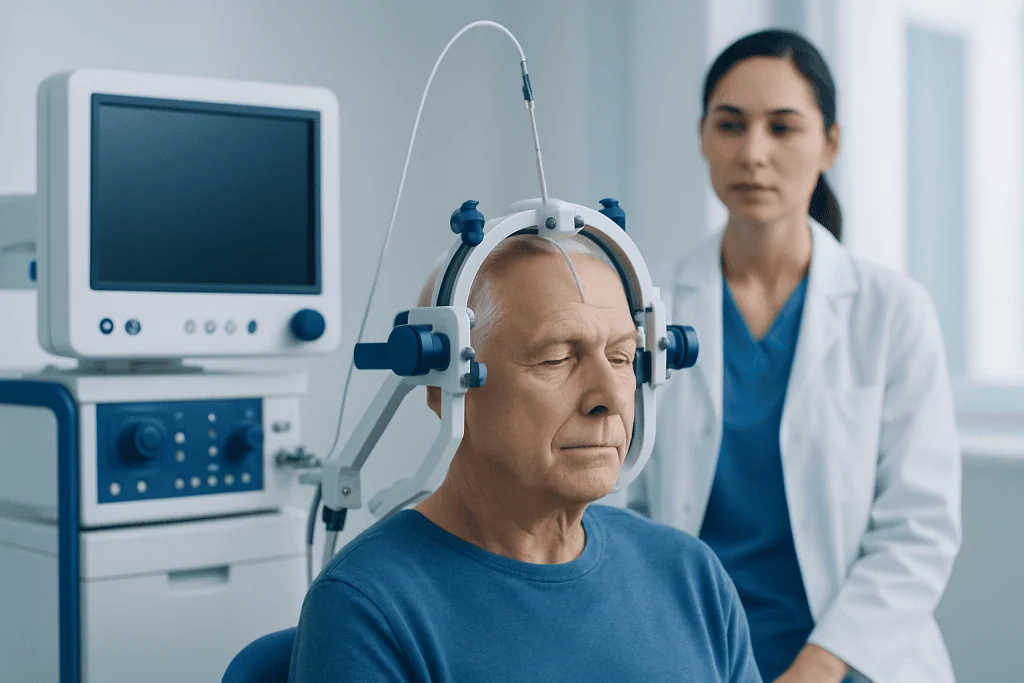
Deep brain stimulation is a surgical treatment used for certain movement disorders. In Parkinson disease, thin electrodes are placed in specific areas of the brain involved in movement control. These electrodes are connected to a small implanted pulse generator, similar to a pacemaker, usually placed under the skin in the chest. The device sends controlled electrical signals that help regulate abnormal brain activity.
DBS does not destroy brain tissue and is considered adjustable and reversible compared with some older surgical approaches. After surgery, the system is programmed over time to find settings that best reduce symptoms while limiting side effects. Medication often continues, but doses may be reduced in some patients depending on their response.
It is important to understand that DBS is not a cure for Parkinson disease and does not stop disease progression. Instead, it is used to improve symptom control, especially for movement-related problems that respond to levodopa but have become difficult to manage consistently with medication alone. Patients who want to learn more about deep brain stimulation usually benefit from speaking with a movement disorders neurologist and a functional neurosurgery team.
When DBS May Be Considered

DBS is usually considered when a person has had Parkinson disease for some time and still responds to levodopa, but symptom control has become unpredictable or burdensome. A classic example is the development of motor fluctuations, when a medication dose works well for a while and then wears off before the next dose is due. During these “off” periods, walking, hand use, speech, or daily tasks may become much harder.
Another common reason to consider DBS is troublesome dyskinesia, which refers to involuntary twisting, fidgeting, or writhing movements often related to long-term dopaminergic treatment. Some patients also have tremor that remains difficult to control even when medications have been optimized. In these situations, surgery may offer more stable symptom relief than medication changes alone.
Doctors generally look for signs that symptoms improve with levodopa, because this suggests that DBS is more likely to help. Symptoms that often respond best include:
- Tremor that is medication-resistant or inconsistent
- Slowness of movement
- Muscle stiffness
- Motor fluctuations and wearing-off periods
- Dyskinesias related to medication
DBS is less likely to improve symptoms such as severe balance problems that do not respond to medication, major speech difficulties, advanced dementia, or significant uncontrolled psychiatric illness. For this reason, timing matters. Surgery is often most helpful before disability becomes dominated by symptoms that DBS does not treat well.
Who Is a Good Candidate for DBS
There is no single checklist that fits every patient, but several factors guide the decision. In general, good candidates have a clear diagnosis of Parkinson disease, continue to benefit from levodopa, and have symptoms that significantly affect quality of life despite expert medication adjustments. They should also be well enough medically to undergo surgery and to participate in the follow-up programming process.
Cognitive and emotional health are also important. Patients usually undergo testing to assess memory, attention, mood, and judgment, because DBS can be more complicated in people with significant cognitive decline or active psychiatric conditions. Mild anxiety or depression does not automatically exclude surgery, but these issues should be recognized and managed carefully.
The evaluation is usually multidisciplinary and may include a movement disorders neurologist, neurosurgeon, neuropsychologist, psychiatrist, rehabilitation specialists, and imaging experts. This team approach helps confirm the diagnosis, set realistic expectations, and choose the most appropriate target in the brain if surgery moves forward. In a broader discussion of Parkinson disease, patients often find it helpful to review how symptoms, medication response, and daily function have changed over time.
How the Evaluation and Diagnosis Process Works
Before DBS is recommended, the care team first makes sure that the diagnosis is accurate. Several neurological conditions can resemble Parkinson disease, and some of these do not respond well to DBS. A detailed history, neurological examination, and review of medication response are central parts of the assessment.
Many centers perform a formal “on-off” evaluation. In this test, symptoms are measured when medication is temporarily withheld and then measured again after the patient takes levodopa. Strong improvement with medication supports the idea that DBS may also be effective for those same motor symptoms. Brain imaging may be used to rule out other conditions and to plan the procedure safely.
Neuropsychological testing, speech and swallowing assessment, and general medical clearance may also be part of the workup. The goal is not simply to decide whether surgery is technically possible, but whether it is likely to offer meaningful benefit for that person’s goals, lifestyle, and symptom pattern. In selected cases, advanced imaging or other neurological rehabilitation planning may also be discussed to support recovery and long-term function.
Treatment Options Before and After DBS
DBS is only one part of Parkinson disease treatment. Before surgery is considered, doctors usually optimize medication timing, dose schedules, and supportive therapies. Regular physical activity, gait training, speech therapy, and occupational therapy can significantly improve daily function and may help patients maintain benefit from medical treatment longer.
If DBS is chosen, treatment continues after the operation rather than ending with surgery. The device must be programmed gradually over several visits, and medication adjustments are often made at the same time. It can take weeks or months to find the settings that provide the best balance between symptom control and side effects.
Benefits vary from person to person, but many patients experience less “off” time, fewer dyskinesias, and smoother daily functioning. However, some symptoms may persist, and non-motor features of Parkinson disease still need active care. Rehabilitation can remain very important after surgery, especially for posture, walking confidence, and speech. In centers that offer stereotactic and functional neurosurgery, DBS is typically integrated with long-term neurological follow-up rather than treated as a stand-alone procedure.
Potential risks should also be discussed openly. As with any brain procedure, there can be risks related to bleeding, infection, device complications, or changes in mood or thinking. Most decisions are made by weighing these risks against the impact of current symptoms on daily life. A careful conversation with the treating team helps patients and families make an informed choice.
Self-care, Expectations, and When to See a Doctor
Good self-care remains essential whether or not DBS is part of the treatment plan. Patients are usually encouraged to stay physically active, keep medication schedules consistent, prioritize sleep, and address constipation, nutrition, and mood changes early. Family support and regular follow-up can make a meaningful difference in long-term symptom management.
Expectations should be realistic and specific. DBS may improve movement symptoms and reduce fluctuations, but it does not restore the brain to a pre-Parkinson state. It usually helps the symptoms that improve with levodopa, and it does not reliably treat every aspect of the condition. Understanding this helps patients focus on goals such as easier walking during “on” time, fewer involuntary movements, or more predictable daily function.
A doctor should be consulted when Parkinson symptoms are interfering more with work, sleep, walking, eating, dressing, or social life despite treatment. Medical review is also important if medications are wearing off early, dyskinesias are becoming troublesome, tremor is difficult to control, or memory and mood changes are emerging. A movement disorders specialist can help determine whether DBS or another strategy is the next appropriate step.
For international patients seeking specialist evaluation, Acibadem International’s multidisciplinary teams and JCI-accredited hospitals provide diagnosis and treatment for movement disorders, including advanced surgical options when appropriate.
Frequently asked questions
Does deep brain stimulation cure Parkinson disease?
No. Deep brain stimulation does not cure Parkinson disease and it does not stop the condition from progressing. Its main purpose is to improve control of certain movement symptoms, especially when medicines are no longer providing steady relief.
At what stage of Parkinson disease is DBS usually considered?
DBS is often considered after medications have worked for some time but begin to cause wearing-off periods, unpredictable symptom control, or troublesome dyskinesias. It is usually most useful when the person still shows a clear benefit from levodopa.
Which Parkinson symptoms respond best to DBS?
DBS often helps tremor, stiffness, slowness, motor fluctuations, and medication-related dyskinesias. Symptoms such as severe balance problems, speech difficulties, or cognitive decline may improve less or not at all, especially if they do not respond to medication.
Will a person still need Parkinson medication after DBS?
Many people still need medication after DBS, although the dose or schedule may change. The goal is usually better symptom control with fewer fluctuations, not necessarily stopping all medicine.
How is someone evaluated for DBS?
The evaluation usually includes a detailed neurological exam, review of medication response, brain imaging, and often neuropsychological testing. A multidisciplinary team then decides whether the expected benefits outweigh the risks for that individual.
Is DBS safe for older adults?
Age alone does not automatically rule out DBS. Overall health, cognitive function, symptom pattern, and surgical risk are usually more important than a specific age number, so each case is assessed individually.
When should someone ask about DBS?
A patient should ask about DBS when Parkinson symptoms are increasingly affecting daily life despite careful medication management. This is especially true if there is more “off” time, difficult-to-control tremor, or involuntary movements from treatment.
References
- National Institute of Neurological Disorders and Stroke
- Parkinson's Foundation
- International Parkinson and Movement Disorder Society
- National Health Service
- Mayo Clinic
This article is for general information only and is not a substitute for professional medical advice. Please consult a qualified doctor about your individual situation.
Parkinson Disease in Turkey — costs, top hospitals & a free quote
JCI-accredited · board-certified surgeons · reply within 24h
Add us as a Preferred Source to see more of our trusted health content across Google Search, AI Overviews and Discover.

Neurology
Diagnosis and treatment of disorders of the brain, spinal cord, nerves and muscles.
51 specialists in this unitMore from the Health Library



Related Specialists

Dr. Ünsal Arif Turan
Anesthesiology
Prof. Dr. Murat Şamlı
Urology
Damla Tuncay
Physical Medicine & Rehabilitation
Dr. Sedef Başgönül
Infectious Diseases & Clinical Microbiology