Vestibular Neuritis: Sudden Vertigo, Balance Problems, and Recovery

Vestibular neuritis usually causes sudden vertigo, nausea, and unsteadiness without hearing loss. It is often linked to inflammation of the vestibular nerve, sometimes after a viral illness.
Key Takeaways
- Vestibular neuritis usually causes sudden vertigo, nausea, and unsteadiness without hearing loss.
- It is often linked to inflammation of the vestibular nerve, sometimes after a viral illness.
- Diagnosis is based on symptoms, examination, and tests to rule out other causes such as stroke or other inner ear conditions.
- Treatment focuses on short-term symptom relief, hydration, rest, and vestibular rehabilitation exercises.
- Many people recover well, but mild imbalance or motion sensitivity can last for weeks or months.
- Urgent medical assessment is important if vertigo comes with weakness, double vision, severe headache, or new hearing loss.
Vestibular neuritis is a disorder of the inner ear balance nerve that typically causes sudden, intense vertigo, nausea, and difficulty walking. Although symptoms can be frightening, many people improve gradually with time, supportive treatment, and balance rehabilitation.
Overview
Vestibular neuritis is an inner ear balance disorder caused by inflammation affecting the vestibular nerve. This nerve carries balance information from the inner ear to the brain. When it becomes inflamed, the brain receives mismatched signals, which can lead to sudden spinning vertigo, nausea, vomiting, and trouble standing or walking.
The condition usually starts abruptly, often over a few hours, and symptoms may be severe at the beginning. Many people describe waking up with intense dizziness or feeling that the room is spinning. Even small head movements can make symptoms worse in the first phase.
Vestibular neuritis is different from some other causes of vertigo because hearing is usually not affected. If vertigo occurs together with hearing loss, ringing in the ear, or a feeling of ear fullness, doctors may also consider other inner ear conditions such as Meniere disease or sudden hearing-related disorders.
Although the symptoms can feel alarming, vestibular neuritis is often self-limited. The most intense vertigo usually eases over several days, while balance and motion sensitivity may take longer to recover. In many cases, targeted follow-up through neuro-otology care or vestibular assessment can help guide diagnosis and recovery.
Symptoms
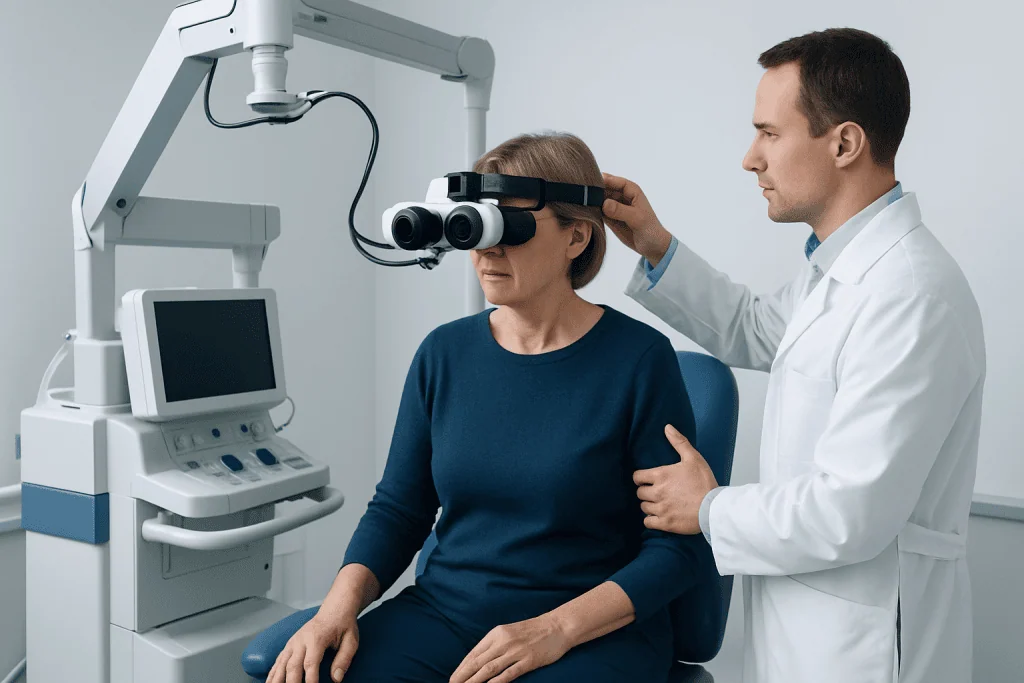
The hallmark symptom of vestibular neuritis is sudden, continuous vertigo. Unlike brief dizziness that lasts a few seconds, this vertigo may continue for hours or days, especially at the start. The spinning sensation often worsens when the person turns the head, changes position, or tries to walk.
Common symptoms include nausea, vomiting, poor balance, and difficulty focusing the eyes during movement. Some people notice that they veer to one side when walking or need support to stand. Fatigue is also common because severe vertigo can be physically exhausting.
Typical symptoms of vestibular neuritis may include:
- Sudden spinning sensation
- Unsteadiness or loss of balance
- Nausea and vomiting
- Worsening dizziness with head movement
- Blurred vision during motion
- Difficulty walking
Hearing loss is usually absent in vestibular neuritis. If a person develops new hearing loss, ear fullness, or ear ringing, another diagnosis may need to be considered, including sudden sensorineural hearing loss or other causes of vertigo evaluation and treatment.
Causes and Risk Factors

Vestibular neuritis is thought to result from inflammation of the vestibular nerve. In many cases, doctors suspect a viral trigger, especially when symptoms occur after a recent cold or upper respiratory infection. However, the exact cause is not always confirmed in an individual patient.
Researchers believe that viral reactivation or a post-viral inflammatory response may disrupt nerve function. This helps explain why some people report having a cold, flu-like illness, or another viral syndrome before the sudden onset of vertigo. A recent common cold does not mean vestibular neuritis will definitely occur, but it may be part of the history.
Risk factors are not as clearly defined as in some other conditions, but certain patterns are recognized. Adults are more commonly affected than children, and episodes can happen even in otherwise healthy people. It is not generally considered a contagious balance disorder, even if a virus may have contributed to the inflammation.
Vestibular neuritis is sometimes confused with labyrinthitis. The difference is important: labyrinthitis typically involves both balance symptoms and hearing symptoms because more of the inner ear is affected. Other causes of dizziness, including benign paroxysmal positional vertigo, migraine-related vertigo, medication side effects, and neurologic conditions, may also need to be excluded.
Diagnosis
Diagnosis begins with a detailed history and physical examination. Doctors ask when the dizziness started, whether it is continuous or triggered, whether hearing has changed, and whether there are any neurologic symptoms such as weakness, numbness, trouble speaking, or double vision. These details help separate vestibular neuritis from other causes of acute dizziness.
The examination often includes assessment of eye movements, balance, walking, and a bedside neurologic evaluation. In vestibular neuritis, certain patterns of involuntary eye movement, called nystagmus, can support the diagnosis. Doctors may also perform head impulse and positional tests to distinguish this condition from other vestibular disorders.
Sometimes additional testing is needed, especially if symptoms are atypical or if stroke is a concern. Hearing tests may be used when hearing symptoms are present. Imaging such as MRI may be recommended if the diagnosis is uncertain, if symptoms do not fit a typical pattern, or if there are warning signs suggesting a central nervous system cause.
Specialist evaluation can be helpful for ongoing or complex cases. Assessment in neurotology may include more advanced vestibular testing to identify which part of the balance system is affected and to plan rehabilitation.
Treatment Options
Treatment is mainly supportive and aims to reduce the severe symptoms of the first few days while the inner ear and brain begin to compensate. Doctors may recommend short-term medicines for nausea, vomiting, and vertigo. These medicines can be useful early on, but they are usually not continued longer than necessary because prolonged use may slow natural balance recovery.
Rest, hydration, and a calm environment often help during the acute phase. Many people need to limit sudden head movements at first, but complete bed rest for too long is usually discouraged. Gentle return to activity, as tolerated, supports the brain’s ability to adapt.
Vestibular rehabilitation is an important part of recovery for people whose balance problems continue after the first days. These exercises are designed to retrain the brain to process balance information more effectively. A clinician or therapist may suggest eye-head coordination exercises, walking practice, and progressive balance tasks tailored to the person’s symptoms.
If symptoms are prolonged, unusual, or associated with hearing changes, specialists may reassess the diagnosis and look for overlapping conditions. Near the end of the care pathway, patients may benefit from multidisciplinary review; Acibadem International’s JCI-accredited hospitals and specialists care for international patients with vestibular and balance disorders.
Recovery, Prevention, and Self-care
Recovery from vestibular neuritis varies from person to person. The most severe spinning sensation often improves within a few days, but a lingering sense of imbalance, motion sensitivity, or “floating” dizziness may last for weeks or sometimes months. This does not always mean the condition is worsening; it may reflect the normal compensation process.
Self-care during recovery includes staying hydrated, returning gradually to regular movement, and avoiding sudden unsafe activities until balance improves. It may help to move carefully in clutter-free spaces, use handrails on stairs, and avoid driving if dizziness or blurred vision persists. Alcohol and sleep deprivation can worsen symptoms for some people.
There is no guaranteed way to prevent vestibular neuritis, because it is not fully predictable. General health measures such as rest during viral illnesses, hand hygiene, and routine medical care may support overall wellness, but they do not fully prevent vestibular nerve inflammation.
People who continue to feel off-balance should not hesitate to seek follow-up care. Persistent symptoms may improve further with rehabilitation, and reassessment can make sure a different vestibular condition, migraine, or neurologic problem has not been missed.
When to See a Doctor
Sudden severe vertigo should be medically assessed, especially the first time it happens. While vestibular neuritis is a common peripheral cause of acute vertigo, some dangerous conditions can cause similar symptoms. A doctor can help decide whether the pattern fits an inner ear problem or whether urgent testing is needed.
Immediate medical attention is especially important if dizziness occurs with signs that may suggest stroke or another neurologic emergency. These warning signs include trouble speaking, weakness on one side, facial drooping, numbness, severe headache, fainting, chest pain, new double vision, or inability to walk even with support.
A prompt review is also needed if vertigo is accompanied by new hearing loss, persistent ear ringing, fever, severe ear pain, or repeated vomiting leading to dehydration. These features may point toward a different diagnosis than vestibular neuritis and may require other treatments.
If symptoms do not steadily improve, or if a person remains significantly limited in daily life, follow-up with an ENT, neuro-otology, or neurology specialist is appropriate. Careful reassessment can clarify the diagnosis and guide further management.
Frequently asked questions
Is vestibular neuritis the same as labyrinthitis?
No. Vestibular neuritis mainly affects the balance nerve and usually does not cause hearing loss. Labyrinthitis tends to involve both balance symptoms and hearing-related symptoms because more of the inner ear is inflamed.
How long does vestibular neuritis last?
The worst vertigo often improves within a few days. However, imbalance, motion sensitivity, or mild dizziness can continue for weeks or sometimes months while the brain adjusts.
Can vestibular neuritis cause hearing loss?
Vestibular neuritis usually does not cause hearing loss. If hearing changes happen along with vertigo, a doctor may look for another diagnosis such as labyrinthitis, Meniere disease, or sudden sensorineural hearing loss.
What helps recovery from vestibular neuritis?
Short-term treatment may include medicines for nausea and vertigo, along with hydration and rest during the acute stage. As symptoms begin to settle, gradual movement and vestibular rehabilitation exercises often help recovery more than prolonged inactivity.
Can vestibular neuritis come back?
It can recur, but repeated attacks are not the usual pattern. If vertigo keeps returning, a doctor may consider other causes such as positional vertigo, migraine-related vertigo, or Meniere disease.
When is vertigo an emergency?
Vertigo needs urgent assessment if it starts suddenly and is accompanied by weakness, numbness, severe headache, trouble speaking, double vision, chest pain, or fainting. Emergency care is also important if vomiting is severe or the person cannot safely stand or walk.
References
- National Institute on Deafness and Other Communication Disorders
- American Academy of Otolaryngology–Head and Neck Surgery
- National Health Service
- Merck Manual Consumer Version
- Cleveland Clinic
This article is for general information only and is not a substitute for professional medical advice. Please consult a qualified doctor about your individual situation.
Vertigo in Turkey — costs, top hospitals & a free quote
JCI-accredited · board-certified surgeons · reply within 24h
Add us as a Preferred Source to see more of our trusted health content across Google Search, AI Overviews and Discover.

Related Treatments
Related Conditions
More from the Health Library



Related Specialists

Prof. Dr. Nazim Korkut
Otorhinolaryngology
Prof. Dr. Hasan M. Tanyeri
Ear Nose & Throat
Prof. Dr. Güler Berkiten
Otorhinolaryngology
Assoc. Prof. Dr. A. Erdem Kilavuz
Ear Nose & Throat