Getting a Second Opinion on Brain or Spine Scans: When Expert Review Can Help
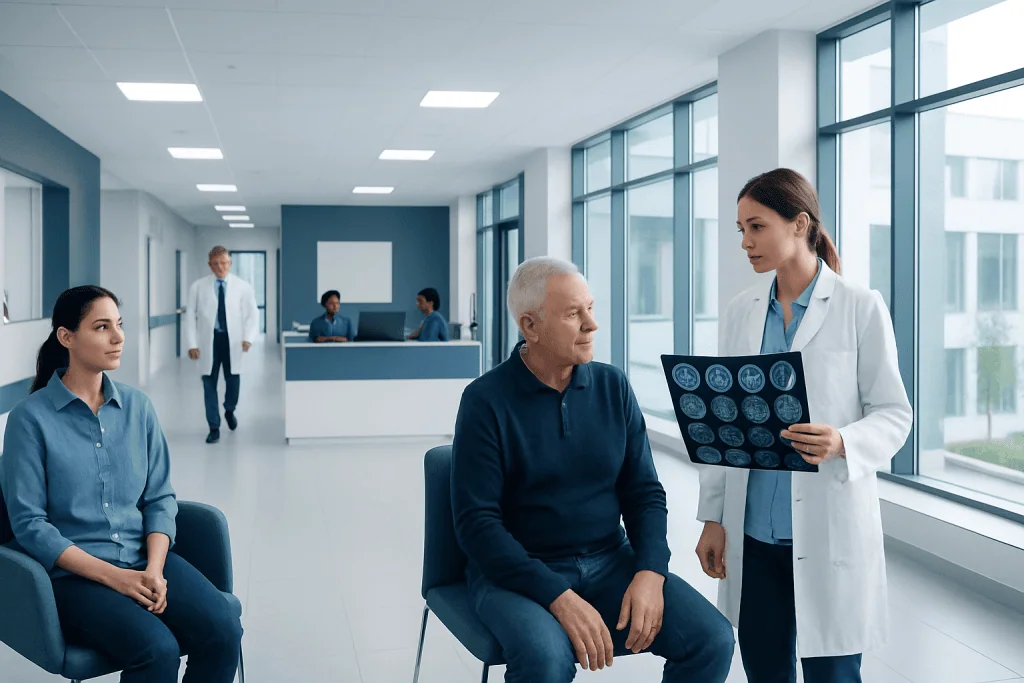
A second opinion can help confirm, clarify, or refine brain and spine scan findings. It is often useful before surgery, when symptoms and scan results do not match, or when findings are unclear.
Key Takeaways
- A second opinion can help confirm, clarify, or refine brain and spine scan findings.
- It is often useful before surgery, when symptoms and scan results do not match, or when findings are unclear.
- A neuroradiologist focuses on imaging of the brain, spine, spinal cord, and nerves.
- Getting another review does not mean the first report was wrong; it is a common part of careful care.
- Patients should bring the images themselves, not only the written report, for the most complete review.
A second opinion on brain or spine scans can be helpful when imaging findings are complex, symptoms do not match the report, or treatment decisions are significant. Expert neuroradiology review may confirm the original interpretation, refine it, or identify details that affect diagnosis and next steps.
Overview
A second opinion on brain or spine scans means asking another qualified specialist to review imaging such as MRI, CT, or sometimes PET studies of the brain, skull, spine, spinal cord, or nearby nerves. In many cases, the second review is performed by a neuroradiologist, a doctor with advanced expertise in interpreting imaging of the nervous system. This can be especially valuable when findings are subtle, symptoms are complex, or major treatment decisions depend on the scan.
A second opinion does not automatically mean there is a mistake in the first report. Many imaging findings sit in a gray zone, where interpretation depends on experience, clinical history, comparison with prior scans, and the quality of the images. Another review may simply confirm the first reading and provide reassurance. In other cases, it may add important detail, suggest a different explanation, or recommend follow-up imaging.
Brain and spine scans are often central to decisions about headaches, seizures, stroke, back pain, numbness, weakness, tumors, infection, inflammation, trauma, and degenerative conditions. Because these issues can overlap on imaging, expert review can help the treating doctor place the scan findings in the right clinical context. The goal is not to create confusion, but to improve clarity so that care can move forward with confidence.
When an expert review can help
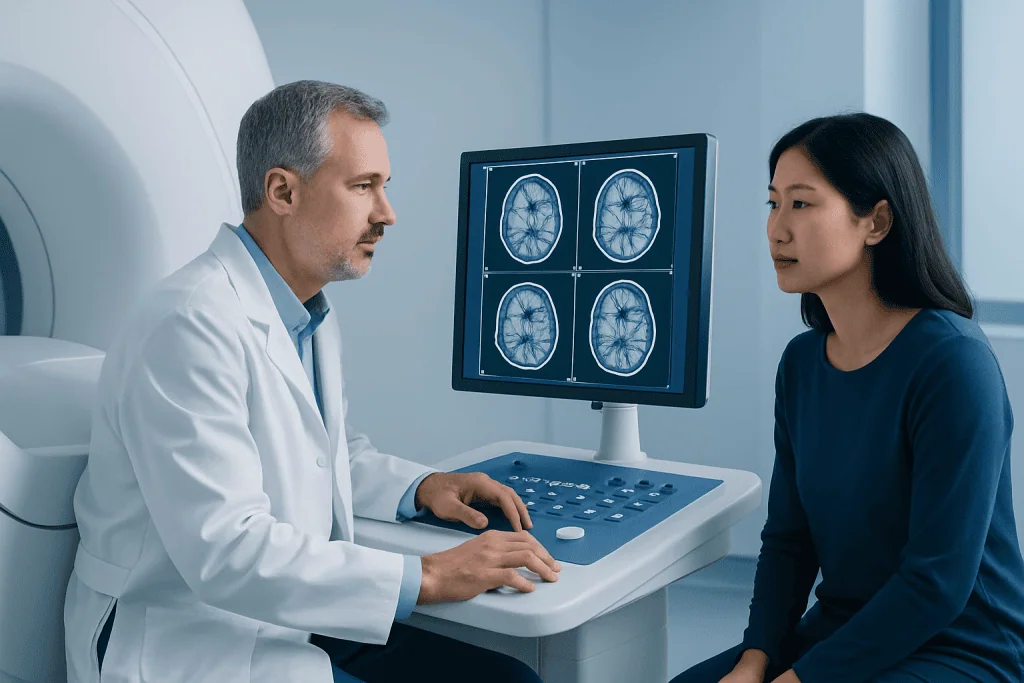
A second opinion is often most useful when a scan result will influence an important decision, such as whether surgery is needed, whether a lesion is likely benign or concerning, or whether symptoms may be caused by the finding seen on imaging. It can also help when the report uses terms such as “indeterminate,” “nonspecific,” or “recommend correlation,” which may leave patients unsure about what the result really means.
Common reasons to seek another review include persistent symptoms despite a normal or unclear scan, a surprising finding that does not fit the person’s symptoms, disagreement between doctors, or concern that a technical issue affected image quality. It may also be helpful when a scan suggests a condition such as a brain tumor or a spinal tumor, because treatment planning often depends on fine imaging details.
People may also ask for a second opinion before procedures such as brain tumor surgery or spine surgery, when understanding the exact location and nature of an abnormality matters greatly. In some situations, expert neuroradiology review can identify whether additional imaging sequences, contrast-enhanced studies, or comparison with older scans would be helpful. This may prevent unnecessary intervention or support timely treatment.
- Before a major treatment or surgery
- When the report is unclear or nonspecific
- When symptoms and scan findings do not match
- When there are rare, complex, or multiple abnormalities
- When prior scans need detailed comparison over time
What kinds of scans and findings are commonly reviewed
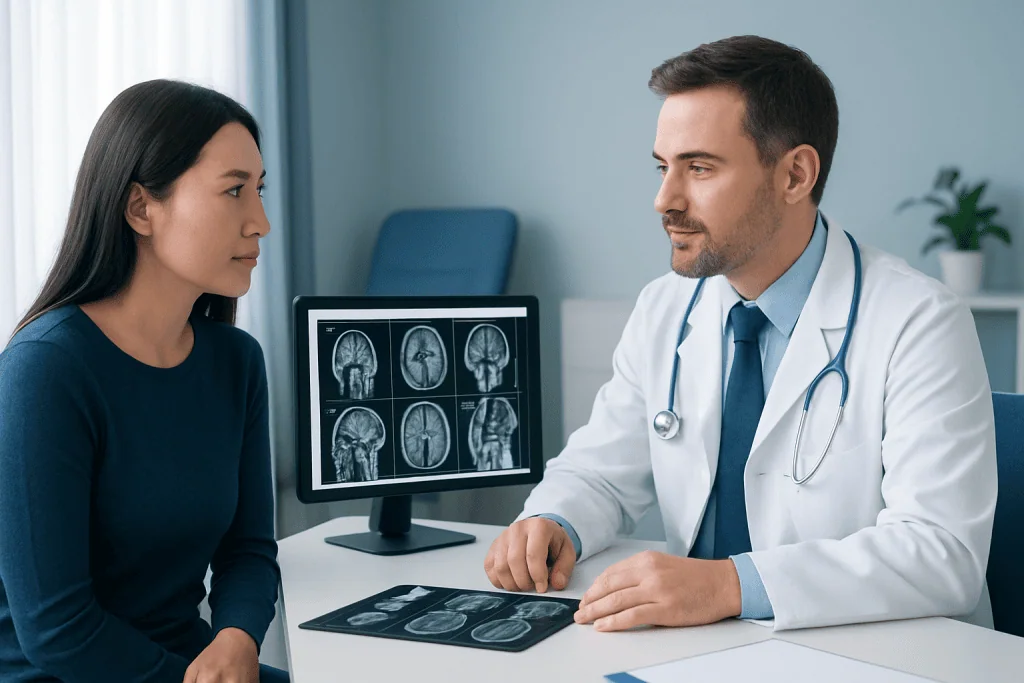
Second opinions are commonly requested for MRI scans of the brain or spine because MRI provides detailed information about soft tissues, the spinal cord, discs, nerves, blood vessels, and many brain structures. CT scans are also frequently reviewed, especially in emergency settings, after trauma, for bleeding, for bone detail, or when calcifications are relevant. In some cases, a specialist may also review angiographic imaging of brain or neck vessels.
Findings that often benefit from expert review include white matter changes, small vessel disease, possible demyelination, subtle strokes, aneurysms, spinal stenosis, disc herniation, nerve root compression, vertebral fractures, Chiari malformation, pituitary findings, and lesions that may represent cysts, inflammation, infection, tumor, or treatment-related change. Some abnormalities are common and age-related, while others need closer follow-up. Distinguishing between them is important.
For cancer-related questions, expert review may help assess whether a lesion looks more likely benign or malignant, whether there is spread to nearby structures, or whether a change after treatment suggests healing, scar tissue, or active disease. This can be relevant in the evaluation of brain cancer and other neurologic conditions. The review may also focus on whether the study quality is adequate to answer the clinical question.
How the second opinion process works
The most useful second opinion includes the actual scan images, not just the written report. Patients are often asked to provide the images on a secure digital platform, patient portal, or disc, along with the radiology report, prior imaging studies, pathology results if available, and a summary of symptoms and medical history. This complete information helps the reviewing specialist compare changes over time and interpret the scan in context.
In many cases, the neuroradiologist or multidisciplinary team reviews the images, confirms technical details, and issues a new written interpretation. The second report may agree fully with the original findings, provide a more specific differential diagnosis, or explain why a finding is likely incidental and unrelated to symptoms. Sometimes the review identifies that the scan protocol was limited and that additional views or another imaging test would be more informative.
After the review, the findings are usually discussed with the referring doctor, such as a neurologist, neurosurgeon, oncologist, orthopedic spine specialist, or primary physician. The value of the second opinion is greatest when imaging is considered alongside the neurological examination, blood tests, pathology, and the person’s history. Imaging alone rarely tells the whole story, but it can strongly guide the next step.
How a second opinion may change diagnosis or treatment
Sometimes a second opinion confirms the initial report and reassures both the patient and the treating team. That outcome can still be very helpful, especially when a person is anxious about surgery, a possible tumor, or a long-term neurological condition. Confirmation from a subspecialist may make it easier to move forward with a clear treatment plan.
In other cases, the review may change the interpretation in a meaningful way. A lesion first thought to be one thing may appear more consistent with inflammation, an old injury, a benign cyst, or a normal anatomical variant. A spinal scan may show that symptoms are better explained by a different level of nerve compression than initially reported, which can directly affect whether treatment is conservative, interventional, or surgical.
The second opinion may also lead to recommendations such as repeat imaging after a defined interval, use of contrast, more specialized MRI sequences, or referral for another expert evaluation. In selected cases, a care team may discuss options such as stereotactic radiosurgery or other targeted treatments if imaging supports that approach. The aim is individualized care based on the clearest possible understanding of the scan findings.
What patients should prepare before requesting a review
Patients can make the review more effective by gathering complete and organized information. Helpful items include the scan images themselves, the original report, any older scans of the same area, clinic notes, operative notes if surgery has already occurred, pathology reports, and a short timeline of symptoms. If symptoms changed suddenly or after an injury, that information should be included.
It also helps to write down the specific questions they want answered. For example, they may ask whether the finding explains symptoms, whether the abnormality appears stable or progressive, whether surgery seems necessary based on the images, or whether another test could clarify uncertainty. Clear questions allow the specialist to focus the review on the patient’s main concerns.
Patients should remember that the quality of the scan matters. If the images are blurry, incomplete, or performed without the most useful protocol, the reviewer may not be able to give a definitive answer from the existing study alone. In that situation, the recommendation for repeat imaging is not a setback; it is part of making sure the diagnosis is based on adequate information.
Choosing the right specialist and knowing when to seek care quickly
For brain and spine imaging, the best second opinion often comes from a neuroradiologist, especially when the issue involves the brain, spinal cord, nerve roots, skull base, or complex vascular anatomy. Depending on the finding, a multidisciplinary team may also be helpful. This can include neurology, neurosurgery, oncology, radiation oncology, orthopedic spine care, or rehabilitation medicine, so the scan is interpreted in a broader treatment context.
It is reasonable to seek another opinion whenever there is uncertainty, a major treatment choice ahead, or a diagnosis with long-term implications. Near the end of the review process, patients may also benefit from asking how urgent the situation appears and what symptoms should prompt faster action. Acibadem International’s multidisciplinary specialists and JCI-accredited hospitals diagnose and treat brain and spine conditions for international patients, with expert imaging review as part of care planning when appropriate.
Some symptoms need prompt medical attention rather than routine second-opinion scheduling. These include sudden weakness, facial drooping, new difficulty speaking, loss of consciousness, new seizures, sudden severe headache unlike usual headaches, rapidly worsening balance problems, loss of bladder or bowel control, or severe back or neck pain with progressive numbness or weakness. In these situations, emergency evaluation is more important than waiting for a delayed review.
Frequently asked questions
What is a second opinion on brain or spine scans?
It is an additional review of imaging such as MRI or CT by another qualified doctor, often a neuroradiologist. The purpose is to confirm the findings, clarify uncertain results, or provide more detail that may affect diagnosis or treatment.
Does getting a second opinion mean the first radiologist was wrong?
No. Imaging interpretation can be complex, and many findings are subtle or depend on clinical context. A second opinion is a common and careful step, especially when treatment decisions are important.
Who usually reviews brain and spine scans for a second opinion?
A neuroradiologist is often the most appropriate specialist because this doctor focuses on imaging of the brain, spine, spinal cord, and nerves. In some cases, a neurologist, neurosurgeon, or spine specialist may also review the findings as part of a team discussion.
Should patients send only the written report or the actual scan images too?
The actual images are essential for a meaningful second opinion. The report is helpful, but the reviewing specialist needs to examine the scan directly and often compare it with prior studies.
Can a second opinion change treatment?
Yes, sometimes it can. The review may confirm that current treatment is appropriate, suggest a different diagnosis, recommend additional imaging, or alter whether surgery or another procedure is needed.
When is it especially helpful to ask for another review?
It is often helpful when symptoms do not match the report, when a result is described as unclear, or before major surgery or cancer treatment. It can also be useful for rare conditions, complex spine disease, and suspected tumors or vascular abnormalities.
References
- World Health Organization
- American College of Radiology
- Radiological Society of North America
- National Institute of Neurological Disorders and Stroke
- National Cancer Institute
This article is for general information only and is not a substitute for professional medical advice. Please consult a qualified doctor about your individual situation.
Joint and spine care in Turkey — expert assessment & treatment
JCI-accredited · board-certified surgeons · reply within 24h
Add us as a Preferred Source to see more of our trusted health content across Google Search, AI Overviews and Discover.