Fungal Brain Infections: Risk Factors, Diagnosis, and Treatment Challenges

Fungal brain infections are rare but can become serious without prompt diagnosis and treatment. People with weakened immune systems are at higher risk, but some infections can also occur in otherwise healthy individuals.
Key Takeaways
- Fungal brain infections are rare but can become serious without prompt diagnosis and treatment.
- People with weakened immune systems are at higher risk, but some infections can also occur in otherwise healthy individuals.
- Symptoms may include headache, fever, confusion, seizures, or focal neurological changes.
- Diagnosis often requires brain imaging, laboratory testing, and careful evaluation of medical history and risk factors.
- Treatment usually involves antifungal medicines and, in selected cases, surgery to drain or remove infected tissue.
- Early medical attention improves the chance of controlling infection and reducing complications.
Fungal brain infections are uncommon infections that affect the brain, meninges, or nearby structures and usually occur when fungi spread from another part of the body or enter through adjacent tissues. They can be difficult to recognize because symptoms may develop gradually and often resemble other neurological conditions.
Overview
Fungal brain infections are infections caused by fungi that reach the brain, the membranes around the brain and spinal cord, or nearby structures such as the sinuses. Although they are much less common than bacterial or viral infections, they require careful and timely medical attention. These infections may appear as meningitis, encephalitis, brain abscesses, or invasive disease spreading from the sinuses or bloodstream.
Several types of fungi can be involved. Common examples include Aspergillus, Cryptococcus, Candida, Mucorales species, and, in certain regions, fungi such as Coccidioides or Histoplasma. The exact type depends on a person’s immune status, exposure history, underlying health conditions, and geographic location.
In many cases, the fungus first enters the lungs through inhalation and then spreads through the bloodstream to the central nervous system. In other cases, infection may spread directly from the sinuses, skull base, or after trauma or surgery. Because the symptoms can overlap with stroke, tumors, or other infections, fungal brain infections can be challenging to diagnose early.
Symptoms
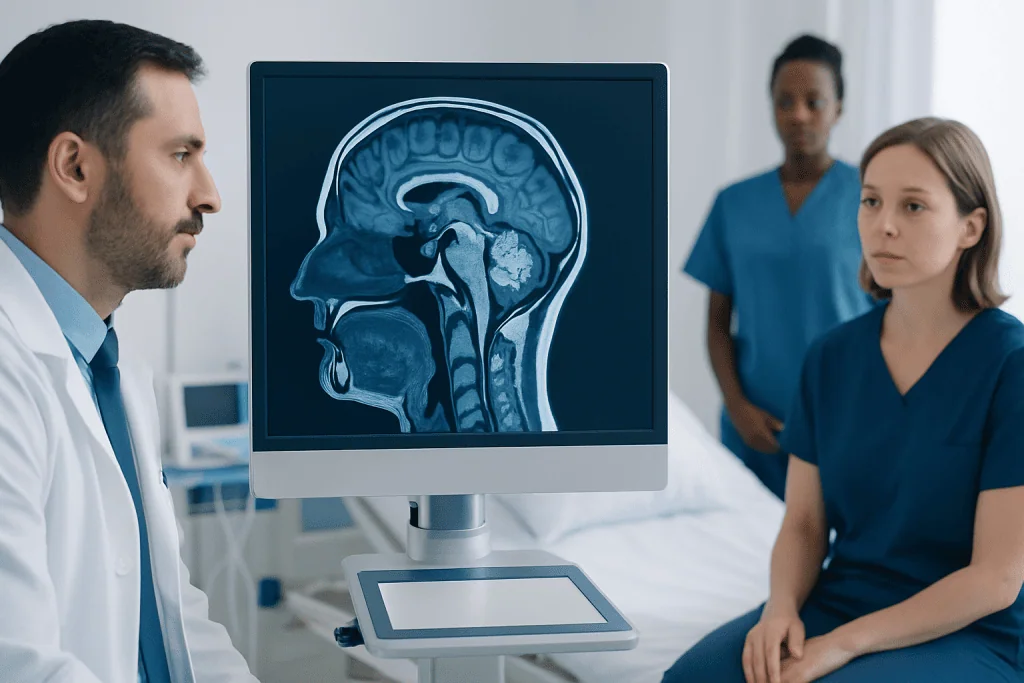
The symptoms of fungal brain infections vary depending on which part of the nervous system is affected, how quickly the infection progresses, and the patient’s general health. Some people become ill over days, while others develop symptoms more gradually over weeks. The early signs may be subtle, especially in people whose immune systems are suppressed.
Common symptoms can include persistent headache, fever, nausea, vomiting, neck stiffness, confusion, drowsiness, or changes in personality and behavior. Some patients develop weakness on one side of the body, difficulty speaking, visual changes, poor balance, or seizures. If the infection forms a localized collection of pus, called a brain abscess, symptoms may reflect pressure on nearby brain tissue.
Symptoms may differ according to the organism involved. For example, cryptococcal infection often causes a more slowly developing meningitis, while invasive mold infections such as aspergillosis or mucormycosis may progress more aggressively and can involve the sinuses, eyes, or blood vessels. In some situations, fungal disease may resemble a brain tumor or another structural brain condition on imaging.
- Persistent or severe headache
- Fever or unexplained illness
- Confusion, sleepiness, or memory problems
- Seizures
- Weakness, numbness, or speech difficulty
- Vision changes or facial pain when the sinuses are involved
Causes and Risk Factors

Fungal brain infections usually occur when fungi that are present in the environment or on the body take advantage of a weakened defense system. Many fungi are commonly found in soil, dust, decaying plant material, bird droppings, or indoor environments. For most healthy people, exposure does not lead to serious illness. The risk rises when the immune system cannot control fungal growth effectively.
Important risk factors include cancer treatment, organ transplantation, advanced HIV infection, long-term corticosteroid use, uncontrolled diabetes, severe malnutrition, and medicines that suppress immunity for autoimmune or inflammatory conditions. Intensive care stays, central intravenous lines, recent neurosurgery, trauma, or prolonged hospitalization can also increase risk in certain settings.
Some fungal infections spread to the brain after beginning in the lungs. Others can extend directly from severe fungal sinus disease, especially in people with diabetes or major immune suppression. Rarely, a fungal infection may follow head injury or a medical procedure. A doctor may also consider related conditions such as meningitis or a severe sinus infection when evaluating symptoms and test results.
Even though weakened immunity is a major risk factor, not every patient fits the typical pattern. Certain environmental exposures, travel history, or residence in endemic regions can be important clues. That is why a full medical history is an essential part of the evaluation.
How Diagnosis Is Made
Diagnosing fungal brain infections often requires several tests rather than a single examination. Doctors begin with the patient’s symptoms, medical history, travel or exposure history, and any conditions that affect immunity. Because these infections may mimic stroke, autoimmune disease, or cancer, the evaluation is usually broad and carefully staged.
Brain imaging is a key step. MRI is often preferred because it gives detailed views of brain tissue, abscesses, inflammation, and surrounding structures. CT scans may also be used, especially in emergencies or when evaluating the sinuses and bone involvement. In some patients, imaging helps distinguish infection from conditions such as brain abscess caused by other organisms.
Laboratory testing may include blood cultures, fungal antigen tests, antibody tests, and molecular methods when available. A lumbar puncture, also called a spinal tap, can help detect meningitis and measure pressure in the cerebrospinal fluid, but it is only performed when it is safe to do so. In selected cases, a biopsy of infected tissue may be needed to identify the fungus accurately and guide treatment.
Diagnosis can be especially difficult because fungi do not always grow easily in cultures, and prior treatment may reduce the chance of detecting them. For this reason, infectious disease specialists, neurologists, radiologists, and neurosurgeons often work together to interpret the findings and plan the safest next step.
Treatment Options
Treatment depends on the fungus involved, the part of the nervous system affected, the severity of illness, and the patient’s immune status. In most cases, treatment starts promptly once the infection is strongly suspected, even before every test result is finalized. The main treatment is antifungal medication, often given intravenously at first and continued for a long period under close supervision.
Different fungi respond to different drugs, so identifying the organism is important. Some patients improve with medicine alone, while others need a combination of treatments. Ongoing monitoring is essential because antifungal medicines can have side effects and because doctors need to check whether the infection is shrinking on repeat scans.
Surgery may be recommended in selected cases, for example to drain an abscess, remove infected tissue, reduce pressure, or treat sinus disease that is spreading toward the brain. Patients with severe neurological symptoms may need advanced hospital-based care, including careful imaging, neurological monitoring, and sometimes neurosurgery or interventional neuroradiology procedures as part of a broader treatment plan.
Supportive care is also important. This may include treatment for seizures, management of raised intracranial pressure, diabetes control, or adjustment of immune-suppressing medicines when medically appropriate. In complex cases, care may involve specialists in infectious diseases and neurology to balance infection control with neurological recovery.
Treatment Challenges and Recovery
Fungal brain infections can be difficult to treat for several reasons. Diagnosis may be delayed because symptoms are not always specific, and some fungi are hard to detect in routine tests. In addition, certain antifungal medicines do not penetrate all parts of the central nervous system equally well, and some infections can affect blood vessels or form dense tissue that is difficult to clear completely.
Another challenge is that patients at highest risk are often already medically fragile. They may be undergoing cancer treatment, recovering from transplantation, or managing complex chronic disease. In these situations, doctors must treat the infection while also protecting the kidneys, liver, blood counts, and other organ systems that can be affected by both the illness and its treatment.
Recovery varies widely. Some people respond well and gradually improve over weeks to months, while others need long-term treatment and follow-up imaging. Neurological symptoms such as weakness, memory changes, or seizures may continue for some time even after the infection is under control, making rehabilitation and follow-up care an important part of recovery.
Prevention, Self-care, and When to Seek Medical Help
Not every fungal brain infection can be prevented, but lowering overall risk is possible. People with weakened immunity should follow their medical team’s advice closely, including preventive medicines when prescribed, careful diabetes management, and prompt treatment of lung or sinus infections. Good hand hygiene, protecting wounds, and avoiding heavily contaminated dust or soil exposure when advised may also help in selected high-risk situations.
Self-care does not replace medical treatment for this condition. A person with persistent headache, fever, confusion, new seizures, unusual drowsiness, or sudden neurological symptoms should seek urgent medical evaluation. These symptoms do not always mean a fungal infection, but they should never be ignored, especially in someone with a weakened immune system or recent serious illness.
Follow-up is an essential part of care after diagnosis. Patients may need repeat scans, blood tests, rehabilitation, and monitoring for medication side effects or relapse. Near the end of the treatment journey, some international patients may seek care at centers such as Acibadem International, where multidisciplinary specialists in JCI-accredited hospitals evaluate and treat complex neurological and infectious conditions.
Anyone who is being treated for a fungal infection should contact a doctor promptly if symptoms worsen, new neurological changes appear, or medication side effects such as severe nausea, jaundice, rash, or reduced urination develop. Early communication can help the care team adjust treatment safely and effectively.
Frequently asked questions
Are fungal brain infections common?
No. Fungal brain infections are relatively rare compared with bacterial or viral infections of the nervous system. They are seen more often in people with weakened immune systems, but they can occasionally occur in others depending on the fungus and the exposure.
What are the first signs of a fungal brain infection?
Early symptoms may include headache, fever, fatigue, confusion, or subtle changes in thinking and behavior. As the infection progresses, seizures, weakness, speech problems, or vision changes can appear.
Can a healthy person get a fungal brain infection?
Yes, but it is less common. Some fungi can affect otherwise healthy people, especially after certain environmental exposures, trauma, or spread from nearby structures such as the sinuses.
How long does treatment usually last?
Treatment is often prolonged and may continue for weeks to months, depending on the organism, location of infection, and response to therapy. Doctors usually monitor progress with repeat imaging, blood tests, and clinical follow-up.
Is surgery always needed?
No. Some fungal brain infections can be treated with antifungal medicines alone. Surgery is considered when there is an abscess, dead tissue, significant pressure, or a need to remove infected tissue or obtain a diagnosis.
Can fungal brain infections be cured?
Many patients can improve with early and appropriate treatment, but outcomes vary. Recovery depends on the type of fungus, how quickly treatment begins, the patient's immune status, and whether complications have developed.
References
- World Health Organization
- Centers for Disease Control and Prevention
- National Institute of Neurological Disorders and Stroke
- Infectious Diseases Society of America
- European Centre for Disease Prevention and Control
This article is for general information only and is not a substitute for professional medical advice. Please consult a qualified doctor about your individual situation.
Joint and spine care in Turkey — expert assessment & treatment
JCI-accredited · board-certified surgeons · reply within 24h
Add us as a Preferred Source to see more of our trusted health content across Google Search, AI Overviews and Discover.

More from the Health Library



Related Specialists

Dr. Özge Karaosmanoğlu
Gynecology & Obstetrics
Prof. Dr. Fatih Oğuz Önder
Gastroenterology
Prof. Dr. Asim Kaytaz
Otorhinolaryngology
Assoc. Prof. Dr. Betül Mazlum
Pediatric & Adolescent Psychiatry