

Ringworm in Children: Rash Signs, Contagion, and How It Is Treated

Ringworm is caused by fungi, not by a worm. It can spread through skin contact, shared items, pets, and contaminated surfaces.
Key Takeaways
- Ringworm is caused by fungi, not by a worm.
- It can spread through skin contact, shared items, pets, and contaminated surfaces.
- Symptoms vary by location and may affect the body, scalp, feet, groin, or nails.
- Many mild skin cases improve with antifungal creams, but scalp and nail infections usually need prescription medicine.
- A doctor should assess widespread rash, scalp involvement, hair loss, nail changes, or symptoms that do not improve.
Ringworm in children is a common fungal infection of the skin, scalp, or nails. It often causes an itchy, ring-shaped rash and usually improves with proper antifungal treatment and simple hygiene steps.
Overview of Ringworm in Children
Ringworm in children is a common fungal infection of the skin. Despite its name, it is not caused by a worm. The medical name is tinea, and different types are named by the part of the body they affect. For example, ringworm on the body is called tinea corporis, while ringworm on the scalp is called tinea capitis.
The infection often appears as a round or ring-shaped patch with a clearer center and a slightly raised, scaly border. It may be itchy, dry, or irritated. In some children, the rash looks more like a scaly patch than a complete ring, especially early on or when it affects the scalp.
Ringworm is common in school-age children because it spreads easily through close contact, shared belongings, sports, and pets. The good news is that it is usually treatable. Early recognition and the right antifungal treatment can help the rash clear and reduce spread to others.
Symptoms and Rash Signs to Look For
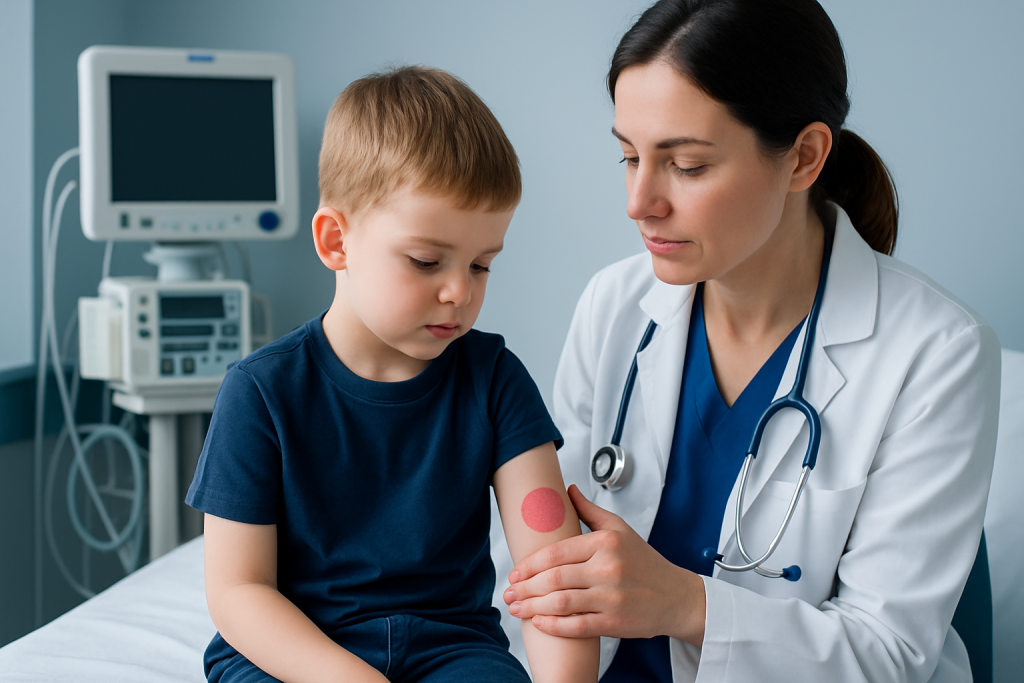
Signs of ringworm depend on where the infection is located. On the skin, it often starts as a small red, pink, or brownish patch that gradually enlarges. The edge may look more noticeable than the center, and the skin can appear dry, flaky, or cracked. Itching is common, but some children have little discomfort.
When ringworm affects the scalp, it may cause scaly patches, dandruff-like flaking, itching, and broken hairs. Some children develop small bald spots. In more inflamed cases, the scalp can become tender, swollen, or develop a soft, raised area called a kerion, which needs medical attention to help protect the scalp and hair.
Other forms of tinea may look different. Ringworm on the feet can cause peeling, cracking, or itching between the toes. Nail infection may lead to thickened, brittle, or discolored nails. In skin folds, the rash may be red and irritated. Because several skin conditions can resemble ringworm, such as eczema or psoriasis, a doctor may be needed to confirm the cause.
- Round or oval scaly rash
- Raised border with clearer center
- Itching or mild burning
- Scalp flaking or patchy hair loss
- Cracked skin or nail changes in some cases
How Ringworm Spreads and Risk Factors

Ringworm is contagious. It spreads by direct skin-to-skin contact with an infected person or animal, and it can also spread indirectly through shared items such as hats, combs, towels, clothing, bedding, or sports equipment. Fungi can survive for some time on surfaces, especially in warm, moist environments.
Children may catch ringworm from household pets, especially kittens and puppies, even if the animal does not seem very sick. Shared locker rooms, swimming pool areas, wrestling mats, and close-contact sports can also increase exposure. Scratching the rash may move the fungus to nearby skin.
Some factors make infection more likely. These include warm and humid weather, sweating, tight clothing, minor skin injury, and having a weakened skin barrier. Children who have close contact with someone who has ringworm, or who already have another fungal infection such as athlete's foot, may be at higher risk of developing it elsewhere on the body.
How Doctors Diagnose Ringworm
Doctors often diagnose ringworm by examining the rash and asking about symptoms, recent exposures, pets, sports, and whether anyone else at home has a similar skin problem. The appearance can be very suggestive, but not every circular rash is ringworm, so a careful assessment matters.
When the diagnosis is uncertain, a doctor may gently scrape a small sample of skin or collect hair from the scalp to look for fungus under a microscope or send it for fungal culture. These tests can help distinguish ringworm from eczema, bacterial infection, seborrheic dermatitis, or other causes of rash and hair loss.
Testing is especially helpful if the infection is on the scalp or nails, is widespread, keeps returning, or has not improved with routine treatment. A confirmed diagnosis helps guide the correct medicine and avoid using creams that may worsen or mask the rash, such as steroid creams used without medical advice.
Treatment Options for Children
Treatment depends on the location and severity of the infection. For mild ringworm on the body, doctors often recommend an antifungal cream, lotion, or spray applied to the rash and a small area of skin around it. Treatment usually needs to continue for the full recommended period, even if the rash starts looking better sooner.
Ringworm on the scalp usually cannot be treated with cream alone because the fungus affects the hair shaft and hair follicles. Children with scalp ringworm commonly need prescription oral antifungal medicine. A doctor may also suggest a medicated shampoo to reduce fungal shedding and help limit spread to family members, though shampoo by itself is not enough to cure scalp infection.
If there is significant inflammation, secondary bacterial infection, or unclear diagnosis, medical review is important. Some children may need care from a dermatology specialist, especially if the rash is extensive, recurrent, or affecting the scalp or nails. In selected cases, doctors may coordinate pediatric care and skin evaluation to make sure treatment fits the child’s age and symptoms.
Parents should avoid using leftover medications or steroid-only creams unless a doctor has advised them. Steroids can temporarily reduce redness while allowing the fungal infection to spread more widely. If a child has repeated fungal infections or unusual skin findings, further evaluation may be needed through diagnostic assessment.
Prevention and Self-care at Home
Good hygiene can help prevent ringworm from spreading and lower the chance of it returning. Children should keep the affected area clean and dry, wash hands regularly, and avoid scratching the rash. Fingernails should be kept short to reduce skin injury and spread to other parts of the body.
Items that touch the affected skin or scalp should not be shared. This includes hats, hairbrushes, combs, towels, pillowcases, sports uniforms, and helmets. Clothing, bedding, and towels should be washed regularly. If the child has scalp ringworm, family members may also need to be checked if they have itching or flaking.
Pets with patchy fur loss or scaly skin should be examined by a veterinarian because untreated animals can continue to spread infection. In children who play sports, especially close-contact sports, it is sensible to follow team hygiene rules and ask a doctor when it is safe to return. If families need specialist support, Acibadem International’s multidisciplinary specialists in JCI-accredited hospitals evaluate and treat skin infections in children and international patients.
When to See a Doctor
Many mild skin cases can be assessed by a primary care doctor, but some situations need more prompt medical attention. A doctor should evaluate a rash that is spreading quickly, is painful, has pus, is causing fever, or does not improve with appropriate over-the-counter antifungal treatment. Medical review is also important if the child is very young or has a weakened immune system.
Scalp ringworm should always be assessed by a doctor because it usually needs prescription medicine and can lead to patchy hair loss. Nail infections, frequent recurrences, or uncertain diagnosis also deserve professional evaluation. If the rash is becoming very inflamed or swollen, the child may need more urgent care.
Parents should also seek advice if several family members have similar symptoms, if a pet may be involved, or if school or sports participation is affected. Early treatment helps limit spread, improve comfort, and reduce the risk of complications such as bacterial infection or scarring from severe scalp inflammation.
Frequently asked questions
Is ringworm in children caused by a worm?
No. Ringworm is a fungal infection, not a parasite or worm. The name comes from the common ring-shaped appearance of the rash on the skin.
Is ringworm contagious to other children?
Yes, ringworm can spread easily through direct skin contact and through shared objects such as hats, towels, combs, and sports equipment. It may also spread from infected pets or contaminated surfaces.
Can a child go to school with ringworm?
Many children can return to school once treatment has started, but the exact advice may depend on the location of the infection and the school's policy. Covering the rash when possible and avoiding shared personal items can help reduce spread.
How is scalp ringworm different from ringworm on the body?
Scalp ringworm often causes flaking, itching, and patchy hair loss rather than a classic ring-shaped rash. Unlike many body rashes, scalp ringworm usually needs prescription oral antifungal medicine because creams alone do not reach the infection well enough.
Can ringworm go away on its own?
Some mild cases may seem to improve temporarily, but ringworm often persists or spreads without proper treatment. Using the right antifungal medicine helps clear the infection and lowers the chance of passing it to others.
What should parents avoid putting on ringworm?
Parents should avoid using steroid creams alone unless a doctor specifically recommends them. Steroids can make the rash look less red while allowing the fungal infection to worsen or spread.
References
- American Academy of Dermatology
- American Academy of Pediatrics
- Centers for Disease Control and Prevention
- National Health Service
- World Health Organization
This article is for general information only and is not a substitute for professional medical advice. Please consult a qualified doctor about your individual situation.
Hair transplant in Turkey — costs, graft counts & a free assessment
JCI-accredited · board-certified surgeons · reply within 24h
Add us as a Preferred Source to see more of our trusted health content across Google Search, AI Overviews and Discover.

More from the Health Library



Related Specialists

Prof. Dr. Fuat Demirci
Gynecology & Obstetrics
Dr. Mert Pehlivan Altın
Cardiology
Assoc. Prof. Dr. Selim Aydin
Cardiovascular Surgery
Prof. Dr. Muammer Doygun
Neurosurgery