

Full Mouth Reconstruction: When Multiple Dental Problems Need One Treatment Plan

Full mouth reconstruction treats several dental issues together under one coordinated plan. It may include crowns, bridges, implants, gum treatment, root canal therapy, or bite correction.
Key Takeaways
- Full mouth reconstruction treats several dental issues together under one coordinated plan.
- It may include crowns, bridges, implants, gum treatment, root canal therapy, or bite correction.
- The main goals are to restore function, reduce discomfort, protect oral health, and improve appearance.
- Diagnosis usually involves a detailed exam, digital imaging, and a review of bite and jaw function.
- Treatment is individualized, and recovery depends on which procedures are included.
Full mouth reconstruction is a customized dental treatment plan for people with several oral health problems affecting the teeth, gums, bite, or jaw function. It combines restorative and sometimes cosmetic procedures in a careful sequence to improve comfort, chewing, speech, and appearance.
Overview
Full mouth reconstruction is a comprehensive approach to dental care used when a person has multiple problems affecting the teeth, gums, bite, or supporting bone. Rather than treating each issue in isolation, the dentist creates one coordinated plan that addresses oral health as a whole. This can be especially helpful when damage has built up over time and several treatments are needed to restore normal function.
It is not a single procedure. Instead, full mouth reconstruction may combine restorative treatments such as fillings, crowns, bridges, root canal treatment, periodontal care, implants, and replacement of missing teeth. In some cases, treatment also includes cosmetic improvements, but the primary focus is usually health, comfort, and function.
People who may benefit from this approach include those with extensive tooth wear, multiple broken or decayed teeth, long-term gum disease, tooth loss, trauma, or bite problems. Some also have jaw discomfort, difficulty chewing, or changes in speech because the teeth no longer meet properly.
Modern planning tools can make treatment more precise and predictable. Digital scans, photographs, and bite analysis often help the dental team design a step-by-step plan using approaches such as digital dentistry to visualize the final result and organize care efficiently.
Symptoms and Signs That May Point to a Need for Full Mouth Reconstruction

Many people consider full mouth reconstruction when everyday oral function becomes difficult. Common concerns include pain when chewing, sensitivity to hot or cold, broken or heavily filled teeth, visible wear, loose teeth, or gaps caused by missing teeth. Some notice that their teeth look shorter, flatter, or uneven.
Other signs are related to the bite and jaw. A person may feel that the teeth no longer fit together comfortably, may clench or grind, or may wake with jaw tension and headaches. In some cases, worn teeth are linked with bruxism care as part of a broader treatment plan to protect the restored teeth.
Gum symptoms can also be important. Bleeding, swelling, recession, bad breath, or teeth that seem longer than before may suggest periodontal disease or gum damage. These issues need attention because healthy gums and supporting bone are essential for long-lasting dental reconstruction.
- Difficulty biting or chewing certain foods
- Frequent tooth fractures or failing dental work
- Missing multiple teeth
- Changes in facial support due to tooth loss or wear
- Reduced confidence in smiling because of extensive dental damage
Causes and Risk Factors
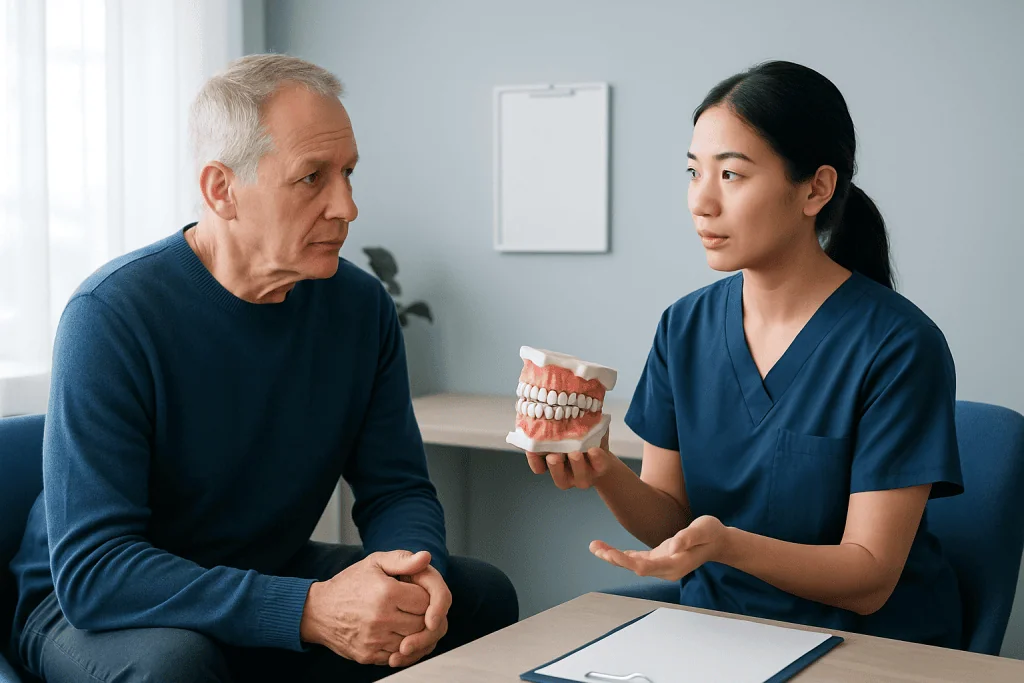
Several different conditions can lead to the need for full mouth reconstruction. Tooth decay is one of the most common causes, especially when cavities are extensive or old restorations have failed. Gum disease is another major factor because it can weaken the tissues and bone that support the teeth.
Long-term wear can also play a large role. Clenching and grinding, acid erosion, and years of heavy chewing pressure may gradually shorten and weaken teeth. Trauma from accidents or sports injuries may suddenly damage multiple teeth or change the bite. Some people are also affected by developmental issues, missing teeth from birth, or uneven jaw relationships.
Medical and lifestyle factors may influence treatment needs and healing. Smoking, uncontrolled diabetes, dry mouth, certain medications, and limited access to regular dental care can worsen oral disease. The dentist will also ask about reflux, sleep-related grinding, and dietary habits because these can contribute to enamel loss and restoration failure.
Age alone does not determine whether reconstruction is needed, but cumulative wear and past dental problems can become more complex over time. A careful history helps the team understand which factors caused the damage in the first place so that treatment not only repairs the mouth but also helps prevent repeat problems.
How Dentists Diagnose and Plan Treatment
Diagnosis begins with a full dental examination. The dentist looks at the teeth, gums, existing restorations, bite, jaw movement, and overall oral hygiene. They will usually ask about pain, sensitivity, habits such as grinding, previous dental treatment, and the person’s goals for function and appearance.
Imaging is an important part of planning. Dental X-rays and, when needed, three-dimensional scans help show the roots, bone levels, hidden decay, infections, and available support for implants or other restorations. Photos and impressions or digital scans allow the team to study tooth shape, spacing, and how the upper and lower teeth come together.
In many cases, treatment planning is staged. The first stage often focuses on controlling disease, such as decay, infection, or gum inflammation. Later stages restore missing tooth structure and improve the bite. This sequence is important because long-term success depends on first creating a healthy foundation, often with attention to dental hygiene and gum care.
Some people may be evaluated by more than one specialist, such as a prosthodontist, periodontist, endodontist, oral surgeon, or orthodontist. This multidisciplinary approach can be useful when treatment is complex. Near the end of care, final restorations are designed to balance appearance with durability and comfortable function.
Treatment Options Used in Full Mouth Reconstruction
The exact treatment plan depends on what problems are present. If teeth are damaged but can be saved, restorations such as fillings, onlays, or dental crowns may rebuild structure and protect weakened teeth. Root canal treatment may be needed for infected or deeply damaged teeth, sometimes as part of endodontic treatment before a final crown is placed.
When teeth are missing or cannot be saved, replacement options may include bridges, removable dentures, or implant-based solutions. For some patients, dental implants provide stable support and help preserve the jawbone. If there is not enough bone, grafting procedures may be considered before implants are placed.
Gum treatment is often necessary when periodontal disease, recession, or excess gum tissue affects oral health or the appearance of the smile. Bite adjustment may also be part of reconstruction, especially when tooth wear or jaw strain has changed how the teeth meet. In selected cases, orthodontic treatment can improve spacing or alignment before final restorations are made.
Treatment may happen over several appointments or over a longer period of time, depending on healing needs and the number of procedures involved. Temporary restorations are sometimes used to test comfort, speech, and bite before final work is completed. This step can help refine the result and improve long-term stability.
Recovery, Aftercare, and Self-Care
Recovery after full mouth reconstruction varies widely because it depends on the procedures performed. Simple restorative stages may involve only mild, short-term sensitivity, while implants, gum procedures, or extractions can require more healing time. The dental team usually gives individualized instructions about eating, cleaning, activity, and follow-up appointments.
Good oral hygiene is essential during and after treatment. Brushing, flossing or interdental cleaning, and professional cleanings help protect the new restorations and reduce the risk of gum disease or decay around them. If the person grinds their teeth, a night guard may be recommended to reduce pressure on the reconstructed bite.
Diet can also affect results. Immediately after some procedures, softer foods may be advised until tenderness settles. Over the longer term, limiting frequent sugary snacks and acidic drinks can help preserve both natural teeth and restorations. Stopping smoking, when relevant, supports gum health and healing.
People should keep all review appointments so the dentist can monitor healing, adjust the bite if needed, and check the condition of restorations. Long-term maintenance is one of the most important parts of successful full mouth reconstruction. With consistent care, many restorations can function well for years, although they may still need maintenance or replacement over time.
When to See a Dentist and What to Expect
A person should consider a dental evaluation if they have several ongoing oral problems rather than one isolated issue. Repeated tooth breakage, difficulty chewing, multiple missing teeth, bleeding gums, chronic sensitivity, or a bite that feels unstable are all reasonable reasons to seek professional advice. Early assessment can sometimes prevent a more extensive reconstruction later.
Urgent dental care may be needed for severe pain, swelling, signs of infection, or trauma affecting the teeth or jaw. Even if the final solution will take time, prompt treatment can relieve symptoms and protect the remaining teeth and supporting tissues. A staged approach often makes complex care feel more manageable.
At the first visit, patients can usually expect a discussion of goals, a detailed examination, and diagnostic imaging. The dentist may explain several possible pathways based on priorities such as saving teeth, replacing missing teeth, reducing pain, or improving appearance. Costs, timing, and recovery are often clearer once the diagnostic work-up is complete.
For people seeking coordinated care, Acibadem International’s multidisciplinary dental specialists in JCI-accredited hospitals diagnose and treat complex dental conditions for international patients. A comprehensive plan can help bring together restorative, periodontal, and surgical care in an organized way that supports both oral health and daily quality of life.
Frequently asked questions
What is the difference between full mouth reconstruction and a smile makeover?
Full mouth reconstruction mainly focuses on restoring oral health, bite function, and damaged teeth, although appearance often improves as well. A smile makeover is usually more cosmetic and may be chosen when the teeth are healthy but the person wants aesthetic changes.
How long does full mouth reconstruction take?
The timeline depends on the number and type of procedures needed. Some people complete treatment in a few months, while others need a longer staged plan, especially if healing is required after extractions, gum therapy, or implant placement.
Is full mouth reconstruction painful?
Dental teams aim to keep treatment as comfortable as possible with local anesthesia and other supportive measures when appropriate. Some temporary soreness or sensitivity can happen after procedures, but this is usually managed with the dentist’s aftercare guidance.
Can all damaged teeth be saved?
Not always. Some teeth can be restored with crowns, fillings, or root canal treatment, while others may be too damaged or have too little support to remain healthy long term. The dentist will recommend saving teeth when it is predictable and beneficial, and replacement when it is not.
Who may need dental implants during full mouth reconstruction?
Dental implants may be considered for people who have missing teeth or teeth that cannot be saved. They can support crowns, bridges, or full-arch restorations, but suitability depends on gum health, bone support, general health, and healing factors.
How can someone protect the results after treatment?
Long-term success depends on daily oral hygiene, regular dental check-ups, and professional cleanings. Avoiding tobacco, managing grinding if present, and following advice about diet and maintenance can help protect both natural teeth and restorations.
References
- American Dental Association
- National Institute of Dental and Craniofacial Research
- European Federation of Periodontology
- Mayo Clinic
- World Health Organization
This article is for general information only and is not a substitute for professional medical advice. Please consult a qualified doctor about your individual situation.
Full Mouth Reconstruction in Turkey — costs, top hospitals & a free quote
JCI-accredited · board-certified surgeons · reply within 24h
Add us as a Preferred Source to see more of our trusted health content across Google Search, AI Overviews and Discover.

Dental & Oral Health
Full-scope dental care from implants and aesthetics to oral and maxillofacial surgery.
158 specialists in this unitRelated Treatments
More from the Health Library



Related Specialists

Assoc. Prof. Dr. Ferit Bayram
Oral & Dental Health
Dt. Alara Naz Kenir
Oral & Dental Health
Dt. Gonca Katmer
Oral & Dental HealthDt. Doğa Baysal
Oral & Dental Health