Interventional Neuroradiology in Turkey: How International Patients Can Compare Centers

Patients should compare centers based on the experience of the interventional neuroradiology team, not only cost or location. Advanced imaging, 24/7 stroke and neurocritical care support, and multidisciplinary planning are important quality markers.
Key Takeaways
- Patients should compare centers based on the experience of the interventional neuroradiology team, not only cost or location.
- Advanced imaging, 24/7 stroke and neurocritical care support, and multidisciplinary planning are important quality markers.
- International patients benefit from asking about language support, travel coordination, expected hospital stay, and follow-up after returning home.
- A clear review of diagnosis, treatment goals, possible risks, and alternatives helps with informed decision-making.
- JCI-accredited hospitals and teams that work closely with neurology, neurosurgery, and intensive care may offer more comprehensive care.
Interventional neuroradiology in Turkey may be an option for international patients seeking minimally invasive diagnosis and treatment for blood vessel conditions of the brain, head, neck, and spine. Comparing centers carefully helps patients understand medical expertise, safety systems, logistics, and follow-up before making travel plans.
Overview: What Interventional Neuroradiology Means
Interventional neuroradiology is a highly specialized field that uses imaging guidance to diagnose and treat conditions affecting the blood vessels of the brain, spinal cord, head, and neck. Instead of traditional open surgery, many procedures are performed through a small catheter, usually inserted through an artery in the wrist or groin. This approach may reduce tissue disruption and can be helpful in carefully selected patients.
Common conditions treated in this field include brain aneurysms, arteriovenous malformations, carotid or intracranial narrowing, certain causes of stroke, and some tumors or vascular malformations. Depending on the problem, treatment may involve coiling, stenting, embolization, thrombectomy, or targeted vessel repair. The exact plan depends on the diagnosis, the urgency of treatment, and the patient’s overall health.
For international patients, Turkey is often considered because it has large tertiary hospitals, experienced specialists, modern imaging systems, and established medical travel services. Even so, the best center is not simply the nearest or the lowest-cost option. A good comparison looks at the full care pathway, from initial assessment to recovery and long-term follow-up.
Which Conditions and Procedures Are Commonly Evaluated
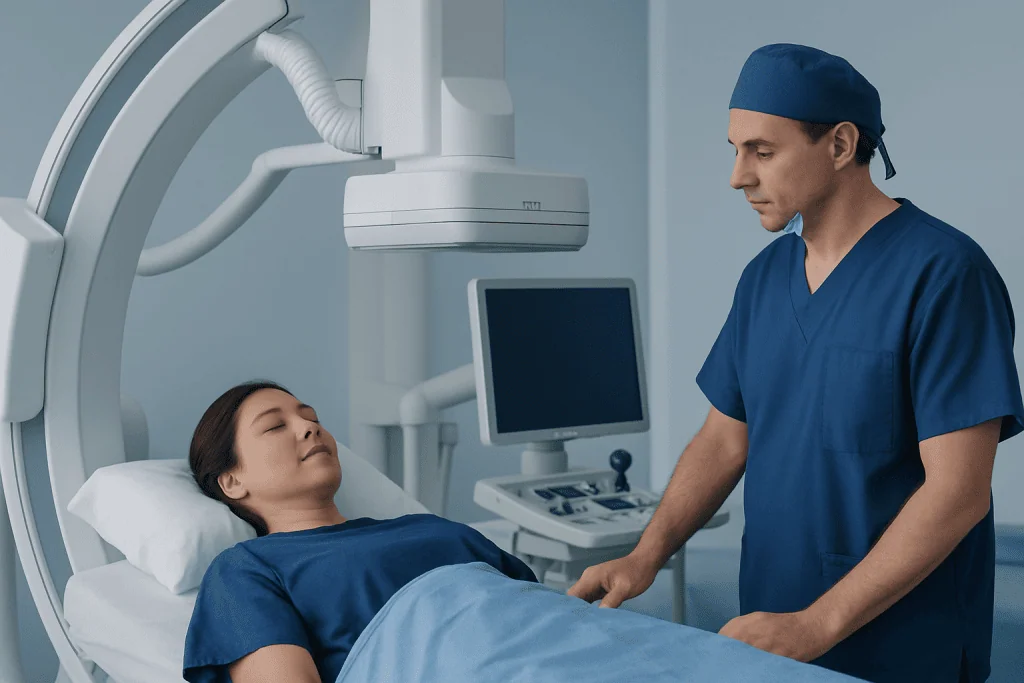
Patients may travel for evaluation or treatment of conditions such as cerebral aneurysms, dural arteriovenous fistulas, arteriovenous malformations, carotid artery disease, acute ischemic stroke, or vascular causes of bleeding in the brain. Some centers also treat spinal vascular malformations and perform preoperative embolization for selected head, neck, or spinal tumors. In many cases, the goal is to prevent stroke, stop bleeding, reduce symptoms, or support another treatment plan.
Not every patient with a vascular brain or spine condition needs an interventional procedure. Some findings are monitored over time, while others may be better treated with microsurgery, radiation-based therapy, or medication. That is why a center’s ability to provide balanced recommendations matters as much as its technical capability.
When comparing hospitals, patients can ask whether the center routinely manages conditions such as brain aneurysm and whether treatment decisions are reviewed in a multidisciplinary meeting. They can also ask whether the hospital offers related services such as diagnostic angiography and emergency stroke treatment if urgent care is needed.
How International Patients Can Compare Centers

A useful comparison starts with the team. Patients should look for a center with interventional neuroradiologists who regularly perform the specific procedure being considered, supported by neurologists, neurosurgeons, anesthesiologists, neurointensive care specialists, and experienced nursing staff. A high-functioning multidisciplinary team is especially important for complex conditions, emergency stroke care, and cases where more than one treatment option may be appropriate.
Hospital infrastructure also matters. Patients can ask whether the hospital has advanced MRI and CT imaging, modern angiography suites, neurocritical care beds, operating room backup, and 24/7 emergency support. If a complication occurs or a treatment plan changes unexpectedly, having these services in one location can be reassuring and clinically important.
For international patients, practical support should be part of the comparison. Helpful questions include whether the hospital offers professional medical interpreters, remote pre-travel consultations, assistance with records review, airport and accommodation coordination, and clear written discharge instructions in English. Good logistical planning does not replace medical quality, but it can make the experience safer and less stressful.
It is also reasonable to ask how the center handles follow-up after the patient returns home. Some procedures require imaging surveillance, medication review, or communication with a doctor in the patient’s home country. Centers that explain this plan early usually provide a more organized patient journey.
Questions to Ask Before Choosing a Hospital
Before making a decision, patients should request a clear explanation of the diagnosis, why treatment is recommended now, and what alternatives exist. If observation is a reasonable option, the team should say so. If surgery or radiosurgery may be better than an endovascular procedure, that should also be discussed openly.
It can help to prepare a written list of questions. For example, patients may ask what imaging needs to be repeated on arrival, whether the procedure is urgent or planned, how long hospitalization is usually expected, and what type of anesthesia may be used. They can also ask about typical recovery milestones, likely restrictions after discharge, and when return travel may be considered safe.
- What exact diagnosis is being treated, and how certain is it?
- What are the benefits, limitations, and possible risks of the proposed procedure?
- How often does the team perform this specific treatment?
- What support is available if intensive care or surgery becomes necessary?
- What follow-up imaging and medication plan will be needed after discharge?
- How will communication continue once the patient returns home?
A center that answers these questions clearly, in understandable language, often reflects good patient-centered practice. Patients should feel comfortable asking for clarification and should not feel rushed into a decision when the situation is not an emergency.
Diagnosis, Imaging, and Treatment Planning
Interventional neuroradiology decisions are built on imaging. Depending on the condition, assessment may involve CT, MRI, MR angiography, CT angiography, duplex ultrasound, or catheter angiography. Some patients arrive with scans from another country, but repeat imaging may still be needed if the images are incomplete, outdated, or not sufficient for treatment planning.
Catheter angiography remains an important tool because it can provide a very detailed map of blood vessels and blood flow. In some cases, it confirms the diagnosis; in others, it helps the team decide whether endovascular treatment is suitable and which technique may be safest. Patients can ask what information each scan is expected to provide and whether the imaging findings have been reviewed by more than one specialist.
Good treatment planning also considers age, symptoms, medical history, medications, kidney function, prior procedures, and the urgency of the problem. For example, an emergency stroke pathway differs greatly from the planned treatment of an unruptured aneurysm. Some patients may benefit from embolization or vessel repair, while others may need monitoring or referral to another specialty.
Safety, Recovery, and Aftercare for Travelers
No interventional procedure is completely risk-free, so safety systems are essential. Potential concerns vary by procedure but may include bleeding, vessel injury, contrast-related issues, stroke, infection, or problems at the catheter entry site. A well-prepared center will explain these risks in context, describe how they are monitored, and review the steps taken to reduce them.
Recovery depends on the condition treated and the type of procedure performed. Some patients go home within a short time, while others need monitoring in a neurointensive care unit or a longer hospital stay. Patients should ask what kind of observation is expected after treatment, whether rehabilitation might be needed, and when activities such as walking, bathing, working, or flying can usually resume.
For international travelers, aftercare planning is especially important. Medication instructions should be clearly written, including whether blood thinners, antiplatelet drugs, or blood pressure medicines need adjustment. Follow-up imaging may be required weeks or months later, sometimes in the patient’s home country, so the discharge summary should be detailed enough for the local doctor to continue care safely.
Some patients also need support from related specialties, such as neurology, neurosurgery, rehabilitation, or cardiology. Centers that can coordinate these services in one system may make continuity of care easier. Near the end of the planning process, some international patients choose hospitals such as Acibadem International, where multidisciplinary specialists in JCI-accredited hospitals diagnose and treat complex neurovascular conditions for patients traveling from abroad.
Travel Planning, Costs, and Practical Considerations
Medical travel involves more than the procedure itself. International patients should share complete medical records before travel, including imaging discs, reports, medication lists, allergies, and details of prior surgeries or stents. They should also ask whether a companion is recommended and how long they may need to remain in Turkey before being fit to travel home.
Cost discussions should be clear and itemized where possible. Estimates may differ depending on whether additional imaging, intensive care, extra hospitalization, or another specialty consultation is needed. Rather than comparing only a single headline price, patients may find it more useful to understand what is included in the package and which factors can change the final cost.
Travel timing is another important issue. Some conditions can be scheduled in advance, while others require urgent treatment and should not be delayed for convenience. Patients should avoid long flights against medical advice and should ask about hydration, movement during travel, wound care, and what warning signs would require urgent review after they leave the hospital.
Administrative details also matter. These include visa needs, insurance coverage, payment methods, access to translators, and obtaining copies of scans and discharge paperwork to take home. Being organized before departure can reduce stress and help the treatment journey go more smoothly.
When to Seek Urgent Care and How to Make a Decision
Some symptoms require urgent medical attention rather than routine travel planning. Sudden weakness, facial drooping, trouble speaking, severe new headache, seizures, loss of consciousness, vision loss, or sudden numbness can be signs of a serious neurological emergency. In these situations, the safest step is to seek immediate emergency care locally.
For non-emergency situations, patients can take time to compare opinions and choose a center carefully. Seeking a second opinion is often reasonable, particularly for unruptured aneurysms, vascular malformations, or planned procedures where several treatment paths may exist. A thoughtful decision is based on diagnosis, expertise, safety systems, communication, and long-term follow-up, not on marketing language alone.
In practical terms, the best center is usually one that can explain the condition clearly, show that the recommended treatment fits the patient’s needs, and provide coordinated support before, during, and after travel. A qualified doctor should always guide the final decision, especially for complex brain and spine vascular conditions.
Frequently asked questions
What is interventional neuroradiology used for?
It is used to diagnose and treat blood vessel problems of the brain, head, neck, and spine using imaging-guided, minimally invasive techniques. Examples include aneurysms, some strokes, arteriovenous malformations, and certain vascular narrowings.
Why do international patients compare centers instead of choosing by price alone?
Price is only one part of care. Patients also need to consider specialist experience, imaging quality, emergency support, intensive care availability, and how follow-up will be managed after they return home.
Is interventional neuroradiology safer than open surgery?
It can be less invasive than open surgery, but it is not automatically the best option for every condition. The safest and most effective treatment depends on the diagnosis, anatomy, urgency, and the patient’s overall health.
What records should a patient send before traveling to Turkey?
Useful records include recent imaging, radiology reports, medical summaries, medication lists, allergy information, and details of prior procedures or implants. Sending complete records early can help the medical team decide whether more tests are needed on arrival.
How long do patients usually stay in the hospital after a procedure?
The hospital stay varies widely depending on the condition and the procedure performed. Some patients are discharged relatively quickly, while others need closer monitoring or intensive care, especially after emergency treatment.
Will follow-up still be needed after returning home?
Yes, many patients need follow-up appointments, medication review, and repeat imaging after treatment. A clear discharge plan and communication between the treating center and the patient’s local doctor are important for safe continuity of care.
This article is for general information only and is not a substitute for professional medical advice. Please consult a qualified doctor about your individual situation.
Interventional Neuroradiology in Turkey — costs, top hospitals & a free quote
JCI-accredited · board-certified surgeons · reply within 24h
Add us as a Preferred Source to see more of our trusted health content across Google Search, AI Overviews and Discover.

More from the Health Library

Coronary Bypass Surgery Cost Abroad: What Patients Should Compare

Continuity of Care After Treatment Abroad: Follow-Up at Home

Bariatric Surgery Abroad: Safety Checks Before Traveling for Treatment

Traveling Home After IVF Treatment: Flying, Medicines, and Test Timing

Bringing a Companion for Medical Travel: Support, Safety, and Practical Planning