Motor Neuron Disease: How Diagnosis Is Confirmed and What Tests Are Used

There is no single test that confirms motor neuron disease in every patient. Diagnosis usually combines medical history, neurological examination, EMG, nerve conduction studies, imaging, and blood tests.
Key Takeaways
- There is no single test that confirms motor neuron disease in every patient.
- Diagnosis usually combines medical history, neurological examination, EMG, nerve conduction studies, imaging, and blood tests.
- Testing is designed both to look for patterns typical of motor neuron disease and to rule out other conditions that may mimic it.
- Early specialist evaluation is important if progressive weakness, muscle wasting, cramps, or speech and swallowing changes develop.
- Follow-up visits may be needed because signs can become clearer over time.
Motor neuron disease diagnosis is based on a careful neurological assessment plus tests that support nerve and muscle involvement while excluding other causes. Because symptoms can overlap with several treatable conditions, confirmation often takes more than one step and may require follow-up over time.
Overview
Motor neuron disease diagnosis can be challenging because the condition affects the nerve cells that control voluntary muscles, but its early symptoms may resemble those of other neurological or muscular disorders. Patients may first notice weakness in a hand or foot, muscle twitching, cramps, slurred speech, or difficulty swallowing. These symptoms are important, but on their own they do not confirm a diagnosis.
Doctors usually diagnose motor neuron disease by combining a detailed history, a neurological examination, and a group of tests that look for signs of upper and lower motor neuron damage. At the same time, they check for other illnesses that can cause similar symptoms, such as nerve compression, inflammatory nerve disease, metabolic problems, or certain muscle conditions. This step is essential because some mimics are treatable.
In many cases, the term motor neuron disease includes several related disorders, with amyotrophic lateral sclerosis being the most widely recognized form. The diagnosis may be discussed alongside amyotrophic lateral sclerosis when symptoms and test findings fit that pattern. Even so, specialists are careful not to rely on one symptom or one test result alone.
Symptoms That Prompt Evaluation
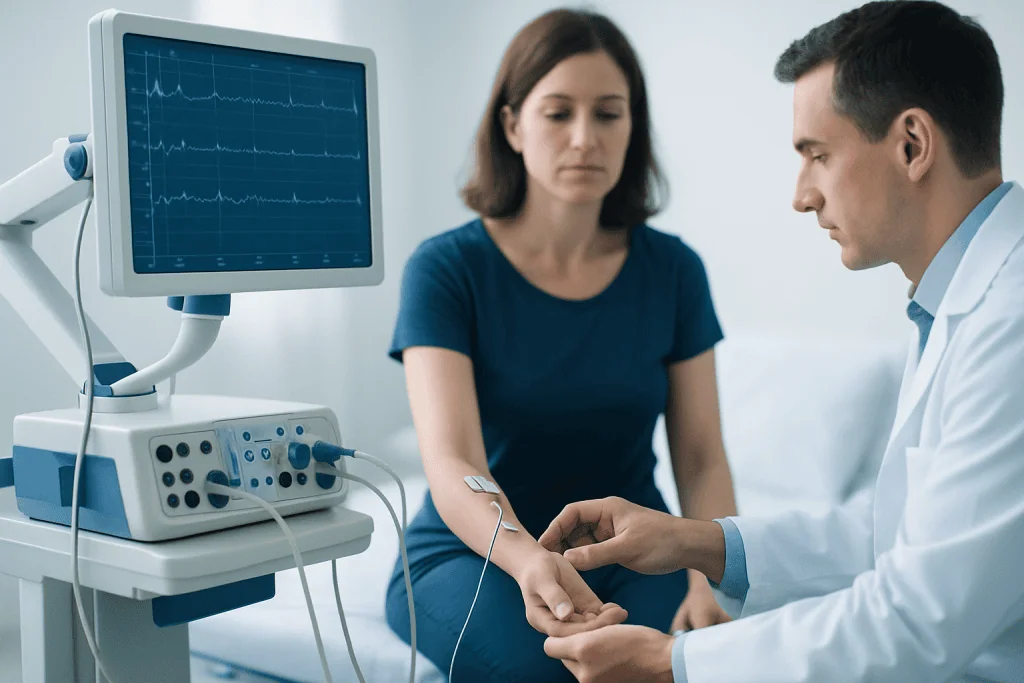
The symptoms that lead to testing often develop gradually and progress over time. A person may notice weakness in one limb, frequent tripping, dropping objects, hand clumsiness, or reduced grip strength. Others first develop speech changes, hoarseness, swallowing difficulty, or muscle twitching under the skin.
Doctors also ask about muscle cramps, stiffness, weight loss, shortness of breath, and fatigue with daily activities. Sensory symptoms such as numbness, tingling, or significant pain are less typical of classic motor neuron disease and may suggest another condition, although some patients can still have discomfort related to muscle cramps or immobility.
A careful symptom timeline is very helpful. Specialists want to know when symptoms started, how quickly they changed, whether they spread from one body region to another, and whether there is any family history of neurological disease. This information helps guide the choice of tests and the urgency of evaluation.
- Progressive weakness in the arms, legs, speech, or swallowing muscles
- Muscle wasting or visible twitching
- Stiffness, brisk reflexes, or muscle cramps
- Breathlessness or reduced cough strength in more advanced cases
How Doctors Assess Motor Neuron Disease

The diagnostic process usually starts with a neurologist, and often a neuromuscular specialist. The medical history focuses on symptom progression, daily function, previous illnesses, medication use, toxin exposure, and family history. The goal is to identify a pattern that is consistent with motor neuron disease and to look for clues that suggest a different diagnosis.
During the neurological examination, the doctor checks muscle strength, tone, bulk, reflexes, coordination, speech, swallowing, and breathing effort. They look for signs of both lower motor neuron involvement, such as wasting, weakness, and fasciculations, and upper motor neuron involvement, such as stiffness, spasticity, or overly brisk reflexes. A mix of these findings in multiple body regions can strongly support the diagnosis.
Because there is no single definitive blood test or scan for most forms of motor neuron disease, the examination remains central. Doctors may also repeat the exam over time, especially if early findings are subtle. Progression and the spread of signs from one region to another can provide important diagnostic evidence.
What Tests Are Used to Confirm the Diagnosis
Electromyography, often called EMG, is one of the most important tests in motor neuron disease diagnosis. EMG uses a fine needle electrode inserted into selected muscles to assess electrical activity at rest and during contraction. It can show evidence of ongoing nerve injury and reinnervation, patterns that support damage to lower motor neurons even in muscles that may not yet feel weak to the patient.
Nerve conduction studies are usually performed alongside EMG. These tests use small electrical impulses to evaluate how well nerves carry signals. In classic motor neuron disease, motor findings may be abnormal, but sensory nerve conduction is often relatively preserved. This can help distinguish motor neuron disease from peripheral neuropathies or other disorders affecting both movement and sensation.
MRI scans of the brain and spinal cord are commonly ordered not because they directly diagnose motor neuron disease, but because they help rule out structural problems such as cervical spinal cord compression, stroke, multiple sclerosis, or tumors. Imaging is especially useful when symptoms begin in one limb or when the pattern raises concern for another neurological disorder.
Blood tests and sometimes urine tests are used to exclude conditions that can mimic motor neuron disease. Depending on the case, doctors may check thyroid function, vitamin deficiencies, autoimmune markers, infection-related tests, metabolic measures, and markers of muscle injury. If respiratory symptoms are present, breathing tests may also be arranged to measure how well the chest muscles and diaphragm are working. In some patients, a neuromuscular team may also discuss EMG testing or MRI imaging as part of the diagnostic pathway.
Other Tests That May Be Needed
Some patients need additional tests when the diagnosis is uncertain or when another disease remains possible. Genetic testing may be considered if there is a family history of motor neuron disease or frontotemporal dementia, or if symptoms begin at a younger age. Genetic results can help explain the cause in inherited cases, although they are not necessary for every patient.
A lumbar puncture may occasionally be used to look for inflammation, infection, or other central nervous system conditions that can resemble motor neuron disease. Muscle biopsy is not routinely required, but it may be considered if doctors suspect a primary muscle disorder instead. In selected cases, ultrasound or more detailed neurophysiology may also be helpful.
Breathing and swallowing assessments are important when symptoms affect the chest, throat, or speech muscles. Pulmonary function testing can detect early respiratory muscle weakness, and speech and swallowing evaluation can identify aspiration risk and nutritional concerns. These assessments do not establish the diagnosis on their own, but they help define the full extent of disease and guide supportive care.
Why Diagnosis Can Take Time
Many patients and families find the waiting period difficult, but a careful step-by-step process helps improve accuracy. Early motor neuron disease may not show its full pattern at the first appointment, and some signs can be subtle. A specialist may therefore recommend repeat examinations or repeat EMG testing after an interval if symptoms continue to evolve.
Another reason diagnosis can take time is that doctors must exclude other disorders that may be more treatable. Conditions such as multifocal motor neuropathy, myasthenia gravis, cervical myelopathy, inflammatory neuropathies, and some muscle diseases can overlap with motor neuron disease symptoms. Some of these require very different treatment, so distinguishing them matters.
Doctors often use accepted clinical criteria to support the diagnosis, combining symptom history, examination findings, and electrophysiology results. Rather than relying on a single label too early, they may explain that the current findings are suspicious for or consistent with motor neuron disease while they continue to monitor progression and test results. This approach is careful, evidence-based, and intended to avoid misdiagnosis.
What Happens After Diagnosis
Once motor neuron disease diagnosis is confirmed, care usually shifts toward both disease management and supportive treatment. The exact plan depends on the subtype, symptoms, rate of progression, and the patient’s overall health. Treatment often involves a multidisciplinary team that may include neurology, physical medicine, respiratory medicine, nutrition, speech and language therapy, physiotherapy, and occupational therapy.
Medications may be offered to slow progression in appropriate cases or to manage symptoms such as spasticity, cramps, excess saliva, constipation, sleep difficulty, or mood changes. Supportive therapies can help maintain communication, mobility, nutrition, and breathing comfort. If needed, doctors may discuss options such as physical therapy and rehabilitation or referral for specialist neurology care.
Emotional support is also an important part of care. A new diagnosis can affect the patient and family in practical and psychological ways, so clear communication and ongoing follow-up are essential. Near the end of the diagnostic pathway, some international patients may choose evaluation and treatment through Acibadem International, where multidisciplinary specialists in JCI-accredited hospitals care for complex neuromuscular conditions.
When to See a Doctor
A person should seek medical attention if they develop persistent or progressive muscle weakness, repeated falls, hand clumsiness, slurred speech, swallowing problems, or unexplained muscle wasting. Early assessment is especially important when symptoms are worsening over weeks or months or are beginning to affect daily activities.
Urgent medical review is needed if there is significant breathing difficulty, choking, rapid decline in swallowing, or severe weakness that affects walking or self-care. While these symptoms do not always mean motor neuron disease, they deserve prompt evaluation because several neurological conditions can progress quickly.
It is also reasonable to seek a specialist opinion if an initial explanation does not match ongoing symptoms. A neuromuscular or neurology consultation can help clarify whether the problem reflects motor neuron disease, another nerve disorder, or a potentially reversible condition. Early diagnosis supports better planning, symptom management, and access to appropriate care.
Frequently asked questions
Can motor neuron disease be diagnosed with one test?
No. Motor neuron disease diagnosis usually depends on a combination of medical history, neurological examination, EMG, nerve conduction studies, imaging, and blood tests. These tests help show a typical pattern and exclude other possible causes.
Is EMG always needed for motor neuron disease diagnosis?
EMG is one of the most important tests because it can detect patterns of nerve damage affecting muscles. In most patients, it plays a major role in supporting the diagnosis, although the full interpretation depends on symptoms, examination findings, and other test results.
What conditions can look like motor neuron disease?
Several disorders can mimic motor neuron disease, including cervical spinal cord compression, multifocal motor neuropathy, myasthenia gravis, inflammatory neuropathies, and some muscle diseases. This is why imaging, blood tests, and neurophysiology are used to rule out other explanations.
Does MRI show motor neuron disease clearly?
MRI is usually more helpful for excluding other conditions than for directly confirming motor neuron disease. It can identify structural problems in the brain or spinal cord that may cause similar symptoms, such as compression, stroke, or inflammation.
Why can diagnosis take several visits?
Early signs may be mild or incomplete, and the pattern can become clearer over time. Doctors may need repeat examinations or repeat EMG testing to confirm progression and to make sure another condition is not being missed.
Should a person get a second opinion?
A second opinion can be helpful, especially when symptoms are unusual, the diagnosis is uncertain, or important treatment decisions are being made. A neuromuscular specialist may offer additional expertise in interpreting examination findings and test results.
References
- National Institute of Neurological Disorders and Stroke
- National Health Service
- Mayo Clinic
- Muscular Dystrophy Association
- European Academy of Neurology
This article is for general information only and is not a substitute for professional medical advice. Please consult a qualified doctor about your individual situation.
Motor Neuron Disease in Turkey — costs, top hospitals & a free quote
JCI-accredited · board-certified surgeons · reply within 24h
Add us as a Preferred Source to see more of our trusted health content across Google Search, AI Overviews and Discover.

Physical Medicine & Rehabilitation
Restoring movement and function after injury, surgery or neurological conditions.
150 specialists in this unitMore from the Health Library



Related Specialists

Dr. Erkan Sarıyıldız
Internal Medicine
Prof. Dr. Cengiz Canpolat
Pediatrics & Pediatric Oncology
Dr. Özgür Özer
Gynecology & Obstetrics
Prof. Dr. Rezan Topaloğlu
Pediatric Nephrology