Can Contact Lenses Correct Astigmatism? Types, Fit, and Daily Comfort

Astigmatism can usually be corrected with specially designed contact lenses. Toric soft lenses are common, but rigid and specialty lenses may work better for some eyes.
Key Takeaways
- Astigmatism can usually be corrected with specially designed contact lenses.
- Toric soft lenses are common, but rigid and specialty lenses may work better for some eyes.
- A proper lens fitting is important because lens position and corneal shape affect vision quality.
- Daily comfort improves with correct wear time, cleaning, and management of dry eye or allergies.
- Eye pain, redness, blurred vision, or sudden discomfort should be assessed by an eye doctor.
Contact lenses can often correct astigmatism effectively, but success depends on the right lens type, a precise fit, and healthy daily habits. Many people achieve clear, comfortable vision with toric soft lenses, rigid gas permeable lenses, or other specialty designs recommended by an eye specialist.
Overview: Can Contact Lenses Correct Astigmatism?
Yes, contact lenses can often correct astigmatism. Astigmatism is a common refractive error in which the cornea or, less often, the lens inside the eye has an irregular curve. Instead of focusing light evenly on the retina, the eye bends light unevenly, which can cause blurred or distorted vision at near, far, or both distances.
Many people with astigmatism wear contact lenses successfully. The most commonly prescribed option is a toric soft contact lens, which is designed with different powers in different parts of the lens to correct the uneven curvature. Depending on the type and degree of astigmatism, other options such as rigid gas permeable lenses or specialty lenses may provide sharper vision.
Choosing the right lens is not only about correcting vision. Comfort, eye surface health, tear quality, eyelid shape, and daily habits all affect how well a person adapts to lenses. A full eye examination helps determine whether contact lenses are suitable and which design is most likely to work well.
How Astigmatism Affects Vision
In a typical eye, the front surface of the cornea is smoothly curved in a balanced way. In astigmatism, that curve is more like the shape of a football than a basketball, so light rays focus at more than one point. This can make objects appear blurry, stretched, shadowed, or less crisp.
Symptoms vary from person to person. Mild astigmatism may cause only slight blur, while stronger astigmatism may make fine detail difficult to see. Some people also notice glare, halos around lights, reduced night vision, or trouble switching focus between screens and distance.
Astigmatism often occurs together with nearsightedness or farsightedness. It can be present from childhood or develop over time. For a general overview of the condition itself, readers may find astigmatism care and evaluation helpful.
- Blurred or distorted vision
- Eye strain after reading or screen use
- Headaches related to visual effort
- Glare or halos, especially at night
- Frequent squinting to sharpen focus
Types of Contact Lenses for Astigmatism

Toric soft contact lenses are the most widely used choice for contact lenses for astigmatism. These lenses have a special shape and built-in orientation so they stay in the correct position on the eye. They are available in daily disposable, two-week, and monthly designs, and many also correct nearsightedness or farsightedness at the same time.
Rigid gas permeable lenses, sometimes called RGP or GP lenses, are smaller and firmer than soft lenses. Because they keep their shape on the eye, they can create a smooth optical surface and may provide very crisp vision, especially for people with moderate to high astigmatism or inconsistent vision in soft toric lenses. The trade-off is that they can take longer to get used to.
Other specialty options include hybrid lenses, which have a rigid center with a soft outer skirt, and scleral lenses, which vault over the cornea and rest on the white part of the eye. These may be recommended when corneal shape is more irregular, when dry eye affects comfort, or when standard toric lenses do not perform well. People exploring everyday lens options may also wish to learn more about contact lenses and fitting options.
Why Fit Matters So Much
Fit is especially important in astigmatism because the lens must align correctly on the eye to provide stable, clear vision. A toric lens has orientation markers or weighted zones that help keep it from rotating. Even a small amount of rotation can reduce sharpness or make vision seem to shift with blinking.
During a fitting, the eye doctor measures the curvature of the cornea, evaluates the tear film, and checks how a trial lens sits and moves on the eye. They assess centration, rotation, comfort, and visual clarity. Sometimes the first lens works well, but often small adjustments in base curve, diameter, material, or prescription are needed.
People with dry eye, allergies, large amounts of astigmatism, or irregular corneas may need more individualized fitting. In some cases, the specialist may discuss corneal health and whether a procedure such as cornea evaluation and external eye disease care is relevant if there is an underlying surface problem affecting lens wear.
A good fit should allow the lens to remain comfortable throughout the day, move appropriately with blinking, and keep vision stable. Follow-up visits are important because a lens that feels acceptable at first may still need adjustment after several hours of wear or after a few weeks of regular use.
Daily Comfort: What Helps and What Gets in the Way
Comfort depends on both the lens and the eye surface. People usually do best when they follow the recommended wear schedule, replace lenses on time, and use only products approved by their eye care professional. Daily disposable lenses can be especially helpful for some people because they reduce deposit buildup and remove the need for storage and cleaning.
Dry eye is one of the most common reasons for discomfort. Symptoms may include stinging, burning, fluctuating vision, or lenses that feel dry late in the day. Spending long hours on screens can worsen this because blinking often becomes less frequent. Preservative-free lubricating eye drops recommended by a doctor, regular blinking breaks, and good hydration may improve comfort.
Environmental triggers also matter. Air conditioning, smoke, dust, and allergy season can all make lens wear less pleasant. If the eyes become itchy, red, or unusually watery, an allergic or inflammatory problem may be contributing. Eye irritation from causes such as conjunctivitis may need treatment before comfortable lens wear can resume.
- Wash and dry hands before handling lenses
- Never sleep in lenses unless specifically prescribed for overnight wear
- Replace lenses and cases exactly as advised
- Avoid exposing lenses to tap water
- Remove lenses and seek advice if eyes become painful or very red
Who Is a Good Candidate and What Are the Alternatives?
Many people with mild, moderate, or even higher degrees of astigmatism can wear contact lenses successfully. Good candidates are usually able to follow hygiene instructions, attend follow-up visits, and remove lenses promptly if discomfort develops. Teenagers and adults may both be suitable candidates, depending on maturity, eye health, and lifestyle needs.
Some situations make contact lens wear more challenging. These include severe dry eye, active eye infection, significant allergies, frequent eyelid inflammation, or certain corneal conditions. In these cases, the eye doctor may recommend treating the underlying issue first or selecting a specialty lens design.
Glasses remain an effective and simple alternative, and some people prefer to switch between glasses and contacts depending on the day. For those who want to reduce dependence on corrective lenses, refractive surgery may be considered after a full assessment. Options may include LASIK or other laser-based techniques, although not every person with astigmatism is an ideal candidate.
Diagnosis and Contact Lens Fitting Process
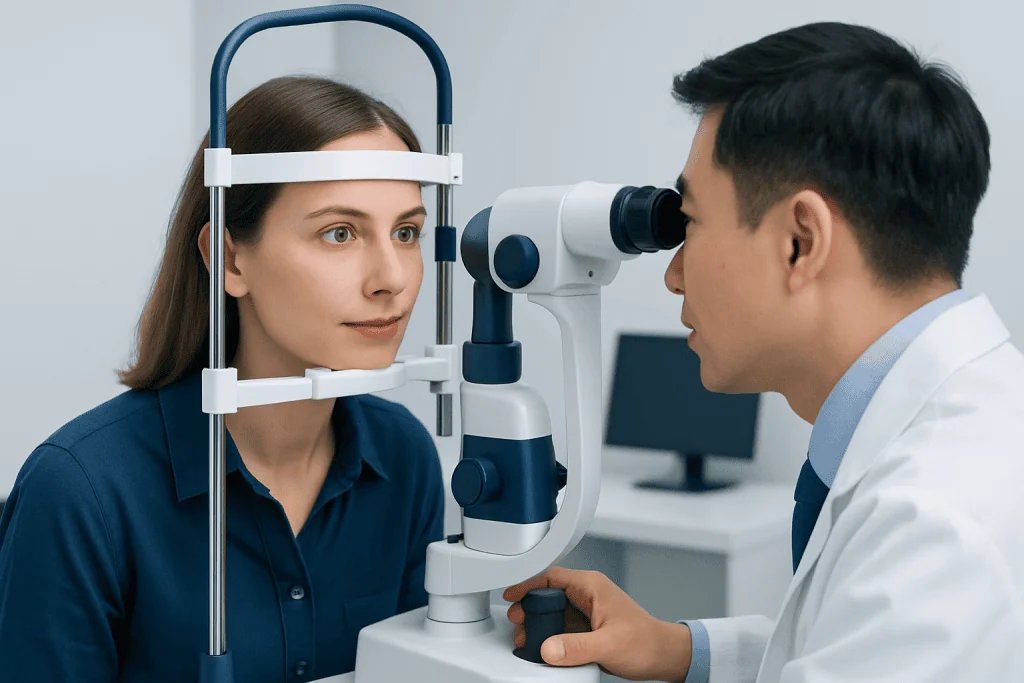
Diagnosis begins with a routine eye exam that measures refractive error and checks the health of the front and back of the eye. Astigmatism is identified through vision testing and instruments that assess the shape and focusing power of the eye. Corneal measurements help determine both the amount of astigmatism and the best lens design.
A contact lens fitting goes beyond a standard glasses prescription. The specialist may perform keratometry or corneal topography to study the curvature of the cornea in more detail. Trial lenses are then placed on the eyes so the doctor can examine fit, movement, orientation, and visual performance after blinking and during normal eye movements.
Patients are often asked about their routine, screen time, work environment, and previous lens experience. These details help guide the choice between daily and reusable lenses, soft versus rigid materials, and whether added moisture retention or specialty designs may improve comfort. A final prescription is usually confirmed after follow-up, once the lenses have been worn in real-life conditions.
When to See a Doctor
A person should arrange an eye assessment if blurred vision, squinting, headaches, or nighttime glare suggest uncorrected astigmatism. Professional evaluation is also important when contact lenses feel unstable, vision fluctuates through the day, or previous lenses have been disappointing. Small changes in fit or lens type can sometimes make a large difference.
Prompt medical advice is needed if contact lens wear causes pain, strong redness, light sensitivity, discharge, or a sudden drop in vision. These symptoms may signal infection, corneal injury, or another urgent eye problem that should not be managed at home. Lenses should be removed unless a clinician has advised otherwise.
Near the end of the care pathway, some patients benefit from a multidisciplinary ophthalmology assessment, especially if lens intolerance is linked to corneal disease, dry eye, or refractive complexity. Acibadem International’s multidisciplinary specialists and JCI-accredited hospitals diagnose and treat eye conditions for international patients, including contact lens-related concerns and astigmatism management.
Frequently asked questions
Can all astigmatism be corrected with contact lenses?
Many cases of astigmatism can be corrected with contact lenses, but the best results depend on the amount and type of astigmatism and the health of the eye. Some people do very well with soft toric lenses, while others need rigid or specialty lenses for clearer vision.
Are toric contact lenses the same as regular soft lenses?
No. Toric lenses are specially designed for astigmatism and have different powers in different meridians of the lens. They also include features that help the lens stay in the right position on the eye.
Why do contacts for astigmatism sometimes feel blurry when blinking?
This can happen if the lens rotates slightly or does not settle consistently on the eye. It may also be related to dryness or an imperfect fit. An eye care professional can often improve this by changing the lens design or measurements.
Are daily disposable lenses available for astigmatism?
Yes, daily disposable toric lenses are available for many prescriptions. They can be convenient and may improve comfort for some people because a fresh lens is used each day.
Do contact lenses for astigmatism cost more than regular lenses?
They often do cost more because their design is more specialized. The exact cost depends on the lens material, replacement schedule, and whether a specialty fitting is needed.
Can someone with dry eyes still wear contacts for astigmatism?
Sometimes, yes. Success depends on how severe the dryness is and which lens material or design is chosen. Treating dry eye first and using the right lens schedule can make wear more comfortable.
This article is for general information only and is not a substitute for professional medical advice. Please consult a qualified doctor about your individual situation.
Contact Lenses in Turkey — costs, top hospitals & a free quote
JCI-accredited · board-certified surgeons · reply within 24h
Add us as a Preferred Source to see more of our trusted health content across Google Search, AI Overviews and Discover.

Ophthalmology
Comprehensive eye care from laser vision correction to retina, cornea and cataract surgery.
75 specialists in this unitRelated Treatments
More from the Health Library
Pediatric Eye Exam: What to Expect at Your Child’s Visit

LASIK Vision Institute vs Hospital Eye Centers

Myopia in Children: Nearsightedness and Progression Control

Contact Lenses for Keratoconus: Who May Benefit and What to Expect
Tonometry Test for Measuring Eye Pressure