Pediatric Eye Exam: What to Expect at Your Child’s Visit
A pediatric eye exam can detect vision problems even when a child does not report symptoms. Eye doctors use age-appropriate methods such as pictures, lights, and observation to assess infants and children.
Key Takeaways
- A pediatric eye exam can detect vision problems even when a child does not report symptoms.
- Eye doctors use age-appropriate methods such as pictures, lights, and observation to assess infants and children.
- Dilating eye drops may be used to examine the inside of the eye and measure refractive error more accurately.
- Early diagnosis of conditions such as lazy eye, crossed eyes, or refractive errors can support healthy visual development.
- Parents can help by preparing their child calmly and bringing any glasses, school concerns, or medical history to the visit.
A pediatric eye exam helps assess a child’s vision, eye alignment, focusing ability, and overall eye health. The visit is usually simple and child-friendly, and the tests are adapted to the child’s age and development.
Overview
A pediatric eye exam is a medical assessment of a child’s vision and eye health. It is designed to identify problems with seeing clearly, using the eyes together, focusing, or the health of the eye structures. Because children may not realize that their vision is different from normal, regular eye evaluation can play an important role in healthy development.
The exam is not the same at every age. Infants, toddlers, school-age children, and teenagers are tested in different ways depending on what they can understand and communicate. Eye specialists often use lights, pictures, symbols, eye movement checks, and special instruments to gather information without requiring a child to read letters if they are too young.
Many families are surprised to learn that a child can have an eye problem even without obvious complaints. Some children adapt well to blurry vision in one eye, mild misalignment, or focusing issues. A thorough eye examination can help detect concerns early, including refractive errors, eye coordination problems, and conditions affecting the front or back of the eye.
Why Children Need Eye Exams
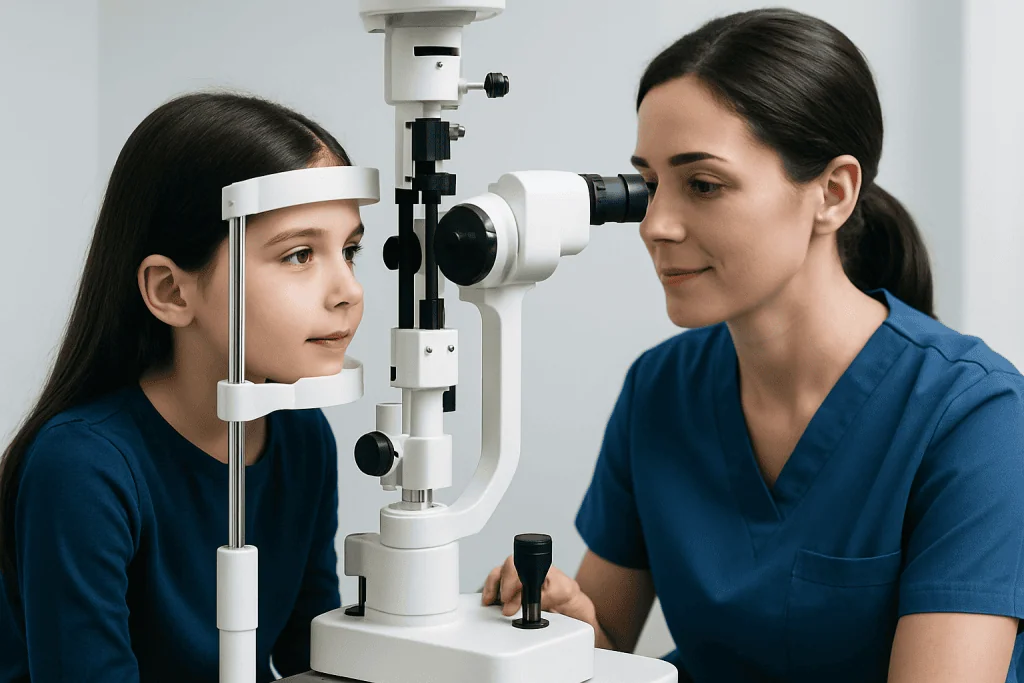
Vision is closely linked to learning, motor development, and everyday activities. Children use their eyes to recognize faces, explore their surroundings, track moving objects, read, write, and participate in sports. If a vision problem goes unnoticed, it may affect comfort, confidence, and school performance.
Screening at a pediatrician’s office or school can be helpful, but it does not replace a full eye exam when there are concerns or risk factors. A complete exam can provide more detailed information about how each eye sees, how the eyes work together, and whether the child needs glasses or treatment.
Children may especially benefit from a full exam if they were born prematurely, have developmental delays, have a family history of significant eye disease, failed a vision screening, or show signs such as squinting, eye rubbing, headaches, or frequent loss of place while reading. Early care is particularly important for problems such as amblyopia (lazy eye) and eye misalignment, because treatment is often most effective while vision is still developing.
What Happens During the Visit
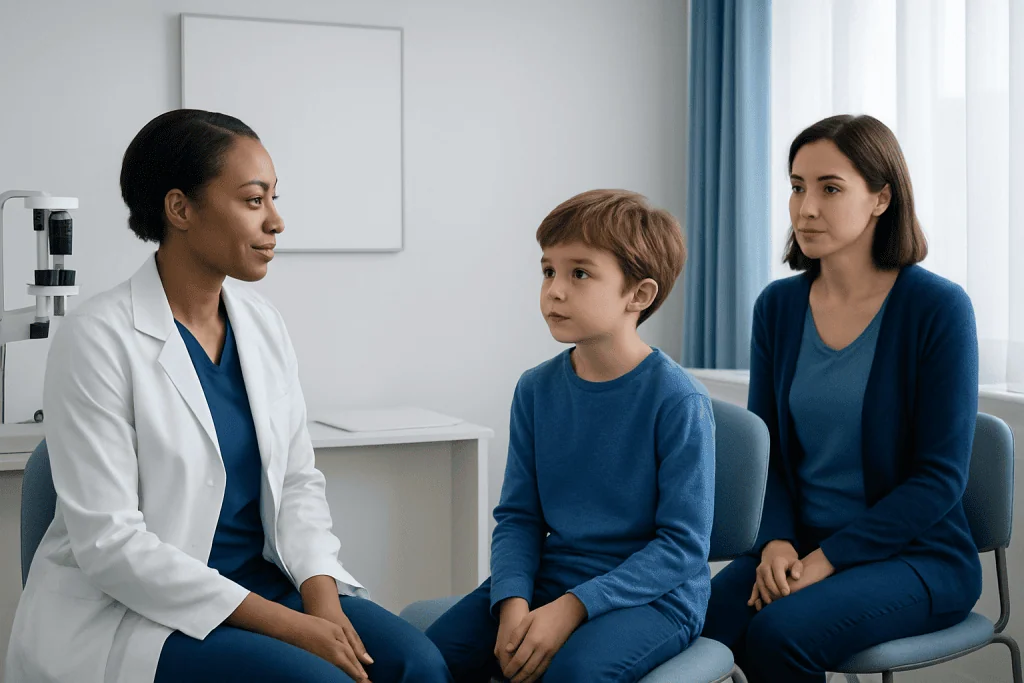
A pediatric eye visit usually begins with questions about the child’s medical history, birth history, family eye conditions, symptoms, school concerns, and any glasses previously used. Parents may be asked whether the child sits very close to screens, tilts their head, bumps into objects, or seems sensitive to light.
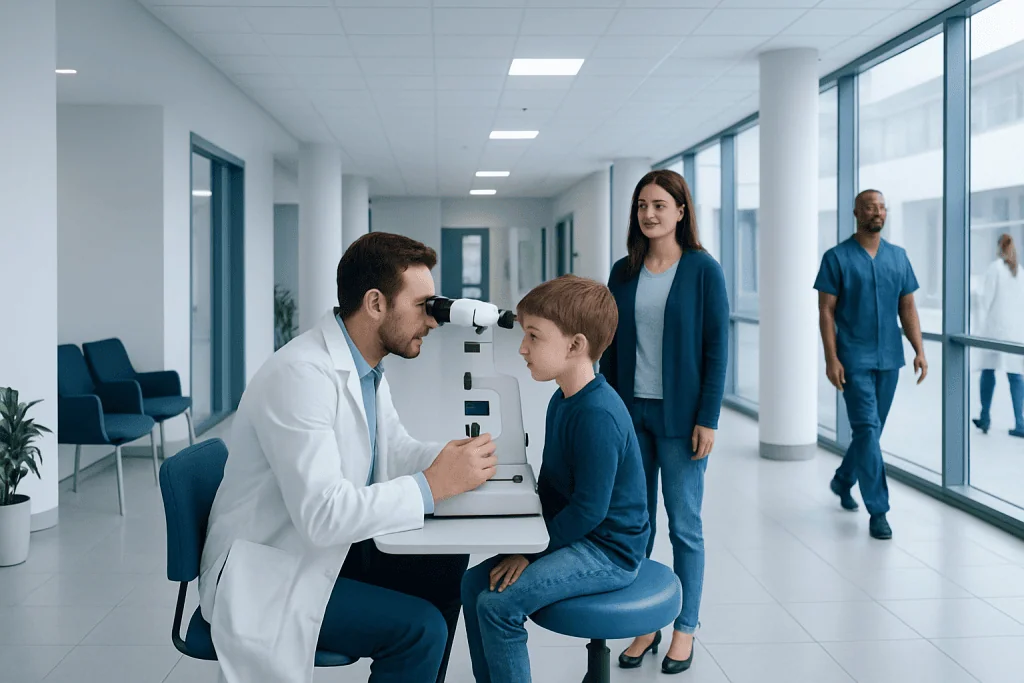
The doctor or orthoptist then checks visual function in age-appropriate ways. Babies may be assessed by how they fix and follow a target. Toddlers and preschoolers may use matching cards, pictures, or symbols instead of letters. Older children may read a chart at distance and near. The clinician also checks whether the eyes are straight, how well they move, and how they work together.
Other parts of the exam often include pupil reactions, depth perception, color vision when appropriate, and an examination of the front of the eyes. To better evaluate focusing and the internal structures of the eye, dilating drops may be used. These drops temporarily enlarge the pupils and may blur near vision for a few hours. Although children may dislike the sting for a moment, the process is usually brief and safe when used appropriately.
In some children, special instruments are used to estimate refractive error or examine the retina more closely. If needed, the eye specialist may discuss follow-up with general ophthalmology or another subspecialty service depending on the findings.
Common Conditions a Pediatric Eye Exam Can Detect
One major goal of a pediatric eye exam is to find refractive errors, which are focusing problems that make vision blurry. These include nearsightedness, farsightedness, and astigmatism. Some children need glasses full-time, while others may only need them for certain tasks such as schoolwork or distance viewing.
The exam can also identify eye alignment and binocular vision problems. These include eyes that turn inward, outward, or do not work well together. If one eye sends a weaker image to the brain over time, amblyopia may develop. Children do not always complain because the stronger eye can compensate, which is why routine assessment is valuable.
In addition, the doctor looks for signs of less common but important eye health issues. These may include eyelid or tear duct problems, cataracts, inflammation, retinal disorders, or optic nerve abnormalities. Redness or discharge may point to infections such as conjunctivitis, while unusual reflexes or reduced vision may need prompt specialist assessment. Most findings are manageable, especially when recognized early.
How to Prepare Your Child
Parents can help by describing the visit in simple, calm language. It is often enough to say that the doctor will look at how the eyes see and move, using lights and pictures. Avoid telling the child that nothing will happen, because this can increase anxiety if drops are needed. A more reassuring approach is to say that some parts may feel strange for a moment but will not last long.
It is useful to bring any glasses, previous prescriptions, referral notes, school reports about vision concerns, and a list of medications. If there is a family history of strong glasses, lazy eye, childhood cataracts, retinal disease, or genetic eye conditions, sharing this information can help guide the exam.
Because dilating drops can make bright light uncomfortable and blur near vision temporarily, some families like to bring a hat, sunglasses, snacks, or a favorite toy for after the appointment. Younger children often do best when the visit is scheduled at a time of day when they are usually well rested and fed.
Treatment and Follow-Up
Treatment depends on what the exam shows. Many children simply need monitoring over time, while others benefit from glasses, eye patching, eye drops for amblyopia treatment, vision-related exercises under specialist guidance, or treatment of an underlying eye condition. When appropriate, the doctor will explain what the diagnosis means and how follow-up should be planned.
If glasses are prescribed, parents may need to allow time for adjustment. Some children adapt quickly, while others need encouragement and consistent wear. The doctor may schedule repeat visits to check whether vision is improving equally in both eyes and whether the prescription remains appropriate as the child grows. In selected cases, older children may also discuss options such as contact lenses when medically suitable and with proper hygiene habits.
A smaller number of children need referral for more specialized care, including retina, neuro-ophthalmology, eyelid, or surgical assessment. Near the end of the care journey, families may wish to know that Acibadem International’s multidisciplinary specialists and JCI-accredited hospitals diagnose and treat pediatric and adult eye conditions for international patients.
When to See a Doctor Sooner
Some symptoms should prompt an earlier eye evaluation rather than waiting for a routine check. These include a constant eye turn, frequent squinting, one eye closing in bright light, a white pupil in photos, persistent tearing, repeated eye redness, eyelid drooping, or a child who seems unusually bothered by light. Sudden changes in vision or eye appearance always deserve timely medical attention.
Parents should also seek assessment if a child complains of headaches with visual tasks, double vision, eye pain, or trouble reading despite normal intelligence and effort. Sometimes these problems are related to refractive error or eye alignment, and sometimes they have another cause that needs evaluation.
Emergency care is especially important after an eye injury, chemical exposure, or sudden severe eye pain. If there is concern about infection, trauma, or abrupt vision loss, the safest step is to contact a qualified doctor promptly or go to urgent care or an emergency department.
Frequently asked questions
At what age should a child have an eye exam?
Eye assessment begins in infancy through routine pediatric care, but a full pediatric eye exam may be recommended earlier if there are risk factors or symptoms. Many children also need formal vision evaluation before starting school or if they fail a screening.
Will my child need dilating eye drops?
Many pediatric eye exams include dilating drops because they help the doctor check the inside of the eye and measure refractive error more accurately. The drops can sting briefly and may cause light sensitivity or blurry near vision for a few hours.
How long does a pediatric eye exam take?
The visit length varies with the child’s age, cooperation, and whether dilation is needed. Many appointments take around 30 to 60 minutes, though dilation can add waiting time while the drops take effect.
What if my child cannot read letters yet?
Children do not need to know the alphabet to have their eyes tested. Eye doctors use age-appropriate tools such as pictures, matching games, lights, and observation of eye movements and visual behavior.
How can parents tell if a child may have a vision problem?
Possible signs include squinting, sitting very close to screens, covering one eye, frequent eye rubbing, headaches, poor tracking while reading, or an eye that seems to drift. Some children show no clear signs, which is why regular screening and timely exams are helpful.
If a school vision screening was normal, does my child still need an eye exam?
A normal screening is reassuring, but it does not rule out every eye or vision problem. A full exam may still be needed if the child has symptoms, risk factors, learning-related visual concerns, or a family history of eye disease.
References
- American Academy of Ophthalmology
- American Association for Pediatric Ophthalmology and Strabismus
- American Academy of Pediatrics
- National Eye Institute
- Centers for Disease Control and Prevention
This article is for general information only and is not a substitute for professional medical advice. Please consult a qualified doctor about your individual situation.
Explore treatments in Turkey — costs, top hospitals & a free quote
JCI-accredited · board-certified surgeons · reply within 24h
Add us as a Preferred Source to see more of our trusted health content across Google Search, AI Overviews and Discover.