

Can You Have Lung Cancer Surgery? What Lung Function and Heart Tests Help Decide

Key Takeaways
- Surgeons judge fitness for lung resection on predicted postoperative FEV1 and DLCO, not your current values alone, because the calculation accounts for how much functioning lung the planned operation removes.
- Under the ACCP guideline, predicted postoperative values above 60 percent of normal usually need no further breathing tests, values between 30 and 60 percent trigger an exercise test, and values below 30 percent call for a cardiopulmonary exercise test.
- A VO2 max above 20 mL/kg/min on cardiopulmonary exercise testing indicates low physiological risk, while a value below 10 places a person in the high-risk group where alternatives to surgery are usually discussed.
- Heart assessment starts with a history, ECG, and a thoracic-specific risk score, and only a higher score, an active cardiac condition, or poor exercise capacity leads to echocardiography, stress testing, or cardiology referral.
- Guidelines reject chronological age as a reason on its own to decline surgery, and they state there is no evidence that stopping smoking shortly before an operation increases complications.
- Lung function typically falls immediately after surgery and then recovers over months as the remaining lung adapts, so the preoperative estimate is a planning figure rather than a permanent ceiling.
Yes, many people with early-stage lung cancer can have surgery, but the decision rests on tests rather than age alone. Surgeons measure breathing capacity with spirometry (FEV1) and gas transfer (DLCO), estimate how much function would remain after the planned removal, and add exercise and heart tests when numbers are borderline. The treating team weighs these results together with the cancer stage and your overall health.
The envelope from the thoracic clinic looks thin, almost casual. Inside is a list: breathing test, gas transfer test, electrocardiogram, and, circled in pen, a note that says the surgeon will decide after the results. For someone who has just been told a nodule on a CT scan is probably lung cancer, that sentence lands harder than any medical term. It sounds as if the operation might be taken off the table.
The reality is more reassuring and more interesting. A lung function test before lung cancer surgery is not a pass-or-fail exam. It is the first step in a structured pathway that thoracic teams use to answer one practical question: if we remove this part of the lung, will the lungs and heart that remain carry you comfortably through recovery and the years afterward?
This article walks through that pathway, from the mouthpiece in the pulmonary lab to the stairwell test and the cardiology consult, so the thin envelope stops looking like a verdict.
What actually happens during a lung function test before lung cancer surgery
Most of it takes place sitting in a chair. A respiratory technologist fits a soft clip over your nose so all air moves through a mouthpiece connected to a machine called a spirometer, which measures how much air you move and how fast. You will be asked to take the deepest breath you can and blow out as hard and long as possible, usually three or more times so the results are consistent. Coaching is loud and enthusiastic by design; the test only counts if the effort is maximal.
A second part measures gas transfer. You breathe in a mixture containing a tiny, harmless trace of carbon monoxide and a marker gas, hold it for about ten seconds, then exhale. The machine calculates how efficiently gas crosses from the air sacs into the blood. This is the DLCO, short for diffusing capacity of the lung for carbon monoxide, and it tells the team something spirometry cannot: how well the lung tissue itself is working, not just how open the airways are.
Some labs add lung volume measurements in a clear booth that looks like a phone box, and a few include a walking or stair test on the same day. According to MedlinePlus, the tests are safe for most people, though some feel briefly lightheaded or tired from the hard breathing, and you may be asked to avoid heavy meals, vigorous exercise, and smoking beforehand. Results are expressed as a percentage of what is expected for someone of your age, height, sex, and ancestry, which is why two people with the same raw number can be judged quite differently.
The whole visit rarely takes more than an hour, yet the numbers it produces shape everything that follows.
FEV1 and DLCO: the two breathing numbers your team watches most
Of all the figures on the printout, two carry the weight. FEV1 is the forced expiratory volume in one second, the amount of air you can push out in the first second of a hard exhale. It reflects how open and elastic the airways are, and it falls in conditions such as chronic obstructive pulmonary disease (COPD), a long-term narrowing of the airways most often linked to smoking. Because many people with lung cancer have also smoked for years, a reduced FEV1 is common in this setting rather than exceptional.
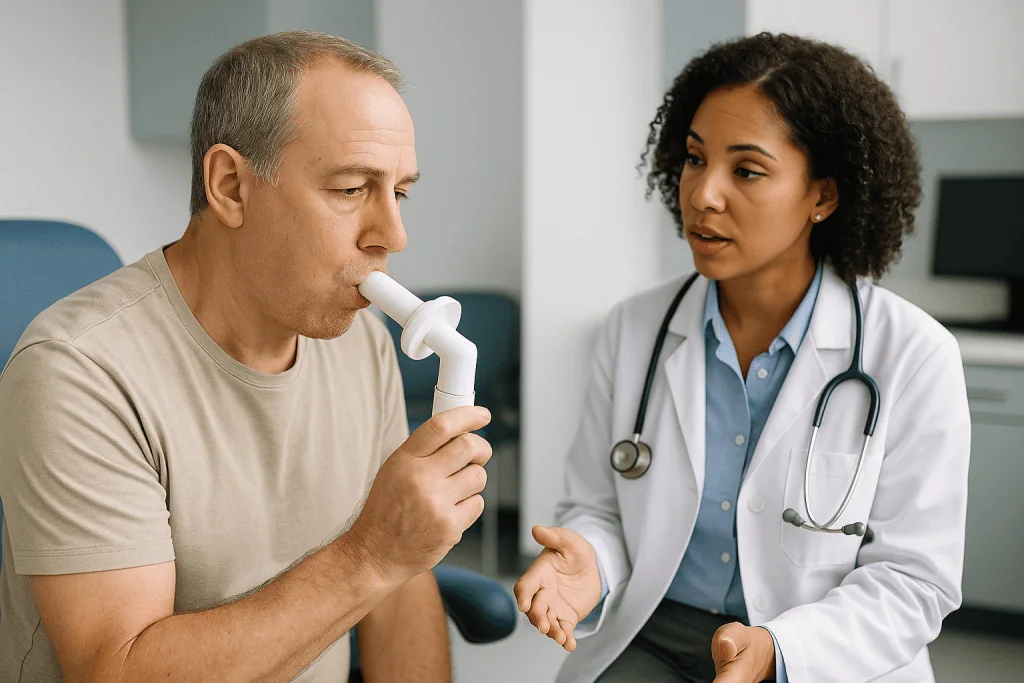
DLCO measures something different. Think of the lung as a wet sponge threaded with blood vessels. FEV1 tells you how fast air reaches the sponge; DLCO tells you how well oxygen soaks through it. Emphysema destroys the sponge’s fine walls, scarring thickens them, and some chemotherapy drugs can injure them, so DLCO can be low even when FEV1 looks respectable. The American College of Chest Physicians (ACCP) guideline on physiologic evaluation for lung resection recommends measuring both in everyone being considered for surgery, precisely because one can be normal while the other flags a problem.
Why do these matter for an operation? Removing a lobe removes both airways and sponge. If the reserve is generous, the body barely notices. If the reserve is already thin, the loss can leave someone breathless doing ordinary things, more prone to pneumonia in the weeks after surgery, and sometimes dependent on oxygen at home. The tests are not there to exclude people; they are there to predict which of those futures is likely and to steer the plan accordingly.
A single low number is a prompt for more information, not a closed door.
Predicted postoperative FEV1: how surgeons estimate the lung you would have left
Here is the piece of arithmetic that turns a breathing test into a surgical decision. Surgeons do not judge your current FEV1 or DLCO on their own. They calculate the predicted postoperative value, often written ppoFEV1 and ppoDLCO, which estimates what you would have after the planned resection.
The simplest method counts segments. Each lung is divided into anatomical segments, 19 in total across both lungs. The right upper lobe has three, the middle lobe two, the right lower lobe five, and the left lobes hold the remaining nine. If a surgeon plans to remove a right upper lobe, roughly three-nineteenths of the functioning lung goes with it. Multiply your current value by the fraction that remains and you have a rough ppo figure. Segments already blocked by the tumor are counted as non-functioning, which can make the predicted loss smaller than it first appears.
For a pneumonectomy, the removal of an entire lung, the ACCP guideline suggests a more precise approach: a quantitative perfusion scan, a nuclear medicine test that shows what proportion of blood flow goes to each lung. If the diseased lung is already contributing little, losing it costs less function than the segment count implies.
The thresholds that follow come from the ACCP guideline. When both ppoFEV1 and ppoDLCO are above 60 percent of predicted, the risk from a lung standpoint is considered low and no further breathing tests are usually needed. When either falls between 30 and 60 percent, an exercise test is added. When either drops below 30 percent, a formal cardiopulmonary exercise test is recommended before any decision.
The immediate postoperative function tends to be lower than the ppo figure, then recovers over the following months as the remaining lung adapts, which is why the estimate is treated as a guide rather than a guarantee.
Cardiopulmonary exercise test for lung cancer surgery: why you may be asked to climb stairs
Breathing tests measure the lungs at rest. Surgery and recovery are not restful. The days after a thoracotomy demand more oxygen delivery than a quiet afternoon, and the only way to know whether heart, lungs, muscles, and blood can meet that demand together is to make them work.
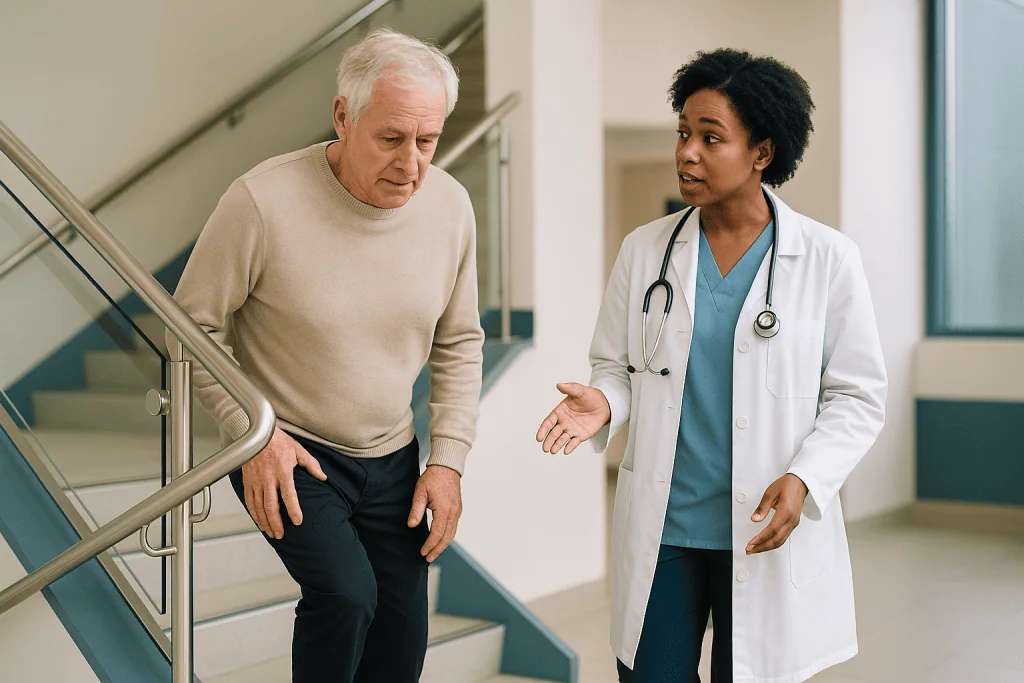
The low-technology version is charmingly simple. In a stair-climb test you walk up flights of stairs at your own pace while a clinician records how far you get and monitors your oxygen level; in a shuttle walk test you walk between two cones as a beeping signal speeds up. The ACCP guideline treats climbing more than 22 meters of vertical height, or walking more than 400 meters in the shuttle test, as reassuring. Falling short of those marks is not a refusal. It is the trigger for the more detailed test.
That test is the cardiopulmonary exercise test, or CPET: you pedal a stationary bike or walk on a treadmill with a mask over your face and ECG leads on your chest while the workload climbs steadily. The key output is peak oxygen consumption, called VO2 max, measured in milliliters of oxygen per kilogram of body weight per minute. According to the ACCP guideline, a VO2 max above 20 signals low risk, values between 10 and 20 place a person in an intermediate zone, and below 10 the risk of a major complication is considered high enough that the team usually looks hard at alternatives.
CPET also does something no single organ test can. If someone stops early because of leg fatigue, chest pain, or an abnormal heart rhythm, the test has uncovered the true limiting factor, which sometimes turns out to be the heart rather than the lung.
What heart tests are done before lung cancer surgery?
Lung cancer and heart disease share a cause in tobacco smoke, and they share a patient population. A thoracic operation places genuine strain on the heart: general anesthesia, fluid shifts, a period of one-lung ventilation while the surgeon works, and the inflammatory response to a large incision. The heart assessment exists to find problems that could be treated or stabilized before surgery, not to hunt for reasons to say no.
Everyone starts with a history and an electrocardiogram (ECG), a painless recording of the heart’s electrical activity from stickers on the chest and limbs. The ACCP guideline recommends adding a structured risk score for thoracic surgery, which weighs whether a pneumonectomy is planned, whether there has been prior coronary artery disease, a previous stroke or mini-stroke, and reduced kidney function. A higher score, an active heart condition such as unstable angina or uncontrolled heart failure, or an inability to climb two flights of stairs comfortably leads to a cardiology review.
What might that review include? An echocardiogram, an ultrasound of the heart, shows pumping strength and valve function. A stress test, either on a treadmill or with a medication that mimics exercise while images are taken, checks whether the heart muscle gets enough blood under load. Occasionally a coronary angiogram, in which dye is injected into the heart arteries, is needed to define a blockage.
Two practical points follow. First, existing heart medicines are usually continued, not stopped, and any change belongs to the prescribing clinician. Second, the guideline is explicit that cardiac and pulmonary evaluation should run in parallel with cancer staging rather than delay it. An oncology timeline is not something the heart work-up should stall unnecessarily.
The risk pathway at a glance
Seen as a whole, the preoperative work-up is a set of gates, each opening onto either surgery planning or another, more detailed test. The table below summarizes the physiologic pathway as laid out in the ACCP guideline. It is a simplification; your team will also weigh tumor stage, other illnesses, your own priorities, and the specific operation being considered.
| Step | What is measured | Reassuring result (ACCP guideline) | What happens next |
|---|---|---|---|
| Cardiac screen | History, ECG, thoracic risk score | Low score, no active heart condition, able to climb two flights | Proceed to lung tests; higher risk prompts cardiology review |
| Spirometry and gas transfer | FEV1 and DLCO | Both predicted postoperative values above 60 percent | No further lung tests usually required |
| Borderline zone | Either ppo value 30 to 60 percent | Stair climb over 22 m or shuttle walk over 400 m | Considered acceptable risk; below these marks, CPET |
| Formal exercise test | CPET with VO2 max | Above 20 mL/kg/min | 10 to 20 is intermediate; below 10 is high risk |
| High-risk result | Any combination above | Not applicable | Team discusses smaller resection, non-surgical treatment, or optimization first |
Notice how many boxes end in another test rather than a decision. That structure is deliberate. Guidelines favor gathering more evidence before excluding anyone from an operation that offers the best chance of controlling early-stage disease. The same structure also protects against the opposite error: rushing someone with hidden heart disease or minimal reserve into an operation that could cost more than it gives.
The final column is where medicine becomes conversation. Numbers tell the team what is likely; only you can say what risks feel acceptable for what gain.
Who is usually offered surgery, and who is usually asked to wait
Surgery is generally considered for non-small cell lung cancer that is confined to the lung or nearby lymph nodes and can be removed completely with margins of healthy tissue. The NHS describes surgery as the main treatment when the cancer has not spread, provided general health allows. Small cell lung cancer, a faster-growing type, is treated with surgery far less often because it has usually spread microscopically by the time it is found.
Age by itself is not a barrier. The ACCP guideline advises against using chronological age alone to decline an operation, and thoracic teams routinely operate on people in their eighties whose test results support it. What matters is physiological age: how the lungs, heart, kidneys, and muscles perform on the tests described above, and how independent the person is in daily life. Frailty, meaning a general loss of strength and resilience that makes recovery slower, is increasingly assessed formally because it predicts complications better than a birth date.
Who is usually asked to wait? Someone with an active heart problem that can be stabilized first, such as newly discovered coronary narrowing or poorly controlled heart failure. Someone in the middle of a chest infection or a COPD flare, because operating on inflamed lungs raises the risk of pneumonia and prolonged air leak. Someone still smoking heavily who is willing to stop, when the team judges that a short delay for cessation and breathing training is worth more than the time lost. And anyone whose staging is incomplete, since finding spread outside the chest changes the plan entirely.
Waiting in these situations is not neglect. Staging scans, biopsies, and optimization typically run over a few weeks, and the goal is to arrive at the operating table with the best possible odds, not simply the earliest date.
Can you have lung surgery with COPD or borderline lung function?
Often, yes, and this is where the pathway earns its complexity. COPD is common among people with lung cancer, and a reduced FEV1 alone would exclude a large number of patients if the rules were blunt. Guidelines are not blunt. When predicted postoperative values land in the 30 to 60 percent zone, exercise testing frequently shows that the person copes well under load, and surgery goes ahead with extra precautions.
Several adjustments can tilt the balance. The first is the size of the resection. A lobectomy removes a whole lobe; a segmentectomy removes only the segments containing the tumor; a wedge resection takes a small piece. Smaller operations preserve more function and are increasingly used for very small, peripheral tumors in people with limited reserve, although the trade-off is a slightly higher chance that microscopic disease is left behind. The surgeon weighs tumor size and location against the breathing numbers when proposing one over another.
The second is the approach. Video-assisted thoracoscopic surgery (VATS) and robotic surgery use small incisions and a camera instead of spreading the ribs. Published patient information from MedlinePlus notes that these approaches are associated with less pain and shorter hospital stays than open thoracotomy, which particularly benefits people whose lungs cannot afford a slow, painful recovery.
The third is a curious feature of emphysema. When the diseased, over-inflated part of the lung is exactly where the tumor sits, removing it can act a little like lung volume reduction, letting the healthier lung expand. In selected cases, postoperative function falls less than the segment count predicts.
When every option carries high risk, stereotactic body radiotherapy, a precisely targeted radiation treatment delivered over a few sessions, is the usual non-surgical alternative for early-stage disease. That discussion belongs in a multidisciplinary meeting, with you in the room.
Stopping smoking and prehab: what improves in the weeks before the operation
If there is one thing within your control that changes the numbers, it is tobacco. The ACCP guideline recommends that everyone who smokes and is being considered for lung resection is counseled to stop and offered help, and it specifically states there is no evidence that quitting close to the operation increases complications, a myth that once led some people to keep smoking right up to surgery. Within days of the last cigarette, carbon monoxide levels in the blood fall and oxygen carrying improves; over the following weeks, the airways produce less mucus and the tiny hair-like cilia that clear it begin to recover. Nicotine replacement products and prescription medicines exist to support quitting, and which, if any, is appropriate is a decision for your clinician.
Prehabilitation, or prehab, is the idea of training for surgery the way an athlete trains for an event. Programs typically combine walking or cycling to build stamina, inspiratory muscle training with a small handheld device that adds resistance to breathing in, and instruction in the coughing and deep-breathing techniques you will need afterward. The evidence base is still developing, and reviews differ on how much prehab changes hard outcomes such as pneumonia rates, so it is fair to describe it as promising and low-risk rather than proven to alter results. What it reliably does is teach skills that make the first postoperative days less frightening.
Nutrition matters too. Unintended weight loss and low protein intake weaken the muscles used for breathing and coughing. A dietitian may suggest ways to hold weight steady in the run-up to surgery.
People with COPD may have inhaler therapy reviewed so airways are as open as possible on the day. Any change to inhaled or other medicines is for the prescribing team; the rule for patients is simply to bring an accurate list and take nothing new without asking.
How long does lung lobectomy surgery take, and what happens in the hospital?
People ask about the clock more than almost anything else, usually on behalf of whoever will be sitting in the waiting area. The honest answer is that a lobectomy is measured in hours rather than minutes, and the exact figure depends on the approach, the tumor’s position, scarring from previous illness, and how many lymph nodes are sampled. Your surgeon can give a range for your specific operation; a general figure would be a guess.
The sequence is more predictable. You receive a general anesthetic, and a specialized breathing tube allows the anesthesiologist to ventilate one lung while the surgeon works on the other, which is one reason the preoperative tests are so thorough. Through either a single larger incision between the ribs or several small ports, the surgeon divides the blood vessels and airway to the lobe, removes it along with nearby lymph nodes for staging, checks the remaining lung for air leaks, and places one or two chest tubes. These drain fluid and air from around the lung so it can re-expand.
Waking up, most people find the chest tube more bothersome than the incision. It stays until the lung has sealed and drainage slows, typically a few days. Nurses and physiotherapists will have you sitting out of bed and walking the corridor within the first day, because movement is the single best defense against pneumonia and blood clots.
MedlinePlus describes hospital stays after open lung surgery of roughly five to seven days, with shorter stays after keyhole operations. Johns Hopkins patient information similarly notes that recovery time varies with the type of surgery and individual health. Before discharge you will be taught breathing exercises, wound care, and warning signs, and the pathology result on the removed tissue will be scheduled for discussion.
How painful is lung surgery, and what do the first weeks at home look like?
Chest surgery hurts because every breath moves the wound. That said, the experience has changed considerably. Regional anesthesia, in which local anesthetic is delivered around the nerves running between the ribs or into the space beside the spine, is now standard in many programs and can blunt the sharpest pain for the first days. Pain teams combine this with scheduled oral medicines from several classes so that no single drug has to do all the work. Which medicines, at what doses, and for how long are decisions for your team, and they will adjust as you heal.
The character of the pain matters as much as its intensity. Incisional soreness fades over weeks. A burning or numb patch along the rib line, caused by bruised intercostal nerves, is common and can linger for months in some people; it usually settles but should be mentioned at follow-up if it interferes with sleep or activity. Shoulder ache on the operated side is frequent early on and responds to gentle stretching.
At home, the pattern is gradual. MedlinePlus advises that a full return to usual activity after lung surgery can take weeks to months, with walking encouraged from the outset and heavy lifting avoided until the surgeon clears it. Breathlessness on stairs is expected early and improves as the remaining lung expands and fitness returns. Many people describe a plateau around the third or fourth week where progress seems to stall, followed by another improvement, which is normal rather than a sign of trouble.
Follow-up usually includes a chest X-ray, a review of the pathology, and a conversation about whether any additional treatment is advised. Driving, working, and travel decisions depend on pain control, wound healing, and the specific job, and your team will guide the timing.
What people often get wrong about a pulmonary function test before surgery
The first misconception is that the breathing test looks for cancer. It does not. Spirometry and DLCO cannot see a tumor; imaging and biopsy do that. The pulmonary function test before surgery measures reserve, and a normal result says nothing about whether cancer is present.
The second is that one bad number means no operation. As the pathway shows, a low FEV1 or DLCO is the beginning of a conversation, leading to exercise testing, consideration of a smaller resection, or a different approach. The ACCP guideline was written specifically to avoid excluding people on a single measurement.
The third is that the test is pass or fail on effort, so trying hard will fool it. Poor effort produces low, inconsistent readings that the technologist will recognize, and the software flags variability. Maximal effort helps you, because it reveals your true capacity; there is no strategy in blowing gently.
The fourth concerns age. Relatives often assume an older parent is automatically too old for surgery. Guidelines reject age as a sole criterion, and fitness on testing counts for far more.
The fifth is the smoking myth already mentioned: that stopping shortly before surgery is somehow harmful. The evidence does not support that, and guidelines encourage quitting at any point before the operation.
The sixth is that keyhole surgery is a lesser operation for the cancer. VATS lobectomy removes the same lobe and the same lymph nodes as open surgery; the difference lies in access, not in what is taken out.
Last, people sometimes read the predicted postoperative figure as a permanent sentence. Function typically dips immediately after surgery and then recovers over months, often ending above the early estimate. The number is a planning tool, not a prophecy.
Questions to ask your care team
The most useful appointments are the ones you walk into with a written list. These questions are drawn from what patients most often wish they had asked before deciding.
- What were my FEV1 and DLCO as a percentage of predicted, and what do you estimate they will be after the operation you are proposing?
- Which operation are you recommending, lobectomy, segmentectomy, wedge, or pneumonectomy, and why that one for my tumor and my lungs?
- Will the approach be open, video-assisted, or robotic, and does that choice change my expected recovery?
- Did I need an exercise test or a cardiology review, and if so, what did the results show about my risk?
- What are the specific complications you worry about most in my case, and how often do they occur in patients like me?
- If surgery is judged too risky, what are the alternatives for treating this cancer, and how do they compare for my stage?
- Is there anything I can do in the coming weeks, stopping smoking, exercise, inhaler review, nutrition, that would improve my numbers or my recovery?
- How will pain be managed in the hospital and at home, and who do I call if it is not controlled?
- How long do you expect me to be in the hospital, and what needs to happen before I can go home?
- Will I need oxygen at home, even temporarily?
- When will the pathology result be ready, and who will explain whether further treatment is advised?
- How will my remaining lung function be checked afterward, and what should I expect it to feel like at three and six months?
Bring someone with you if you can. Two sets of ears catch more, and a companion can write while you listen. Ask for a copy of the multidisciplinary team summary; many centers provide one. If the answers leave you uncertain, asking for a second opinion within the same health system or elsewhere is a normal part of cancer care, not a challenge to the surgeon.
When to call your doctor
Before surgery, the team needs to know about anything that could change the plan or the timing. Call the clinic if you develop a chest infection with fever, colored sputum, or worsening breathlessness; new chest pain, palpitations, or fainting; a new or increasing cough of blood; sudden swelling or pain in one leg; or a marked drop in your usual ability to walk or climb stairs. Tell them as well if you start or stop any medicine, including over-the-counter products and supplements, because some affect bleeding or anesthesia.
After surgery, most days bring small improvements. Certain symptoms are not part of normal recovery and warrant an urgent call to your surgical team, or emergency services if severe:
- Breathlessness that is sudden, worsening, or present at rest, especially with chest pain or a racing heart, which can signal a blood clot in the lung, a collapsed lung, or a heart problem.
- Coughing up more than streaks of blood.
- Fever with chills, or a wound that becomes red, hot, swollen, or leaks pus or cloudy fluid.
- A chest tube site that bubbles, hisses, or drains heavily after the tube has been removed.
- Pain that escalates rather than eases, or that is not controlled by the plan you were given.
- Swelling, warmth, or pain in a calf or thigh.
- Confusion, drowsiness, or fainting.
- Rapidly increasing swelling of the face, neck, or chest wall, which can indicate air trapped under the skin.
Chest pain with breathlessness, sudden weakness on one side, or difficulty speaking are emergencies; call your local emergency number rather than the clinic. For anything less dramatic that still feels wrong, the surgical ward or specialist nurse line exists for exactly these calls, and teams would far rather hear from you early than late. Every decision about what to do next, including whether to be seen, adjust medicines, or return to hospital, sits with the clinicians who know your case.
Frequently asked questions
Can a pulmonary function test detect lung cancer?
No. A pulmonary function test measures how much air the lungs move and how well gas transfers into the blood; it cannot see a tumor. Lung cancer is found through imaging such as CT scans and confirmed by biopsy. Before surgery, the breathing test is used only to estimate how well you would cope with losing part of a lung, so a normal result says nothing about whether cancer is present.
What is predicted postoperative FEV1 and why does it matter?
Predicted postoperative FEV1 is an estimate of the one-second forced exhaled volume you would have after the planned lung removal, usually calculated by counting the functioning segments to be removed out of 19 in total. It matters because the ACCP guideline uses it, alongside predicted postoperative DLCO, to sort people into low-risk, intermediate, and high-risk groups and to decide whether exercise testing is needed.
What heart tests are done before lung cancer surgery?
Everyone has a history taken and an ECG, and a thoracic-specific cardiac risk score is calculated. If that score is elevated, if there is an active heart condition such as unstable angina, or if you cannot climb two flights of stairs comfortably, a cardiologist may add an echocardiogram, a stress test, or occasionally a coronary angiogram. Existing heart medicines are usually continued, with any change made only by your prescribing clinician.
Can you have lung surgery with COPD?
Often, yes. Many people with lung cancer also have COPD, and guidelines are designed so that a reduced FEV1 alone does not exclude someone. When predicted postoperative values are borderline, exercise testing frequently shows adequate reserve. Surgeons may also propose a smaller resection such as a segmentectomy, or a keyhole approach that eases recovery. The final judgment rests with the thoracic team after all results are reviewed.
How long does lung lobectomy surgery take?
A lobectomy is an operation lasting hours rather than minutes, but the exact time depends on whether it is done through an open incision or keyhole ports, where the tumor sits, how much scarring is present, and how many lymph nodes are removed. Your surgeon is the right person to give a realistic range for your specific procedure; a single general number would be misleading.
How painful is lung surgery?
Chest surgery is painful because breathing moves the wound, but modern pain control has changed the experience. Regional anesthesia around the nerves between the ribs, combined with scheduled medicines from several classes, blunts the worst of it in the first days. Keyhole approaches are associated with less pain than open surgery. Incisional soreness fades over weeks, while nerve-related numbness or burning along the ribs can linger longer in some people.
Do people fully recover from lung cancer surgery?
Many people return to their usual activities, though how complete recovery feels varies with the amount of lung removed, pre-existing lung disease, and fitness beforehand. MedlinePlus notes that full recovery can take weeks to months. Breathlessness on exertion is common early and improves as the remaining lung expands. Whether the cancer itself is controlled depends on stage and pathology, which your team will discuss after the operation.
What is the average life expectancy after a lobectomy for lung cancer?
There is no single figure that applies to an individual. Outlook after lobectomy depends mainly on the stage found on the final pathology, the cancer subtype, whether lymph nodes were involved, and your overall health, not on the preoperative breathing or heart tests. Your oncology team can explain what the pathology report means for you and whether further treatment is advised. Population statistics describe groups, not any one person.
What happens if my lung function is too low for surgery?
The team first checks whether anything can be improved, such as treating a COPD flare, stopping smoking, or completing a breathing training program, and then repeats the assessment. If risk remains high, a smaller resection may be considered, or non-surgical treatment such as stereotactic body radiotherapy, a precisely targeted form of radiation, is discussed for early-stage disease. These options are weighed in a multidisciplinary meeting and explained to you before any decision.
How do I prepare for a lung function test before surgery?
Wear loose clothing, avoid a heavy meal and vigorous exercise beforehand, and do not smoke for several hours before the test, following the instructions your lab gives you. Bring a list of your medicines, since some inhalers may need to be timed differently on the day; do not change them without being told. Give maximal effort during the blows, because half-hearted attempts produce misleadingly low readings that do not help you.
References
- Pulmonary function tests (MedlinePlus Medical Encyclopedia)
- Lung surgery (MedlinePlus Medical Encyclopedia)
- Lung cancer – Treatment (NHS)
- Pulmonary Function Testing (Cleveland Clinic)
This article is for general information only and is not a substitute for professional medical advice. Please consult a qualified doctor about your individual situation.

More from the Blog

Melanoma Staging: What Biopsy Review, PET-CT and Blood Tests Reveal Before Treatment
Melanoma staging tests establish how far the cancer has spread before any treatment plan is made. The pathologist's review of the biopsy, which measures…
Why Transfusions Are Part of Bone Marrow Transplant Care: Bleeding Risk and Low Counts
Transfusions are a routine part of bone marrow transplant care because the high-dose chemotherapy, and sometimes radiation, given before the transplant clears out the…

Liver Tumor Ablation Step by Step: Anesthesia, Imaging Guidance and Recovery
Liver tumor ablation destroys a small liver tumor with heat, cold or electrical energy delivered through a thin needle guided by ultrasound, CT or…

Life After CAR-T Cell Therapy: Infection Precautions, Driving Restrictions and Follow-Up Visits
Life after CAR-T cell therapy usually means several weeks of close monitoring near the treatment center, a full-time caregiver, no driving for about eight…
After Melanoma Skin Cancer Treatment: Scar Care, Sun Habits and Skin Self-Checks
After melanoma treatment, sun protection should become a daily habit rather than a beach-only one. Public health guidance advises shade during peak UV hours,…

How Transarterial Radioembolization Works Step by Step: Mapping Angiogram to Microspheres
TARE radioembolization is performed in two visits by an interventional radiology team. First, a mapping angiogram threads a thin catheter from the wrist or…