

How Pancreatic Cancer Treatment Is Planned: Resectable, Borderline and Advanced Disease
Key Takeaways
- Treatment plans for pancreatic cancer hinge on resectability, meaning whether a surgeon can remove the tumor with clear margins, more than on the stage number.
- Borderline resectable tumors are usually treated with two to four months of combination chemotherapy before surgery is reconsidered, partly to test how the tumor behaves.
- A Whipple procedure removes the head of the pancreas, the duodenum, the gallbladder and part of the bile duct, with a typical hospital stay of one to two weeks.
- Chemotherapy after surgery for resectable disease is generally given for about six months once the person has recovered enough to start.
- Germline and tumor genetic testing are advised in advanced disease because inherited BRCA-type changes, mismatch repair deficiency and certain KRAS variants open specific treatment options.
- Pancreatic cancer carries one of the highest blood clot risks of any tumor type, so leg swelling or sudden breathlessness during treatment warrants a same-day call.
Pancreatic cancer treatment by stage is decided less by the stage number than by whether a surgeon can remove the tumor completely. Resectable tumors are usually treated with surgery plus chemotherapy, in either order. Borderline resectable tumors typically receive chemotherapy first, then reassessment for surgery. Locally advanced and metastatic (stage 4) disease is managed mainly with chemotherapy, sometimes radiation or targeted drugs for tested subgroups, with supportive care throughout. The treating team makes the final plan.
The surgeon draws the pancreas on the back of a printout: a lopsided comma tucked behind the stomach, with a thick vein running past its head. Then she circles a spot and says the word that will shape the next year. Not a number. Not a stage. The word is resectable, or borderline, or advanced.
People arrive at this conversation braced for a Roman numeral, because that is how most cancers are described. Pancreatic cancer treatment by stage works differently in practice. The scan is read for one question above all others: can this tumor be removed with a margin of healthy tissue, and if not yet, could it become removable? Everything else in the plan follows from that answer.
This explainer walks through how a treating team reaches that answer, what each pathway involves, what the first weeks usually look like, and where the honest gaps in the evidence still sit.
Why pancreatic cancer treatment by stage really means treatment by resectability
Oncologists still assign a formal stage to pancreatic cancer using the TNM system, which describes tumor size (T), lymph node involvement (N) and spread to distant organs (M). Stage 0 through stage 4 follows from those letters. That number matters for research, registries and prognosis discussions. It is not, however, the main tool used to plan treatment (Mayo Clinic).
The pancreas sits in a crowded neighborhood. The superior mesenteric artery and vein, the portal vein, the celiac artery and the hepatic artery all pass within millimeters of the gland. A tumor of modest size that wraps around an artery can be impossible to remove safely, while a larger tumor sitting clear of those vessels may be a straightforward operation. Size alone tells a surgeon little.
So treating teams sort the disease into four practical groups: resectable, borderline resectable, locally advanced and metastatic. Resectable means a surgeon expects to remove the tumor entirely with clear margins. Borderline resectable means the tumor touches or partly encases a major vessel, so surgery is possible but uncertain. Locally advanced means the tumor has grown around vessels to a degree that removal is not feasible, though it has not spread elsewhere. Metastatic means cancer cells have traveled to distant sites, most commonly the liver, the lining of the abdomen or the lungs.
Only a minority of people are in the first group when they are diagnosed, because the pancreas rarely produces symptoms until a tumor is well established (NHS). That fact drives much of the urgency around imaging, and much of the honesty required when discussing options. It also explains why the same stage 3 label can lead to two quite different plans for two different people.
What actually happens when a multidisciplinary team plans your treatment
Behind the single conversation with a surgeon or oncologist sits a meeting most patients never see. A multidisciplinary tumor board, which is a scheduled review where surgeons, medical oncologists, radiation oncologists, radiologists, pathologists and specialist nurses look at every new case together, usually decides the pathway (Mayo Clinic).

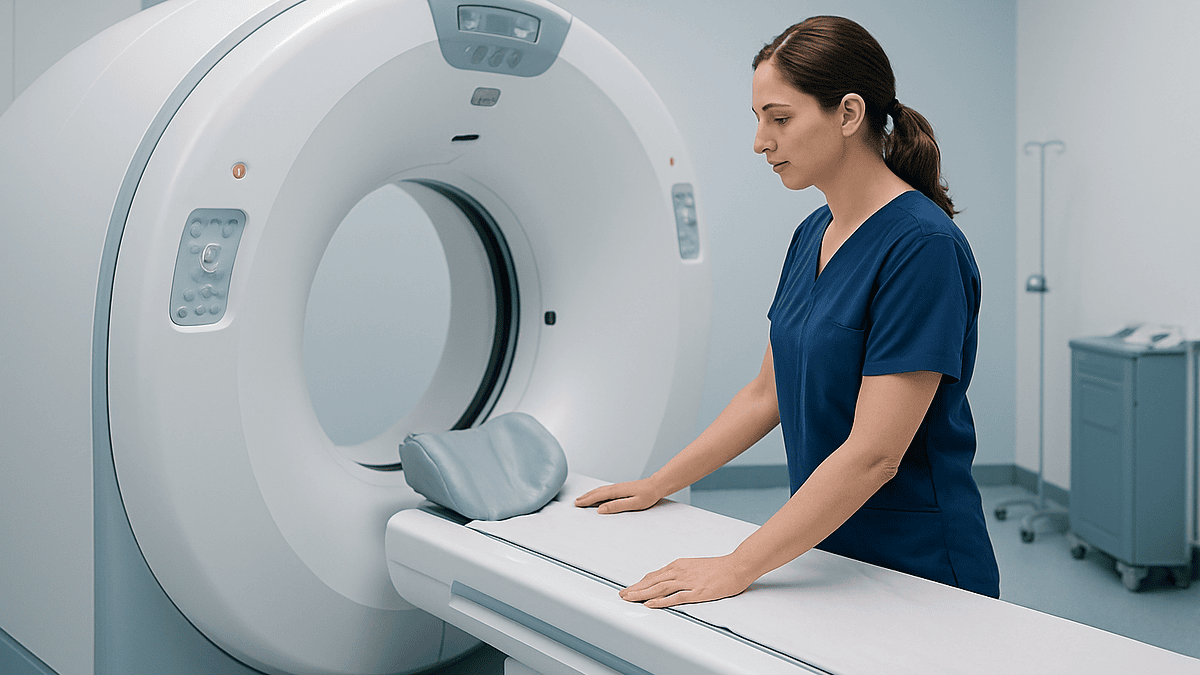
The board works from a specific set of information. A contrast-enhanced CT scan of the pancreas, taken with thin slices timed to the arterial and venous phases, shows the tumor’s relationship to each vessel. An MRI or a CT of the chest may be added to look for distant spread. Endoscopic ultrasound, a procedure in which a thin camera with an ultrasound probe is passed down the throat to the stomach and duodenum, allows a needle biopsy through the stomach wall to confirm the diagnosis and sometimes to collect tissue for genetic testing. A blood test for CA 19-9, a protein many pancreatic tumors release, gives a baseline that can be tracked during treatment, though it is not reliable enough to diagnose or rule out the disease on its own (Cleveland Clinic).
The radiologist describes, vessel by vessel, how many degrees of each artery or vein the tumor touches. The surgeon translates that into an opinion on resectability. The medical oncologist assesses fitness: heart and kidney function, nutrition, how far the person can walk without stopping, whether jaundice needs relieving before chemotherapy can begin. A pathologist confirms the tumor type, because a small share of pancreatic tumors are neuroendocrine rather than the more common adenocarcinoma and follow an entirely different pathway.
What emerges is a recommendation, not a verdict. It is then discussed with the person and family, adjusted for preferences and circumstances, and revisited at each scan.
Resectable pancreatic cancer: who is usually offered surgery first, and who is asked to wait
Surgery is the only treatment with the potential to remove every visible cancer cell, which is why resectability is the hinge of the whole plan (Johns Hopkins Medicine). Being resectable on a scan, though, does not automatically mean going straight to the operating room.
Two broad approaches exist for resectable disease. In the first, the operation happens within weeks of diagnosis and chemotherapy follows once the person has recovered, typically over a period of about six months (NHS). In the second, chemotherapy is given for several weeks before surgery, a sequence called neoadjuvant therapy, and the operation is scheduled afterward. Both are considered standard, and which one a team favors depends on tumor features, the person’s fitness and how the team weighs the evidence.
The argument for chemotherapy first runs like this. Microscopic spread is common even when scans look clean, and drugs delivered early reach those cells while the person is at full strength. Watching how the tumor responds also gives information: disease that grows through chemotherapy is unlikely to be helped by a major operation. The argument for surgery first is equally practical. Some tumors block the bile duct or duodenum in ways that make delay risky, some people cannot tolerate chemotherapy before an operation, and a proportion of those who start with drugs never reach surgery because of side effects or progression.
People are commonly asked to wait for surgery when jaundice needs a stent, when nutrition or muscle strength has fallen, when a heart or lung problem needs stabilizing, or when the team wants a repeat scan to settle a doubtful vessel. Waiting in these cases is part of the plan rather than a lost opportunity, and the treating team should explain what each pause is for.
What happens in a Whipple procedure and the other pancreatic operations
The operation chosen depends on where the tumor sits. Most pancreatic cancers arise in the head of the gland, next to the duodenum and bile duct, and these are removed with a pancreaticoduodenectomy, better known as the Whipple procedure (Johns Hopkins Medicine).
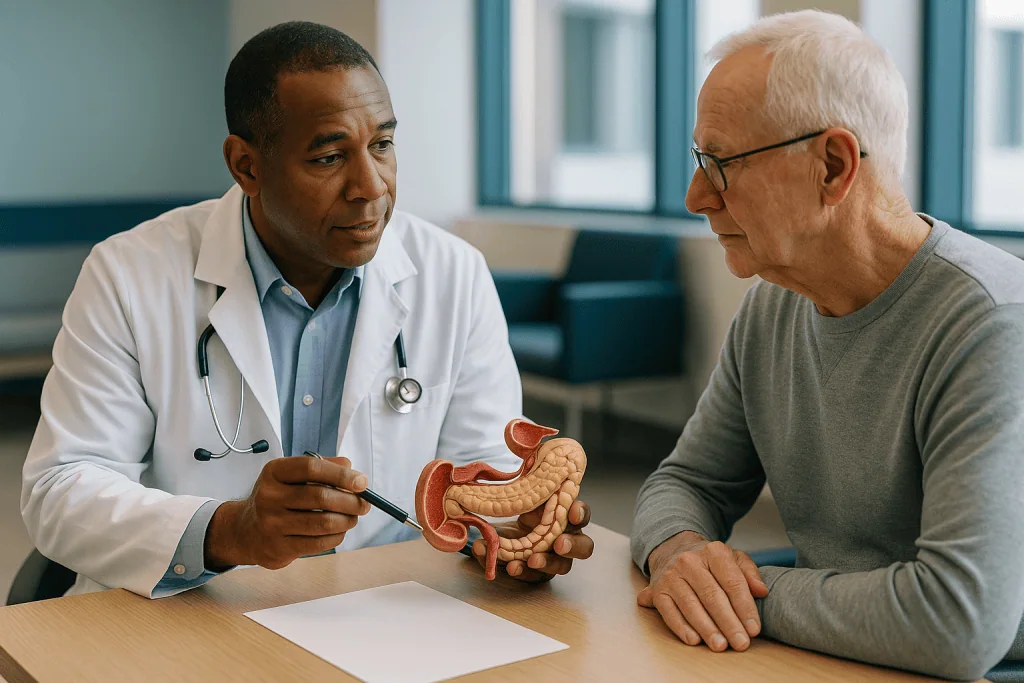
A Whipple removes the head of the pancreas, the duodenum (the first part of the small intestine), the gallbladder, the lower end of the bile duct and often a portion of the stomach. The surgeon then reconnects three things: the remaining pancreas to the intestine so digestive enzymes can flow, the bile duct to the intestine so bile can drain, and the stomach to the intestine so food can pass. Those three joins, called anastomoses, are where most of the operation’s risk lives, because a leak of pancreatic fluid can irritate surrounding tissue and slow recovery.
Tumors in the body or tail of the pancreas are treated with a distal pancreatectomy, which removes that portion and usually the spleen, since the spleen’s blood supply runs along the tail. A total pancreatectomy, removing the whole gland, is uncommon and reserved for tumors that span the organ; it leaves a person permanently dependent on insulin and enzyme replacement. Some operations also remove and reconstruct a segment of vein when a tumor is stuck to it, which is part of what makes borderline cases operable.
These procedures can be performed through an open incision or with minimally invasive techniques, including robot-assisted surgery, depending on the tumor and the surgeon’s practice. Neither approach changes what is removed. Before any of them, a person can reasonably ask how many of these operations the surgical unit performs, what the plan is if the tumor turns out to be unremovable once the abdomen is open, and how complications would be managed.
Whipple procedure recovery time: what the first days and weeks usually look like
The night after a Whipple is spent in a monitored unit. Drains, a urinary catheter and intravenous lines are standard, and pain is managed with a combination of an epidural or nerve block and intravenous medicine, then oral medicine as eating resumes. Walking begins within a day or two, because early mobility lowers the risk of pneumonia and blood clots.
Hospital stays after a Whipple typically run one to two weeks, longer if a complication develops (Mayo Clinic). Common complications include delayed gastric emptying, in which the stomach is slow to move food onward and nausea persists for days; leakage of pancreatic fluid at the join, which may need a drain kept in longer; infection; and bleeding. Most are managed without a second operation, but each adds days.
Eating returns in stages: sips, then liquids, then small soft meals. The remaining pancreas may not make enough enzymes at first, so fat is poorly absorbed and stools become loose, pale and greasy. Pancreatic enzyme replacement, capsules taken with meals that supply the missing digestive enzymes, is commonly prescribed, and a dietitian usually guides portion size and frequency. Blood sugar is checked, since removing part of the pancreas can unmask or worsen diabetes.
At home, fatigue dominates the first month. Many people describe needing a nap after a short walk and losing weight before they regain it. Full recovery, meaning a return to previous energy and eating, commonly takes several weeks to a few months (Mayo Clinic). Chemotherapy after surgery is generally started once the person has healed and regained strength, which the oncology team judges at follow-up rather than by a fixed date. A slow start is not a sign the treatment has failed; it is a sign the body is being given the time surgery demands.
Why does chemotherapy come before surgery in borderline resectable pancreatic cancer?
Borderline resectable pancreatic cancer describes a tumor that touches or partly wraps around a major vessel, most often the superior mesenteric vein, the portal vein or a short segment of artery. A surgeon might remove it, but the odds of leaving cancer cells at the edge of the specimen are high, and an operation that leaves cancer behind offers little benefit for considerable risk.
For this group, most guidelines and treating teams favor chemotherapy first, sometimes followed by radiation, before deciding on surgery (NHS). The logic is threefold. Drugs given upfront may shrink the tumor or at least soften its grip on the vessel, improving the chance of clear margins. The interval also serves as a test of biology: a tumor that spreads to the liver during three months of chemotherapy would have done so after a Whipple too, and the person is spared an operation that could not have helped. Finally, people tolerate full-strength chemotherapy better before surgery than after it.
A typical sequence involves two to four months of combination chemotherapy, then repeat imaging and a fresh tumor board discussion (Mayo Clinic). Combination regimens in common use pair a fluoropyrimidine, a drug that interferes with DNA building blocks, with a platinum agent and a topoisomerase inhibitor, or pair gemcitabine with a taxane. Which regimen is chosen depends on fitness, and the oncologist adjusts as side effects emerge.
The scan after chemotherapy is read cautiously. Treated tumors often scar rather than shrink, so a mass that looks unchanged may contain far fewer living cells than it did. Surgeons increasingly rely on a falling CA 19-9 level, absence of new spread and the person’s overall condition to decide whether to proceed. Some people in this group go on to surgery; others are found to have progressed and move to the locally advanced or metastatic pathway. Both outcomes are planned for from the start.
Locally advanced disease: when the tumor cannot be removed yet
Locally advanced pancreatic cancer has grown around nearby arteries or veins to a degree that surgery is not considered feasible, yet scans show no spread to distant organs. It is the group where honesty about uncertainty matters most, because the goal of treatment can shift over time.
Chemotherapy is the first step, using the same combination regimens as for borderline disease, given for several months while the team watches how the tumor behaves (Cleveland Clinic). The primary aim is to control growth and manage symptoms. A secondary aim, realized in a minority of cases, is to shrink the tumor enough that a surgeon revisits the question of removal. Teams differ on how often that conversion happens, and no one can predict it for an individual at the outset.
Radiation is often considered after chemotherapy for people whose disease has stayed confined to the pancreas. Conventional chemoradiation delivers daily treatments over about five to six weeks alongside a low-intensity chemotherapy drug that makes cells more sensitive to radiation (NHS). Stereotactic body radiotherapy, which delivers larger doses over a handful of sessions with tight targeting, is an alternative in some centers. The evidence on whether radiation extends life in locally advanced disease is mixed; what it more reliably does is improve local control and reduce pain from a tumor pressing on nerves.
Because the tumor stays in place, symptom control runs alongside everything else. A blocked bile duct is relieved with a stent, a small tube placed by endoscopy to keep bile flowing. A narrowed duodenum may need a stent or a surgical bypass so food can pass. Pain from the celiac nerve plexus can be treated with a nerve block, an injection of local anesthetic and sometimes alcohol delivered by endoscopic ultrasound to quiet the nerves.
Stage 4 pancreatic cancer treatment: what the options actually aim to do
Stage 4 means the cancer has spread beyond the pancreas to distant sites, most often the liver, the lining of the abdomen or the lungs. At this stage, surgery to remove the primary tumor is not offered, because removing it does not address the disease elsewhere and carries real risk (Mayo Clinic). The plan becomes systemic: treatment that travels through the bloodstream to reach cancer wherever it sits.
Chemotherapy is the backbone. For people who are fit, a multi-drug combination is usually favored; for those who are frailer, a gentler single-drug or two-drug approach may be chosen. Treatment is given in cycles, commonly every two weeks, with scans every two to three months to check whether the disease is responding, stable or growing (Cleveland Clinic). The oncologist adjusts or pauses treatment based on side effects and those scans, and a second-line regimen is often available if the first stops working.
Goals are stated plainly in good consultations. Chemotherapy at this stage aims to slow the cancer, relieve symptoms such as pain and weight loss, and extend life. It is not expected to eliminate the disease. Knowing that helps people weigh what they are willing to accept in side effects, hospital visits and time.
Palliative care, which is specialist support for symptoms and quality of life at any stage of a serious illness, is best introduced early rather than at the end. Studies across cancers have linked early palliative care involvement with better symptom control and mood; it runs alongside chemotherapy, not instead of it. People sometimes hear the word and assume treatment is being withdrawn. In a well-run pathway it means a second team joins the first.
The question of stage 4 pancreatic cancer life expectancy comes up in almost every one of these conversations, and it deserves its own answer below.
Is chemo worth it for stage 4 pancreatic cancer? What the evidence shows
This is among the most-searched questions about the disease, and the honest answer has two parts.
The first part is what trials show. Randomized studies comparing combination chemotherapy with older single-drug treatment in metastatic pancreatic cancer have found that combinations extend life on average and delay the point at which the disease grows, at the cost of more side effects such as fatigue, nausea, low blood counts and nerve tingling (NHS). Chemotherapy has also been shown to improve or stabilize pain and weight in a meaningful share of people. So the evidence supports offering it to people who are fit enough to receive it.
The second part is what averages cannot tell you. Population figures come from registries and trial groups and describe a curve, not a person. Within that curve some people gain little and stop early because of side effects; others live considerably longer than the median and remain active. Factors that shift the odds include how much disease is present, where it is, how fit a person is at the start, and whether the tumor carries one of the uncommon genetic changes that respond to targeted drugs.
People asking about stage 4 pancreatic cancer life expectancy should ask their oncologist for a personalized range rather than a search-engine number, and should ask it in the form that helps most: what is the best case, what is the most likely case, and what would tell us the plan is not working? Oncologists are trained to answer those questions and to revisit them after each scan.
Declining chemotherapy is a legitimate choice, and choosing it is equally legitimate. What matters is that the decision is informed, revisited and supported by symptom care either way. A plan that begins with a time-limited trial of treatment, with an agreed point to reassess, is a common and reasonable middle path.
New treatments for stage 4 pancreatic cancer: genomic testing, targeted drugs and trials
Every person with advanced pancreatic cancer is now generally advised to have two kinds of genetic testing, and the distinction matters. Germline testing looks at inherited genes in a blood sample. Tumor, or somatic, testing looks at changes that arose only in the cancer cells, using tissue from a biopsy (Mayo Clinic).
Germline testing can reveal inherited changes in genes such as BRCA1, BRCA2 or PALB2, which affect how cells repair DNA. Cancers with these changes tend to respond well to platinum chemotherapy, and a class of drugs called PARP inhibitors, which block a backup DNA-repair pathway so that damaged cancer cells die, has been studied as a maintenance treatment after chemotherapy in this subgroup. A germline finding also has implications for relatives, who may be offered testing and surveillance.
Tumor testing looks for a short list of targetable changes. Cancers that are mismatch repair deficient or have high microsatellite instability, which means the cells cannot fix certain DNA copying errors, may respond to immunotherapy drugs that release the immune system’s brakes. Rare fusions in NTRK genes have their own targeted drugs. Certain KRAS variants, in the gene mutated in the vast majority of pancreatic cancers, now have first-in-class inhibitors approved for a small molecular subgroup, with drugs against other KRAS variants still in trials.
The sobering context is that most people with pancreatic cancer do not carry any of these changes, and for them chemotherapy remains the standard. Claims that immunotherapy works broadly in pancreatic cancer are not supported by current evidence; trials of checkpoint inhibitors in unselected patients have been largely negative.
Clinical trials are how the standard changes. Asking whether a trial is available, and what phase it is, is a reasonable question at any stage, and joining one does not mean giving up standard care.
Pancreatic cancer treatment by stage at a glance
The table below summarizes how the four practical groups are usually approached. It is a map of common pathways, not a prescription; individual plans vary with fitness, tumor biology and preferences, and the treating team decides (NHS; Mayo Clinic).
| Practical group | What it means | Typical first step | What usually follows | Main aim |
|---|---|---|---|---|
| Resectable | Tumor clear of major vessels; surgeon expects clean margins | Surgery, or chemotherapy for several weeks before surgery | Chemotherapy for about six months after recovery | Remove all visible disease and treat microscopic spread |
| Borderline resectable | Tumor touches or partly encases a vessel; surgery possible but uncertain | Combination chemotherapy for two to four months | Repeat scan and tumor board; surgery if feasible, sometimes radiation first | Improve odds of clear margins; test tumor biology |
| Locally advanced | Tumor encases vessels; not removable; no distant spread | Combination chemotherapy for several months | Chemoradiation or stereotactic radiation in selected people; surgery reconsidered in a minority | Control growth, relieve symptoms, reassess |
| Metastatic (stage 4) | Spread to liver, abdominal lining, lungs or elsewhere | Systemic chemotherapy matched to fitness; genomic testing | Second-line chemotherapy, targeted drugs for tested subgroups, trials, palliative care throughout | Slow the disease, relieve symptoms, extend life |
Two features of the table deserve emphasis. Chemotherapy appears in every row, which reflects the current understanding that pancreatic cancer behaves as a systemic disease even when it appears confined. And the arrows between rows run both ways: a borderline tumor can become resectable, and a resectable tumor can reveal itself as metastatic at the time of surgery. Plans are written in pencil for good reason.
Supportive care that runs alongside every stage: digestion, jaundice, pain, nutrition and clots
Whatever the pathway, a cluster of problems is common enough that teams plan for them from the first visit rather than waiting for them to appear (Cleveland Clinic).
Digestion suffers because the pancreas makes the enzymes that break down fat, protein and starch. A tumor in the head of the gland, or the removal of part of it, reduces that supply. The result is bloating, loose pale stools that float, and weight loss despite eating. Enzyme replacement capsules taken with food, supervised by a dietitian, are a standard part of care and often make a visible difference to energy and appetite.
Jaundice, the yellowing of skin and eyes from a blocked bile duct, is frequently the first sign of the disease and can delay chemotherapy because the liver cannot clear drugs properly. A stent placed by endoscopy usually relieves it within days; the itching that accompanies it eases as bilirubin falls.
Pain typically comes from the tumor pressing on the celiac plexus, a bundle of nerves behind the pancreas. Regular oral pain medicine is the first approach, and a celiac plexus block by endoscopic ultrasound can reduce the need for it. Radiation to the tumor can also ease pain.
Nutrition is a treatment in its own right. Loss of muscle, not just weight, predicts how well people tolerate surgery and chemotherapy, so small frequent meals, protein at every sitting and supervised supplements are standard advice.
Blood clots deserve special mention. Pancreatic cancer carries one of the highest clot risks of any tumor type, and clots in the legs or lungs are a leading cause of emergency admissions during treatment. Teams weigh preventive anticoagulation for people receiving chemotherapy, and everyone is told the warning signs described in the final section below.
Diabetes may appear or worsen, since the pancreas also makes insulin; blood sugar is checked regularly and managed alongside everything else.
What people often get wrong about pancreatic cancer treatment
Misunderstandings about this disease travel fast, partly because so many people have watched a relative go through it. A few deserve correcting.
Myth: the stage number tells you the plan. As explained above, two people with the same stage 3 label can be treated very differently depending on which vessels the tumor touches. Resectability, fitness and tumor biology drive decisions more than the numeral.
Myth: if a surgeon says no to an operation, nothing more can be done. Not being operable today is not the same as never being operable, and for locally advanced and metastatic disease there is a full pathway of chemotherapy, radiation, targeted therapy and symptom care. A surgical no is the start of a different plan, not the end of planning.
Myth: pancreatic cancer develops overnight. Genomic modeling in a well-known study estimated that more than a decade typically passes between the first cancer-driving mutation and the moment a tumor gains the ability to spread, with the final phase of clinical illness far shorter (PubMed, Yachida et al.). The disease feels sudden because symptoms arrive late, not because the biology is fast.
Myth: chemotherapy is the same for everyone. Regimens are chosen by fitness, kidney and liver function, prior treatment and, increasingly, genetic results. Two people in the same infusion chair may be receiving very different drugs for good reasons.
Myth: palliative care means treatment has stopped. It means a team focused on comfort has joined the team focused on the cancer. Many people receive both for months.
Myth: a special diet or supplement can treat the tumor. No dietary regimen, herbal product or high-dose vitamin has been shown in controlled studies to shrink pancreatic cancer or extend life, and some interfere with chemotherapy. Good nutrition supports treatment; it does not replace it.
Questions to ask your care team, and when to call your doctor
A first consultation passes quickly, and the questions people wish they had asked usually surface in the car park. Bringing a written list, and someone to take notes, changes the quality of the conversation. Useful questions include:
- Which practical group is my tumor in: resectable, borderline, locally advanced or metastatic, and which vessels, if any, does it touch?
- Was my case reviewed by a multidisciplinary tumor board, and what did the surgeon and oncologist each recommend?
- If chemotherapy comes first, how will you decide whether surgery is still possible afterward, and when?
- Have I had germline and tumor genetic testing, and would any result change my treatment or matter for my family?
- What is the goal of this treatment in plain words: removing the cancer, controlling it, or relieving symptoms?
- What side effects should I expect, which ones mean I should call, and who answers the phone at night?
- Is there a clinical trial I could be considered for, and what would joining involve?
- Can I meet the dietitian and the palliative care team now rather than later?
When to call your doctor. During any phase of pancreatic cancer treatment, certain signs need same-day contact with the oncology team or emergency care rather than waiting for the next appointment (Cleveland Clinic; Mayo Clinic). Call urgently for a fever or chills while on chemotherapy, which can signal infection when blood counts are low; sudden swelling, warmth or pain in one leg, or new breathlessness or chest pain, which can indicate a blood clot; new or worsening yellowing of the skin or eyes, dark urine, pale stools or intense itching, which suggest a blocked bile duct or stent; vomiting that prevents fluids for more than a day, or a swollen, hard abdomen; black or bloody stools or vomit; severe abdominal pain unrelieved by prescribed medicine; confusion, drowsiness or a very high or very low blood sugar; and, after surgery, redness, discharge or opening of the wound, or a drain that suddenly changes color or volume. The care team would rather hear about a false alarm than miss a real one, and every decision about what to do next belongs with them.
Frequently asked questions
What is the life expectancy for someone with stage 4 pancreatic cancer?
It varies widely between individuals, and published averages describe groups rather than any one person. Fitness at the start of treatment, how much disease is present and where, response to chemotherapy and whether the tumor carries a targetable genetic change all shift the range. Oncologists can give a personalized best-case, most-likely and worst-case estimate, and revisit it after each scan, which is far more useful than a single number found online.
Is chemo worth it for stage 4 pancreatic cancer?
For people fit enough to receive it, trials show combination chemotherapy extends life on average, delays disease growth and often improves pain and weight compared with older single-drug treatment. The trade-off is side effects such as fatigue, nausea and low blood counts. Whether that balance is worth it is a personal decision; a time-limited trial of treatment with an agreed reassessment point is a common and reasonable approach.
How long does pancreatic cancer take to develop?
Longer than most people assume. Genomic modeling of tumor evolution has estimated that more than a decade typically passes from the first cancer-driving mutation to the point where a tumor can spread, followed by a much shorter phase of clinical illness. The disease feels abrupt because the pancreas produces few symptoms until a tumor is established, not because the underlying biology is rapid.
What are the new treatments available for stage 4 pancreatic cancer?
Newer options are largely tied to genetic testing. PARP inhibitors are used as maintenance in people with inherited BRCA-type changes after platinum chemotherapy; immunotherapy helps the small group with mismatch repair deficiency; and targeted inhibitors exist for NTRK fusions and certain KRAS variants. Most people do not carry these changes, and clinical trials remain the main route to new approaches for them.
What does borderline resectable pancreatic cancer mean?
It means the tumor touches or partly wraps around a major blood vessel near the pancreas, so surgery might be possible but the chance of leaving cancer at the edge of the specimen is high. Teams usually give combination chemotherapy first, sometimes followed by radiation, then repeat the scan and reconsider surgery. Some people go on to an operation; others are found to have progressed and follow a different pathway.
How long is Whipple procedure recovery time?
Hospital stays typically last one to two weeks, longer if complications such as delayed stomach emptying or a pancreatic fluid leak develop. At home, fatigue dominates the first month, eating returns gradually, and enzyme capsules are often needed with meals. A return to previous energy commonly takes several weeks to a few months, and chemotherapy afterward starts only when the team judges recovery sufficient.
Why do some people get chemotherapy before surgery and others after?
Both sequences are considered standard for resectable disease. Chemotherapy first treats microscopic spread early and reveals how the tumor behaves before a major operation; surgery first avoids delay when a tumor is blocking the bile duct or bowel, or when someone cannot tolerate chemotherapy beforehand. The tumor board weighs these factors with the person’s fitness and preferences, and neither order is inherently superior for everyone.
Can locally advanced pancreatic cancer become operable?
Occasionally. After several months of combination chemotherapy, sometimes with radiation, a minority of tumors shrink or loosen their grip on vessels enough for a surgeon to reconsider removal. Scans can understate this because treated tumors often scar rather than shrink, so teams also watch CA 19-9 levels and overall condition. No one can predict conversion for an individual at the outset, which is why plans are reassessed at each scan.
What is the role of radiation in pancreatic cancer treatment?
Radiation is used mainly for locally advanced disease that has stayed confined to the pancreas after chemotherapy, and sometimes before surgery in borderline cases. Conventional chemoradiation runs over about five to six weeks; stereotactic radiotherapy delivers higher doses in a few sessions. Evidence that it extends life is mixed, but it more reliably improves local control and eases pain from a tumor pressing on nerves.
Does palliative care mean treatment has stopped?
No. Palliative care is specialist support for symptoms, nutrition, mood and planning at any stage of a serious illness, and it commonly runs alongside chemotherapy for months. Studies across cancers have linked early involvement with better symptom control and quality of life. Asking to meet the palliative care team at diagnosis is a sign of a well-organized plan, not a signal that active treatment is ending.
References
- Pancreatic cancer – Treatment (NHS)
- Pancreatic Cancer (Cleveland Clinic)
- Pancreatic Cancer (MedlinePlus)
This article is for general information only and is not a substitute for professional medical advice. Please consult a qualified doctor about your individual situation.

More from the Blog

Simple, Skin-Sparing or Nipple-Sparing Mastectomy: How the Types Differ and Who Gets Which
The main types of mastectomy differ in how much skin and nipple are kept, not in how much breast tissue is removed. A total…

Sarcoma in Teenagers and Young Adults: How Treatment Planning Considers Growth and School
Sarcoma treatment in teenagers usually combines chemotherapy with surgery, and sometimes radiation, sequenced over many months by a specialist sarcoma team. Because young bodies…

How Do Doctors Judge Whether SBRT Worked? Why the First Follow-Up Scan Waits a Few Months
After stereotactic body radiation therapy (SBRT), the first imaging check usually happens a few months after the final session, because irradiated tumors shrink slowly…

Which Blood and Genetic Tests Guide Lymphocytic Leukemia Treatment Choices?
Treatment choices in chronic lymphocytic leukemia rest on a small set of tests: a complete blood count with flow cytometry to confirm the diagnosis,…

When Is Graft-Versus-Host Disease Suspected? Fever, Rash and Diarrhea After Transplant
Graft-versus-host disease is suspected when someone who has received donor stem cells develops a new rash, persistent watery diarrhea, nausea, or rising liver tests,…

Mohs Surgery Recovery: Pressure Dressing, Stitches and the First Two Weeks of Wound Care
Mohs surgery recovery usually begins with a firm pressure dressing worn for about one to two days, followed by daily gentle cleaning, ointment and…