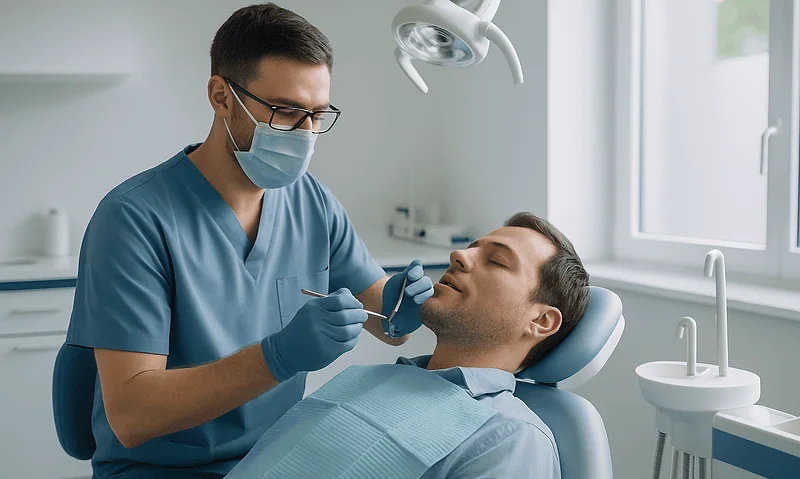
Eating After a Dental Filling: Numbness, Hard Foods and When the Tooth Feels Normal
With a composite (white) filling you can usually eat as soon as the numbness fades, typically within a few hours; with a silver amalgam…
Read article

4,196 plain-language articles across 62 topics, symptoms explained, nutrition, lab results, medical technology and everyday wellbeing, written by Dr. Şule Eren, published daily by the group behind 45 hospitals and clinics in Türkiye, Bulgaria, Serbia, Netherlands and North Macedonia. For clinical guidance on a condition or procedure, see the Patient Guides.
With a composite (white) filling you can usually eat as soon as the numbness fades, typically within a few hours; with a silver amalgam…
Kawasaki disease and scarlet fever can both cause several days of fever, a red rash, a strawberry tongue and later peeling skin, but they…
Most adults can meet calcium and zinc targets from food alone. Yogurt, milk, cheese, calcium-set tofu, canned sardines, fortified plant milks and low-oxalate greens…
CT angiography comes before TAVI because the scan gives the heart team millimeter-level measurements that an echocardiogram alone cannot: the exact size and shape…
Myomectomy removes fibroids while keeping the uterus, so it is usually the surgical option for people who may want a future pregnancy, though fibroids…
Abdominal etching is a specialized liposuction technique that removes small amounts of fat in precise lines over the abdominal muscles to mimic a six-pack.…
Regrowth after alopecia areata treatment usually begins as a soft fuzz of fine, short hairs that are pale or white, appearing inside the patch…
Life after Cushing syndrome treatment usually means months of gradual recovery rather than an overnight change. Cortisol levels often fall abruptly after surgery, so…
Protein in urine, called proteinuria, means the kidneys' filters are letting protein such as albumin leak through. A single positive result on a urinalysis…
After an IVIG infusion, the most common effects are headache, chills, mild fever, muscle aches, nausea and tiredness, usually starting during or within a…
A gut cleanse, gut reset or colon cleanse is not needed for health: the colon clears itself through daily bowel movements, a self-renewing lining…
A Brazilian tummy tuck is a marketing name, not a distinct medical operation. It usually describes a standard abdominoplasty (removing loose lower-abdominal skin and…
Most food takes about 24 to 72 hours to travel from mouth to toilet. A typical meal spends two to five hours in the…
Vaser-style ultrasound-assisted liposuction suits adults who are close to a stable, healthy weight, have firm skin that snaps back, and want to reshape specific…
Targeted therapy for myelofibrosis usually means a JAK inhibitor, a medicine that blocks an overactive signaling enzyme inside blood-forming cells. Quieting that signal lowers…
PRK surgery is done in three steps. After numbing drops, the surgeon removes the cornea's thin outer skin, the epithelium, using a soft brush,…
Hypospadias repair is usually done in infancy, commonly between about 6 and 18 months of age, and in some cases up to around age…
Preparing for hiatal hernia surgery usually means a pre-op visit with blood tests and an anesthesia review, a medicine check in which your surgical…
Choose which cookies you allow. Essential cookies are always on because the site cannot work without them.