Quick answer
Bullous pemphigoid is an autoimmune skin disease that causes intense itching and tense, fluid-filled blisters, most often in older adults, and it is usually managed by confirming the diagnosis and controlling inflammation. At Acibadem in Turkey, evaluation may include dermatology assessment, skin biopsy, and laboratory tests, with treatment focused on medications such as corticosteroids and other immune-modulating therapies, along with…
What is bullous pemphigoid?
Bullous pemphigoid is a rare, chronic (long-lasting) autoimmune skin condition that causes large, fluid-filled blisters to form on the skin. An autoimmune condition is one in which the body’s immune system, which normally protects against infection, mistakenly attacks the body’s own tissues. In bullous pemphigoid, the immune system produces antibodies, protective proteins, that attack the thin layer of tissue connecting the outer layer of the skin (the epidermis) to the layer underneath it (the dermis). This attack weakens the bond between the two layers, allowing fluid to collect and blisters to form.
The condition most often affects older adults, typically people over the age of 60, and becomes more common with advancing age. It can occur in younger adults and, very rarely, in children, but this is uncommon. Bullous pemphigoid affects men and women and is seen in all ethnic groups worldwide.
Although the blisters can look alarming, bullous pemphigoid is not contagious. You cannot catch it from another person, and you cannot pass it on by touch. For many people the condition follows a pattern of flare-ups and quieter periods, and in a significant number of cases it eventually settles down over a period of years, although this varies from person to person.
Understanding what is bullous pemphigoid, how it is diagnosed, and how it is treated can help patients and families feel more confident when discussing care with their medical team. This condition is usually managed by a dermatologist, a doctor who specializes in skin diseases.
Symptoms of bullous pemphigoid
Bullous pemphigoid symptoms can vary widely between individuals, and the condition often develops in stages. In many people, the first signs appear weeks or even months before any blisters form, which can make early recognition difficult.
Common symptoms include:
- Intense itchingoften the earliest symptom, sometimes present for weeks or months before blisters appear.
- Red, raised, or hive-like patchesareas of inflamed skin that may resemble eczema (an itchy skin rash) or urticaria (hives).
- Large, tense blistersfirm, dome-shaped blisters filled with clear fluid, which do not burst easily when pressed. The fluid may occasionally contain some blood.
- Blisters in typical locationsmost often on the lower abdomen, groin, inner thighs, armpits, and the flexural areas (the creases where the skin folds, such as inside the elbows or behind the knees). Blisters can also appear elsewhere on the body.
- Skin around blistersthis may look normal, red, or darker than the surrounding skin.
- Raw or sore areaswhen blisters break, they can leave painful open areas (erosions) that may crust over as they heal.
- Mouth involvementin a minority of cases, small blisters or sore areas form inside the mouth. This is less common than in some related blistering conditions.
How symptoms differ by stage
Doctors often describe two phases of the condition. In the early (pre-blistering) phase, the main problems are itching and red or hive-like patches, without any obvious blisters. Because these signs can look like eczema, an allergic reaction, or another common rash, bullous pemphigoid may not be suspected at first, particularly in older adults with itchy skin.
In the blistering phase, the characteristic tense blisters develop, usually on top of the red patches, though they can also appear on skin that looks normal. Blisters may come and go in crops. When they burst, they typically heal without scarring, although the skin can be left temporarily darker or lighter in that area.
Some people have a milder form in which itching and red patches persist for a long time with few or no blisters at all. This “non-bullous” pattern can be especially hard to recognize without specialized testing.
Causes and risk factors
The exact bullous pemphigoid causes are not fully understood. What is known is that the immune system produces antibodies against specific proteins, most notably proteins called BP180 and BP230, found in the basement membrane zone, the microscopic layer that anchors the epidermis to the dermis. When these antibodies bind to their targets, they trigger inflammation that separates the skin layers and causes blisters.
Why the immune system begins attacking these proteins in a particular person is usually unclear. In most cases, no single cause can be identified. However, several factors are associated with the condition or may act as triggers in some people:
- Older agethe most consistent risk factor. The condition is far more common in people over 60 and its frequency rises with age.
- Certain medicationssome drugs have been reported to trigger or unmask bullous pemphigoid in susceptible individuals. Examples that have been linked in the medical literature include certain diuretics (“water tablets”), some antibiotics, and certain diabetes medications known as DPP-4 inhibitors (gliptins). If a medication is suspected, doctors weigh the possible connection carefully before changing any treatment; patients should never stop a prescribed medicine on their own.
- Neurological conditionsbullous pemphigoid is seen more often in people who have conditions affecting the brain and nervous system, such as stroke, dementia, or Parkinson’s disease. The reason for this association is still being studied.
- Skin injury or treatmentsin occasional cases, physical triggers such as burns, radiation therapy, ultraviolet (UV) light treatment, or trauma to the skin have been reported before the condition appeared.
It is important to understand that bullous pemphigoid is not caused by an infection, poor hygiene, or diet, and it is not inherited in a simple, predictable way, although genetic factors may influence susceptibility. It also cannot be spread to family members or caregivers.
Diagnosis
Because several skin conditions can cause blisters or intense itching, an accurate bullous pemphigoid diagnosis relies on a combination of clinical examination and laboratory tests rather than appearance alone.
Clinical examination and history
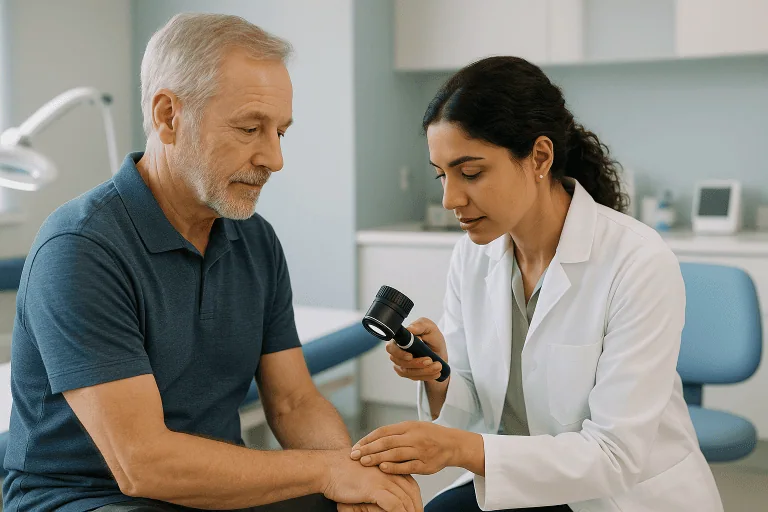
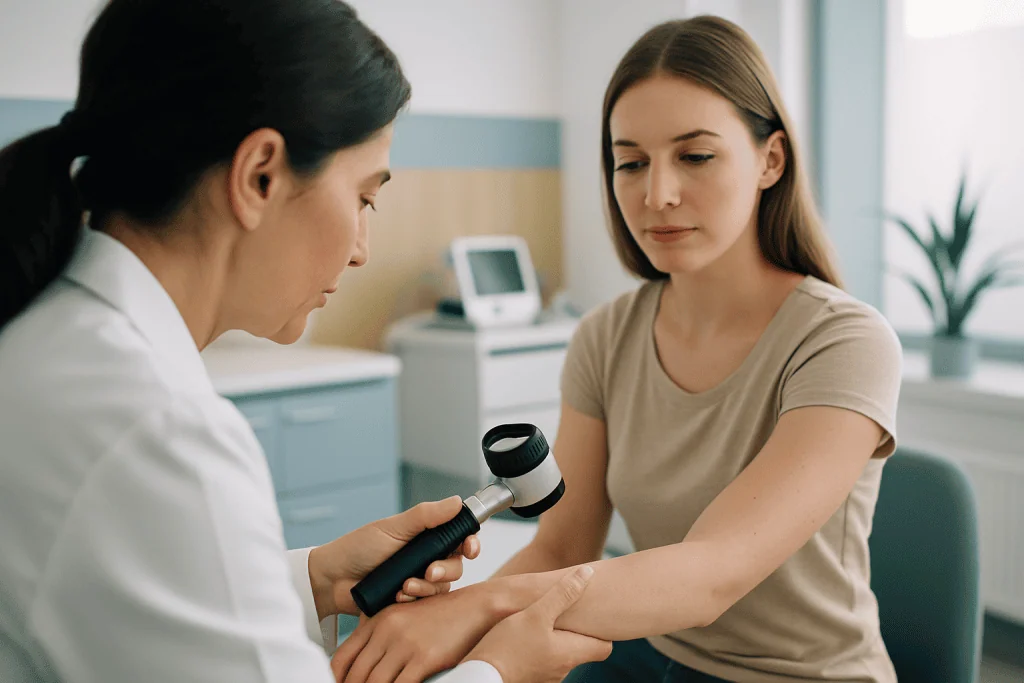
A dermatologist will examine the skin, noting the type, location, and pattern of blisters or rashes, and will ask about how long symptoms have been present, what medications are being taken, and any other health conditions. Tense blisters on red or normal skin in an older adult often raise suspicion of bullous pemphigoid, but tests are needed to confirm it.
Skin biopsy
The key confirmatory test is a skin biopsythe removal of a small sample of skin under local anesthetic (numbing medicine) so it can be examined under a microscope. Usually two samples are taken:
- Routine histologya sample taken from the edge of a fresh blister shows where the skin layers have separated and what type of inflammatory cells are present.
- Direct immunofluorescencea sample taken from skin near, but not on, a blister is treated with special stains that reveal antibodies and other immune proteins deposited along the basement membrane zone. This test is central to confirming the diagnosis.
Blood tests
Blood tests can detect the circulating antibodies responsible for the condition. Techniques such as indirect immunofluorescence and ELISA (a laboratory method that measures antibody levels against the BP180 and BP230 proteins) support the diagnosis and, in some cases, help doctors monitor disease activity over time. Routine blood tests may also be done to check general health before starting treatment.
Imaging scans such as X-rays or CT scans are not needed to diagnose bullous pemphigoid itself, although a doctor may order other tests to assess overall health or investigate coexisting conditions. Because the early, non-blistering phase can mimic eczema or hives, doctors may repeat testing if suspicion remains high despite an initially unclear result.
Treatment options for bullous pemphigoid
The goals of bullous pemphigoid treatment are to relieve itching, stop new blisters from forming, allow existing blisters to heal, and keep the condition controlled with the lowest effective dose of medication. Treatment is tailored to the extent of the disease, the person’s age, and their other medical conditions. Care is typically coordinated through a dermatology department; at hospital groups such as Acibadem, this is the specialty that manages the condition.
Topical corticosteroids
For many patients, especially those with limited or moderate disease, the first-line treatment is a strong topical corticosteroid, a steroid cream or ointment applied directly to the skin to reduce inflammation. In some treatment protocols, potent topical steroids are applied over large areas of the body and can be effective even in more widespread disease, often with fewer whole-body side effects than steroid tablets.
Oral corticosteroids
When the disease is extensive or does not respond to creams, doctors may prescribe oral corticosteroids (steroid tablets, such as prednisone or prednisolone) to calm the immune system throughout the body. These medicines are often effective, but long-term use can cause side effects such as raised blood sugar, bone thinning (osteoporosis), weight gain, high blood pressure, and increased risk of infection, concerns that matter particularly in older adults. For this reason, doctors usually aim to reduce the dose gradually to the lowest amount that keeps the disease controlled, and they may add preventive measures such as bone-protecting medication.
Steroid-sparing and other medications
To reduce reliance on steroids, doctors may add or substitute other medicines, depending on the individual case:
- Immunosuppressantsdrugs such as azathioprine, mycophenolate mofetil, or methotrexate, which dampen the overactive immune response. These require regular blood-test monitoring.
- Anti-inflammatory antibioticscertain tetracycline antibiotics (such as doxycycline), sometimes combined with nicotinamide (a form of vitamin B3), are used for their anti-inflammatory effect rather than to treat infection, and can be an option in milder disease or where steroids are best avoided.
- Biologic and other advanced therapiesin cases that do not respond to standard treatment, specialists may consider newer options such as rituximab (an antibody-based medicine) or other immune-targeting treatments. These decisions are made case by case by specialists.
- Antihistaminestablets that may help reduce itching in some people, used alongside other treatment.
Wound and blister care
Practical skin care is an important part of treatment. Doctors or nurses may drain large, tense blisters with a sterile needle while leaving the blister roof in place to protect the skin underneath. Open areas are covered with non-stick dressings to prevent infection and reduce pain. Gentle skin care, avoiding harsh rubbing, and keeping wounds clean all support healing.
Watchful waiting and surgery
Very mild cases with only occasional small blisters may sometimes be monitored with simple skin care and low-strength treatment, under regular medical review. Surgery is not a treatment for bullous pemphigoid itself, since the problem lies in the immune system rather than in a structure that can be removed; the biopsy used for diagnosis is the only minor procedure most patients need.
Whatever the treatment plan, regular follow-up is important so the medical team can adjust medication as the disease becomes more or less active, and monitor for side effects.
Living with bullous pemphigoid and outlook
Bullous pemphigoid is usually a long-term condition that fluctuates over time. Many people experience good control of their symptoms with treatment, and in a substantial proportion of cases the disease eventually goes into remissiona period in which it becomes inactive, often within a few years, allowing medication to be reduced or stopped under medical supervision. However, relapses (flare-ups after improvement) can occur, and some people need low-dose treatment for longer periods. No doctor can promise a specific timeline, because the course varies considerably from person to person.
Day-to-day, several practical steps can help:
- Follow the prescribed treatment plan and attend follow-up appointments, even when the skin looks better, so medication can be tapered safely.
- Handle the skin gently, avoid scratching, harsh soaps, very hot water, and tight or rough clothing that rubs against affected areas.
- Watch blistered or raw areas for signs of infection, such as increasing redness, warmth, swelling, pus, or fever, and report them promptly.
- Discuss any new medications with your doctor, since some drugs have been associated with flares in certain people.
- If you take long-term steroids, follow your doctor’s advice on bone health, blood pressure, and blood sugar monitoring.
Because the condition mainly affects older adults, overall outlook also depends on general health and other medical conditions. Untreated or severe widespread disease carries risks, mainly from skin infection and fluid loss through open areas, which is one reason timely diagnosis and treatment matter. With appropriate care, many people manage the condition well and maintain a good quality of life. Living with visible skin disease and persistent itching can also affect sleep and mood; it is reasonable to raise these concerns with your medical team, as they are a recognized part of the condition’s burden.
Frequently asked questions
What is bullous pemphigoid in simple terms?
Bullous pemphigoid is an autoimmune skin disease in which the immune system attacks the “glue” layer that holds the outer skin to the layer beneath it. This causes intense itching and large, firm, fluid-filled blisters, most often in older adults. It is not an infection and cannot be passed from person to person.
Is bullous pemphigoid contagious?
No. Bullous pemphigoid is caused by the person’s own immune system, not by bacteria or viruses. Family members and caregivers cannot catch it through touch, shared items, or close contact, although normal hygiene is still sensible when helping care for open skin areas to prevent ordinary wound infections.
Can bullous pemphigoid go away on its own?
In many people the condition eventually becomes inactive, sometimes within a few years, and treatment can then often be reduced or stopped under medical supervision. However, waiting without treatment is generally not advised for active disease, because widespread blisters cause discomfort and can become infected. Doctors typically recommend treatment to control symptoms while the disease runs its course.
How serious is bullous pemphigoid?
Severity varies. Mild cases may involve only itching and a few blisters, while severe cases can cover large areas of skin. Widespread untreated disease can lead to complications such as skin infection, and both the disease and some of its treatments can be more challenging in frail older adults with other health problems. With proper diagnosis and treatment, the condition can usually be controlled, though close medical follow-up is important.
What is the best treatment for bullous pemphigoid?
There is no single best option for everyone. Strong steroid creams are often the first choice, and steroid tablets, immune-suppressing medicines, or anti-inflammatory antibiotics may be used depending on how extensive the disease is and the person’s overall health. Your doctor may adjust the plan over time to find the lowest dose of medication that keeps the skin clear.
What triggers bullous pemphigoid flare-ups?
Often no clear trigger is found. In some people, certain medications, skin injury, UV light exposure, or reducing treatment too quickly have been linked to flares. Keeping follow-up appointments, tapering medicines only as directed, and telling your doctor about any new prescriptions may help reduce the chance of a relapse, although flares can still occur unpredictably.
How long does recovery from bullous pemphigoid take?
Itching and blistering often improve within weeks of starting effective treatment, but the underlying disease activity usually takes longer to settle. Many people remain on gradually reducing treatment for months to a few years before the condition becomes inactive. Individual blisters typically heal without scarring, though temporary skin color changes are common in the healed areas.
When to see a doctor
See a doctor promptly if you develop unexplained blisters on your skin, or if you are an older adult with persistent, intense itching or a rash that does not improve, especially if it later starts to blister. Early assessment allows testing and treatment before the condition becomes widespread.
Seek urgent medical attention if you have bullous pemphigoid (or suspected bullous pemphigoid) and notice any of the following red-flag warning signs:
- Signs of skin infectionspreading redness, warmth, swelling, pus, a foul smell from blisters or raw areas, or increasing pain.
- Fever, chills, or feeling generally very unwellthese may indicate an infection spreading beyond the skin, which needs prompt treatment.
- Rapidly spreading blisterslarge areas of new blistering or raw skin appearing over a short period.
- Blisters or sores in the mouth or throat that make eating or drinking difficult.
- Blisters or irritation affecting the eyeseye involvement always warrants prompt specialist assessment.
- Signs of dehydrationsuch as dizziness, confusion, very dry mouth, or passing little urine, particularly in frail or elderly patients with extensive raw skin.
- Suspected medication side effectssuch as black stools, severe abdominal pain, marked mood changes, or signs of serious infection while taking steroids or immune-suppressing medicines.
If you are already under the care of a dermatologist, contact your medical team early when symptoms change or worsen, rather than waiting for a scheduled appointment. Timely adjustments to treatment often prevent minor flares from becoming serious problems.
Medically reviewed by the Acıbadem International Medical Board September 2, 2026
See our medical review board →
Update history
- PublishedJune 14, 2026
- Medical review approvedSeptember 2, 2026
- Last content updateSeptember 2, 2026