Colon Polyps
Colon Polyps are growths inside the colon or rectum. Learn symptoms, causes, diagnosis, removal, follow-up and when to see a doctor.
Quick answer
Colon polyps are growths on the inner lining of the colon or rectum that are often harmless at first but can sometimes develop into colorectal cancer if left untreated. Management typically involves detection with colonoscopy, removal of suspicious or precancerous polyps during the procedure when appropriate, and pathology review to guide follow-up and further treatment if needed.
What is colon polyps?
Colon polyps are small growths that form on the inner lining of the colon, which is the main part of the large intestine (the last section of the digestive tract). A polyp develops when cells in the lining of the bowel grow more than they should, forming a lump that bulges into the inside of the colon. Some polyps are flat, while others hang from a short stalk, a little like a mushroom. In medical coding systems, colon polyps are listed under ICD-10 code K63.5.
To answer the common question “what is colon polyps” in the simplest terms: they are usually benign (noncancerous) growths in the large bowel. Most colon polyps never cause harm. However, certain types can slowly change over many years and, in some cases, develop into colorectal cancer. This is why doctors take polyps seriously, even when they cause no symptoms, and why finding and removing them is a central part of colorectal cancer prevention.
Colon polyps are very common, and they become more common with age. They can affect anyone, but they are found most often in adults over the age of 45 to 50. Men and women both develop polyps, and people with a family history of polyps or colorectal cancer are more likely to have them. Doctors classify polyps by their appearance and by how their cells look under a microscope. The two broad categories are non-neoplastic polyps (such as hyperplastic and inflammatory polyps, which rarely become cancerous) and neoplastic polyps (such as adenomas and serrated polyps, which carry some risk of turning into cancer over time). Larger polyps generally carry a higher risk than smaller ones.
Symptoms of colon polyps
One of the most important facts about colon polyps symptoms is that most people have none at all. Polyps often grow silently for years and are discovered only during routine screening tests. This is a major reason why screening colonoscopy is recommended even for people who feel completely well.
When colon polyps do cause symptoms, they may include:
- Rectal bleedingblood on the toilet paper, in the toilet bowl, or mixed with stool. Bleeding can have many causes, including hemorrhoids (swollen veins around the anus), so it always deserves a medical evaluation rather than self-diagnosis.
- Change in stool colorstool may appear streaked with red blood, or it may look very dark or black if bleeding occurs higher in the bowel.
- Change in bowel habitsconstipation or diarrhea that lasts longer than about a week without an obvious cause.
- Abdominal pain or crampinga large polyp can occasionally partly block the bowel and cause crampy pain, nausea, or bloating.
- Iron deficiency anemiaslow, invisible bleeding from a polyp can gradually lower the body’s iron stores, causing tiredness, weakness, pale skin, or shortness of breath.
Symptoms can differ depending on the size, number, and type of polyp. Small polyps, which make up the majority, almost never cause noticeable symptoms. Larger polyps are more likely to bleed or, rarely, to obstruct the bowel. Certain villous adenomas (a subtype of adenoma with a frond-like surface) can occasionally cause watery diarrhea. Because these symptoms overlap with many other digestive conditions, from irritable bowel syndrome to colorectal cancer, none of them can confirm or rule out polyps on their own. Only proper testing can do that.
Causes and risk factors
The exact colon polyps causes come down to changes in the way cells in the bowel lining grow and divide. Normally, cells in the colon lining are replaced in an orderly way. When genetic changes (mutations) occur in these cells, they may keep dividing when they should not, and the extra tissue forms a polyp. In most people, these mutations happen gradually over a lifetime rather than being inherited.
Several factors are known to increase the likelihood of developing colon polyps:
- Agepolyps become steadily more common after age 45 to 50.
- Family historyhaving a parent, sibling, or child with colon polyps or colorectal cancer raises your risk, and having several affected relatives raises it further.
- Inherited syndromesrare genetic conditions such as familial adenomatous polyposis (FAP), in which hundreds of polyps form at a young age, and Lynch syndrome (hereditary nonpolyposis colorectal cancer) greatly increase risk. People with these conditions need specialized, earlier, and more frequent surveillance.
- Inflammatory bowel diseaselong-standing ulcerative colitis or Crohn’s disease affecting the colon increases the risk of abnormal growths in the bowel lining.
- Type 2 diabetesespecially when blood sugar is poorly controlled, this condition is associated with a higher polyp risk.
- Lifestyle factorssmoking, heavy alcohol use, obesity, physical inactivity, and a diet high in red or processed meat and low in fiber have all been linked with a greater likelihood of polyps.
- Previous polypspeople who have already had adenomas are more likely to develop new ones, which is why follow-up surveillance is recommended after removal.
Having one or more risk factors does not mean you will definitely develop polyps, and some people with no obvious risk factors still get them. Risk factors simply help doctors decide when screening should start and how often it should be repeated.
Diagnosis
Because most polyps cause no symptoms, colon polyps diagnosis usually happens through screening, testing done in people who feel well, or during the investigation of symptoms such as bleeding or anemia. Several tests can detect polyps, but they differ in how thorough they are and whether they allow treatment at the same time.
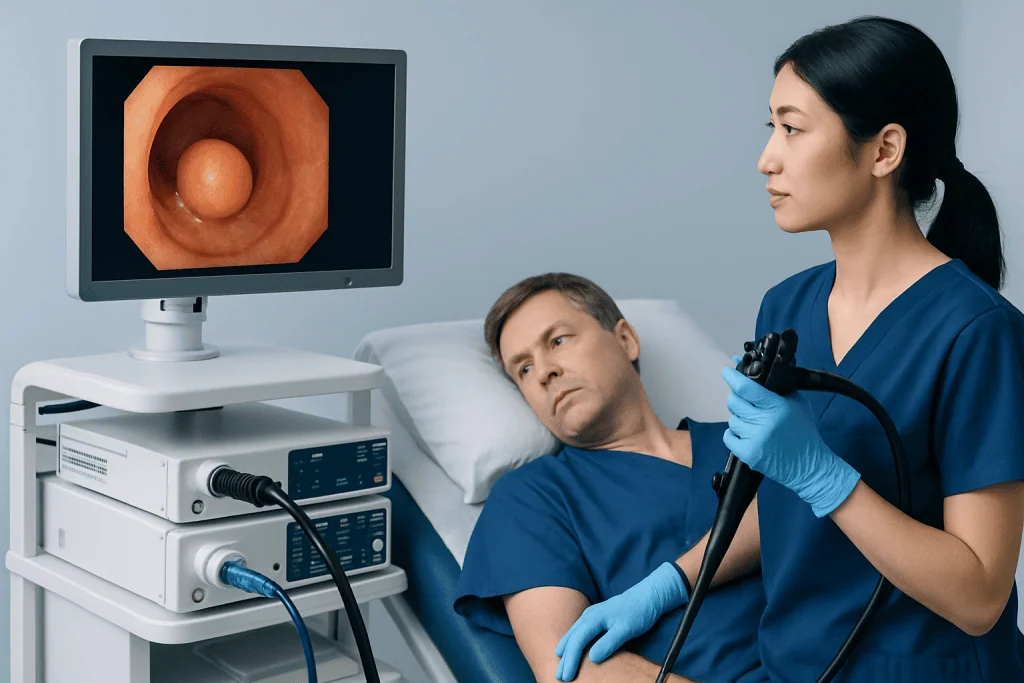
- Colonoscopythis is the most complete test. A doctor passes a thin, flexible tube with a camera (a colonoscope) through the rectum to examine the entire colon. The major advantage is that polyps found during the examination can usually be removed immediately, and the tissue sent for laboratory analysis. Colonoscopy is generally performed under sedation and requires a bowel-cleansing preparation beforehand. You can read more about how these examinations work on the endoscopy and colonoscopy page.
- Flexible sigmoidoscopya shorter scope examines only the lower part of the colon. It can find polyps in that section, but a full colonoscopy is usually needed afterward if polyps are found.
- CT colonography (virtual colonoscopy)a specialized CT scan creates detailed images of the colon. It does not require sedation, but if polyps are seen, a conventional colonoscopy is still needed to remove them.
- Stool-based teststests such as the fecal immunochemical test (FIT) look for hidden (occult) blood in the stool, and some tests also detect abnormal DNA shed by polyps or cancers. A positive stool test does not diagnose polyps by itself; it means a colonoscopy is needed to find the source.
The definitive diagnosis of the polyp type is made by histopathology, examination of the removed tissue under a microscope by a pathologist. This determines whether the polyp is an adenoma, a serrated polyp, a hyperplastic polyp, or another type, and whether it contains any precancerous changes (dysplasia) or early cancer. This information guides how soon the next surveillance colonoscopy should be scheduled. Colon polyps are typically evaluated and managed within a gastroenterology department; at Acibadem, for example, gastroenterology specialists coordinate screening, polyp removal, and follow-up surveillance.
Treatment options for colon polyps
The cornerstone of colon polyps treatment is removal. Because doctors cannot reliably tell from appearance alone which polyps will remain harmless and which could eventually become cancerous, the standard approach is to remove polyps found during colonoscopy and send them for laboratory analysis. There is no medication that dissolves or shrinks existing polyps.
Polypectomy during colonoscopy
Most polyps are removed during the same colonoscopy in which they are discovered: a procedure called polypectomy. Small polyps can be removed with biopsy forceps or a thin wire loop (a snare), sometimes using a gentle electrical current to cut and seal the tissue. This is done through the colonoscope, so no incisions are made in the abdomen. Polypectomy is generally safe; uncommon complications include bleeding and, rarely, a small tear (perforation) in the bowel wall.
Endoscopic removal of larger or complex polyps
Large or flat polyps may require advanced endoscopic techniques such as endoscopic mucosal resection (EMR), in which fluid is injected under the polyp to lift it before removal, or endoscopic submucosal dissection (ESD), a more detailed technique for carefully separating a large polyp from the bowel wall. These procedures are performed by experienced endoscopists and can often spare patients from needing abdominal surgery.
Surgery
Surgery is reserved for situations where endoscopic removal is not possible or not safe, for example, very large polyps, polyps in difficult locations, or polyps found to contain cancer that has grown beyond the most superficial layers. In these cases, a surgeon may remove the affected segment of the colon, often using minimally invasive (laparoscopic) techniques. People with rare inherited syndromes such as familial adenomatous polyposis may be advised to have more extensive preventive surgery, because their polyp burden is too high to manage endoscopically.
Watchful waiting and surveillance
For certain very small polyps with an extremely low risk profile, such as tiny hyperplastic polyps in the rectum, a doctor may in some cases judge that removal of every single one is unnecessary. More importantly, after polyps are removed, ongoing surveillance is a key part of treatment. Because people who have had adenomas are more likely to develop new ones, follow-up colonoscopies are scheduled at intervals that depend on the number, size, and type of polyps found. Your doctor will recommend a personalized surveillance plan based on your pathology results and overall risk.
Prevention and risk reduction
Although no medication is approved specifically to treat existing polyps, lifestyle measures may help lower the risk of new ones: not smoking, limiting alcohol, maintaining a healthy weight, staying physically active, and eating a diet rich in fruits, vegetables, whole grains, and fiber. Some studies suggest aspirin may reduce polyp formation in certain people, but aspirin also carries bleeding risks, so it should only be taken for this purpose if a doctor specifically recommends it.
Living with colon polyps and outlook
For most people, the outlook after a diagnosis of colon polyps is reassuring. The great majority of polyps are benign, and when precancerous polyps are removed, the process that could have led to cancer is interrupted. Removing adenomas through screening colonoscopy is one of the main reasons colorectal cancer can often be prevented rather than merely treated. That said, no medical approach eliminates risk entirely: new polyps can form over time, and rarely a polyp can be missed during an examination. This is why attending scheduled surveillance colonoscopies is so important.
Living with a history of colon polyps generally means a few practical commitments. Keep a record of your colonoscopy results and pathology reports, follow the surveillance interval your doctor recommends, and let your relatives know about your diagnosis, since first-degree family members may need to begin screening earlier than the general population. Adopting bowel-friendly habits, a high-fiber diet, regular exercise, healthy weight, and avoiding tobacco, supports overall colon health, although these steps reduce risk rather than guarantee protection.
If a removed polyp is found to contain early cancer, the outlook depends on how deeply the abnormal cells extended and whether the polyp was completely removed. In many such cases, complete endoscopic removal is sufficient, but your care team will review the pathology carefully and advise whether any further treatment or closer follow-up is needed.
Frequently asked questions
What is colon polyps in simple terms?
A colon polyp is a small growth of extra tissue on the inner lining of the large intestine. Most polyps are benign, meaning they are not cancer. However, some types, mainly adenomas and serrated polyps, can slowly change into colorectal cancer over many years, which is why doctors usually remove polyps when they find them and examine the tissue in a laboratory.
Are colon polyps cancer?
No, a polyp is not cancer at the time it is found in the vast majority of cases. Polyps are considered potential precursors: certain types can develop precancerous changes and, over a long period, may progress to cancer if left in place. Only microscopic examination of the removed polyp can determine its type and whether any worrying changes are present. Removing polyps before they change is the main way colonoscopy helps prevent colorectal cancer.
What are the first symptoms of colon polyps?
In most cases, there are no early symptoms at all, polyps are usually found during routine screening in people who feel entirely well. When symptoms do occur, the most common are rectal bleeding, blood in the stool, a persistent change in bowel habits, unexplained abdominal cramping, or fatigue from iron deficiency anemia caused by slow blood loss. Because these symptoms have many possible causes, they should always be evaluated by a doctor rather than assumed to be polyps.
Can colon polyps go away on their own?
Polyps do not generally heal or disappear on their own, and there is no medication that reliably makes existing polyps go away. The standard approach is removal during colonoscopy, followed by laboratory analysis of the tissue. Lifestyle changes may lower the chance of new polyps forming in the future, but they are not a substitute for removing polyps that are already present or for the surveillance schedule your doctor recommends.
How serious is it to have colon polyps?
For most people, finding polyps is not an emergency and does not mean cancer. The seriousness depends on the polyp’s type, size, and number, which is why pathology results matter. Small hyperplastic polyps carry very little risk, while larger adenomas or serrated polyps warrant closer follow-up. Having polyps removed and attending recommended surveillance colonoscopies generally keeps the long-term risk low, although no approach removes risk completely.
Is polyp removal painful, and how long is recovery?
Polyp removal is usually performed during colonoscopy while you are sedated, so most people feel no pain during the procedure. Afterward, mild bloating or gas discomfort is common for a few hours as the air used during the examination passes. Many people return to normal activities the next day, although your doctor may advise temporary restrictions, for example, avoiding certain blood-thinning medications or strenuous activity for a short period, especially after removal of larger polyps. A small amount of spotting can occur, but heavier bleeding should be reported promptly.
How often do I need a colonoscopy after polyps are removed?
The interval depends on what was found: the number, size, and type of polyps, and whether they showed any precancerous changes. Follow-up may range from about one year to ten years, and your doctor will set the interval based on your pathology results, family history, and how well the colon was cleaned and examined. It is important to follow the specific schedule you are given rather than a general rule, because recommendations are individualized.
When to see a doctor
Talk to a doctor about colon polyp screening if you are approaching the recommended screening age (commonly 45 in many guidelines), or earlier if you have a family history of polyps, colorectal cancer, an inherited polyp syndrome, or inflammatory bowel disease. Seek medical advice promptly, do not wait for a routine appointment, if you notice any of the following warning signs:
- Blood in your stool or rectal bleeding, even if it seems minor or happens only occasionally.
- Black, tarry stools, which can indicate bleeding higher in the digestive tract.
- A persistent change in bowel habitsnew constipation, diarrhea, or narrower stools lasting more than about a week.
- Ongoing abdominal pain, cramping, or bloating without an obvious explanation.
- Unexplained weight loss or a marked loss of appetite.
- Unusual tiredness, weakness, or paleness, which may point to anemia from hidden blood loss.
- After a polypectomy: heavy or persistent rectal bleeding, severe abdominal pain, fever, or vomiting: these need urgent evaluation.
These symptoms do not necessarily mean you have polyps or cancer, since many other conditions can cause them. However, they are the body’s most common signals that the colon should be examined, and early evaluation gives doctors the best chance to find and remove polyps before they cause harm.
Medically reviewed by the Acıbadem International Medical Board September 2, 2026
See our medical review board →
Update history
- PublishedJune 8, 2026
- Medical review approvedSeptember 2, 2026
- Last content updateSeptember 2, 2026