Colorectal Cancer
Colorectal Cancer affects the colon or rectum. Learn symptoms, causes, screening, diagnosis, treatment options and when to see a doctor.

Quick answer
Colorectal cancer is a malignancy that starts in the colon or rectum, often developing from abnormal growths in the bowel lining. In Turkey, Acibadem approaches colorectal cancer with diagnosis, staging, and personalized treatment planning that may include surgery, chemotherapy, radiotherapy, targeted therapies, and ongoing follow-up according to the tumor’s location and extent.
What is colorectal cancer?
Colorectal cancer is a cancer that starts in the colon (the large intestine) or the rectum (the final section of the large intestine that connects to the anus). Because the colon and rectum are parts of the same continuous organ and the diseases behave in similar ways, doctors often group them together under the single term colorectal cancer. When people ask what is colorectal cancer, the simplest answer is this: it is the uncontrolled growth of abnormal cells in the lining of the large bowel, which can form a tumor, invade nearby tissue, and in some cases spread to other parts of the body.
Most colorectal cancers develop slowly over many years. They usually begin as a polyp, which is a small, non-cancerous growth on the inner lining of the bowel. Not all polyps become cancer, but certain types, particularly those called adenomas, can gradually change into cancer over time. This slow development is important, because it means that finding and removing polyps early can often prevent colorectal cancer from ever forming.
Colorectal cancer is one of the most common cancers worldwide in both men and women. It becomes more frequent with age, and most people diagnosed are over 50, although it can occur in younger adults, and rates in people under 50 have been rising in many countries. Both men and women are affected, and a family history of the disease can increase a person’s risk.
Symptoms of colorectal cancer
Colorectal cancer symptoms can be subtle or completely absent in the early stages. Many small tumors and polyps cause no noticeable problems at all, which is one of the main reasons screening tests are recommended for people at average risk starting in middle age. When symptoms do appear, they often relate to bleeding, changes in bowel habits, or the tumor partially blocking the bowel.
Common colorectal cancer symptoms include:
- A change in bowel habitsdiarrhea, constipation, or narrower stools than usual that lasts more than a few days
- Blood in the stoolwhich may appear bright red or make the stool look dark or black
- Rectal bleedingbleeding from the anus, sometimes noticed on toilet paper
- Abdominal discomfortpersistent cramps, gas, bloating, or pain
- A feeling that the bowel does not empty completely after a bowel movement
- Unexplained weight loss without changes in diet or activity
- Weakness or fatigue, which can be related to anemia (a low red blood cell count) caused by slow, hidden bleeding
Symptoms can differ depending on where the tumor is located. Cancers in the rectum or the left (descending) side of the colon are more likely to cause visible bleeding, changes in stool shape, or a sense of blockage, because stool in this part of the bowel is more solid. Cancers in the right (ascending) side of the colon often grow for longer without obvious symptoms; they may first show up as unexplained anemia, tiredness, or vague abdominal discomfort, because bleeding from this area is usually hidden in the stool.
In later stages, symptoms may become more pronounced. A large tumor can cause a bowel obstruction, with severe cramping, inability to pass stool or gas, and vomiting: this is a medical emergency. If the cancer has spread to other organs, additional symptoms may appear, such as jaundice (yellowing of the skin and eyes) if the liver is involved, or breathing problems if the lungs are affected.
It is important to remember that all of these symptoms can also be caused by much more common and less serious conditions, such as hemorrhoids, infections, or irritable bowel syndrome. Having one or more of these symptoms does not mean you have cancer, but persistent symptoms should always be evaluated by a doctor.
Causes and risk factors
Like most cancers, colorectal cancer does not have a single cause. It develops when cells in the lining of the colon or rectum acquire genetic changes (mutations) that allow them to grow uncontrollably. Some of these changes are inherited, but most occur during a person’s lifetime. When discussing colorectal cancer causes, doctors usually describe a combination of factors that raise or lower risk rather than one direct cause.
Risk factors that cannot be changed include:
- Agerisk increases significantly after age 50, although younger adults can also be affected
- Personal history of colorectal polyps or a previous colorectal cancer
- Family historyhaving a parent, sibling, or child with colorectal cancer increases risk
- Inherited syndromesconditions such as Lynch syndrome (hereditary nonpolyposis colorectal cancer) and familial adenomatous polyposis, in which faulty genes are passed down in families and greatly raise the lifetime risk
- Inflammatory bowel diseaselong-standing ulcerative colitis or Crohn’s disease affecting the colon
Lifestyle-related factors that may increase risk include:
- Dieta diet high in red and processed meats and low in fiber, fruits, and vegetables has been linked with higher risk
- Physical inactivity and a sedentary lifestyle
- Obesity, which is associated with a higher risk of developing and dying from colorectal cancer
- Smokinglong-term tobacco use is linked to a higher risk
- Heavy alcohol use
- Type 2 diabetes, which appears to be associated with somewhat increased risk
Having one or more risk factors does not mean a person will definitely develop the disease, and some people develop colorectal cancer with no known risk factors at all. However, people with a strong family history or an inherited syndrome are usually advised to begin screening earlier and to be screened more often. Your doctor can help you understand your personal risk.
Diagnosis of colorectal cancer
Colorectal cancer diagnosis usually involves several steps, moving from initial suspicion to confirmation and then to staging, which describes how far the cancer has spread.
Medical history and physical examination. The doctor will ask about symptoms, family history, and risk factors. A physical examination may include a digital rectal exam, in which the doctor gently examines the lower rectum with a gloved finger to feel for abnormalities.
Stool and blood tests. Stool tests can detect hidden (occult) blood or abnormal DNA shed by tumors. Blood tests may reveal anemia caused by chronic bleeding. Doctors may also measure a tumor marker called CEA (carcinoembryonic antigen), a protein that can be elevated in colorectal cancer; it is not used to diagnose the disease on its own but can help monitor treatment later.
Colonoscopy. The key test for confirming colorectal cancer is a colonoscopy, an endoscopy and colonoscopy procedure in which a thin, flexible tube with a camera is passed through the entire colon. During the procedure, the doctor can see suspicious areas directly, remove polyps, and take a biopsy: a small tissue sample. Examination of the biopsy under a microscope by a pathologist is the only way to definitively confirm a diagnosis of cancer.
Imaging and staging. Once cancer is confirmed, imaging tests determine the extent of the disease. These commonly include a CT (computed tomography) scan of the chest, abdomen, and pelvis to look for spread to the lymph nodes, liver, or lungs. For rectal cancer, MRI (magnetic resonance imaging) of the pelvis is often used to assess how deeply the tumor has grown. In selected cases, PET-CT imaging, which combines a scan of the body’s metabolic activity with detailed anatomy, may be used to detect spread that other scans cannot clearly show.
Based on these results, doctors assign a stage, usually from stage I (the cancer is confined to the inner layers of the bowel wall) to stage IV (the cancer has spread to distant organs such as the liver or lungs). The stage is one of the most important factors guiding treatment decisions and discussions about outlook.
Treatment options for colorectal cancer
Colorectal cancer treatment depends on the location of the tumor, the stage of the disease, the person’s overall health, and, increasingly, the genetic characteristics of the tumor itself. Care is typically planned by a multidisciplinary team that includes surgeons, medical oncologists (cancer specialists who use drug treatments), radiation oncologists, radiologists, and pathologists. In many hospitals, including within the Acibadem group, systemic drug treatment is coordinated by a medical oncology department.
Removal of early lesions during colonoscopy. Very early cancers and precancerous polyps can sometimes be removed completely during a colonoscopy, without the need for open surgery. When the pathologist confirms that the abnormal tissue was fully removed and had not invaded deeply, no further treatment may be needed beyond regular follow-up.
Surgery. Surgery is the main treatment for most colorectal cancers that have not spread widely. The surgeon removes the section of the colon or rectum containing the tumor, along with nearby lymph nodes, and usually reconnects the healthy ends of the bowel. In some cases, particularly with rectal cancer, a temporary or permanent stoma (an opening on the abdomen through which stool passes into a bag) may be needed. Many operations can now be performed with minimally invasive (laparoscopic or robotic) techniques, which often allow a shorter recovery, although the choice of approach depends on the individual case.
Chemotherapy. Chemotherapy uses drugs that kill rapidly dividing cells. It may be given after surgery to lower the risk of the cancer returning, before surgery to shrink a tumor (especially in rectal cancer), or as the main treatment when the cancer has spread. Side effects vary by drug and by person, and supportive treatments can help manage them.
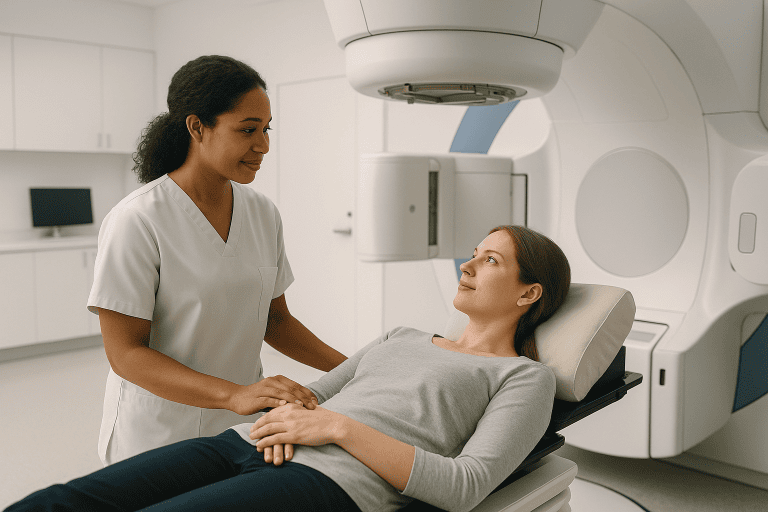
Radiation therapy. Radiation uses high-energy beams to destroy cancer cells. It is used mainly for rectal cancer, often combined with chemotherapy before surgery, and sometimes to relieve symptoms in advanced disease.
Targeted therapy and immunotherapy. For advanced colorectal cancer, doctors may test the tumor for specific genetic changes. Targeted drugs attack particular features of cancer cells, and immunotherapy drugs help the body’s immune system recognize and fight the cancer. These treatments are effective only in certain tumor types, so testing is essential before they are considered.
Treatment of cancer that has spread. When colorectal cancer spreads, it most often goes to the liver, lungs, or the peritoneum (the lining of the abdominal cavity). In selected patients, spread that is limited to one area can still be treated with the goal of long-term control, for example, surgery to remove liver metastases. When the cancer involves the peritoneum, some specialized centers offer cytoreductive surgery combined with HIPEC (heated intraperitoneal chemotherapy), in which warmed chemotherapy is circulated inside the abdomen during surgery. This is a major procedure suitable only for carefully selected patients.
Watchful waiting and supportive care. In some situations, for example, in people who are very frail or when the goals of care focus on comfort, active surveillance or symptom-focused (palliative) care may be the most appropriate approach. Palliative care aims to relieve pain and other symptoms and can be provided alongside cancer-directed treatment at any stage.
Living with colorectal cancer and outlook
A diagnosis of colorectal cancer affects daily life in many ways, but many people continue to live full and active lives during and after treatment. The outlook depends heavily on the stage at diagnosis. In general, cancers found at an early stage, before they have spread beyond the bowel, are often curable with surgery, sometimes combined with other treatments. Cancers that have spread to lymph nodes can still frequently be treated with the aim of cure. When the cancer has spread to distant organs, treatment usually focuses on controlling the disease, extending life, and maintaining quality of life; in selected cases, even some metastatic cancers can be treated with curative intent.
No doctor can predict exactly how the disease will behave in any individual person. Statistics describe groups of patients, not individuals, and outcomes vary widely depending on the tumor’s biology, the person’s overall health, and the response to treatment. Your treatment team can discuss what the findings in your specific situation are likely to mean.
After treatment, regular follow-up is important because colorectal cancer can return. Follow-up typically includes periodic physical examinations, blood tests such as CEA, imaging scans, and surveillance colonoscopies on a schedule set by your doctors. People living with a stoma usually receive training and support from specialized nurses, and most adapt well over time. Practical steps that many doctors recommend during and after treatment include eating a balanced diet, staying as physically active as your condition allows, not smoking, limiting alcohol, and seeking emotional support, from family, support groups, or mental health professionals, when needed.
Frequently asked questions
What is colorectal cancer in simple terms?
Colorectal cancer is a disease in which cells in the lining of the colon or rectum grow out of control and form a tumor. It usually develops slowly from small growths called polyps, which is why screening tests that find and remove polyps can often prevent the cancer from developing in the first place.
What are the first symptoms of colorectal cancer?
Early colorectal cancer often causes no symptoms at all. When symptoms do appear, the most common early signs are a persistent change in bowel habits, blood in the stool or rectal bleeding, abdominal discomfort, unexplained tiredness, and unintended weight loss. Because these symptoms overlap with many harmless conditions, only a medical evaluation can determine the cause.
Can colorectal cancer be cured?
In many cases, yes, particularly when it is found at an early stage. Cancers confined to the bowel wall or involving only nearby lymph nodes are often treated with curative intent, usually with surgery and sometimes chemotherapy or radiation. Even some cancers that have spread can be treated with the goal of long-term control or cure in carefully selected patients. However, outcomes vary from person to person, and no treatment can be guaranteed to succeed.
How serious is colorectal cancer?
Colorectal cancer is a serious disease and one of the leading causes of cancer death worldwide, but seriousness depends greatly on the stage at diagnosis. Early-stage disease often has a favorable outlook after treatment, while advanced disease is more difficult to treat. This wide difference is one of the strongest arguments for screening and for having persistent symptoms checked without delay.
How is colorectal cancer diagnosed?
The definitive test is a colonoscopy with a biopsy: a camera examination of the entire colon during which a small tissue sample is taken and examined under a microscope. Stool tests and blood tests may raise suspicion, and imaging such as CT, MRI, or PET-CT is used after diagnosis to determine how far the cancer has spread.
How long is recovery after colorectal cancer surgery?
Recovery varies with the type of operation and the person’s overall health. Many people spend several days to a week or more in the hospital and gradually return to normal activities over the following weeks. Minimally invasive surgery often allows a faster recovery than open surgery. If chemotherapy or radiation is also needed, the overall treatment period is longer. Your surgical team can give you a realistic timeline for your situation.
Can colorectal cancer be prevented?
Not entirely, but risk can be reduced. Screening colonoscopy allows doctors to remove precancerous polyps before they turn into cancer, which is the most effective preventive measure available. Lifestyle steps that may lower risk include eating a fiber-rich diet with less red and processed meat, staying physically active, maintaining a healthy weight, not smoking, and limiting alcohol.
When to see a doctor
See a doctor promptly if you notice any of the following warning signs, especially if they persist for more than a few days:
- Blood in the stool or rectal bleedingeven if you think it is from hemorrhoids, it should be evaluated
- Black, tarry stools, which can indicate bleeding higher in the digestive tract
- A persistent change in bowel habitsnew constipation, diarrhea, or noticeably narrower stools
- Ongoing abdominal pain, cramping, or bloating with no clear cause
- Unexplained weight loss or loss of appetite
- Persistent fatigue or weakness, or a diagnosis of unexplained anemia
- A constant feeling that your bowel does not empty completely
Seek urgent medical care if you have severe abdominal pain, are unable to pass stool or gas, are vomiting repeatedly, or are bleeding heavily from the rectum: these can be signs of a bowel obstruction or serious bleeding that needs immediate attention. Even if your symptoms turn out to have a harmless cause, having them checked early gives you the best chance of finding any serious problem while it is still highly treatable. If you are 45 or older, or younger with a family history of colorectal cancer, ask your doctor when you should begin screening, even if you feel completely well.
Medically reviewed by the Acıbadem International Medical Board September 2, 2026
See our medical review board →
Update history
- PublishedJune 8, 2026
- Medical review approvedSeptember 2, 2026
- Last content updateSeptember 2, 2026