Gallbladder Cancer
Gallbladder Cancer is a rare cancer of the gallbladder. Learn symptoms, risk factors, diagnosis, treatment options and when to seek care.
Quick answer
Gallbladder cancer is a rare malignancy that begins in the gallbladder, often remaining unnoticed until it has grown or spread, and treatment depends on the stage and overall health of the patient. At Acibadem in Turkey, evaluation typically includes imaging and pathology, with care planned by a multidisciplinary team using surgery when possible and chemotherapy or other supportive treatments when…
What is gallbladder cancer?
Gallbladder cancer is a disease in which abnormal cells grow out of control in the gallbladder, a small pear-shaped organ that sits underneath the liver on the right side of the abdomen. The gallbladder stores bile, a digestive fluid made by the liver that helps the body break down fats. When cells in the lining of the gallbladder begin to change and multiply in an uncontrolled way, they can form a tumor, which is an abnormal mass of tissue. Over time, cancer cells may grow through the wall of the gallbladder and spread to nearby organs, such as the liver, or travel to other parts of the body through the lymphatic system or the bloodstream.
Most gallbladder cancers are adenocarcinomas, meaning they begin in the gland cells that line the inside of the organ. Gallbladder cancer is relatively uncommon compared with many other cancers, and it tends to be diagnosed more often in older adults, typically after the age of 65. It is seen more frequently in women than in men, which is thought to be related in part to the higher rate of gallstones in women. Rates also vary between countries and regions of the world.
Understanding what is gallbladder cancer, how it behaves, and how it is treated can help patients and families take part in decisions about care. One important feature of this disease is that the gallbladder sits deep in the abdomen and often does not cause noticeable problems in the early stages. For this reason, gallbladder cancer is sometimes discovered by chance, for example when the gallbladder is removed for gallstones and a pathologist (a doctor who examines tissue under a microscope) finds cancer cells in the specimen.
Symptoms of gallbladder cancer
Gallbladder cancer symptoms are often vague in the beginning, and many of them overlap with far more common and less serious conditions, such as gallstones or gallbladder inflammation. In the early stages, there may be no symptoms at all. As the tumor grows, the following signs may appear:
- Abdominal pain, most often in the upper right part of the belly, which may be dull, persistent, or crampy
- Jaundice, a yellowing of the skin and the whites of the eyes, caused by a blocked bile duct
- Nausea and vomiting, especially after meals
- Bloating or a feeling of fullness in the abdomen
- A lump or mass that can sometimes be felt in the right upper abdomen
- Unintended weight loss without a change in diet or activity
- Loss of appetite
- Fever that does not have an obvious cause
- Itchy skin, dark urine, or pale stools, which can accompany jaundice
How symptoms appear often depends on the stage of the disease. Early-stage tumors that are confined to the inner layers of the gallbladder wall frequently cause no symptoms, or only mild discomfort that is easy to mistake for indigestion or gallstone pain. As the cancer advances and grows into nearby structures, symptoms usually become more pronounced. Jaundice, for example, tends to occur when the tumor blocks the bile ducts, the tubes that carry bile from the liver and gallbladder to the intestine. Significant weight loss, a persistent mass, and swelling of the abdomen caused by fluid buildup (called ascites) are more often seen in later stages.
Because gallbladder cancer symptoms are not specific to this disease, having one or more of them does not mean a person has cancer. However, symptoms that are new, persistent, or getting worse should always be evaluated by a doctor rather than ignored.
Causes and risk factors
The exact gallbladder cancer causes are not fully understood. In general, cancer begins when changes (mutations) occur in the DNA of cells, allowing them to grow and divide when healthy cells would stop. What triggers these changes in the gallbladder is not known in every case, but researchers have identified several factors that increase the risk. Long-standing inflammation of the gallbladder appears to play an important role, because chronic irritation of the gallbladder lining over many years may encourage abnormal cell changes.
Recognized risk factors include:
- Gallstones: Hardened deposits of bile that form in the gallbladder. Gallstones are the most common risk factor, and most people diagnosed with gallbladder cancer have a history of them. It is important to remember that gallstones are very common, and only a very small proportion of people with gallstones ever develop gallbladder cancer.
- Chronic gallbladder inflammation (cholecystitis): Repeated or long-lasting inflammation, often related to gallstones, may increase risk over time.
- Porcelain gallbladder: A condition in which the wall of the gallbladder becomes covered with calcium deposits, usually as a result of long-term inflammation. It has been linked with a higher chance of cancer in some cases.
- Gallbladder polyps: Growths that project from the inner lining of the gallbladder. Most polyps are harmless, but larger polyps may carry a higher risk of becoming cancerous, so doctors often recommend monitoring or removal depending on their size and appearance.
- Female sex: Women develop gallbladder cancer more often than men.
- Older age: Risk increases with age, and most cases occur in people over 65.
- Obesity: Excess body weight is associated with gallstones and appears to raise the risk of gallbladder cancer.
- Bile duct abnormalities: Conditions present from birth that affect how bile flows, such as cysts of the bile ducts or an abnormal junction between the bile and pancreatic ducts, can increase risk.
- Chronic infections: Long-term infection of the gallbladder or bile with certain bacteria, such as chronic Salmonella typhi infection, has been linked to increased risk in some populations.
- Family history and geography: Having a close relative with gallbladder cancer may modestly increase risk, and the disease is more common in certain regions of the world.
Having one or more risk factors does not mean a person will develop gallbladder cancer, and some people who develop the disease have no known risk factors. There is no proven way to prevent gallbladder cancer entirely, but maintaining a healthy body weight and discussing gallbladder polyps or other bile duct conditions with a doctor may help manage risk.
Diagnosis
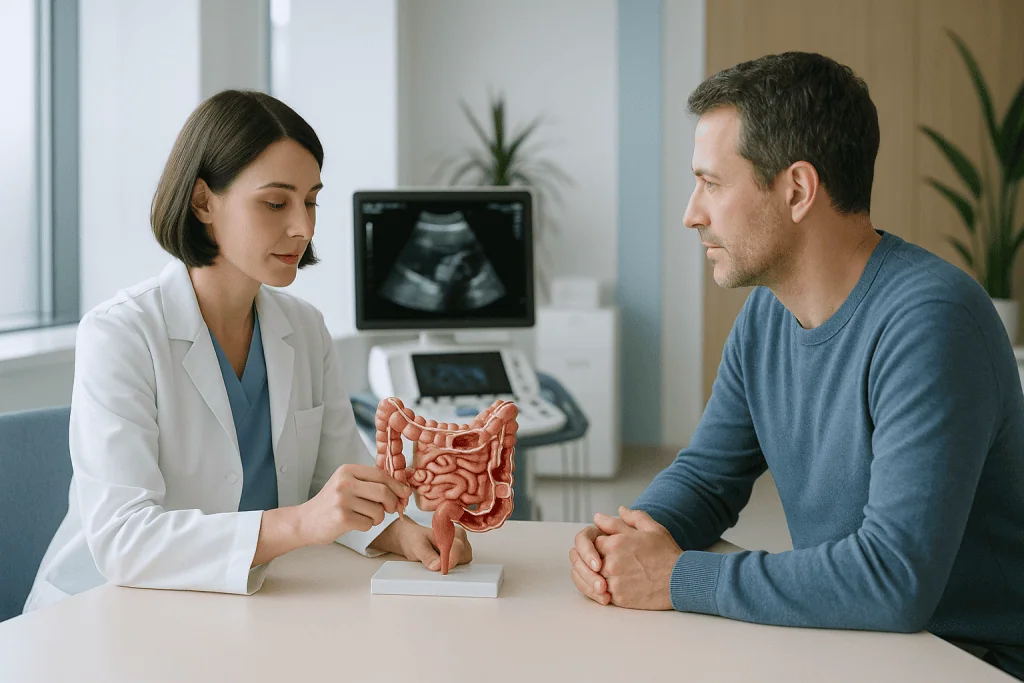
Gallbladder cancer diagnosis usually begins when a person sees a doctor because of symptoms, or when an abnormality is found by chance during imaging or surgery performed for another reason. The doctor will typically start by asking about symptoms and medical history and by performing a physical examination, checking for tenderness, a mass in the abdomen, or signs of jaundice.
Tests that doctors commonly use to confirm or rule out gallbladder cancer include:
- Blood tests: Liver function tests measure substances made or processed by the liver, such as bilirubin, and can show whether the bile ducts are blocked. Doctors may also check tumor markers, which are substances that can be elevated in some cancers; these markers are not specific enough to diagnose cancer on their own, but they can support the overall picture and help monitor treatment.
- Ultrasound: A painless scan that uses sound waves to create pictures of the gallbladder and liver. It is often the first imaging test, because it can show gallstones, thickening of the gallbladder wall, or a mass.
- CT scan (computed tomography): A detailed X-ray study that shows the gallbladder, liver, lymph nodes, and other organs, helping doctors see how far a tumor may have grown or spread.
- MRI (magnetic resonance imaging): A scan that uses magnetic fields to create detailed images of soft tissues. A special form called MRCP (magnetic resonance cholangiopancreatography) shows the bile ducts and can reveal blockages.
- ERCP (endoscopic retrograde cholangiopancreatography): A procedure in which a thin, flexible tube with a camera is passed through the mouth into the small intestine to examine the bile ducts. Doctors can take tissue samples and, if needed, place a small tube called a stent to relieve a blocked duct.
- Endoscopic ultrasound: An ultrasound probe attached to an endoscope that provides close-up images of the gallbladder and nearby lymph nodes and can guide tissue sampling.
- Biopsy: The removal of a small sample of tissue so a pathologist can examine it under a microscope. A biopsy is the definitive way to confirm cancer in many cases. Sometimes, however, the diagnosis is made only after the gallbladder has been surgically removed and examined.
Once cancer is confirmed, doctors determine the stage, which describes how large the tumor is, how deeply it has grown into the gallbladder wall, and whether it has spread to lymph nodes or distant organs. Staging usually relies on imaging scans and sometimes on a surgical procedure called staging laparoscopy, in which a camera is inserted through small cuts in the abdomen to look for spread that scans might miss. Staging is essential because it guides which gallbladder cancer treatment options are appropriate.
Treatment options
Gallbladder cancer treatment depends on the stage of the disease, the person’s overall health, and their preferences. Care is usually planned by a multidisciplinary team, which means specialists from several fields, including surgeons, medical oncologists (doctors who treat cancer with medicines), radiation oncologists, gastroenterologists, and radiologists, review the case together. At Acibadem, the nonsurgical, medicine-based part of cancer care is coordinated through the Medical Oncology Department, working alongside surgical and other teams.
Surgery
Surgery offers the best chance of removing the cancer completely when the disease is found early. Options may include:
- Cholecystectomy: Removal of the gallbladder. For very early cancers confined to the inner layers of the gallbladder wall, removing the gallbladder alone may be sufficient in some cases.
- Extended (radical) cholecystectomy: Removal of the gallbladder together with a portion of the adjacent liver and nearby lymph nodes. This operation is often recommended when the cancer has grown deeper into or through the gallbladder wall.
Not every gallbladder cancer can be removed with surgery. If the tumor has spread widely, an operation to remove it may not be beneficial, and treatment focuses instead on controlling the disease and relieving symptoms.
Chemotherapy
Chemotherapy uses medicines that kill cancer cells or stop them from dividing. It may be given after surgery to lower the chance of the cancer returning, or as the main treatment when surgery is not possible. Chemotherapy is usually given in cycles, with treatment periods followed by rest periods, and side effects vary depending on the drugs used.
Radiation therapy
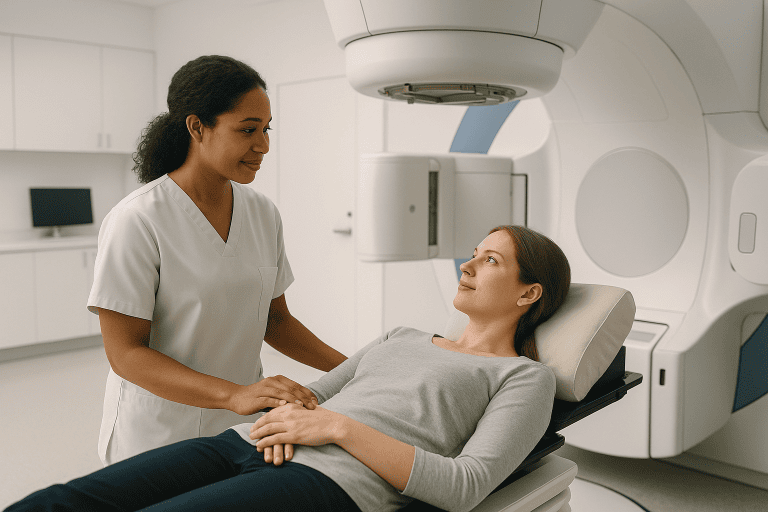
Radiation therapy uses focused high-energy beams to destroy cancer cells. It may be used in combination with chemotherapy, after surgery in selected cases, or to relieve pain and other symptoms caused by a tumor that cannot be removed.
Targeted therapy and immunotherapy
Targeted therapy drugs act on specific genetic changes found in some tumors, while immunotherapy helps the body’s own immune system recognize and attack cancer cells. These treatments are options for some people with advanced gallbladder cancer, often depending on the results of laboratory tests performed on the tumor tissue. Your care team can explain whether such testing and treatment are appropriate in your situation.
Supportive and palliative care
Palliative care focuses on relieving symptoms and improving quality of life at any stage of illness, not only at the end of life. For gallbladder cancer, this can include procedures to relieve a blocked bile duct, such as placing a stent, as well as medicines to manage pain, nausea, or itching. Supportive care is often provided alongside cancer-directed treatment.
Watchful monitoring
In some situations, for example when a person is not well enough for intensive treatment, doctors may recommend careful monitoring combined with symptom control rather than aggressive therapy. This decision is always individualized and discussed openly between the patient, family, and care team.
Living with gallbladder cancer and outlook
The outlook for gallbladder cancer varies widely from person to person. In general, the prognosis is more favorable when the disease is found at an early stage and can be removed completely with surgery. Because early-stage disease often causes no symptoms, many gallbladder cancers are diagnosed after they have already grown beyond the gallbladder, which makes treatment more challenging. No doctor can predict exactly how an individual’s illness will progress, and statistics describe groups of people rather than any one person’s future.
After treatment, regular follow-up visits are important. These usually include physical examinations, blood tests, and imaging scans to watch for any sign that the cancer has returned. People living without a gallbladder can generally digest food normally, although some notice looser stools or discomfort after fatty meals, especially in the first months; a doctor or dietitian can suggest ways to manage this, such as eating smaller, more frequent meals.
Living with a serious diagnosis affects emotional health as well as physical health. Feelings of anxiety, sadness, or uncertainty are common and understandable. Many people find it helpful to talk with a counselor, join a patient support group, or lean on family and friends. Care teams can also connect patients with psychological support, nutrition advice, and palliative care services to help maintain the best possible quality of life throughout treatment and afterward.
Frequently asked questions
What is gallbladder cancer in simple terms?
Gallbladder cancer is a disease in which abnormal cells grow uncontrollably in the gallbladder, the small organ under the liver that stores bile. These cells can form a tumor and, if untreated, may spread to nearby organs such as the liver or to more distant parts of the body. It is an uncommon cancer that mainly affects older adults and occurs more often in women than in men.
What are the first symptoms of gallbladder cancer?
Early gallbladder cancer often causes no symptoms at all. When symptoms do appear, the most common early complaints are pain in the upper right abdomen, nausea, bloating, and loss of appetite. Because these problems are also caused by gallstones and other common conditions, they do not mean a person has cancer, but persistent symptoms should be checked by a doctor.
Can gallbladder cancer be cured?
Gallbladder cancer can sometimes be cured, particularly when it is found early and the tumor can be removed completely with surgery. When the cancer has spread beyond the gallbladder, a complete cure becomes less likely, but treatments such as chemotherapy, radiation, targeted therapy, and immunotherapy may control the disease, ease symptoms, and extend life in many cases. Outcomes vary from person to person, so it is best to discuss your individual situation with your care team.
How serious is gallbladder cancer?
Gallbladder cancer is considered a serious disease, mainly because it is often diagnosed at a later stage after it has grown beyond the gallbladder. The seriousness for any individual depends on the stage at diagnosis, whether surgery is possible, and the person’s overall health. Early detection generally leads to better outcomes, which is one reason persistent abdominal symptoms should never be ignored.
What causes gallbladder cancer?
The exact cause is not fully understood, but long-term irritation and inflammation of the gallbladder appear to play a key role. Gallstones are the most common risk factor, and others include chronic gallbladder inflammation, porcelain gallbladder, larger gallbladder polyps, obesity, older age, female sex, certain bile duct abnormalities, and chronic infections. Most people with these risk factors never develop gallbladder cancer.
How is gallbladder cancer diagnosed?
Doctors usually begin with a physical examination and blood tests, followed by imaging such as ultrasound, CT, or MRI to look at the gallbladder and surrounding organs. Procedures such as ERCP or endoscopic ultrasound may be used to examine the bile ducts and collect tissue samples. A biopsy, in which tissue is examined under a microscope, is often needed to confirm the diagnosis, although sometimes the cancer is discovered only after the gallbladder is removed for another reason.
What is recovery like after gallbladder cancer surgery?
Recovery depends on the extent of the operation. Removal of the gallbladder alone often allows a return to normal activities within a few weeks, while a more extensive operation that includes part of the liver requires a longer hospital stay and recovery period. Most people can digest food without a gallbladder, though some experience temporary changes in digestion. Your surgical team will give you individualized guidance on activity, diet, and follow-up care.
When to see a doctor
Because gallbladder cancer often has few early warning signs, it is important to have any persistent digestive or abdominal symptoms evaluated rather than assuming they are harmless. See a doctor promptly if you notice any of the following:
- Yellowing of the skin or eyes (jaundice), with or without dark urine, pale stools, or itchy skin
- Persistent pain in the upper right abdomen that lasts more than a few days or keeps returning
- Unexplained weight loss or a lasting loss of appetite
- A lump or swelling you can feel in the right upper abdomen
- Ongoing nausea or vomiting that does not improve
- Fever with abdominal pain, which can also signal a gallbladder infection needing urgent care
- Increasing abdominal swelling or fullness
These symptoms are much more often caused by conditions other than cancer, such as gallstones or infection, but some of them, particularly jaundice or severe pain with fever, can require urgent medical attention regardless of the cause. If you have known gallbladder polyps, a porcelain gallbladder, or other risk factors, keep up with the monitoring schedule your doctor recommends. Early evaluation gives doctors the best chance to find the cause of your symptoms and, if gallbladder cancer is present, to treat it at the most manageable stage.
Medically reviewed by the Acıbadem International Medical Board September 3, 2026
See our medical review board →
Update history
- PublishedJune 8, 2026
- Medical review approvedSeptember 3, 2026
- Last content updateSeptember 2, 2026