Morton Neuroma
Morton Neuroma causes forefoot pain, burning, tingling, or numbness. Learn symptoms, diagnosis, treatment options, and when to seek care.

Quick answer
Morton neuroma is a painful thickening of tissue around a nerve between the toes, most often causing burning pain, tingling, or the feeling of standing on a pebble. Treatment depends on symptom severity and may include footwear changes, activity modification, medication, injections, and, when needed, surgery to relieve pressure or remove the affected nerve tissue.
Morton Neuroma is a painful thickening and irritation of a small nerve in the ball of the foot, most often between the third and fourth toes. It is not usually a true tumor, and many people improve with footwear changes, orthotics, injections, or other specialist-guided treatments.
Overview
Morton Neuroma is a condition in which a small nerve in the forefoot becomes irritated, compressed, and surrounded by thickened tissue. It most commonly affects the nerve between the third and fourth metatarsal bones, near the base of the toes. Although the word neuroma can sound concerning, Morton Neuroma is usually not a cancerous growth; it is better understood as a painful nerve entrapment or thickening caused by repeated irritation.
The condition typically causes pain in the ball of the foot, often described as burning, sharp, or electric. Some people feel as if they are standing on a small stone, a fold in the sock, or a lump inside the shoe, even when nothing is there. Symptoms may worsen during walking, running, wearing tight shoes, or using high-heeled footwear.
Morton Neuroma can affect daily comfort, mobility, and exercise, but it is commonly manageable. Many patients improve with non-surgical care, especially when treatment begins early and the source of pressure on the nerve is reduced. A foot and ankle specialist can confirm the diagnosis, rule out similar conditions, and recommend an approach based on the person’s symptoms, foot structure, activity level, and overall health.
Symptoms
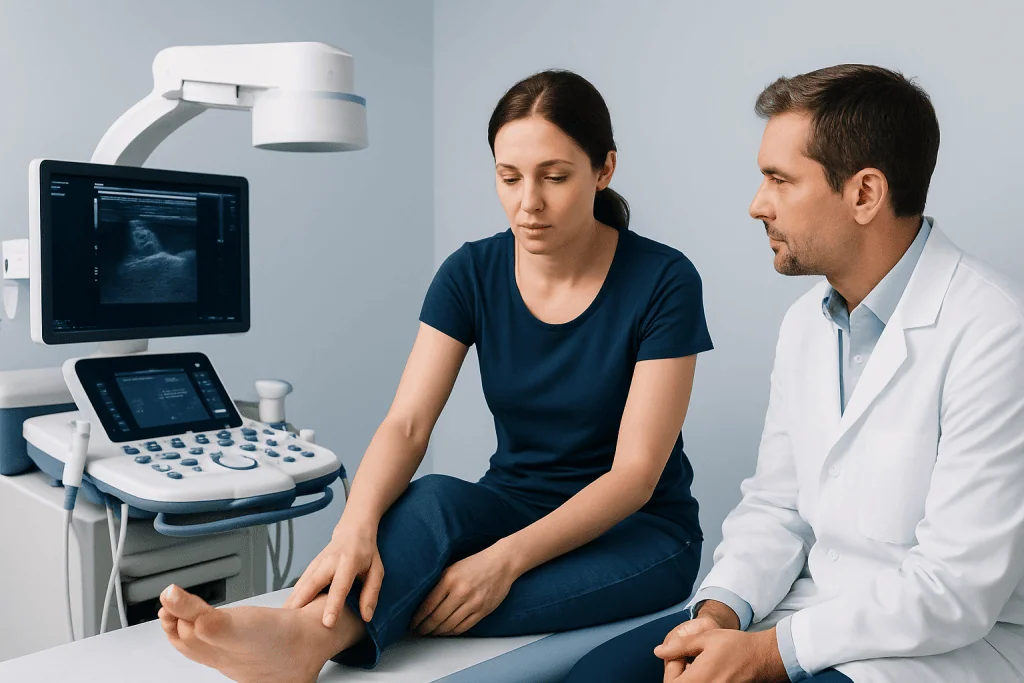
Morton Neuroma symptoms usually develop in the forefoot, most often between the third and fourth toes. Pain may be intermittent at first and appear only when wearing certain shoes or after a long walk. Over time, the discomfort can become more frequent if the nerve continues to be compressed or inflamed.
Common symptoms include:
- Burning pain in the ball of the foot that may spread into the toes.
- Tingling, pins and needles, or numbness in the affected toes.
- A sharp, shooting, or electric-like sensation with walking or pressure.
- The feeling of a pebble, wrinkle, or lump under the forefoot.
- Symptoms that improve when shoes are removed, the foot is massaged, or the toes are stretched.
- Discomfort that worsens in narrow shoes, pointed shoes, high heels, or during high-impact activity.
There is often no visible swelling, bruising, or deformity from the outside. This can make the condition frustrating because the foot may look normal while still feeling painful. Symptoms may overlap with other causes of forefoot pain, such as metatarsalgia, stress fracture, arthritis, tendon irritation, or inflammation in the joint capsules, so medical assessment is important when pain persists.
Causes & Risk Factors
Morton Neuroma develops when an interdigital nerve in the forefoot is repeatedly compressed or irritated. The nerve runs between the metatarsal bones, which are the long bones leading to the toes. When these bones press together or when surrounding tissues become tight or inflamed, the nerve can become sensitive and thickened.
Several factors can increase pressure on the forefoot or narrow the space around the nerve. Shoes with a tight toe box can squeeze the metatarsal bones together, while high heels shift body weight toward the ball of the foot. Repetitive impact from running, court sports, dancing, or other activities may also contribute, particularly if symptoms are ignored or footwear is not supportive.
Foot shape and biomechanics can also play a role. People with bunions, hammertoes, flat feet, high arches, or abnormal gait patterns may place uneven pressure across the forefoot. Previous foot injury or inflammation around nearby joints may further irritate the nerve. In many cases, Morton Neuroma results from a combination of shoe pressure, activity, and individual foot structure rather than a single cause.
Diagnosis
Morton Neuroma is usually diagnosed through a careful review of symptoms and a physical examination of the foot. The doctor asks where the pain is located, what triggers it, which shoes make it worse, and whether there is numbness or tingling in the toes. The pattern of pain is often an important clue, especially when symptoms are relieved by removing the shoe or massaging the forefoot.
During the examination, the specialist may press between the metatarsal bones, gently squeeze the forefoot, and assess toe sensation, joint movement, foot alignment, and gait. Some patients have a characteristic click or reproduction of symptoms during examination, but this is not present in every case. The doctor also checks for other conditions that can mimic Morton Neuroma, including stress fracture, arthritis, bursitis, plantar plate injury, nerve problems from the back, or circulation-related pain.
Imaging is not always required, but it can be helpful when symptoms are unclear or when treatment decisions need more detail. X-rays do not show the neuroma itself, but they can identify bone problems, arthritis, or fractures. Ultrasound can visualize soft tissue changes around the nerve and may guide injections when appropriate. MRI may be considered for complex cases or when another diagnosis needs to be excluded.
Treatment Options
Treatment for Morton Neuroma aims to reduce pressure on the affected nerve, calm irritation, relieve pain, and restore comfortable movement. The right approach is decided by a qualified specialist after assessment, because treatment depends on symptom severity, duration, foot mechanics, activity needs, imaging findings, and previous response to care. Many people begin with non-surgical measures before considering more invasive options.
Conservative care often includes footwear changes, such as choosing shoes with a wider toe box, lower heel, and supportive sole. Metatarsal pads, shoe inserts, or custom orthotics may help spread pressure away from the nerve. Activity modification, gradual return to exercise, stretching, strengthening, and physical therapy may be recommended when tight calf muscles, altered walking mechanics, or forefoot overload contribute to symptoms. General pain-relief or anti-inflammatory medicines may be considered for short-term comfort when suitable for the patient, but they should be used only as advised by a healthcare professional.
If symptoms continue despite these steps, injection-based treatments may be discussed. These may include anti-inflammatory injections or other specialist-guided procedures intended to reduce nerve irritation or pain. The expected benefits, limitations, and possible side effects should be reviewed with the treating doctor before any procedure.
Surgery may be considered for persistent, function-limiting Morton Neuroma that has not improved with appropriate non-surgical treatment. Surgical options can include releasing tight structures around the nerve or removing the affected segment of nerve tissue. Surgery is not necessary for everyone, and the decision should be individualized after a detailed discussion of likely recovery, possible numbness, recurrence risk, and alternative treatments.
Living With / Prognosis
Many people with Morton Neuroma can manage symptoms successfully by reducing pressure on the forefoot and following a specialist’s treatment plan. Practical steps such as wearing wider shoes, avoiding prolonged use of high heels, using appropriate inserts, and pacing high-impact activities can make daily walking more comfortable. Because symptoms often flare with certain footwear, choosing shoes carefully is an important part of long-term management.
The outlook is generally good, especially when the condition is recognized early and the source of nerve irritation is addressed. Some people have occasional flare-ups that settle with rest, footwear adjustment, and supportive care. Others may need injections or surgery if pain persists and limits normal activities. Recovery times vary, and improvement may be gradual because irritated nerve tissue can remain sensitive for some time.
Living well with Morton Neuroma also means watching for patterns. Patients may benefit from noting which shoes, surfaces, sports, or distances trigger symptoms. A clinician or physiotherapist can help adjust training routines, walking mechanics, and strengthening exercises to reduce forefoot overload. For international patients, Acibadem International’s multidisciplinary specialists and JCI-accredited hospitals provide diagnosis and treatment for foot and ankle conditions, including Morton Neuroma, within an individualized care pathway.
When to See a Doctor
A person should see a doctor if pain in the ball of the foot lasts more than a few days, keeps returning, or interferes with walking, work, sport, or sleep. Medical assessment is also recommended if there is numbness, tingling, burning pain into the toes, or the repeated feeling of a pebble under the foot. Early evaluation can help identify Morton Neuroma and rule out other conditions that may need different treatment.
Prompt medical attention is important if foot pain follows an injury, if swelling or bruising is significant, if the person cannot bear weight comfortably, or if there are signs of infection such as increasing redness, warmth, fever, or an open wound. People with diabetes, circulation problems, immune system conditions, or reduced foot sensation should seek medical advice earlier because foot symptoms may require closer monitoring.
Before the appointment, it can be helpful to bring the shoes most often worn, note where the pain occurs, and describe which activities make symptoms better or worse. A foot and ankle specialist can provide a clear diagnosis and discuss treatment choices, including conservative care, orthotic options, injections, or surgery when appropriate.
Frequently asked questions
What is Morton Neuroma?
Morton Neuroma is irritation and thickening around a small nerve in the ball of the foot, most often between the third and fourth toes. It is usually caused by repeated pressure or compression rather than a true tumor. The condition commonly causes burning pain, tingling, numbness, or the feeling of stepping on a pebble.
What does Morton Neuroma pain feel like?
Pain is often described as burning, sharp, shooting, or electric-like in the forefoot. It may spread into the toes and be accompanied by tingling or numbness. Many people notice that symptoms worsen in narrow shoes or high heels and improve when the shoe is removed.
Can Morton Neuroma go away without surgery?
Many cases improve without surgery, especially when pressure on the nerve is reduced early. Wider shoes, lower heels, metatarsal padding, orthotics, activity changes, and physical therapy may be helpful. If symptoms persist, a specialist can discuss injection treatments or other options.
How is Morton Neuroma diagnosed?
Diagnosis is usually based on the symptom pattern and a physical examination of the foot. The doctor may press between the metatarsal bones and assess sensation, joint movement, and gait. Ultrasound, MRI, or X-rays may be used when the diagnosis is uncertain or to rule out other causes of forefoot pain.
Which shoes are best for Morton Neuroma?
Shoes with a wide toe box, low heel, cushioned sole, and good support often reduce pressure on the affected nerve. Narrow, pointed, or high-heeled shoes can worsen symptoms by squeezing the forefoot. A clinician may also recommend metatarsal pads or orthotics based on foot shape and walking mechanics.
When is surgery considered for Morton Neuroma?
Surgery may be considered when symptoms remain painful and limiting despite appropriate non-surgical treatment. Procedures may aim to release pressure around the nerve or remove the irritated nerve segment. The decision should be made with a foot and ankle specialist after discussing expected benefits, recovery, and possible risks.
References
- American Academy of Orthopaedic Surgeons
- American College of Foot and Ankle Surgeons
- National Health Service
- Mayo Clinic
- Cleveland Clinic
This article is for general information only and is not a substitute for professional medical advice. Please consult a qualified doctor about your individual situation.
Treatments for This Condition
Doctors Who Treat This Condition

Pdg. Ayşe Günsay
Podiatry & Foot Health
Pdg. Fulya Sari
Podiatry & Foot Health
Pdg. Gizem Sencer
Podiatry & Foot Health
Pdg. Gülşah Kızıl
Podiatry & Foot Health
Pdg. Melek Başaran
Podiatry & Foot Health
Pdg. Onur Baş
Podiatry & Foot Health
Pdg. Tuğçe Er
Podiatry & Foot Health
Pdg. Yaren Kavlak
Podiatry & Foot Health