Postpartum Fever
Learn what postpartum fever is, its common symptoms and causes after childbirth, how doctors diagnose the source, treatment options, and warning signs.
Quick answer
Postpartum fever is a body temperature of 38.0°C (100.4°F) or higher occurring on two of the first ten days after childbirth, excluding the first 24 hours. It most often signals an infection of the uterus, a wound, the urinary tract, or the breast, and is usually treated successfully with antibiotics.
What is postpartum fever?
Postpartum fever is a raised body temperature that develops in the days after giving birth. The word postpartum simply means “after delivery,” and the period is sometimes also called the puerperium, the roughly six weeks during which the body recovers from pregnancy and childbirth. A widely used clinical definition of postpartum fever is a temperature of 38.0°C (100.4°F) or higher, measured on at least two occasions, on any two of the first ten days after delivery, not counting the first 24 hours. Doctors often exclude the first day because a mild, short-lived temperature rise is common after labor and usually settles on its own.
Postpartum fever is not a disease in itself. It is a sign that something else is happening in the body, and in many cases that “something” is an infection. Because women who have just delivered have a healing uterus, sometimes a surgical wound, breasts that are starting to produce milk, and a bladder that may have been catheterized, there are several possible sources. Most cases are mild and respond well to treatment when they are recognized early, but a small number can progress to a serious, body-wide infection called sepsis. For this reason, any fever after childbirth deserves medical attention.
Postpartum fever can affect anyone who has given birth, whether vaginally or by cesarean section (delivery through a surgical cut in the abdomen and uterus). It is more common after cesarean delivery, after long labors, and when the membranes around the baby were broken for a long time before birth. In hospital settings, this condition is usually managed by the obstetrics team, which at Acibadem falls under the Gynecology & Obstetrics department.
Postpartum fever symptoms
The defining feature is the fever itself, but postpartum fever symptoms often include other signs that point toward the underlying cause. Common symptoms include:
- Temperature of 38.0°C (100.4°F) or higher, often with chills or shivering
- Feeling generally unwell, weak, or unusually tired beyond normal new-parent fatigue
- Lower abdominal or pelvic pain, or a uterus that feels tender when pressed
- Vaginal discharge (called lochia) that smells foul or becomes heavier than expected
- Redness, warmth, swelling, pain, or leaking fluid around a cesarean incision or perineal stitches
- A painful, red, hot, wedge-shaped area on one breast, sometimes with flu-like aches
- Burning or pain when passing urine, needing to urinate often, or pain over the kidneys in the back
- Cough, shortness of breath, or chest pain
- Pain, swelling, or warmth in one leg
- Fast heartbeat, fast breathing, confusion, or feeling faint
The pattern of symptoms often depends on when the fever starts. A fever in the first 24 to 48 hours is sometimes linked to breast engorgement, a urinary tract infection, or a chest problem after anesthesia. A fever starting two to seven days after birth is more often related to infection of the lining of the uterus or of a wound. Breast infection typically appears one to several weeks after delivery, once breastfeeding is established. These timings are only general guides, and your doctor will consider the whole picture rather than the day count alone.
Some symptoms are more worrying than others. Confusion, difficulty breathing, a racing heart, very low blood pressure, cold or mottled skin, or a fever that keeps climbing despite treatment may indicate sepsis and require emergency care. These red flags are listed again at the end of this page.
Causes and risk factors
Postpartum fever causes are most often infections, although not always. Doctors sometimes use a memory aid of “the Ws” to run through the usual suspects.
- Womb (endometritis): infection of the inner lining of the uterus is the single most common cause. Bacteria that normally live in the vagina can travel upward into the uterus during labor and delivery. Symptoms typically include fever, lower abdominal tenderness, and foul-smelling discharge.
- Wound infection: the cesarean incision, or a perineal tear or episiotomy (a cut made to widen the vaginal opening during birth), can become infected. This usually shows as redness, swelling, pain, or pus at the site.
- Water (urinary tract infection): the bladder or kidneys can become infected, especially after a urinary catheter was used or after an epidural made emptying the bladder difficult.
- Wind (lungs): after general anesthesia or a long time lying flat, small areas of the lung can collapse (called atelectasis) or become infected (pneumonia), producing fever, cough, and breathlessness.
- Walking (blood clots): a clot in a deep vein of the leg or pelvis, including a condition called septic pelvic thrombophlebitis (an infected clot in a pelvic vein), can cause fever. Pregnancy and the weeks after birth increase clotting risk.
- Breast (mastitis): engorgement or infection of breast tissue, often through a cracked nipple, causes a painful, red, hot area on the breast along with fever and body aches.
- Wonder drugs: occasionally a fever is a reaction to a medication rather than an infection.
- Retained tissue: pieces of placenta or membranes left in the uterus can become a focus of infection and may also cause heavy bleeding.
Several factors raise the likelihood of developing postpartum fever. These include cesarean delivery, especially an unplanned one after labor has already started; a long labor; membranes that ruptured many hours before delivery; many internal examinations during labor; internal fetal monitoring; manual removal of the placenta; retained placental fragments; heavy blood loss; anemia; diabetes; obesity; a weakened immune system; poorly controlled infection of the vagina before birth; and a history of group B streptococcus (a common bacterium) colonization. Not having received recommended antibiotics before a cesarean section also increases risk. Having a risk factor does not mean an infection will occur, and many women with none of these factors still develop a fever.
Postpartum fever diagnosis
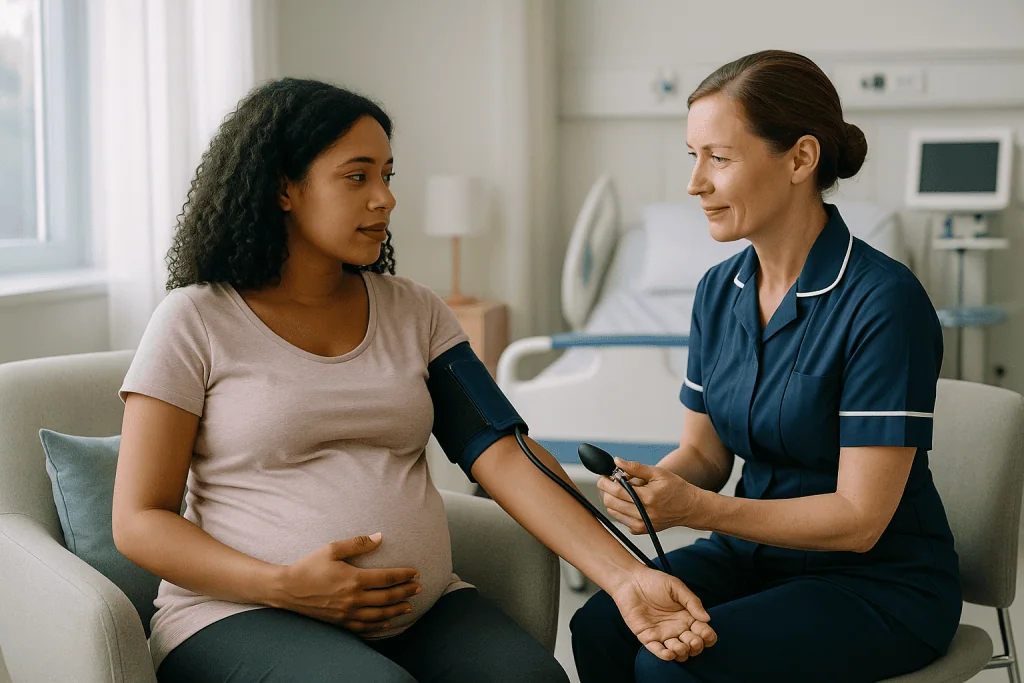
Postpartum fever diagnosis begins with confirming the fever and then searching for its source. Your doctor or midwife will ask about the timing of the fever, the type of delivery, any procedures during labor, breastfeeding, urinary symptoms, breathing symptoms, and pain. They will then perform a careful physical examination that typically includes checking vital signs (temperature, heart rate, breathing rate, blood pressure, and oxygen level), pressing gently on the abdomen and uterus to check for tenderness, examining any incision or perineal repair, examining the breasts, listening to the lungs, and checking the legs for swelling or tenderness. A pelvic examination may be done to assess the uterus and the discharge.
Tests commonly used include:
- Blood tests: a complete blood count looks for a raised white blood cell count, which often suggests infection, although white cells are naturally somewhat elevated after delivery. Inflammatory markers such as C-reactive protein may also be measured.
- Blood cultures: a sample of blood is sent to the laboratory to see whether bacteria grow. This helps identify the organism and guide antibiotic choice, especially if sepsis is suspected.
- Urine tests: urinalysis and urine culture check for a urinary tract infection.
- Wound swabs or cultures: if a wound looks infected, a sample may be taken from any discharge.
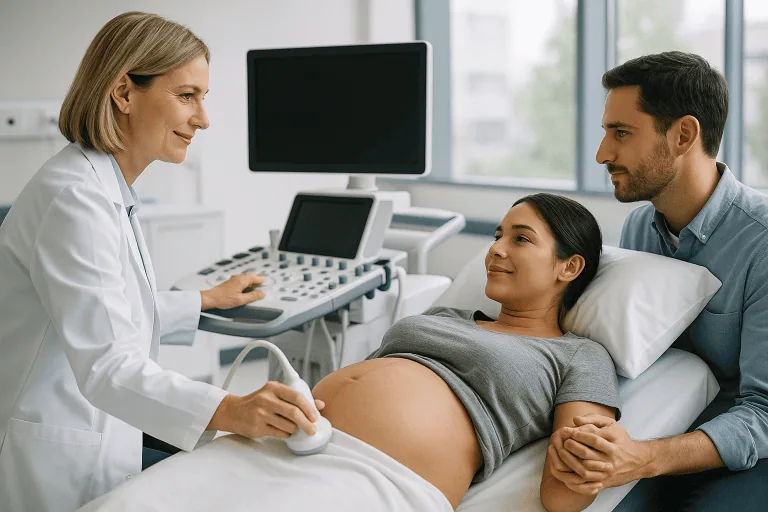
- Pelvic ultrasound: this imaging test uses sound waves to look at the uterus for retained tissue, collections of fluid or pus, or blood clots.
- Chest X-ray: used when there are breathing symptoms, to look for pneumonia or lung collapse.
- Doppler ultrasound of the legs: checks for a deep vein clot if a leg is swollen or painful.
- CT or MRI of the pelvis: occasionally used when fever persists despite antibiotics, to look for a deep abscess (a pocket of pus) or an infected pelvic vein clot.
There is no single test that “proves” postpartum fever. Endometritis, for example, is usually diagnosed clinically, meaning from the combination of fever, uterine tenderness, and discharge, rather than from a specific laboratory result. In some cases the source is never identified with certainty, and doctors treat the most likely cause while watching the response.
Postpartum fever treatment
Postpartum fever treatment depends on the cause, how unwell the person is, and whether they are breastfeeding. Options range from simple observation to hospital admission.
Observation and supportive care. A low-grade temperature in the first 24 hours with no other worrying signs may simply be watched. Rest, fluids, and a medicine to reduce fever such as acetaminophen (paracetamol) are often recommended. Ibuprofen may also be used in many cases. Your doctor will advise which medicines are compatible with breastfeeding; many common options are.
Antibiotics. When an infection is suspected, antibiotics are the main treatment. For endometritis, doctors typically start intravenous (through a vein) antibiotics in hospital that cover a broad range of bacteria, because these infections usually involve several types of organisms at once. Once the fever has settled for a day or two, treatment can often be stopped or switched to tablets. Urinary tract infections and mild mastitis are frequently treated with oral antibiotics at home. Wound infections may need antibiotics as well as local wound care. The choice of antibiotic takes breastfeeding into account, and most commonly used antibiotics are considered acceptable during breastfeeding, though your doctor will confirm this for your specific medicine.
Breast-related measures. For engorgement or mastitis, continuing to breastfeed or express milk from the affected side is generally encouraged, because emptying the breast helps recovery. Cold packs, supportive but not tight clothing, and pain relief can help. A breast abscess (a collection of pus) may need to be drained with a needle guided by ultrasound or, less often, a small surgical cut.
Wound care and procedures. An infected cesarean incision may need to be partly opened so that pus can drain, followed by cleaning and dressing until it heals. If ultrasound shows retained placental tissue, a procedure called dilation and curettage (gently removing tissue from the uterus through the cervix) may be needed, usually after antibiotics have been started. A pelvic abscess may be drained using imaging guidance or, occasionally, through surgery.
Blood clot treatment. If a deep vein clot or septic pelvic thrombophlebitis is found, blood-thinning medicine (anticoagulation) is added, often alongside antibiotics.
Treatment of sepsis. If there are signs of sepsis, treatment is urgent and includes intravenous fluids, prompt broad-spectrum antibiotics, oxygen if needed, and close monitoring, sometimes in an intensive care unit.
Surgery. Surgery is rarely needed. In uncommon severe cases where infection cannot be controlled and the uterus itself is badly affected, removal of the uterus (hysterectomy) may be considered as a life-saving measure. This is a last resort.
Most people begin to feel better within a day or two of starting the right treatment. If the fever does not improve within 48 to 72 hours, doctors usually reassess, repeat tests, and consider changing antibiotics or looking for an abscess or clot.
Living with postpartum fever and outlook
For the majority of women, postpartum fever is a short-term problem. Once the cause is identified and treated, the fever settles and recovery continues. Many cases of endometritis, urinary infection, and mastitis are cured with a single course of antibiotics and leave no lasting effects. Wound infections may take longer, sometimes several weeks, to heal fully, and may leave a wider scar.
Recovery can feel harder because it coincides with caring for a newborn, sleep loss, and hormonal changes. It is reasonable to ask for help with feeding, household tasks, and rest while you recover. If you are breastfeeding, most treatment plans allow you to continue, and your care team can advise on any temporary adjustments. Feeling low or anxious after a complicated recovery is common, and it is worth mentioning to your doctor, since postpartum mood changes are treatable.
Serious outcomes are uncommon but possible. Untreated or delayed treatment of uterine infection can lead to pelvic abscess, sepsis, or scarring inside the uterus that may affect future fertility. Sepsis after childbirth remains a leading cause of maternal death worldwide, particularly where access to timely care is limited, which is why early recognition matters. Having had postpartum fever once does not necessarily mean it will happen again in a future pregnancy, though your doctor may take extra precautions.
Frequently asked questions
What temperature counts as a postpartum fever?
Most clinical definitions use a temperature of 38.0°C (100.4°F) or higher, recorded on at least two occasions on any two of the first ten days after delivery, excluding the first 24 hours. A single low reading in the first day is common and often harmless. If you are unsure whether your reading is significant, it is reasonable to check with your care team rather than wait.
What are the most common postpartum fever causes?
Infection of the uterine lining (endometritis) is the most frequent cause, followed by wound infection, urinary tract infection, and breast infection (mastitis). Less common causes include pneumonia, blood clots, medication reactions, and retained placental tissue. In some cases no clear source is found, and the fever settles with general treatment.
How is postpartum fever diagnosis usually made?
Doctors rely mainly on a detailed history and physical examination, looking at the uterus, any wounds, the breasts, the chest, the urine, and the legs. Blood tests, blood and urine cultures, and often a pelvic ultrasound help identify the source. Additional imaging such as a chest X-ray or leg Doppler is used when symptoms point that way. Some diagnoses, such as endometritis, are made from the clinical picture rather than one specific test.
Can I keep breastfeeding during postpartum fever treatment?
In most cases, yes. Fever itself is not a reason to stop, and for mastitis continuing to feed or express is generally recommended. Many antibiotics and fever-reducing medicines are considered compatible with breastfeeding, but the safety of each specific drug should be confirmed by your doctor or pharmacist. Very rarely, a particular medicine or severe illness may require a temporary pause.
How long does postpartum fever last with treatment?
With appropriate antibiotics, fever from endometritis or a urinary infection often improves within 24 to 72 hours. Mastitis usually improves over a few days once treatment starts and the breast is regularly emptied. If a fever persists beyond about 72 hours of treatment, doctors typically look for a less common cause such as an abscess or an infected pelvic clot.
Is postpartum fever more likely after a cesarean section?
Yes. Cesarean delivery is one of the strongest risk factors, particularly when the surgery follows a long labor or ruptured membranes. This is one reason a dose of preventive antibiotics is routinely given before the skin is cut. Even so, some women who deliver vaginally also develop postpartum fever, so all new mothers should be aware of the warning signs.
Can postpartum fever come back after treatment?
It can, though this is not common. Recurrence may happen if the antibiotic course was not completed, if an abscess or retained tissue was not fully treated, or if a new source such as mastitis develops later. A fever that returns after initially settling should be reported to your doctor so the cause can be reassessed.
When to see a doctor
Any temperature of 38.0°C (100.4°F) or higher after childbirth should be reported to your doctor, midwife, or maternity unit the same day, even if you otherwise feel reasonably well. Also seek advice for foul-smelling discharge, increasing pelvic pain, a painful red area on the breast, burning when passing urine, or redness, swelling, or fluid from a wound.
Seek emergency care immediately if you notice any of the following red-flag signs, which may indicate sepsis or another life-threatening problem:
- Temperature above 39°C (102.2°F), or a fever with shaking chills that does not respond to fever medicine
- Very fast heartbeat or fast breathing, or feeling short of breath
- Confusion, drowsiness, slurred speech, or feeling that you might pass out
- Cold, clammy, pale, or blotchy skin, or lips that look blue or gray
- Severe abdominal pain, or a uterus that is very tender to touch
- Heavy vaginal bleeding soaking a pad in an hour, or passing large clots
- Passing very little urine over many hours
- Chest pain, or pain and swelling in one leg
- A wound that is opening, leaking pus, or spreading redness rapidly
- Feeling that you are getting rapidly worse rather than better
Sepsis can develop quickly in the weeks after birth, and early treatment makes a significant difference. If you are worried, it is always appropriate to be assessed.
Medically reviewed by the Acıbadem International Medical Board September 13, 2026
See our medical review board →
Update history
- PublishedSeptember 13, 2026
- Medical review approvedSeptember 13, 2026
- Last content updateSeptember 13, 2026