Quick answer
Uterine polyps are growths that develop from the lining of the uterus and may cause irregular bleeding, spotting, or fertility problems, though some cause no symptoms. At Acibadem in Turkey, evaluation typically includes gynecologic examination and imaging, and treatment depends on symptoms and findings, often involving hysteroscopic removal for diagnosis and relief.
What is uterine polyps?
Uterine polyps, also called endometrial polyps, are growths attached to the inner wall of the uterus (the womb). They form when the endometrium, the tissue that lines the inside of the uterus, grows more than it should in one spot. The result is a soft, usually rounded growth that may sit flat against the uterine wall or hang from a thin stalk, somewhat like a small mushroom. In medical classification systems, this condition is recorded under the code ICD-10 N84.0.
Uterine polyps range in size from a few millimeters (about the size of a sesame seed) to several centimeters (the size of a golf ball, or occasionally larger). A person may have a single polyp or several at the same time. Most polyps stay inside the uterus, but sometimes a polyp on a longer stalk can slip through the cervix (the lower opening of the uterus) into the vagina.
The large majority of uterine polyps are benign, meaning they are not cancer. However, a small proportion contain precancerous or cancerous cells, which is one reason doctors often recommend evaluating them rather than ignoring them, especially after menopause.
Uterine polyps most often affect people in their 40s and 50s, particularly around the time of menopause (perimenopause) and after menopause. They are less common in people under 20 and can also occur in those of reproductive age, where they are sometimes discovered during an evaluation for irregular bleeding or difficulty becoming pregnant.
Symptoms of uterine polyps
Uterine polyps symptoms vary widely. Some people have no symptoms at all, and the polyp is found by chance during an ultrasound or another test performed for a different reason. When symptoms do occur, abnormal bleeding is by far the most common complaint.
Typical uterine polyps symptoms include:
- Irregular menstrual bleedingperiods that arrive unpredictably or vary a great deal in length and heaviness.
- Bleeding or spotting between periodslight bleeding at times when a period is not expected.
- Unusually heavy menstrual periodssoaking through pads or tampons faster than usual, or passing clots.
- Bleeding after sexual intercoursebecause a polyp near the cervix may be irritated by contact.
- Vaginal bleeding after menopauseany bleeding, even light spotting, after periods have fully stopped.
- Difficulty becoming pregnant (infertility)in some cases, polyps may interfere with an embryo attaching to the uterine lining.
How symptoms appear often depends on the size, number, and location of the polyps, as well as the person’s stage of life. Before menopause, polyps most often show up as irregular, heavy, or in-between bleeding that disrupts the usual menstrual pattern. After menopause, the typical sign is new vaginal bleeding or spotting of any amount. Postmenopausal bleeding always deserves medical evaluation, because although polyps are a common and usually benign explanation, the same symptom can also be caused by more serious conditions of the uterine lining.
Small polyps frequently cause no symptoms at all. Larger polyps, or several polyps together, are more likely to cause heavy bleeding or, less commonly, mild cramping or pressure. Pain is not a typical feature of uterine polyps; significant pelvic pain usually points doctors toward other possible causes as well.
Causes and risk factors
The exact uterine polyps causes are not fully understood, but hormones appear to play a central role. Estrogen is the hormone that stimulates the endometrium to thicken during each menstrual cycle. Uterine polyps are sensitive to estrogen, and it is thought that they develop when parts of the lining respond too strongly to this hormonal signal and keep growing instead of shedding normally.
Several factors are associated with a higher likelihood of developing uterine polyps:
- Age around and after menopause. Polyps are most common in the perimenopausal and postmenopausal years.
- Obesity. Fat tissue produces estrogen, and higher body weight is linked to a greater chance of developing polyps.
- High blood pressure (hypertension). This has been observed as an associated factor in many studies, although the reason is not fully clear.
- Tamoxifen use. Tamoxifen is a medication used in the treatment of breast cancer. It can act like estrogen on the uterine lining and is a well-recognized risk factor for developing polyps.
- Hormone therapy after menopause. Some forms of hormone treatment may be associated with polyp growth; your doctor can discuss the details of any therapy you take.
- Certain inherited conditions. Rare genetic syndromes, such as Lynch syndrome (an inherited condition that raises the risk of some cancers), are associated with a higher risk of growths in the uterine lining.
It is important to understand that having one or more risk factors does not mean you will develop polyps, and many people diagnosed with uterine polyps have no identifiable risk factor at all. Polyps are not caused by anything a person did or failed to do.
Diagnosis of uterine polyps
Uterine polyps diagnosis usually begins with a discussion of your symptoms and menstrual history, followed by a pelvic examination. Because polyps sit inside the uterus, they generally cannot be felt during a routine exam, so imaging and other tests are needed to confirm them. The tests doctors commonly use include:
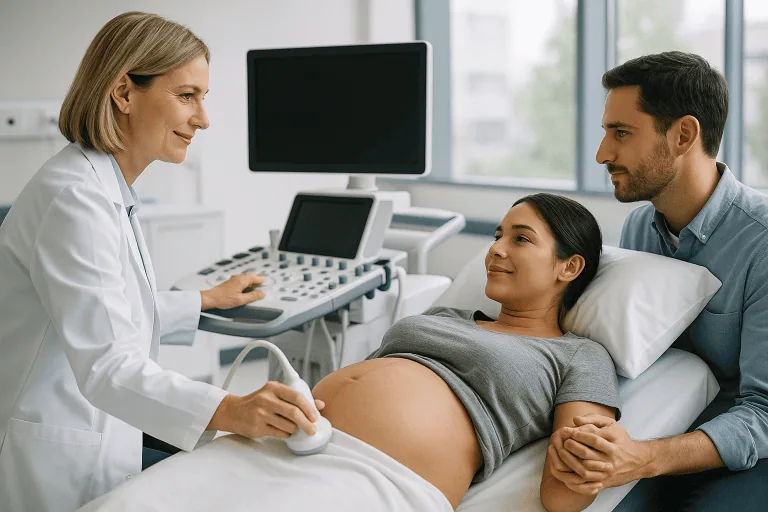
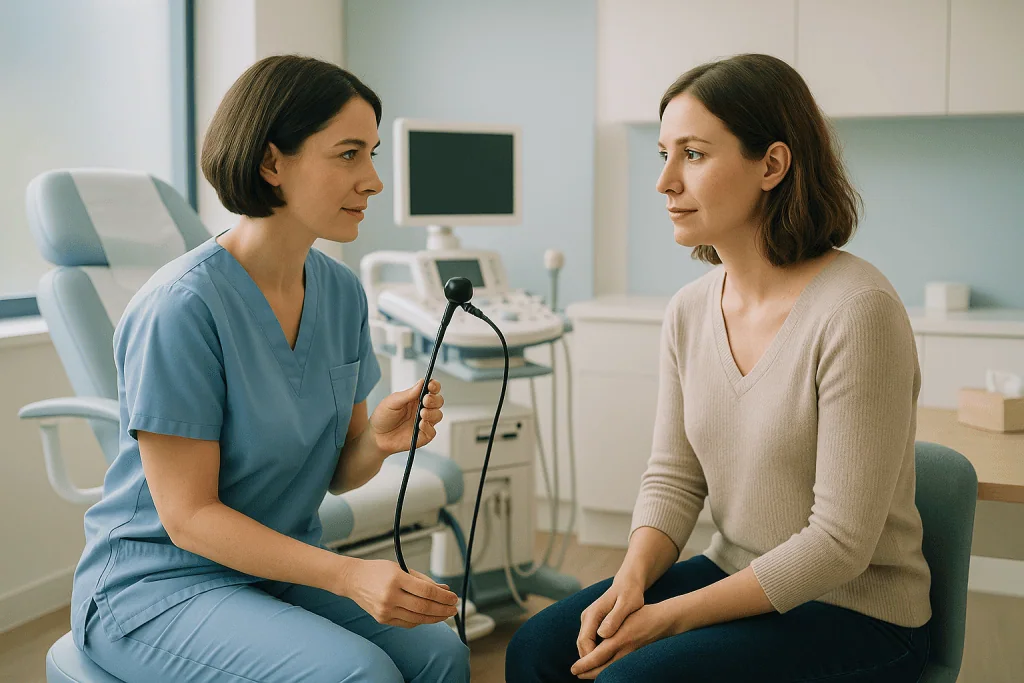
- Transvaginal ultrasound. A slim ultrasound probe is placed in the vagina to create images of the uterus using sound waves. A polyp may appear as a thickened area of the lining or as a distinct growth. This is often the first test performed.
- Saline infusion sonohysterography. In this variation of ultrasound, a small amount of sterile salt water is placed into the uterus through a thin tube. The fluid gently expands the uterine cavity, outlining polyps more clearly than standard ultrasound and helping doctors judge their size and location.
- Hysteroscopy. A hysteroscope is a thin, lighted telescope-like instrument passed through the cervix into the uterus, allowing the doctor to look directly at the lining. Hysteroscopy is considered the most reliable way to confirm a polyp, and in many cases the polyp can be removed during the same procedure.
- Endometrial biopsy. A thin, flexible tube is used to collect a small sample of the uterine lining, which is examined under a microscope. A biopsy can detect abnormal cells, although it may miss a polyp because the sampling is done without direct vision.
The definitive diagnosis is made when the removed tissue is examined by a pathologist: a doctor who studies tissue samples under a microscope. This examination confirms that the growth is a polyp and, importantly, checks whether it contains any precancerous or cancerous cells. This step is a routine part of care whenever a polyp is removed.
Your doctor may also order blood tests or other investigations if heavy bleeding has caused anemia (a low red blood cell count) or if other conditions need to be ruled out. Conditions such as fibroids (benign muscle growths of the uterus) can cause similar symptoms, so careful testing helps distinguish between them.
Treatment options for uterine polyps
Uterine polyps treatment depends on your symptoms, your age, whether you have gone through menopause, whether you hope to become pregnant, and what the tests show. Management of this condition typically falls under a hospital’s Gynecology & Obstetrics department, where specialists can weigh these factors with you. At Acibadem, for example, uterine polyps are evaluated and treated within this specialty. The main approaches are:
Watchful waiting
Small polyps that cause no symptoms sometimes resolve on their own, particularly in premenopausal people. If a polyp is small, symptoms are absent, and the risk of abnormal cells is judged to be low, your doctor may suggest monitoring the polyp over time with follow-up ultrasound rather than treating it right away. This approach is generally not recommended after menopause or when bleeding is present, because the priority in those situations is usually to remove the polyp and examine the tissue.
Medication
Hormonal medications, such as progestins (synthetic forms of the hormone progesterone) or certain other hormone-regulating drugs, may temporarily reduce bleeding symptoms. However, medications do not make polyps disappear permanently, and symptoms often return once the medication is stopped. For this reason, medication is usually seen as a short-term measure or a bridge to a procedure rather than a definitive treatment.
Surgical removal (polypectomy)
The standard treatment for symptomatic polyps is hysteroscopic polypectomy, removal of the polyp using instruments passed through the hysteroscope, without any cuts on the abdomen. This is typically a short, minimally invasive procedure done under local, regional, or general anesthesia, often as day surgery. Because the doctor can see the polyp directly, removal is precise, and the tissue is then sent to the laboratory for examination. Most people recover quickly, with mild cramping or light spotting for a few days being common. Polyps can occasionally grow back after removal, in which case treatment may need to be repeated.
Hysterectomy
Hysterectomysurgical removal of the uterus, is not a routine treatment for benign polyps. It may be discussed in specific situations, for example if laboratory examination shows cancerous cells, if polyps repeatedly return and cause troublesome symptoms, or if other uterine conditions coexist. Because hysterectomy ends the ability to carry a pregnancy and is a larger operation, it is reserved for cases where less invasive options are not appropriate.
Treatment and fertility
For people who are trying to become pregnant, removing polyps may improve the chances of conception in some cases, particularly before fertility treatment. Your doctor can discuss whether polyp removal is advisable in your individual situation.
Living with uterine polyps and outlook
For most people, the outlook with uterine polyps is good. The great majority of polyps are benign, and removal usually relieves abnormal bleeding when the polyp was the cause. Recovery from hysteroscopic removal is typically brief, and most people return to normal activities within days, following their doctor’s individual advice.
A few realistic points are worth keeping in mind:
- Polyps can recur. Even after successful removal, new polyps may form over time. Ongoing follow-up may be recommended, especially if symptoms return.
- A small proportion of polyps contain abnormal cells. This risk is higher after menopause and in people with postmenopausal bleeding, which is why tissue examination after removal is standard.
- Symptoms can have more than one cause. If bleeding continues after a polyp is removed, further evaluation may be needed to look for other explanations.
- General health matters. Maintaining a healthy weight and managing blood pressure are sensible for overall health and may be relevant to some polyp risk factors, although no lifestyle measure is proven to prevent polyps entirely.
Living with a small, symptom-free polyp under medical observation is also a legitimate path for some people. The key is an informed conversation with your doctor about the benefits and limits of each option, since no approach can guarantee that symptoms will never return.
Frequently asked questions
What is uterine polyps in simple terms?
A uterine polyp is an overgrowth of the tissue that lines the inside of the womb. It forms a soft lump attached to the uterine wall, sometimes on a stalk. Most polyps are benign (not cancer), but doctors often recommend evaluating them, particularly if they cause bleeding or occur after menopause, because a small percentage contain abnormal cells.
Can uterine polyps go away on their own?
Sometimes. Small polyps, especially in people who have not yet reached menopause, can shrink or disappear without treatment. Because of this, doctors may suggest a period of observation for small, symptom-free polyps. However, polyps that cause bleeding, are larger, or appear after menopause are less likely to resolve on their own and are usually removed and examined.
How serious are uterine polyps?
In most cases, uterine polyps are not serious in themselves: they are benign growths. Their main effects are troublesome bleeding and, in some people, difficulty becoming pregnant. The main medical concern is that a small proportion contain precancerous or cancerous changes, with the risk generally higher after menopause. This is why evaluation and, in many cases, removal with laboratory examination are recommended rather than simply ignoring them.
Can uterine polyps turn into cancer?
Most uterine polyps remain benign. A small minority contain precancerous cells or, less often, cancer, and this is more likely in people who have gone through menopause or who have bleeding after menopause. Because it is not possible to tell from imaging alone whether a polyp contains abnormal cells, removed polyps are routinely examined under a microscope to be certain.
What is the recovery like after polyp removal?
Hysteroscopic polyp removal is a minimally invasive procedure, and recovery is usually quick. Mild cramping and light bleeding or spotting for a few days are common. Many people return to everyday activities within a day or two, though your doctor may advise avoiding sexual intercourse, tampons, or swimming for a short period to reduce infection risk. Always follow the specific instructions given after your own procedure.
Do uterine polyps affect fertility or pregnancy?
They can in some cases. A polyp may interfere with an embryo implanting in the uterine lining, and polyps are sometimes found during evaluations for infertility. Removing polyps before attempting pregnancy or before fertility treatment may improve outcomes for some people, although results vary from person to person. If you are trying to conceive, discuss the timing and benefits of removal with your doctor.
How are uterine polyps different from fibroids?
Both are usually benign growths of the uterus, but they arise from different tissues. Polyps grow from the endometrium, the soft inner lining, while fibroids grow from the muscular wall of the uterus and tend to be firmer. Their symptoms can overlap, both can cause heavy or irregular bleeding, so imaging tests such as ultrasound or hysteroscopy are used to tell them apart and guide treatment.
When to see a doctor
Abnormal uterine bleeding should not be assumed to be harmless, even when polyps are a likely explanation. Make an appointment with a doctor if you notice ongoing changes in your bleeding pattern, and seek evaluation promptly for any of the following warning signs:
- Any vaginal bleeding after menopauseeven a single episode of light spotting.
- Bleeding or spotting between periods that recurs or does not settle.
- Very heavy menstrual bleedingsoaking through a pad or tampon every hour for several hours, or passing large clots.
- Bleeding after sexual intercourse that happens more than once.
- Symptoms of anemia from blood loss, such as unusual tiredness, dizziness, shortness of breath, or a racing heartbeat.
- Difficulty becoming pregnant alongside irregular bleeding.
- Severe pelvic pain, fever, or foul-smelling discharge, which may indicate a different, urgent problem.
If bleeding is extremely heavy and continuous, or you feel faint or unwell because of blood loss, seek urgent medical care rather than waiting for a routine appointment. Early evaluation allows doctors to confirm whether uterine polyps or another condition is responsible and to recommend the most appropriate treatment for your situation.
Medically reviewed by the Acıbadem International Medical Board September 3, 2026
See our medical review board →
Update history
- PublishedJune 14, 2026
- Medical review approvedSeptember 3, 2026
- Last content updateSeptember 2, 2026