

All-on-4 Dental Implants: Who Is a Good Candidate?

All-on-4 can replace a full upper or lower arch with four strategically placed implants. Good candidates often have multiple missing or failing teeth and want a fixed alternative to removable dentures.
Key Takeaways
- All-on-4 can replace a full upper or lower arch with four strategically placed implants.
- Good candidates often have multiple missing or failing teeth and want a fixed alternative to removable dentures.
- Bone quality, gum health, smoking status, and certain medical conditions all affect suitability.
- A dental exam with imaging is needed to confirm whether All-on-4 is the best option.
- Some people may need gum treatment, extractions, or bone-related procedures before implant placement.
- Careful oral hygiene and regular follow-up visits are essential for long-term success.
All-on-4 dental implants are a full-arch tooth replacement option that uses four implants to support a fixed set of teeth. A good candidate is usually someone missing most or all teeth in one jaw, with stable general health, manageable gum conditions, and enough bone for implant support after a professional evaluation.
Overview
All-on-4 dental implants are a method of replacing all teeth in the upper or lower jaw using four dental implants that support a fixed prosthetic bridge. The implants are placed in carefully chosen positions, often with the back implants angled to make the best use of available bone. This approach can provide stable, non-removable teeth for people who have lost many teeth or whose remaining teeth cannot be saved.
Many patients consider All-on-4 when they are unhappy with loose dentures, repeated dental problems, or widespread tooth damage. Compared with replacing each tooth individually, this treatment uses fewer implants while still restoring chewing function, appearance, and speech. For some patients, it can also shorten overall treatment time.
However, not everyone is automatically a good candidate. Suitability depends on the condition of the gums, the amount and quality of jawbone, bite forces, oral hygiene habits, and overall health. A dentist or oral surgeon will evaluate these factors carefully before recommending treatment.
Who Is Usually a Good Candidate?
A good candidate for All-on-4 dental implants is typically an adult who is missing most or all teeth in one arch, or who has several teeth that are severely decayed, loose, broken, or affected by advanced gum disease. This treatment is also often considered when a patient wants a fixed solution rather than a removable denture.
People who may benefit most often include those who have enough bone in key areas of the jaw to support four implants, even if some bone loss has already occurred. Because the implants are placed strategically, some patients who are not suitable for many individual implants may still qualify for All-on-4. A full assessment is still needed, and in some cases additional procedures such as bone grafting may be discussed.
In general, the best candidates are able to maintain good oral hygiene, attend regular dental follow-up visits, and understand the healing process. They should also have realistic expectations: All-on-4 can greatly improve comfort and function, but it still requires planning, adaptation, and ongoing care.
- People missing all teeth in the upper or lower jaw
- People with many failing teeth that may need extraction
- Patients seeking a fixed alternative to dentures
- Adults with manageable health conditions and adequate bone support
Factors That Can Affect Candidacy
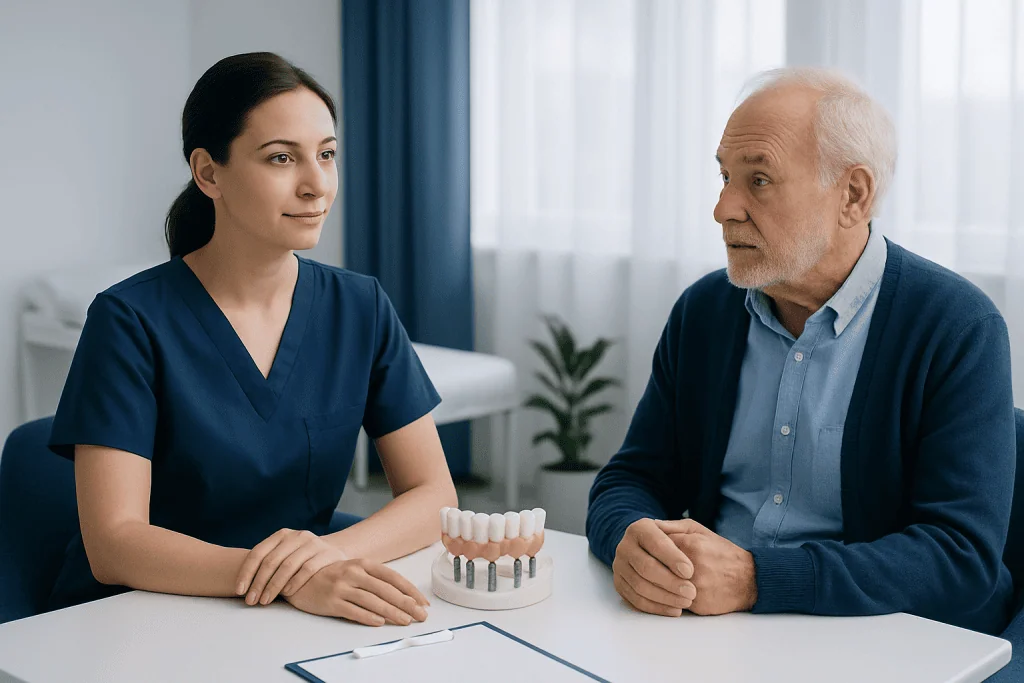
Several oral health factors influence whether All-on-4 is appropriate. Healthy or treatable gums are important because untreated periodontal disease can increase the risk of implant complications. If there is active inflammation, infection, or heavy plaque buildup, these issues usually need attention first through general dentistry care and improved daily cleaning habits.
Jawbone quantity and quality are also central considerations. Even though All-on-4 is designed to make efficient use of available bone, severe bone loss can still limit placement options. Imaging helps the dental team assess bone height, width, and density, especially in the back parts of the jaw where support may be reduced.
General health matters as well. Conditions that affect healing, such as uncontrolled diabetes, immune suppression, certain bone disorders, or a history of radiation therapy to the jaw area, may complicate treatment. Smoking and heavy tobacco use can reduce blood flow to the tissues and may increase the chance of implant failure, so many dentists strongly encourage smoking cessation before and after surgery.
Strong clenching or grinding habits can also affect treatment planning. Patients with significant tooth grinding may still receive implants, but they may need protective measures and close monitoring. In some cases, an evaluation for bruxism is helpful because excessive bite forces can strain the implants and the prosthetic teeth over time.
When All-on-4 May Not Be the Best Choice
All-on-4 may not be the best option when oral disease is active and not yet controlled. Severe untreated gum disease, widespread infection, or poor oral hygiene can make implant placement less predictable. In these situations, the first step is usually stabilizing oral health before moving forward with a full-arch implant plan.
Some patients have very limited jawbone in areas needed for implant stability. Others may have medical issues that increase surgical risk or slow healing significantly. This does not always mean implants are impossible, but it may mean a different approach is safer or more predictable. Depending on the case, a dentist may suggest conventional dentures, other implant designs, staged treatment, or additional preparatory procedures.
Personal preferences and expectations matter too. Some people prefer a removable solution because of cost, maintenance style, or comfort. Others may expect All-on-4 to feel exactly like natural teeth immediately, which is not always realistic during healing and adjustment. A clear conversation about benefits, limits, timelines, and alternatives helps patients make informed decisions.
How Dentists Decide if Someone Qualifies
Determining candidacy starts with a comprehensive consultation. The dentist reviews the patient’s medical history, current medications, dental history, and goals for treatment. The mouth is examined for gum health, signs of infection, remaining tooth condition, jaw relationships, and how much space is available for the final prosthesis.
Dental imaging is a key part of planning. Panoramic X-rays and often three-dimensional scans are used to evaluate bone levels, sinus and nerve locations, and the most stable implant positions. These scans also help the team decide whether the case is suitable for immediate placement after tooth extraction or whether a staged approach would be safer.
The dental team also assesses bite patterns, clenching habits, facial support, speech concerns, and esthetic goals. Sometimes temporary restorations are used while healing takes place before the final bridge is made. Patients may also be advised on the broader process of dental implant treatment so they understand surgery, healing, and maintenance before committing.
Treatment Process and Options Before Placement
If a patient is a suitable candidate, treatment often begins with planning the extractions, implant positions, and temporary teeth. In some cases, failing teeth are removed and implants are placed on the same day. In others, the gums or bone need time to heal before implants can be inserted. The exact sequence depends on anatomy, infection risk, and how stable the implants can be at surgery.
Preparatory treatment may be needed before All-on-4. This can include managing gum inflammation, treating decay in any teeth being retained, improving oral hygiene, or adjusting habits such as smoking. If bone support is limited, the dentist may discuss whether bone grafting or a different implant strategy is more appropriate.
After implant placement, a temporary fixed bridge may be attached for selected patients, followed later by a stronger long-term prosthesis once healing is complete. The final teeth are designed to restore chewing, lip support, and appearance while also being shaped for easier cleaning. Ongoing reviews are important so the dentist can monitor healing, bite balance, and tissue health.
Self-care, Long-Term Maintenance, and Lifestyle
Being a good candidate for All-on-4 is not only about the condition of the mouth on the day of surgery. Long-term success depends heavily on what happens afterward. Patients need to clean around the bridge and implants every day using the tools recommended by their dental team, which may include special brushes, floss aids, or water-based cleaning devices.
Regular professional checkups are essential. During these visits, the dentist checks the fit of the prosthesis, the health of the gums around the implants, and the way the upper and lower teeth meet. Professional cleaning helps remove deposits in hard-to-reach areas. Supportive care through dental hygiene services can play an important role in preventing inflammation around implants.
Lifestyle choices also matter. Avoiding tobacco, controlling medical conditions, wearing a night guard if recommended, and reporting pain or looseness promptly can all protect the implants and prosthesis. With careful maintenance, many patients enjoy stable function and improved confidence for years.
When to See a Dentist
A dental consultation is a good idea if a person has lost several teeth, is struggling with dentures, or has many teeth that are painful, loose, or breaking down. Early assessment can help identify whether teeth can be saved or whether a full-arch solution such as All-on-4 should be considered. Waiting too long may allow infection, gum disease, or bone loss to progress further.
People should also seek dental advice if they notice bleeding gums, persistent bad breath, difficulty chewing, changes in their bite, or sores under a denture. These symptoms may point to gum disease, unstable teeth, or poor denture fit. Addressing these problems early can improve overall oral health and may broaden treatment options.
Patients who are considering full-mouth restoration often benefit from a multidisciplinary opinion. Near the end of the decision process, some may choose evaluation at centers experienced in complex implant care. Acibadem International’s multidisciplinary specialists in JCI-accredited hospitals evaluate and treat international patients who need advanced restorative and implant-based dental care.
Frequently asked questions
What does All-on-4 mean in dentistry?
All-on-4 is a full-arch tooth replacement technique that uses four dental implants to support a fixed set of replacement teeth. It is designed for people who need to replace most or all teeth in the upper or lower jaw.
Can someone with bone loss still get All-on-4 dental implants?
Sometimes, yes. All-on-4 is often suitable for people with some bone loss because the implants are placed in strategic positions to use available bone efficiently. A scan is still needed to see whether the jawbone can support the implants safely.
Are removable dentures better than All-on-4?
Neither option is best for everyone. Removable dentures may be simpler and suitable for some patients, while All-on-4 offers a fixed solution with more stability for chewing and speaking. The right choice depends on oral health, lifestyle, budget, and personal preference.
Do smokers qualify for All-on-4?
Some smokers may still be considered, but smoking can reduce healing and increase the risk of implant complications. Dentists often recommend stopping or significantly reducing tobacco use before and after treatment to improve outcomes.
How long does it take to know if a person is a good candidate?
A dentist can often give an initial opinion during the first consultation, but imaging and a full exam are usually needed for a reliable answer. Treatment planning may take additional time if extractions, gum treatment, or medical clearance are required.
Is age a limit for All-on-4 dental implants?
Age alone is usually not the deciding factor. What matters more is overall health, jawbone condition, healing ability, and whether the patient can maintain good oral hygiene and attend follow-up visits.
References
- American Dental Association
- National Institute of Dental and Craniofacial Research
- Mayo Clinic
- European Association for Osseointegration
- British Dental Association
This article is for general information only and is not a substitute for professional medical advice. Please consult a qualified doctor about your individual situation.
Dental Implants in Turkey — costs, top hospitals & a free quote
JCI-accredited · board-certified surgeons · reply within 24h
Add us as a Preferred Source to see more of our trusted health content across Google Search, AI Overviews and Discover.

Dental & Oral Health
Full-scope dental care from implants and aesthetics to oral and maxillofacial surgery.
158 specialists in this unitRelated Treatments
More from the Health Library



Related Specialists

Assoc. Prof. Dr. Ferit Bayram
Oral & Dental Health
Assoc. Prof. Dr. Yeliz Çavuşoğlu Yüce
Oral & Dental Health
Assoc. Prof. Dr. Mutlu Keskin
Oral & Dental Health
Prof. Dr. Ülkü Noyan
Oral & Dental Health