

All-on-4 vs All-on-6 Dental Implants: Key Differences for Full-Arch Treatment

All-on-4 uses four implants to support a full arch, while All-on-6 uses six. The best option depends on bone volume, bite force, jaw anatomy, and long-term goals.
Key Takeaways
- All-on-4 uses four implants to support a full arch, while All-on-6 uses six.
- The best option depends on bone volume, bite force, jaw anatomy, and long-term goals.
- All-on-6 may offer broader load distribution, but not everyone needs six implants.
- Careful planning with imaging and dental assessment is essential for success.
- Good oral hygiene, regular follow-up, and healthy lifestyle habits help protect implant results.
All-on-4 and All-on-6 are full-arch dental implant approaches used to replace all teeth in the upper or lower jaw. Both can provide a stable, fixed-looking smile, but they differ in how many implants are used, how forces are distributed, and which patients may be the best candidates.
Overview
All-on-4 and All-on-6 are treatment concepts for people who need to replace most or all teeth in one jaw. Instead of placing one implant for every missing tooth, a dentist or oral surgeon places four or six implants in strategic positions and attaches a full-arch prosthesis. This can create a secure, functional alternative to removable dentures.
The main difference is the number of implants supporting the arch. In All-on-4, four implants are used, often with the back implants angled to make use of available bone. In All-on-6, two additional implants are placed, usually creating more support points across the jaw. Both approaches aim to improve chewing, speech, comfort, and appearance.
Neither option is automatically better for every person. Treatment choice depends on several factors, including bone density, the shape of the jaw, gum health, whether teeth still need to be removed, and how much force the patient places on the teeth when chewing or clenching. A detailed assessment helps determine whether dental implants can be used safely and effectively in a full-arch plan.
How All-on-4 and All-on-6 Differ
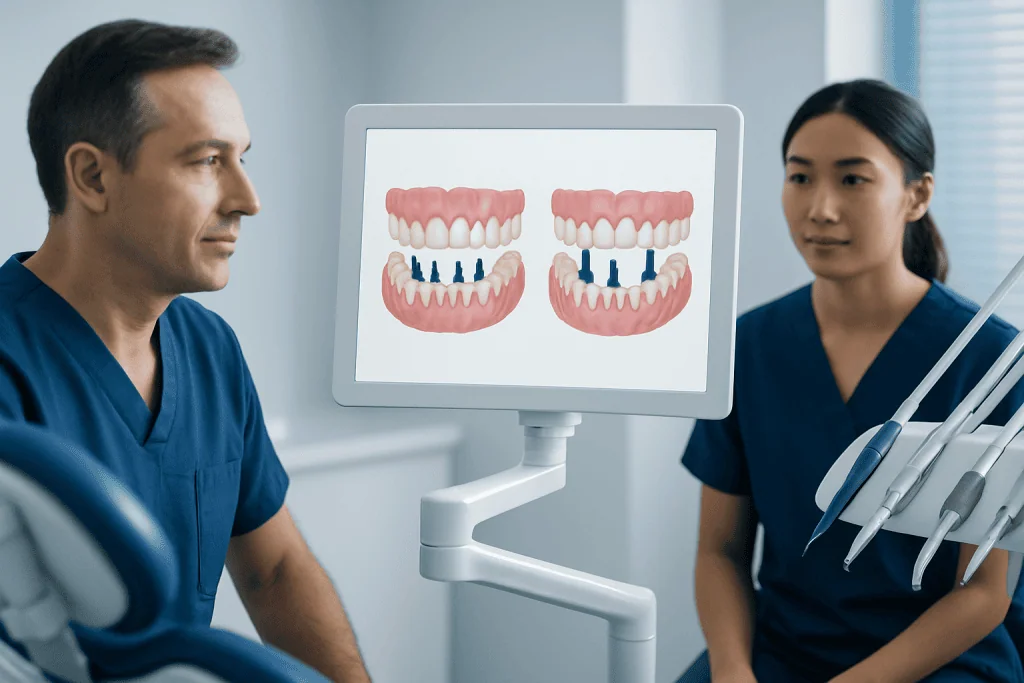
The clearest difference is support structure. All-on-4 relies on four implants to carry the load of a full upper or lower arch. This approach is designed to maximize available bone and may be especially helpful when a patient wants to avoid more extensive bone grafting. The angled back implants can increase stability by extending support farther into the jaw.
All-on-6 uses six implants instead of four, which can spread chewing forces over more anchor points. In some patients, this may provide added mechanical support, especially when the jaw is wider, bone is available in more areas, or the bite places higher stress on the prosthesis. It may also give the clinician more flexibility in prosthesis design.
These differences do not mean that one method is always stronger or longer-lasting than the other. Success depends on the quality of planning, the condition of the bone and gums, the fit of the prosthetic teeth, and the patient’s daily care. For some people, four well-placed implants are entirely appropriate; for others, six may offer a better long-term solution.
- All-on-4: fewer implants, often helpful when bone is limited
- All-on-6: more implants, potentially broader load distribution
- Both: designed for full-arch replacement with a fixed prosthesis
- Choice: based on anatomy, bite, oral health, and treatment goals
Who May Be a Candidate

People considering either option often have many missing teeth, failing teeth, severe tooth wear, advanced decay, or difficulty using traditional dentures. Full-arch implants may also be considered when remaining teeth cannot be restored predictably. The goal is to create a stable foundation for replacement teeth while protecting comfort and function.
Bone availability is an important part of candidacy. Some patients have lost bone over time after extractions, gum disease, or long-term denture use. In these cases, All-on-4 may sometimes be considered because it can work with strategic implant angulation. In other cases, a person may have enough bone for six implants, making All-on-6 a reasonable option.
Gum health matters as much as bone. Active infection, untreated periodontal disease, or poor oral hygiene can increase the risk of implant complications. A person may need cleaning, gum treatment, or extraction of damaged teeth before implant placement. Comprehensive evaluation through general dentistry is often the first step before a full-arch plan is finalized.
General health also plays a role. Smoking, uncontrolled diabetes, certain medications, and conditions that affect healing do not always rule out implants, but they can influence timing and risk. A dentist will also consider clenching or grinding habits, as heavier bite forces may affect the recommended design and number of implants.
Benefits and Possible Limitations
Both All-on-4 and All-on-6 can offer meaningful benefits compared with removable dentures. Many patients appreciate improved stability, easier chewing, and a more natural-feeling smile. Because the prosthesis is fixed in place by implants, it usually does not move in the same way as a removable denture. This can improve confidence in daily life.
Another benefit is efficiency. In suitable cases, extractions, implant placement, and a temporary fixed arch may be completed in a coordinated treatment plan. This can reduce the time a patient spends without functional teeth. Modern planning tools such as digital dentistry may help with precision, prosthesis design, and communication about expected results.
At the same time, there are limitations to understand. Full-arch implants are still a surgical and restorative treatment, so healing time, maintenance, and follow-up are important. A fixed prosthesis can feel different from natural teeth, and small speech adjustments may be needed at first. Not every patient qualifies for immediate loading, and some may need staged treatment.
Cost, anatomy, and maintenance demands can also influence the decision. More implants may mean a more complex procedure, while fewer implants may not be ideal for every bite pattern. A patient-centered discussion should weigh function, comfort, long-term maintenance, and the condition of the jaw rather than focusing only on implant number.
Diagnosis and Treatment Planning
Choosing between All-on-4 and All-on-6 begins with a careful dental examination. The clinician reviews medical history, current medications, gum condition, remaining teeth, and bite alignment. Photographs, impressions or digital scans, and X-rays are commonly used. A 3D scan such as cone beam CT is often especially valuable because it shows bone height, width, and nearby anatomical structures.
Treatment planning also considers how the upper and lower jaws meet. If a patient clenches, grinds, or has a strong bite, the prosthesis may need additional reinforcement or a different design. Jaw shape and smile line can affect the aesthetic outcome as well. The dentist may discuss the materials used for the final teeth and whether a temporary arch will be worn during healing.
When remaining teeth are present, the team decides whether they can be saved or whether extraction is the better path. If there is active gum disease, it should be treated first. In some cases, supporting soft tissue problems such as inflammation or gum recession need attention before or during implant planning to support healthier long-term results.
The final recommendation is individualized. Some patients are best suited to four implants because of bone anatomy or treatment goals. Others benefit from six because of available bone, arch length, or expected chewing load. The safest approach is the one that fits the patient’s biology and allows a well-designed prosthesis with good hygiene access.
Procedure and Recovery
The procedure usually starts with removing unsalvageable teeth if needed, followed by implant placement in the jawbone. In an All-on-4 plan, the two front implants are often placed vertically and the two back implants at an angle. In All-on-6, six implants are distributed more broadly across the arch. The exact positions depend on anatomy and the restorative plan.
In some cases, a temporary fixed prosthesis is attached shortly after surgery. This allows the patient to leave with teeth in place while the implants heal and integrate with the bone. In other situations, the team may recommend a healing period before attaching the prosthesis, especially if bone quality is limited or primary stability is not ideal.
Recovery commonly includes mild swelling, soreness, and dietary changes for a period recommended by the dentist. Soft foods are usually advised while the implants heal. Patients are given instructions on cleaning around the prosthesis, using prescribed or recommended oral care products, and attending review visits.
Healing time varies from person to person. Once integration is complete, the final prosthesis is made and adjusted for fit, comfort, appearance, and bite. Follow-up remains important after treatment because the health of the implants depends not only on surgery but also on ongoing maintenance and prosthetic care.
Long-Term Care, Prevention, and When to Seek Help
Full-arch implants need regular care even though they cannot develop cavities in the same way as natural teeth. Plaque and inflammation can still affect the gums and bone around implants. Daily cleaning with the tools recommended by the dental team, such as special brushes or flossing aids, is essential. Routine professional maintenance helps detect small issues before they become larger ones.
Healthy habits support long-term success. Avoiding tobacco, managing diabetes well, eating a balanced diet, and addressing tooth grinding can all help protect implants. If the prosthesis feels loose, the bite changes, or cleaning becomes difficult, the patient should arrange a dental review. Small repairs or adjustments are often easier when handled early.
Warning signs that need professional advice include persistent pain, swelling, bleeding from the gums around the implants, bad taste, movement of the prosthesis, or difficulty chewing. These symptoms do not always mean implant failure, but they should not be ignored. Prompt evaluation can identify whether the issue is related to the prosthesis, gum inflammation, bite overload, or another dental problem.
For people exploring treatment internationally, Acibadem International’s multidisciplinary specialists in JCI-accredited hospitals diagnose and treat full-arch tooth loss and implant needs for international patients. A consultation can help clarify whether All-on-4 or All-on-6 is more suitable and what kind of aftercare will be needed over time.
Frequently asked questions
Is All-on-6 better than All-on-4?
Not always. All-on-6 provides two additional implants, which may distribute chewing forces over more support points, but that does not automatically make it the better choice for every person. The best option depends on bone volume, bite force, jaw shape, and the treatment plan designed by the dental team.
Who is a good candidate for All-on-4?
All-on-4 may suit people who need full-arch tooth replacement and have limited bone in parts of the jaw. It is often considered when a clinician wants to maximize available bone and possibly reduce the need for more extensive grafting. A full examination is needed to confirm whether it is appropriate.
Does All-on-6 last longer than All-on-4?
Longevity depends on many factors, not only the number of implants. Surgical technique, bone quality, prosthesis design, oral hygiene, smoking status, and regular dental follow-up all affect how well treatment performs over time. Both systems can be successful when carefully planned and maintained.
Are All-on-4 and All-on-6 removable?
They are typically fixed prostheses attached to implants by a dental professional, so patients do not remove them daily like standard dentures. However, the dentist can remove them during maintenance or repairs if needed. Patients still need to clean around them carefully every day.
Is the procedure painful?
The procedure is usually performed with appropriate anesthesia or sedation options, so discomfort during treatment is controlled. Some soreness, swelling, or tenderness is common afterward, especially in the first few days. The dental team provides aftercare guidance to help recovery go smoothly.
Can people with gum disease still have full-arch implants?
Yes, in some cases, but active gum disease usually needs treatment first. Healthy gums and good oral hygiene are important for lowering the risk of complications around implants. A dentist will assess the mouth carefully and may recommend periodontal care before implant placement.
References
- American Dental Association
- National Institute of Dental and Craniofacial Research
- European Association for Osseointegration
- American Academy of Implant Dentistry
This article is for general information only and is not a substitute for professional medical advice. Please consult a qualified doctor about your individual situation.
Dental Implants in Turkey — costs, top hospitals & a free quote
JCI-accredited · board-certified surgeons · reply within 24h
Add us as a Preferred Source to see more of our trusted health content across Google Search, AI Overviews and Discover.

Dental & Oral Health
Full-scope dental care from implants and aesthetics to oral and maxillofacial surgery.
158 specialists in this unitRelated Treatments
More from the Health Library



Related Specialists

Assoc. Prof. Dr. Ferit Bayram
Oral & Dental Health
Assoc. Prof. Dr. Yeliz Çavuşoğlu Yüce
Oral & Dental Health
Assoc. Prof. Dr. Mutlu Keskin
Oral & Dental Health
Prof. Dr. Ülkü Noyan
Oral & Dental Health