

All-on-4 vs All-on-6 Dental Implants: Key Differences

Both systems replace a full arch of missing teeth with a fixed implant-supported restoration. All-on-6 uses two more implants, which may provide broader support and load distribution in some patients.
Key Takeaways
- Both systems replace a full arch of missing teeth with a fixed implant-supported restoration.
- All-on-6 uses two more implants, which may provide broader support and load distribution in some patients.
- All-on-4 may be suitable when bone is limited, especially in the back of the jaw, but candidacy varies.
- Bone quality, gum health, bite strength, and overall medical history are important in treatment planning.
- A full assessment with imaging is needed to decide which option is safer and more predictable.
All-on-4 and All-on-6 are full-arch tooth replacement options that support a fixed bridge on four or six dental implants. The right option depends on jawbone quality, bite forces, oral health, treatment goals, and a dentist’s detailed evaluation.
Overview of All-on-4 and All-on-6
All-on-4 and All-on-6 are treatment approaches used to replace all teeth in the upper or lower jaw with a fixed prosthesis supported by dental implants. Instead of placing one implant for every missing tooth, a smaller number of implants are strategically placed in the jawbone to hold a full-arch bridge. This can restore chewing, speech, and appearance in people who have lost many or all of their teeth.
The main difference is simple: All-on-4 uses four implants per arch, while All-on-6 uses six. That difference affects how chewing forces are distributed, how much bone support is needed, and how the treatment is planned. In some cases, four implants provide stable and long-lasting support. In others, six implants may offer added stability, especially when the jawbone and bite pattern allow it.
These options are often discussed as alternatives to removable full dentures. Many patients prefer a fixed solution because it feels more secure and more similar to natural teeth. Modern dental implants can be part of a carefully designed plan that considers both function and appearance.
How the Two Systems Differ
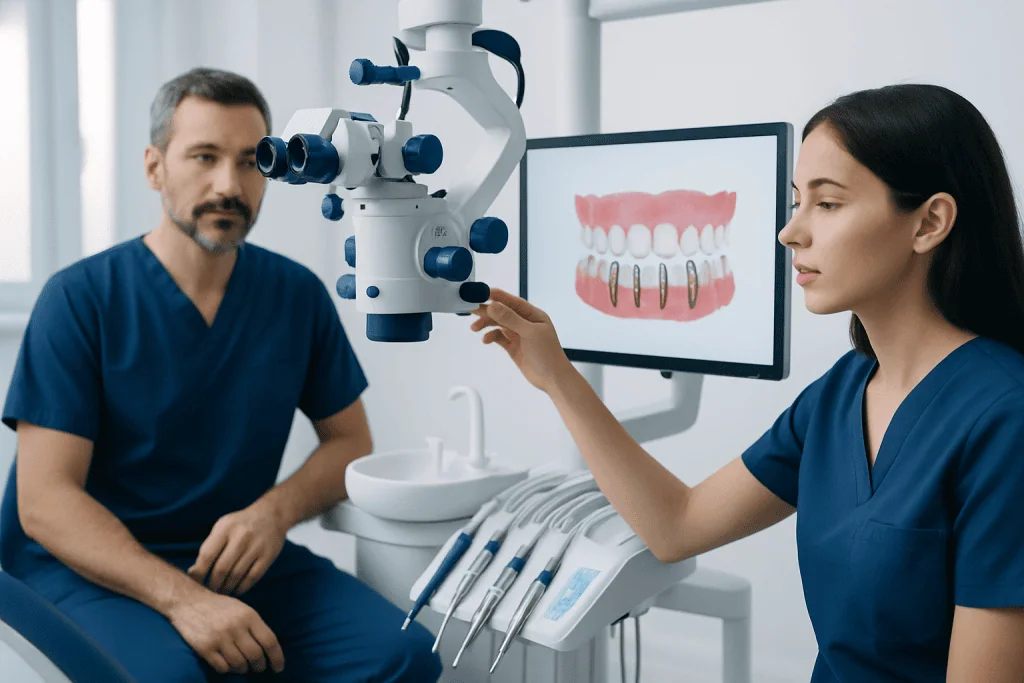
In All-on-4, two implants are usually placed toward the front of the jaw and two are often angled in the back. This angulation can help the dental team use available bone while avoiding certain anatomical structures, such as the maxillary sinuses in the upper jaw or the nerve canal in the lower jaw. Because of this design, All-on-4 may reduce the need for bone grafting in selected patients.
All-on-6 follows the same general concept but uses six implants instead of four. The extra implants can increase the contact area with the bone and spread biting forces across more support points. For some patients, this may improve mechanical balance and provide more flexibility in prosthetic design.
Neither option is automatically better for everyone. The choice depends on whether the jaw has enough bone in the right places, how strong the patient’s bite is, and whether there are habits such as teeth grinding. The material used for the final bridge, the shape of the arch, and the overall treatment goals also influence the recommendation.
- All-on-4: fewer implants, often useful when bone is reduced in the back jaw
- All-on-6: more implants, potentially broader support and force distribution
- Both: designed for full-arch fixed tooth replacement
Who May Be a Candidate

People who have lost most or all teeth in one jaw, or who have teeth that cannot be saved, may be candidates for either All-on-4 or All-on-6. These systems can also help those who struggle with loose dentures and want a fixed alternative. Good candidates generally need enough healthy bone to anchor implants, although the exact amount varies by technique and implant position.
Gum health matters too. Active periodontal disease, untreated infection, or poor oral hygiene can reduce implant success and should be addressed before or during treatment. Smoking, uncontrolled diabetes, certain medications, and conditions that affect healing may also affect candidacy. These factors do not always rule out implants, but they do require closer planning.
Bite forces are especially important. A person with strong chewing muscles or nighttime clenching may place more stress on a full-arch prosthesis. In such cases, the dentist may consider whether extra implant support, bite protection, or treatment for grinding is needed. Patients with possible grinding habits may also benefit from evaluation for bruxism as part of the overall plan.
Age alone is not the deciding factor. What matters more is overall health, jawbone condition, commitment to follow-up care, and the ability to keep the implants and bridge clean over time.
Evaluation and Diagnosis Before Treatment
Choosing between All-on-4 and All-on-6 starts with a detailed dental examination. The dentist reviews the patient’s medical history, current oral health, missing or failing teeth, and expectations for function and appearance. The jaws, gums, and bite are examined carefully to identify signs of infection, bone loss, or uneven pressure.
Imaging is a key part of planning. Panoramic X-rays and three-dimensional scans can show bone height, width, and density, as well as the location of important structures such as nerves and sinuses. These images help determine whether four implants can safely support the arch or whether six implants would be more suitable. Digital planning tools are often used to map implant positions in advance, sometimes with support from digital dentistry.
The team may also assess the temporary and final prosthesis design, gum contours, speech needs, and facial support. In some patients, teeth need to be removed before implants are placed. In others, treatment can be staged to allow healing. The final decision is personalized and should be based on clinical findings rather than preference alone.
Benefits and Limitations of Each Option
All-on-4 may offer a simpler surgical plan because it uses fewer implants. This can make it a practical option for patients with lower bone volume in specific areas, particularly in the posterior jaw. Because fewer implants are placed, surgical time may be shorter in some cases. It is also a well-established approach for immediate full-arch rehabilitation in selected patients.
Its limitations are mostly related to support demands. With fewer implants carrying the load, case selection becomes very important. If the arch is long, the bite is heavy, or bone quality is weaker, the dentist may decide that four implants do not provide the most favorable distribution of forces for that patient.
All-on-6 can offer additional support by increasing the number of anchoring points. This may be helpful for broader arches, stronger chewing forces, or when the clinician wants greater prosthetic stability. However, it usually requires enough available bone to place six implants safely, and in some cases that may involve more complex planning or additional procedures.
Both systems can provide strong functional and cosmetic results when properly planned and maintained. The long-term outcome depends not only on implant number but also on surgical precision, prosthesis design, oral hygiene, follow-up care, and the patient’s general health habits.
Treatment Process and Recovery
The treatment process often begins with removing unsalvageable teeth if needed, followed by implant placement. In suitable cases, a temporary fixed bridge may be attached soon after surgery, allowing the patient to leave with teeth the same day or within a short period. In other situations, a healing phase is recommended before the final restoration is made.
After placement, the implants need time to integrate with the bone. During this period, patients are usually advised to follow a softer diet and avoid overloading the temporary teeth. Mild swelling, soreness, and bruising can happen after surgery, but these are usually managed with the dentist’s instructions and routine follow-up visits.
Once healing is complete, the final bridge is attached. This prosthesis may be made from acrylic, composite, ceramic, or other materials depending on the treatment plan. The final design aims to restore chewing ability, support speech, and create a natural smile. Some patients may also need supporting procedures from general dentistry before or after implant treatment to improve overall oral health.
Regular check-ups remain important after recovery. The dentist monitors the implants, the bridge, the bite, and the condition of the gums to help prevent complications and maintain long-term function.
Long-Term Care, Self-Care, and Possible Risks
Even though the bridge is fixed, it still requires daily cleaning. Food particles and plaque can collect around the prosthesis and along the gumline. Patients are usually taught how to use special brushes, flossing aids, or water irrigators to clean under and around the bridge. Careful home hygiene helps protect both the implants and the surrounding tissues.
Routine professional maintenance is just as important. At follow-up visits, the dental team can check for signs of inflammation, prosthetic wear, screw loosening, bite imbalance, or cleaning difficulties. Early attention to small issues may help prevent larger mechanical or biological complications later on. Supportive visits may also include guidance on dental hygiene tailored to implant care.
Possible risks include infection around implants, poor bone integration, prosthesis fracture or wear, bite discomfort, speech adjustment issues, and sinus or nerve-related complications in selected cases. These risks are not unique to All-on-4 or All-on-6, but the overall plan should be designed to reduce them as much as possible. Smoking cessation, good diabetes control, and consistent aftercare can all support better outcomes.
When to Speak With a Dental Specialist
A dental consultation is worthwhile when a person is missing most or all teeth, has loose dentures, or has several damaged teeth that may not be restorable. It is also helpful for people who avoid certain foods because of poor chewing or feel self-conscious about gaps and unstable dentures. A specialist can explain whether a fixed full-arch solution is realistic and what preparation may be needed.
Prompt review is especially important if there is ongoing dental pain, repeated infections, advanced gum disease, or rapid tooth loss. These issues can affect the amount and quality of available bone and may influence which implant approach is safest. Existing medical conditions should also be discussed so that treatment can be planned responsibly.
For international patients seeking assessment and treatment, Acibadem International’s multidisciplinary specialists in JCI-accredited hospitals diagnose and treat complex dental conditions, including full-arch implant rehabilitation. A personalized evaluation can also help identify related problems such as gum recession or other oral health needs that may affect the final result.
Frequently asked questions
Which is better, All-on-4 or All-on-6?
Neither option is universally better. All-on-4 may work well when bone is limited, while All-on-6 may offer broader support in some patients. The best choice depends on bone quality, arch shape, bite forces, and the dentist’s treatment plan.
Does All-on-6 last longer than All-on-4?
Longevity is influenced by many factors, not just the number of implants. Good surgical planning, healthy gums, regular maintenance, and daily cleaning are all important. In some cases, six implants may distribute forces more evenly, but long-term success still depends on overall case selection and care.
Is bone grafting always needed for these treatments?
No. One reason All-on-4 is often considered is that angled posterior implants may help use available bone and reduce the need for grafting in selected patients. However, some people still need additional procedures, especially if bone loss is significant.
Can teeth be attached on the same day as implant placement?
Sometimes, yes. Many patients receive a temporary fixed bridge soon after implant surgery if the implants achieve good initial stability. Others may need a healing period before a temporary or final prosthesis is attached.
Are All-on-4 and All-on-6 painful?
The procedures are done with appropriate anesthesia and comfort measures, so pain during treatment is usually controlled. After surgery, some swelling and soreness are common for a few days. The dental team provides instructions to help recovery go smoothly.
How are these implants cleaned?
Although the bridge does not come out at home, it still needs daily cleaning around and underneath it. Patients are often advised to use special brushes, floss threaders, or water-cleaning devices. Regular professional maintenance visits are also essential.
References
- American Dental Association
- National Institute of Dental and Craniofacial Research
- European Association for Osseointegration
- Mayo Clinic
- NHS
This article is for general information only and is not a substitute for professional medical advice. Please consult a qualified doctor about your individual situation.
Dental Implants in Turkey — costs, top hospitals & a free quote
JCI-accredited · board-certified surgeons · reply within 24h
Add us as a Preferred Source to see more of our trusted health content across Google Search, AI Overviews and Discover.

Dental & Oral Health
Full-scope dental care from implants and aesthetics to oral and maxillofacial surgery.
158 specialists in this unitRelated Treatments
More from the Health Library



Related Specialists

Assoc. Prof. Dr. Ferit Bayram
Oral & Dental Health
Assoc. Prof. Dr. Yeliz Çavuşoğlu Yüce
Oral & Dental Health
Assoc. Prof. Dr. Mutlu Keskin
Oral & Dental Health
Prof. Dr. Ülkü Noyan
Oral & Dental Health