Am I a Candidate for Fertility check? Eligibility Criteria

A fertility check can be useful before trying for pregnancy as well as after difficulty conceiving. Both partners may need assessment because fertility can be influenced by female, male, combined, or unexplained factors.
Key Takeaways
- A fertility check can be useful before trying for pregnancy as well as after difficulty conceiving.
- Both partners may need assessment because fertility can be influenced by female, male, combined, or unexplained factors.
- The evaluation commonly includes a medical history, examination, blood tests, ultrasound, and semen analysis when relevant.
- Eligibility is based on personal circumstances, age, reproductive history, symptoms, and known health risks rather than a strict checklist.
- A fertility check does not diagnose every possible cause immediately, but it can guide timely, individualised care.
A fertility check may be appropriate for individuals or couples who are planning a pregnancy, have been trying to conceive without success, or have health factors that could affect fertility. It is a personalised assessment rather than a single test, helping clinicians understand reproductive health and discuss suitable next steps.
Am I a Candidate for a Fertility Check?
People who are planning pregnancy, have concerns about their reproductive health, or have been trying to conceive without success may be candidates for a fertility check. It can be helpful for women, men, single people, and couples, including those considering assisted reproduction, fertility preservation, or pregnancy using donor eggs, sperm, or embryos.
There is no single age or situation that automatically determines eligibility. A clinician considers the person’s age, menstrual and reproductive history, how long pregnancy has been attempted, current medical conditions, medications, prior surgery, and the reproductive health of a partner where applicable. A fertility check is not a test of personal worth or a guarantee of future fertility; it is a practical way to gather information and plan care.
For a fuller overview of the assessment pathway and available services, patients can explore fertility check services. A pre-assessment form can also help the clinical team understand relevant history before an appointment and identify which tests may be useful.
When a Fertility Check May Be Especially Helpful
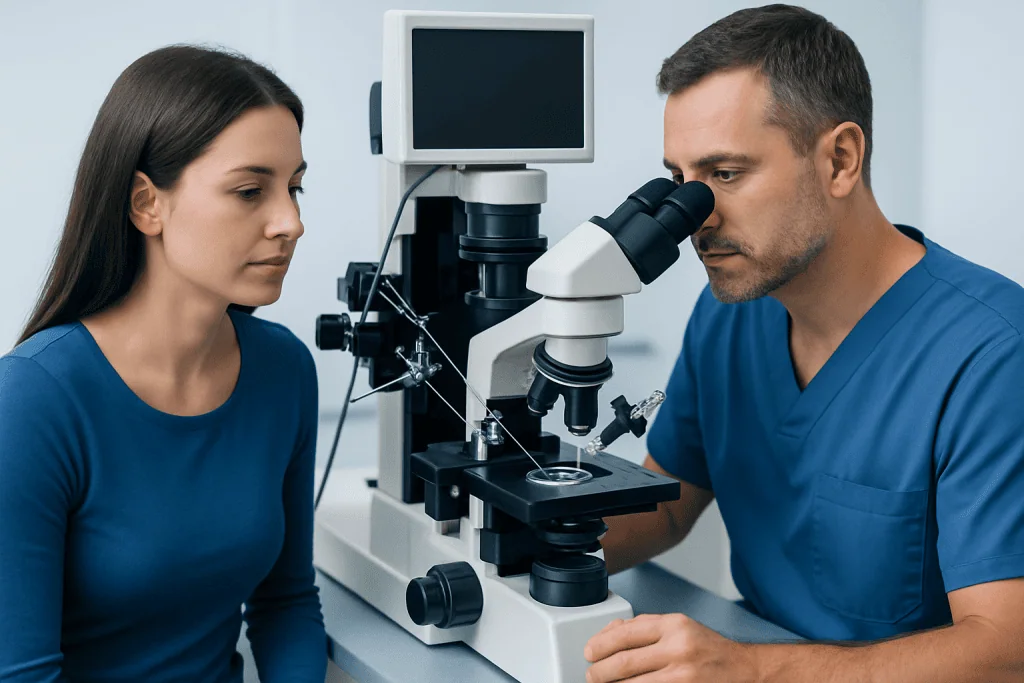
A fertility evaluation is often recommended after 12 months of regular unprotected intercourse without pregnancy for people under 35. For people aged 35 or older, assessment is commonly considered after 6 months. Those over 40, or anyone with known fertility-related concerns, may benefit from seeking advice sooner rather than waiting.
Earlier assessment may be appropriate for irregular or absent periods, very painful periods, previous pelvic infection, endometriosis, polycystic ovary syndrome, recurrent pregnancy loss, previous ectopic pregnancy, or prior surgery involving the pelvis, uterus, ovaries, or testes. Previous chemotherapy, radiotherapy, certain genetic conditions, and some long-term illnesses can also affect reproductive potential.
Male partners may benefit from evaluation when there is a history of undescended testes, testicular injury or surgery, varicocele, erectile or ejaculatory difficulties, genital infection, hormone concerns, or treatment that may affect sperm production. Because fertility is shared, assessing both partners at an early stage can prevent unnecessary delays and avoid assuming that one person is responsible.
How a Fertility Check Works

A fertility check begins with a detailed conversation. The clinician asks about menstrual cycles, previous pregnancies, contraception, sexual health, lifestyle, family history, medical conditions, medications, and any prior fertility tests or treatment. If a partner is involved, their reproductive and general health history is also important.
The assessment is tailored rather than identical for everyone. In women and people with ovaries, initial tests may assess ovulation, hormone patterns, ovarian reserve indicators, and the uterus and ovaries. In men and people producing sperm, semen analysis is usually a key early investigation. Further testing is selected only when the history or initial findings indicate a need.
A fertility check can identify common issues, such as ovulation problems, reduced sperm quality, uterine fibroids, or possible tubal factors. However, normal results do not promise conception, and an abnormal result does not always mean pregnancy is impossible. Some people are diagnosed with unexplained infertility, meaning no clear cause is found on standard testing despite a thorough assessment.
What Happens Step by Step
At the first appointment, the clinician reviews the medical history and discusses pregnancy goals, timing, and any symptoms. A physical examination may be performed when appropriate. The appointment is also an opportunity to ask questions about testing, privacy, emotional wellbeing, and possible future treatment options.
Blood tests may be arranged at specific points in the menstrual cycle to assess hormones linked with ovulation and reproductive function. A pelvic ultrasound may be used to examine the uterus and ovaries, including antral follicle count when clinically appropriate. Depending on the situation, clinicians may recommend tests to check whether the fallopian tubes are open, such as a contrast-based imaging procedure.
For sperm-producing partners, semen analysis assesses features such as sperm concentration, movement, and shape. The sample is usually collected according to laboratory instructions, and a repeat test may be requested because results can vary over time. The clinician then reviews all findings together and explains whether observation, lifestyle support, additional testing, or fertility treatment should be considered.
- Medical and reproductive history review
- Targeted examination and baseline blood tests
- Ultrasound and semen analysis when indicated
- Additional investigations only when clinically relevant
- A follow-up consultation to discuss results and next steps
Benefits, Limits, and Possible Risks
The main benefit of a fertility check is informed planning. It may identify conditions that can be treated, clarify when trying naturally is reasonable, or support timely referral for specialist care. For people not ready to conceive, it can also prompt a discussion about age-related fertility changes and whether fertility preservation may be relevant.
It is important to understand the limits of testing. Ovarian reserve tests estimate aspects of egg quantity and response to fertility medication; they do not directly measure egg quality or predict with certainty whether a person will conceive naturally. Likewise, a single semen analysis is useful but does not provide a complete measure of a person’s ability to father a pregnancy.
Most initial tests involve little physical risk. Blood tests can cause brief discomfort or bruising, and transvaginal ultrasound may feel uncomfortable for some people. Procedures used to assess the fallopian tubes can cause temporary cramping, light bleeding, or rarely infection or an allergic reaction to contrast material. The care team explains benefits, alternatives, preparation, and individual risks before any procedure.
Recovery Timeline and Preparing for the Assessment
There is usually no recovery period after a consultation, routine blood test, ultrasound, or semen analysis. Most people can return to work, travel, exercise, and normal activities straight away. If a tubal assessment or another procedure is performed, mild cramping or spotting may occur briefly, and the team will provide tailored aftercare advice.
Results do not always become available on the same day. Some hormone tests need to be timed to a menstrual cycle, and a clinician may need to review several results before giving a meaningful interpretation. In many cases, the evaluation takes place over one or more cycles rather than in a single visit.
Before attending, patients can prepare by recording cycle dates, bringing details of past pregnancies and operations, listing medicines and supplements, and sharing relevant medical records. It can also help to note questions in advance. If there is a partner, attending together or ensuring both histories are available may make the assessment more complete.
When to Seek Medical Care
Medical advice should be sought promptly for severe pelvic or testicular pain, heavy vaginal bleeding, fever with pelvic symptoms, a suspected ectopic pregnancy, or sudden swelling and pain in a testicle. These symptoms may have causes unrelated to fertility, but they require timely assessment.
It is also sensible to arrange a non-urgent fertility consultation sooner if periods are consistently irregular or absent, there is known endometriosis or polycystic ovary syndrome, there have been repeated miscarriages, or a person has had treatment that may affect fertility. Emotional strain while trying to conceive is common, and support from a clinician, counsellor, or trusted support network can be valuable.
Once results are available, care may include treating an underlying condition, supporting ovulation, addressing sperm-related factors, or discussing IVF treatment when appropriate. Acibadem International’s multidisciplinary specialists and JCI-accredited hospitals provide fertility assessment and treatment planning for international patients.
Frequently asked questions
Can someone have a fertility check before trying to get pregnant?
Yes. A fertility check can be considered before trying for pregnancy, particularly when there are medical conditions, previous treatment, family history, or personal concerns that could affect fertility. The clinician can explain which tests are likely to be informative and which may not be needed.
Should both partners have fertility testing?
In many couples, both partners should be assessed because fertility can be affected by female, male, combined, or unexplained factors. Early evaluation of both partners can make the process more efficient and support shared decision-making.
At what age should a person consider a fertility check?
There is no universal age for testing. However, people aged 35 or older who have not conceived after 6 months of regular unprotected intercourse are often advised to seek assessment, while people under 35 commonly seek advice after 12 months. Earlier care may be appropriate at any age when there are known risk factors or symptoms.
Does a fertility check hurt?
Most initial parts of a fertility check, such as discussing medical history, blood tests, ultrasound, and semen analysis, cause little or no discomfort. Some procedures, including tests of the fallopian tubes, can cause temporary cramping. The clinician should explain what to expect and discuss options for comfort.
Can normal fertility test results guarantee pregnancy?
No. Normal results are reassuring but cannot guarantee pregnancy because conception depends on several factors and may take time. Similarly, an abnormal result does not automatically mean that pregnancy cannot happen, as many contributing factors can be managed or treated.
How long does a fertility check take?
The first consultation may be completed in one visit, but the full assessment often takes several weeks or longer. This is because some tests are timed around the menstrual cycle, results may need review, and repeat semen analysis or further investigations may be recommended.
References
- World Health Organization
- American Society for Reproductive Medicine
- European Society of Human Reproduction and Embryology
- National Institute for Health and Care Excellence
- Centers for Disease Control and Prevention
This article is for general information only and is not a substitute for professional medical advice. Please consult a qualified doctor about your individual situation.
IVF & fertility treatment in Turkey — success rates and costs
JCI-accredited · board-certified surgeons · reply within 24h
Add us as a Preferred Source to see more of our trusted health content across Google Search, AI Overviews and Discover.
Check your numbers in seconds
BMI, calories, due date, blood pressure and 30+ more clinical calculators — free, instant, doctor-reviewed ranges.