

Ankle Mobility Exercises: What Patients Need to Know

Ankle mobility exercises can improve range of motion, balance, and day-to-day movement. They are commonly used after sprains, stiffness, prolonged sitting, or sports activity.
Key Takeaways
- Ankle mobility exercises can improve range of motion, balance, and day-to-day movement.
- They are commonly used after sprains, stiffness, prolonged sitting, or sports activity.
- Exercises should feel gentle and controlled, not sharply painful.
- Persistent swelling, instability, or inability to bear weight needs medical assessment.
- A gradual program often works better than forcing the joint to move further too quickly.
Ankle mobility exercises are gentle movements that help the ankle move more freely, which may improve walking, balance, and comfort. They are often useful after stiffness, inactivity, minor injury, or as part of rehabilitation, but they should be done carefully and adjusted to the person’s symptoms.
Overview: What ankle mobility exercises do
Ankle mobility exercises are simple, controlled movements designed to improve how well the ankle joint moves. For many people, they help reduce stiffness, support balance, and make activities such as walking, climbing stairs, squatting, or exercising feel easier. They are not only for athletes; they can also benefit people who sit for long periods, older adults, and those recovering from a mild ankle injury.
The ankle is a complex area involving bones, ligaments, tendons, muscles, and nerves working together. When any of these tissues become tight, irritated, weak, or swollen, movement can feel limited. In this setting, mobility work aims to restore comfortable motion rather than push through pain.
A helpful way to think about ankle mobility is that it supports overall movement quality. Limited ankle motion can change how a person walks and may place extra stress on the knees, hips, or feet. In some cases, ankle stiffness can also develop after an ankle sprain or after time spent in a brace, cast, or reduced activity.
Why ankle mobility matters in daily life
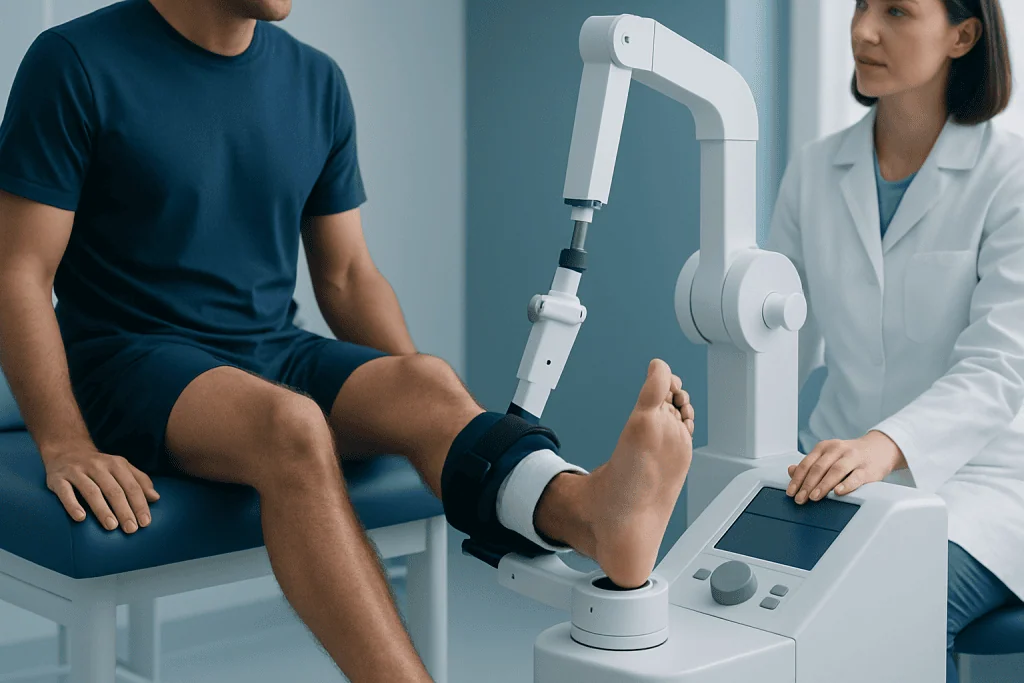
The ankle needs to move in several directions to support normal function. One of the most important movements is dorsiflexion, which is the motion of bringing the foot upward toward the shin. This movement is needed for comfortable walking, descending stairs, and many exercise positions. If dorsiflexion is limited, the body may compensate by turning the foot outward, lifting the heel too early, or shifting stress elsewhere.
Good ankle mobility also contributes to stability. Mobility and stability are not opposites; they work together. A joint that can move through a healthy range in a controlled way is often better able to react to uneven ground, sudden changes in direction, and routine balance demands.
For people returning to sports or physical activity, ankle mobility exercises are often combined with strength and balance training. This may be especially relevant after injuries involving ligaments or tendons. In some cases, doctors may recommend a structured program that includes physical therapy and rehabilitation to restore movement safely and improve confidence in the joint.
Common reasons the ankle becomes stiff
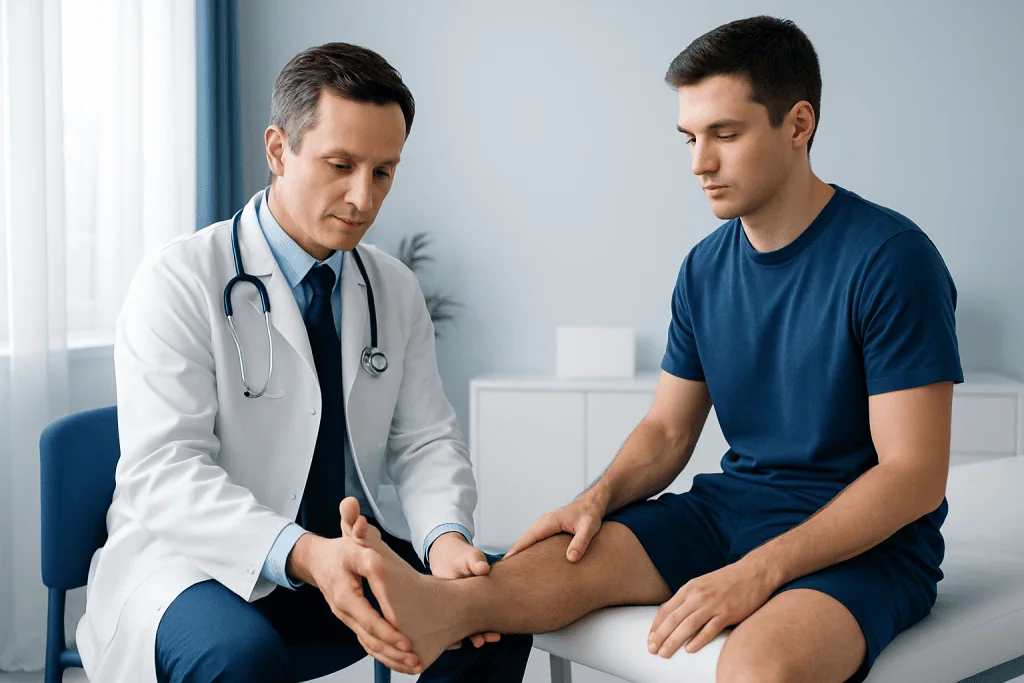
Ankle stiffness can happen for several reasons. A previous sprain is one of the most common. Even when swelling has improved, the joint may remain tight, and surrounding muscles may become guarded. Stiffness can also occur after prolonged rest, long travel, wearing restrictive footwear, or spending many hours sitting each day.
Overuse and repetitive loading may also affect ankle movement. Runners, dancers, and court-sport athletes often place repeated demand on the ankles. Sometimes the limitation is not in the joint itself but in the calf muscles or the Achilles tendon, which can restrict how far the ankle moves. People with flat feet, high arches, or gait changes may notice stiffness as well.
Some medical conditions can contribute to ankle symptoms, including arthritis, tendon problems, nerve irritation, and previous fractures. If pain and swelling continue after an injury, a person may need assessment for a more significant issue such as Achilles tendon rupture or cartilage damage. In these situations, exercise should be guided by a qualified professional rather than started without advice.
- Past ankle sprain or strain
- Reduced activity or immobilization
- Tight calf muscles or Achilles tendon
- Sports overuse or repetitive impact
- Arthritis or prior fracture
Symptoms that may improve with ankle mobility exercises
People often try ankle mobility exercises when they notice stiffness, reduced range of motion, or difficulty performing certain tasks. Common examples include feeling limited when squatting, trouble going down stairs, a sense of tightness in the front or back of the ankle, or discomfort after sitting for a long time. Some people also describe the joint as feeling “stuck” rather than severely painful.
These exercises may also help support recovery if a doctor has advised gentle movement after a mild sprain or after swelling has started to settle. In rehabilitation settings, mobility work may reduce apprehension and help the person regain smoother, more natural movement patterns.
However, not every ankle symptom should be treated as routine stiffness. Mobility work is usually not appropriate as self-care if there is marked swelling, deformity, severe bruising, a sudden popping sensation, numbness, fever, or inability to put weight on the foot. Those signs can suggest a more serious problem and should prompt medical evaluation.
Examples of ankle mobility exercises
The best ankle mobility exercises are usually slow, gentle, and repeatable. They should be done in a pain-aware way, meaning mild stretching or effort can be acceptable, but sharp pain is a signal to stop. A person often starts with small movements and increases only as comfort improves.
Common examples include ankle circles, drawing the alphabet with the foot, seated ankle pumps, and knee-to-wall dorsiflexion drills. Calf stretching may also be included because tight calf muscles can limit ankle motion. Some people benefit from combining mobility with light strengthening, such as heel raises or resistance-band movements, once the joint tolerates motion well.
A simple home routine may include:
- Ankle pumps: point the foot down and then pull it gently up toward the shin.
- Ankle circles: move the foot in slow circles in both directions.
- Alphabet exercise: trace letters in the air using the big toe as the “pen.”
- Knee-to-wall stretch: stand facing a wall and move the knee toward the wall while keeping the heel down.
- Calf stretch: stretch the back of the lower leg with the knee straight or slightly bent.
If symptoms are linked to a recent injury, persistent instability, or long-term pain, it is safer to have the exercise plan tailored. Some people may need imaging, bracing, or specialist review before progressing to more demanding activity, and in selected cases doctors may discuss broader orthopedic rehabilitation strategies.
How to do them safely and when to progress
Safety matters more than intensity. Most people do best with short, regular sessions rather than occasional forceful stretching. A warm-up, such as a few minutes of easy walking, can make movement feel more comfortable. The goal is steady improvement over time, not immediate large gains.
Exercises should be modified if swelling increases, pain lingers, or the ankle feels less stable afterward. It can help to compare both ankles, but the aim is not always perfect symmetry. Age, injury history, and anatomy can all influence the normal range of motion for an individual.
Progression usually means moving from basic range-of-motion work to weight-bearing mobility, then to balance and strength exercises. For example, a person may start seated, then move to standing calf stretches, then add single-leg balance or functional drills. If recovery has stalled, formal assessment may identify whether the limitation comes from the joint, tendon, muscle, or a different structure altogether.
When to seek medical care
Medical care is important if ankle symptoms are severe, worsening, or not improving with sensible self-care. A person should seek assessment if they cannot bear weight, have major swelling, visible deformity, intense pain, or symptoms after a significant twist, fall, or sports injury. Numbness, tingling, fever, redness spreading around the joint, or calf swelling also deserve prompt review.
It is also sensible to speak with a doctor or physiotherapist if ankle stiffness lasts for several weeks, keeps returning, or interferes with work, exercise, or daily life. Ongoing limitation may reflect ligament injury, tendon problems, arthritis, scar tissue, or another condition that needs more than home exercises.
Doctors may examine the ankle, assess gait and balance, and order imaging when needed. Depending on the cause, treatment may include activity modification, braces, medication advice, rehabilitation, or referral for orthopedics and traumatology. Near the end of a patient’s care journey, multidisciplinary specialists at Acibadem International and its JCI-accredited hospitals can assess ankle conditions and plan treatment for international patients when specialist input is needed.
Frequently asked questions
What are ankle mobility exercises?
Ankle mobility exercises are gentle movements that help the ankle joint move through its normal range more comfortably. They are often used to address stiffness, support balance, and help with recovery after minor injury or inactivity.
How often should ankle mobility exercises be done?
Many people tolerate short daily sessions well, especially when exercises are gentle and controlled. The ideal frequency depends on the cause of stiffness, current symptoms, and any advice from a doctor or physiotherapist.
Should ankle mobility exercises hurt?
They should not cause sharp or worsening pain. Mild stretching or a feeling of tightness can be normal, but strong pain, increased swelling, or instability means the exercise should be stopped and reassessed.
Can ankle mobility exercises help after an ankle sprain?
They often can, but timing matters. After a sprain, exercises are usually introduced gradually as pain and swelling begin to settle, and more serious injuries need professional assessment before starting a home program.
Do ankle mobility exercises improve balance?
They may help because better ankle movement can support more natural control during standing and walking. Balance usually improves most when mobility exercises are combined with strength and stability training.
When should someone avoid home ankle exercises?
Home exercises should be avoided or delayed if there is inability to bear weight, obvious deformity, severe swelling, numbness, fever, or suspected fracture or tendon rupture. In these cases, medical care is more appropriate than self-treatment.
This article is for general information only and is not a substitute for professional medical advice. Please consult a qualified doctor about your individual situation.
Explore treatments in Turkey — costs, top hospitals & a free quote
JCI-accredited · board-certified surgeons · reply within 24h
Add us as a Preferred Source to see more of our trusted health content across Google Search, AI Overviews and Discover.

More from the Health Library

37.1 C to F — Explained by Medical Evidence, Not Myths

Patellar Tendon Rupture: What Patients Need to Know

Methyl Salicylate — Explained by Medical Evidence, Not Myths

Chest Seal — Explained by Medical Evidence, Not Myths

Edema Scale — Explained by Medical Evidence, Not Myths

Arterial Blood Gas — Explained by Medical Evidence, Not Myths
Orthopedic Surgery & Traumatology Specialists at Acibadem

Prof. Dr. Barış Kocaoğlu
Orthopedic Surgery & Traumatology
Dr. Bengü Kasım
Physical Medicine & Rehabilitation
Dr. Berhan Bayram
Orthopedic Surgery & Traumatology
Assoc. Prof. Dr. Berkin Toker
Orthopedic Surgery & Traumatology