Appendicitis in Kids: Early Signs, Risk Factors, and How It Is Treated
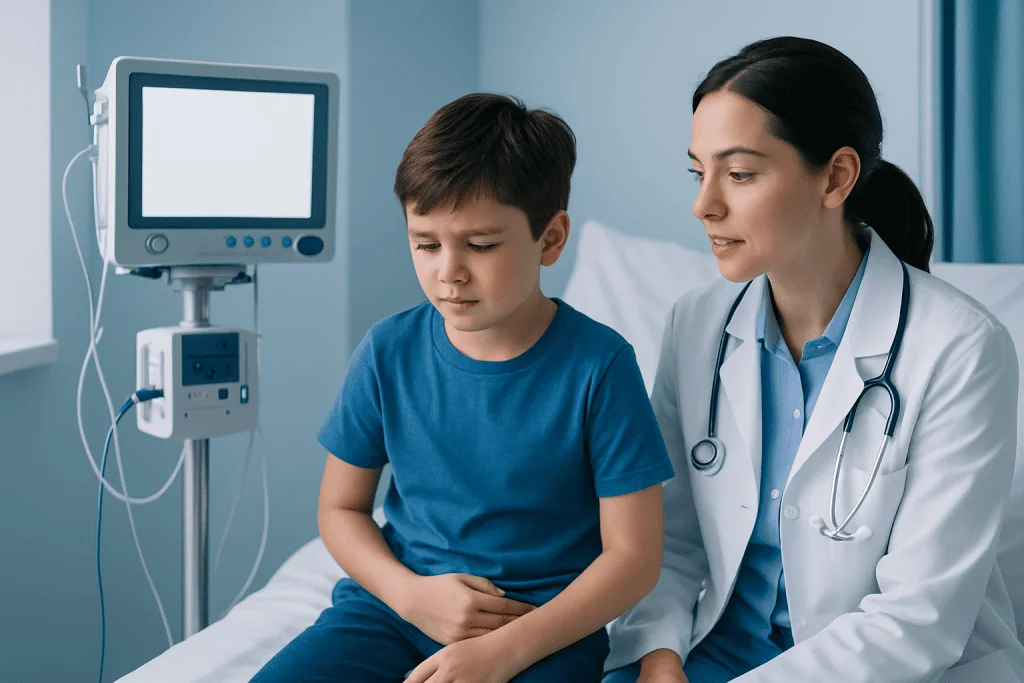
Appendicitis in kids often begins with belly pain near the navel that later shifts to the lower right abdomen. Common signs include loss of appetite, nausea, vomiting, fever, and pain that worsens with movement or coughing.
Key Takeaways
- Appendicitis in kids often begins with belly pain near the navel that later shifts to the lower right abdomen.
- Common signs include loss of appetite, nausea, vomiting, fever, and pain that worsens with movement or coughing.
- Diagnosis may involve a physical exam, blood tests, urine tests, and imaging such as ultrasound or CT.
- Most children need surgery to remove the appendix, and some may also receive antibiotics.
- Parents should seek urgent medical care for worsening abdominal pain, fever, repeated vomiting, or trouble walking upright.
Appendicitis in kids is inflammation of the appendix, a small pouch attached to the large intestine, and it often needs prompt medical care because the appendix can burst if treatment is delayed. Early signs may start as vague stomach discomfort, poor appetite, nausea, or tiredness before the pain becomes sharper and moves to the lower right side of the abdomen.
Overview: what appendicitis in kids looks like
Appendicitis in kids happens when the appendix becomes inflamed, usually because its opening is blocked. This can lead to swelling, infection, and increasing pain. In many children, appendicitis starts with general stomach discomfort and then becomes more localized over several hours.
The reason it matters is timing. If inflammation continues, the appendix may rupture, allowing infected material to spread inside the abdomen. That is why doctors treat ongoing or worsening abdominal pain in children carefully, especially when it comes with fever, vomiting, or loss of appetite.
Appendicitis can be harder to recognize in children than in adults because younger children may have trouble describing where the pain is or when it began. Symptoms may also overlap with common stomach illnesses, constipation, or urinary problems. A medical evaluation helps sort out these possibilities quickly and safely.
Early signs and symptoms
The classic symptom of appendicitis in kids is belly pain that begins around the belly button and later shifts to the lower right side. The pain often becomes sharper over time and may get worse when the child walks, coughs, jumps, or rides in a car over bumps. Many children prefer to lie still because movement hurts.
Other common symptoms include poor appetite, nausea, vomiting, low-grade fever, and a general sense that the child is unwell. Some children also have diarrhea or constipation, which can make diagnosis less obvious. Younger children may simply seem unusually tired, irritable, or unwilling to eat.
Symptoms do not always follow the same pattern. In some children, especially very young ones, the pain may be diffuse rather than clearly on the right side. The appendix can also sit in different positions in the body, which may change where pain is felt.
- Pain that starts near the navel and moves lower right
- Pain that steadily worsens over hours
- Loss of appetite
- Nausea or vomiting after pain begins
- Fever
- Pain with walking, coughing, or jumping
Why it happens and who is at risk

Appendicitis usually develops when the inside of the appendix becomes blocked. This blockage may be caused by hardened stool, swelling of nearby lymph tissue after an infection, or less commonly other material that obstructs the opening. Once blocked, the appendix can fill with mucus, swell, and become infected.
Appendicitis can happen at almost any age but is more common in school-age children and teenagers than in infants. It is not usually caused by anything a parent or child did wrong, and there is no reliable home method to prevent it once inflammation has started.
Certain factors may raise suspicion, even though they do not guarantee a child will develop appendicitis. These include a recent stomach infection, a family history of appendicitis, or symptoms that are clearly getting worse rather than improving. Because other problems can mimic appendicitis, doctors may also consider inflammatory bowel disease or intestinal infection when symptoms are not typical.
How doctors diagnose appendicitis in children
Diagnosis begins with a careful history and physical exam. The doctor will ask when the pain started, where it moved, whether vomiting or fever came first, and whether the child can walk comfortably. During the exam, they look for tenderness, guarding, or pain with certain movements that suggest irritation in the abdomen.
Tests are often used to support the diagnosis and rule out other causes. Blood tests may show signs of infection or inflammation, and a urine test can help exclude urinary tract problems or kidney stones. In girls who are old enough, doctors may also consider gynecologic causes of abdominal pain.
Imaging is commonly part of the evaluation. Ultrasound is often used first in children because it avoids radiation and can show an enlarged or inflamed appendix. If the ultrasound is unclear, a CT scan or sometimes MRI may be recommended for a more definite answer. In some situations, a child may be observed in the hospital and examined again over time before a final decision is made.
Treatment options and recovery
The main treatment for appendicitis in kids is removal of the appendix, called an appendectomy. This is commonly done with minimally invasive laparoscopic surgery, using small incisions and a camera. In some cases, especially if the appendix has ruptured or there is widespread infection, the surgical team may recommend a different approach based on the child’s condition.
Antibiotics are often given before surgery and may be continued afterward, particularly if the appendix has perforated. In selected cases of uncomplicated appendicitis, doctors may discuss treatment with antibiotics first, but surgery remains the standard and most definitive option for many children. The care plan depends on the child’s age, exam findings, imaging results, and how advanced the inflammation appears.
Most children recover well after treatment. Hospital stay and return to normal activities vary depending on whether the appendix was removed before or after rupture. Families are usually advised to watch for fever, worsening pain, redness at incision sites, vomiting, or poor eating during recovery. If more advanced abdominal infection is suspected, children may need broader evaluation and treatment in a center experienced in pediatric surgery.
When to seek medical care
Parents should seek medical care promptly if a child has abdominal pain that is getting worse, especially when it is centered on the lower right side or makes the child avoid walking, standing straight, or moving normally. Medical assessment is also important when stomach pain comes with repeated vomiting, fever, or clear loss of appetite.
Same-day urgent evaluation is appropriate if the child looks unusually ill, cannot keep fluids down, or has pain that is worsening over hours rather than improving. Emergency care is especially important if the belly becomes very tender, swollen, or hard, or if the child becomes weak, confused, or difficult to wake.
Parents should avoid giving food, heavy meals, or laxatives when appendicitis is a concern unless a clinician advises otherwise. Pain medicines should not delay care. A timely medical exam gives the best chance of early treatment before complications develop.
Conditions that can mimic appendicitis and what families can do
Not every child with right-sided belly pain has appendicitis. Stomach viruses, constipation, enlarged lymph nodes in the abdomen, urinary infections, kidney stones, and some intestinal conditions can cause similar symptoms. In older children and teenagers, doctors may also consider reproductive or pelvic causes depending on the child’s sex and age.
At home, the safest approach is observation without delay. Parents can note when pain started, whether it moved, the timing of vomiting or fever, and whether the child can drink fluids or walk normally. This information can help the doctor make a quicker and more accurate diagnosis.
Children should not be pushed to eat if nausea is present, but small sips of water may be reasonable unless a doctor says otherwise. If appendicitis is confirmed, management may involve imaging, antibiotics, and surgery, sometimes alongside general surgery teams depending on the child’s needs. Near the end of the care journey, families seeking international care may wish to know that Acibadem International’s multidisciplinary specialists and JCI-accredited hospitals diagnose and treat appendicitis and related abdominal conditions in children.
Frequently asked questions
What are the first signs of appendicitis in kids?
The first signs are often vague belly pain near the belly button, loss of appetite, nausea, or unusual tiredness. As the condition progresses, the pain commonly becomes stronger and shifts to the lower right side of the abdomen.
Can appendicitis in kids look like a stomach virus?
Yes. Early appendicitis may cause nausea, vomiting, belly pain, and low fever, which can resemble a viral stomach illness. A key difference is that appendicitis pain usually becomes more focused and worse over time rather than improving within a day.
How quickly does appendicitis get worse in children?
It can worsen over hours to a day or two, but the pace varies from child to child. Because rupture becomes more likely as inflammation continues, worsening abdominal pain should be assessed promptly by a clinician.
Do all children with appendicitis need surgery?
Most children are treated with an appendectomy, which is the standard treatment and removes the source of inflammation. In selected uncomplicated cases, doctors may discuss antibiotics first, but this decision depends on imaging findings, symptoms, and the child's overall condition.
How is appendicitis diagnosed in kids?
Doctors diagnose it using the child's history, a physical exam, and tests such as blood work, urine testing, and imaging. Ultrasound is often the first imaging test in children, and CT or MRI may be used if the diagnosis remains unclear.
When should parents take a child to the emergency room for possible appendicitis?
Emergency evaluation is important if belly pain is severe, getting worse, or is paired with repeated vomiting, fever, difficulty walking, or a very tender abdomen. Parents should also seek urgent care if the child seems unusually sleepy, weak, or unable to keep fluids down.
References
- American Academy of Pediatrics
- National Institute of Diabetes and Digestive and Kidney Diseases
- MedlinePlus
- American College of Radiology
- National Health Service
This article is for general information only and is not a substitute for professional medical advice. Please consult a qualified doctor about your individual situation.
Appendicitis in Turkey — costs, top hospitals & a free quote
JCI-accredited · board-certified surgeons · reply within 24h
Add us as a Preferred Source to see more of our trusted health content across Google Search, AI Overviews and Discover.

General Surgery
Open, laparoscopic and robotic surgery for a broad range of abdominal and soft-tissue conditions.
120 specialists in this unitMore from the Health Library



Related Specialists

Prof. Dr. Nurzen Sezgin
Clinical Laboratory
Dt. Gözde Kaya
Oral & Dental Health
Dt. Ayça Aydın Kilavuz
Oral & Dental Health
Assoc. Prof. Dr. Elif Meşeci
Gynecology & Obstetrics