Astigmatism Explained: Symptoms, Diagnosis, and Treatment Options

Astigmatism happens when the cornea or lens has an irregular curve, so light does not focus evenly on the retina. Common symptoms include blurred vision, eye strain, headaches, and difficulty seeing clearly at night.
Key Takeaways
- Astigmatism happens when the cornea or lens has an irregular curve, so light does not focus evenly on the retina.
- Common symptoms include blurred vision, eye strain, headaches, and difficulty seeing clearly at night.
- A comprehensive eye exam is the best way to diagnose astigmatism and check for related vision problems.
- Treatment may include glasses, toric contact lenses, or laser vision correction for suitable candidates.
- Children and adults can both have astigmatism, and early detection helps support clear vision and daily comfort.
Astigmatism is a very common refractive error that can make vision blurry, distorted, or less sharp at any distance. In most cases, it can be diagnosed with a routine eye exam and managed effectively with glasses, contact lenses, or refractive procedures.
Overview of Astigmatism
Astigmatism is a common vision condition caused by an irregular curvature of the eye. In a perfectly shaped eye, the cornea or lens curves evenly in all directions, helping light focus clearly on the retina. With astigmatism, the curve is more oval than round, so light rays focus at more than one point. This leads to blurred or distorted vision.
Astigmatism can affect children and adults. It may occur on its own or together with other refractive errors such as nearsightedness or farsightedness. Some people have only mild astigmatism and notice little effect, while others may find that daily tasks such as reading, driving, or using digital screens become more difficult.
In many cases, astigmatism is present from birth and may remain stable for years. It is not an eye disease in itself, but a focusing problem. Because it is so common and usually treatable, most people are able to achieve clearer, more comfortable vision once it is identified and corrected.
Symptoms and How Astigmatism Affects Vision
The main symptom of astigmatism is blurred or distorted vision. This blurring can affect near vision, distance vision, or both. Straight lines may appear less sharp, letters may seem shadowed, and objects can look stretched or fuzzy. Some people especially notice symptoms in low light or while driving at night, when lights may appear streaked or haloed.
Astigmatism may also cause eye strain because the eyes work harder to focus. This can lead to tired eyes after reading, screen use, or close work. Headaches, squinting, and difficulty switching focus between distances are also common. In children, uncorrected astigmatism may sometimes be noticed as frequent rubbing of the eyes, reduced attention to visual tasks, or complaints that they cannot see the board clearly.
Symptoms can vary depending on how significant the astigmatism is and whether another refractive error is also present. Mild cases may not be obvious at first, which is why regular eye checks are important. If symptoms come on suddenly or are accompanied by pain, redness, flashes, or a rapid drop in vision, a doctor should assess the eye promptly to rule out other causes.
Causes and Risk Factors

Astigmatism usually develops because the cornea, the clear front surface of the eye, is not evenly curved. Less commonly, the irregular shape may come from the lens inside the eye. In many people, this shape difference is simply part of the way the eye naturally formed. It is often inherited, meaning it can run in families.
Astigmatism is not caused by reading in dim light, sitting too close to a screen, or eye overuse, although these habits can make symptoms such as eye strain more noticeable. The condition may be present from childhood and can change gradually over time. It can also develop or worsen after an eye injury, surgery, or diseases that affect the cornea.
One important corneal condition linked with irregular astigmatism is astigmatism related to corneal shape changes, and in some cases doctors may also evaluate for disorders such as keratoconus. Astigmatism may also occur after changes in the natural lens, including those associated with cataracts. When the surface of the eye is significantly irregular, a specialist may recommend further assessment of the cornea.
How Astigmatism Is Diagnosed
Astigmatism is diagnosed through a comprehensive eye examination. Many people learn they have it during a routine vision check, even if they assumed their symptoms were minor. An eye care professional measures how light focuses in the eye and determines whether correction is needed.
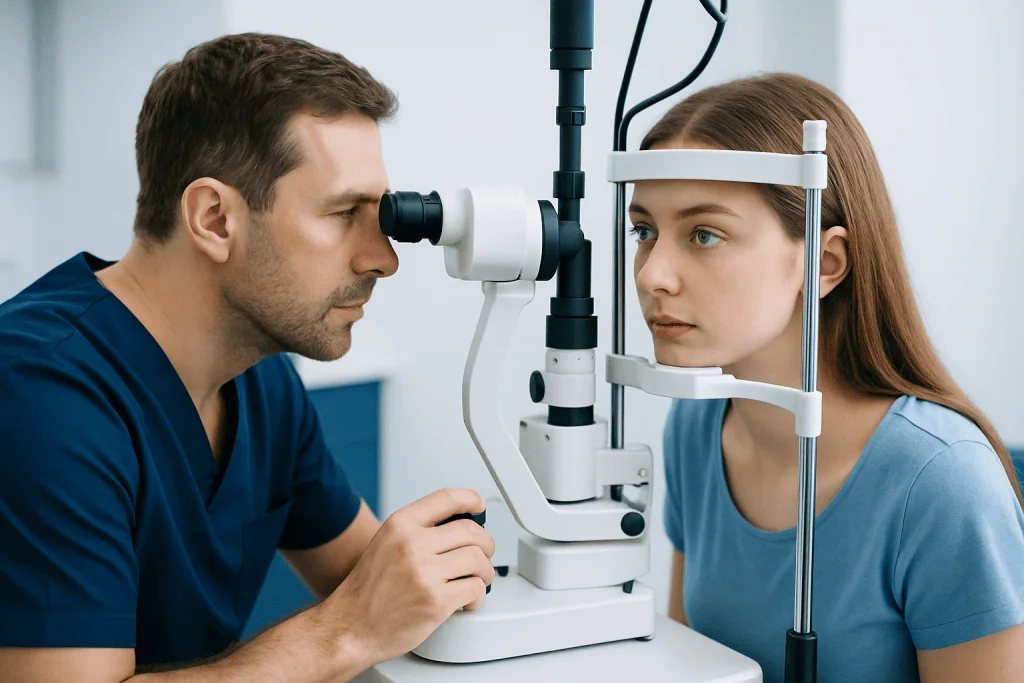
Testing often includes a visual acuity test, refraction to identify the lens prescription, and keratometry or corneal topography to assess the shape of the cornea. These tests are painless and usually quick. A slit-lamp examination may also be used to inspect the front structures of the eye and look for conditions that could influence treatment decisions.
Because blurred vision can have more than one cause, a full eye examination is important. It helps distinguish simple refractive astigmatism from other eye problems, including corneal disease, lens changes, or retinal conditions. Children should also have age-appropriate vision screening and eye exams, since untreated visual blur can affect learning and visual development.
Treatment Options for Astigmatism
Treatment depends on the degree of astigmatism, a person’s age, daily needs, and overall eye health. The most common and simplest treatment is prescription glasses. Special cylindrical lenses are used to compensate for the uneven curve of the eye and bring light to a clearer focus on the retina. Many people achieve excellent vision and comfort with glasses alone.
Contact lenses are another common option. Toric lenses are designed specifically for astigmatism and can provide clear vision for many patients. In some cases, rigid gas-permeable lenses may be recommended if the corneal surface is more irregular. People considering this option can learn more about contact lenses during an ophthalmology consultation, where fit, comfort, and eye surface health are assessed.
For suitable adults who want to reduce dependence on glasses or contact lenses, refractive surgery may be considered. Procedures such as LASIK or other laser treatments can reshape the cornea to improve the way light focuses. Not everyone is a candidate, so careful preoperative evaluation is essential. Factors such as corneal thickness, prescription stability, dry eye, and general eye health all matter when deciding on surgery.
If astigmatism is caused or influenced by another eye problem, treatment may focus on that underlying issue as well. For example, lens replacement during cataract surgery may also help address astigmatism in selected patients. An ophthalmologist can explain which approach is most appropriate based on individual findings.
Prevention, Self-care, and Living With Astigmatism
Astigmatism itself usually cannot be prevented, because it is commonly related to the natural shape of the eye. However, regular eye examinations can help detect changes early and ensure that prescriptions stay up to date. Wearing the correct glasses or contact lenses can reduce eye strain, improve comfort, and support better performance at work, school, and while driving.
Good visual habits may also help ease symptoms. Taking regular breaks from screens, using appropriate lighting, and managing dry eye if present can make vision feel more comfortable. Contact lens users should follow lens care instructions carefully and attend regular check-ups to maintain healthy eyes.
Children benefit from timely diagnosis because uncorrected blur may interfere with visual development and classroom learning. Adults may find that updating their correction improves confidence during tasks such as reading signs, night driving, or using digital devices. When vision changes noticeably, self-adjusting or delaying care is not ideal; a professional review is the safest approach.
When to See a Doctor
Anyone with ongoing blurred vision, eye strain, frequent headaches, or trouble seeing clearly at night should consider an eye examination. These symptoms do not always mean astigmatism, but they do suggest that a professional assessment would be helpful. Regular visits are especially important for children, older adults, and people with a family history of eye conditions.
Medical advice should be sought sooner if there is a sudden change in vision, pain, redness, light sensitivity, flashes, floaters, or an injury to the eye. These signs may point to a different eye problem that needs prompt care. Early assessment can protect vision and provide reassurance.
For people considering refractive surgery or more advanced management, evaluation by an ophthalmologist is important to confirm suitability and discuss benefits and limits of each option. Near the end of the care journey, some patients may also seek support from specialized centers; Acibadem International’s multidisciplinary eye specialists in JCI-accredited hospitals diagnose and treat astigmatism for international patients.
Frequently asked questions
Is astigmatism serious?
Astigmatism is usually not serious and is very common. It is a refractive error, meaning it affects how the eye focuses light rather than causing damage by itself. In most cases, it can be corrected effectively with glasses, contact lenses, or refractive procedures.
Can astigmatism get worse over time?
Astigmatism can change gradually over time, although some people remain stable for many years. Prescription updates may be needed as the eyes change with age or if other eye conditions develop. Regular eye exams help monitor these changes.
Do children need treatment for astigmatism?
Yes, children with significant astigmatism may need treatment to support clear vision and healthy visual development. Uncorrected blur can affect reading, classroom learning, and visual comfort. A pediatric eye assessment can determine whether glasses or follow-up is needed.
Can astigmatism be corrected without surgery?
Yes, many people manage astigmatism very well with prescription glasses or toric contact lenses. These are the most common non-surgical treatments and often provide excellent vision. Surgery is usually considered only for suitable adults who want to reduce dependence on corrective lenses.
Is it safe to wear contact lenses if someone has astigmatism?
Yes, contact lenses can be safe and effective for astigmatism when they are properly prescribed and cared for. Toric lenses are specially designed for this purpose, and some people may benefit from other lens types depending on the cornea. Good hygiene and regular follow-up are important.
How is astigmatism different from nearsightedness or farsightedness?
Nearsightedness mainly affects distance vision, and farsightedness mainly affects near vision, although both can vary. Astigmatism causes blur because the eye has an uneven curve, so light does not focus evenly. It can occur by itself or together with nearsightedness or farsightedness.
References
- American Academy of Ophthalmology
- National Eye Institute
- Mayo Clinic
- Royal College of Ophthalmologists
This article is for general information only and is not a substitute for professional medical advice. Please consult a qualified doctor about your individual situation.
Astigmatism in Turkey — costs, top hospitals & a free quote
JCI-accredited · board-certified surgeons · reply within 24h
Add us as a Preferred Source to see more of our trusted health content across Google Search, AI Overviews and Discover.

Ophthalmology
Comprehensive eye care from laser vision correction to retina, cornea and cataract surgery.
75 specialists in this unit