Astigmatism Symptoms: When Blurred Vision Needs an Eye Exam

Astigmatism often causes blurred or distorted vision, eyestrain, squinting, and headaches. Symptoms may affect both near and distance vision and can be mild or more noticeable over time.
Key Takeaways
- Astigmatism often causes blurred or distorted vision, eyestrain, squinting, and headaches.
- Symptoms may affect both near and distance vision and can be mild or more noticeable over time.
- A comprehensive eye exam is needed to confirm astigmatism and rule out other eye conditions.
- Glasses, contact lenses, and in some cases refractive procedures can correct vision effectively.
- Children and adults should have regular eye checks, especially if vision changes or daily tasks become harder.
Astigmatism is a common vision problem that can make objects look blurred or distorted at any distance. Recognizing astigmatism symptoms and getting an eye exam can help protect clear, comfortable vision.
Overview: What Astigmatism Is
Astigmatism is a very common refractive error, which means the eye does not bend light evenly onto the retina. The retina is the light-sensitive layer at the back of the eye that helps create clear images. When light focuses unevenly, vision may look blurry, shadowed, stretched, or distorted rather than sharp.
This usually happens because the cornea, the clear front surface of the eye, or sometimes the lens inside the eye, has a shape that is more curved in one direction than another. Instead of being evenly rounded like a basketball, it may be shaped more like the back of a spoon. As a result, light rays do not meet at one single focus point.
Astigmatism can occur on its own or together with nearsightedness or farsightedness. It may affect one or both eyes. Many people are born with it, and some may not notice symptoms at first because the brain can adapt to mild blur for a time.
In most cases, astigmatism is not dangerous, but it can interfere with reading, driving, screen use, and other daily activities. Because blurred vision has several possible causes, an eye exam is the best way to understand whether astigmatism is responsible.
Common Astigmatism Symptoms
The most common astigmatism symptoms are blurred vision and distorted vision. Some people describe letters as looking fuzzy, doubled, or slightly shadowed. Others notice that straight lines seem less sharp, especially when they are tired or trying to focus for a long time.
Symptoms can affect both near and far vision. A person may struggle to read small print, recognize road signs, or see clearly at night. Squinting may seem to help for a moment because it changes the way light enters the eye, but it does not correct the underlying problem.
Astigmatism can also cause eye discomfort. When the eyes work harder to focus, people may develop tired eyes, a pulling sensation around the eyes, or headaches, particularly after reading, computer work, or driving. Children may not describe blur clearly but may rub their eyes, avoid close work, or lose interest in school tasks that require visual concentration.
- Blurred or distorted vision
- Difficulty seeing clearly at night
- Eye strain or tired eyes
- Frequent squinting
- Headaches after visual tasks
- Trouble with reading or screen work
These symptoms are not specific to astigmatism alone. Similar complaints can occur with other refractive errors or eye conditions, which is why professional assessment is important.
What Causes Astigmatism and Who Is at Risk

Astigmatism usually results from the natural shape of the cornea or lens. In many people, this shape difference is present from birth and may run in families. It is not caused by reading in dim light, sitting too close to screens, or using the eyes too much, although these activities can make symptoms more noticeable if vision is already strained.
Some cases develop or change over time. Eye injury, previous eye surgery, and certain corneal conditions can affect the curve of the cornea. One example is keratoconus, a condition in which the cornea becomes thinner and more cone-shaped, leading to increasing irregular astigmatism and worsening vision.
Astigmatism can occur at any age. It is often found in childhood, but adults may also first notice symptoms when work, study, or driving demands become more visually intense. Age-related changes in the lens of the eye can also alter focusing patterns over time.
Risk is higher in people with a family history of refractive errors, prior eye trauma, corneal disease, or past eye procedures. Still, many people with astigmatism have no clear risk factor beyond natural variation in eye shape.
How an Eye Exam Diagnoses Astigmatism
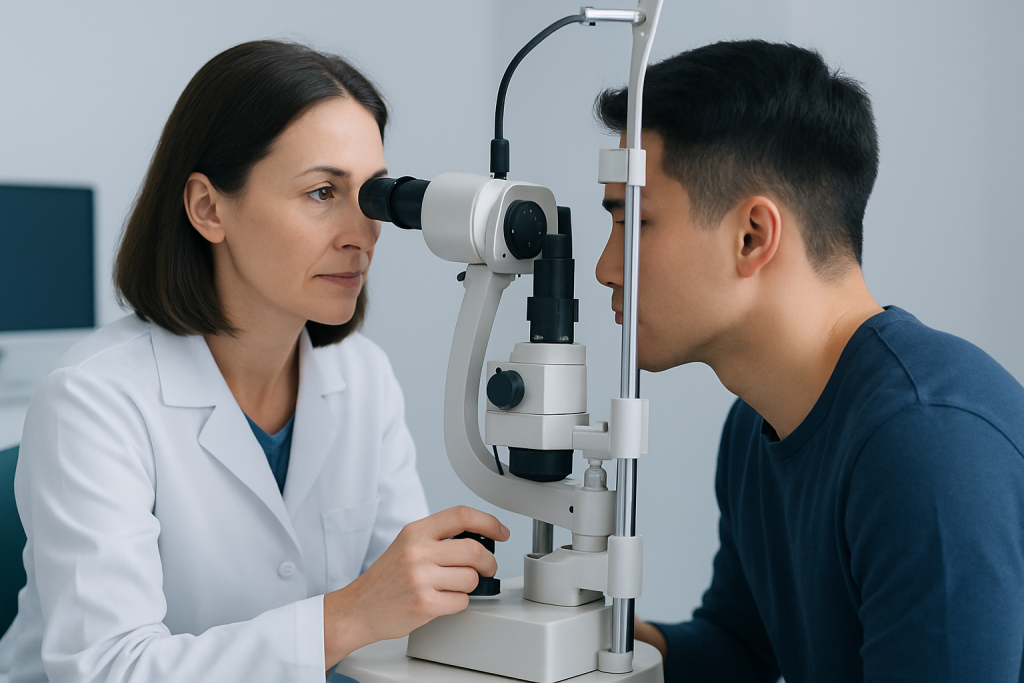
An eye exam is the only reliable way to diagnose astigmatism. During the visit, an eye specialist asks about symptoms, visual habits, and whether the blur affects near work, distance vision, or both. A simple visual acuity test checks how clearly each eye sees letters at different distances.
The exam usually includes refraction testing, which determines the lens power needed to sharpen vision. Instruments may also measure the curvature of the cornea. These tests help show whether astigmatism is present, how strong it is, and in which direction the corneal curve differs.
If symptoms are significant, the doctor may also examine the health of the cornea, lens, retina, and optic nerve. This is important because blurred vision is not always due to a refractive error. Conditions such as glaucoma or cataracts can also affect vision and may require different care.
Children should have age-appropriate eye checks even if they do not complain. They may assume their vision is normal because they have nothing to compare it with. Early diagnosis matters because untreated blur can affect learning, visual development, and comfort.
Treatment Options for Astigmatism
Treatment depends on the severity of symptoms, the amount of astigmatism, and the person’s age and visual needs. Mild astigmatism may not need treatment if vision is comfortable and daily activities are not affected. When correction is needed, glasses are often the simplest and most effective option.
Contact lenses can also correct astigmatism. Special designs, often called toric lenses, are made to address the uneven focusing pattern. For some people, rigid lenses may provide especially clear vision when the corneal shape is less regular. Good fitting and follow-up care are important for comfort and eye health.
Some adults may consider refractive procedures to reduce dependence on glasses or contact lenses. Depending on the eye’s measurements and overall eye health, options may include LASIK eye surgery or no-touch laser eye surgery. These treatments are not suitable for everyone, so a detailed eye assessment is needed before any decision.
If another problem is contributing to vision changes, that condition should be treated as well. For example, cataracts can cause blur and glare in addition to refractive errors, and cataract surgery may be appropriate when lens clouding is the main issue. The right plan is individualized and based on a full examination.
Prevention, Self-care, and Living With Astigmatism
Astigmatism itself usually cannot be prevented because it is often related to the natural shape of the eye. However, regular eye examinations can help detect changes early and ensure that glasses or contact lens prescriptions remain accurate. Updated correction can make a significant difference in comfort, concentration, and quality of life.
Simple self-care habits can reduce visual strain. Good lighting for reading, regular breaks from screens, and proper contact lens hygiene all support better eye comfort. A common approach during screen work is to pause frequently, look into the distance, and blink often to reduce dryness and fatigue.
People should avoid rubbing the eyes aggressively, especially if they have allergies or a corneal condition. Eye rubbing may irritate the surface of the eye and, in some individuals, may worsen corneal shape problems over time. Managing allergies and dryness can help reduce the urge to rub.
For those living with astigmatism, the outlook is generally very good. Most people achieve clear vision with the right correction and routine follow-up. If symptoms suddenly change, become much worse, or are accompanied by pain or marked redness, medical advice should be sought promptly.
When Blurred Vision Needs an Eye Exam
Any persistent blurred vision deserves an eye exam, even if the symptoms seem mild. Changes that appear gradually can be easy to ignore, but they may still affect safety, learning, work performance, and overall comfort. Difficulty seeing at night, headaches after focusing, or frequent squinting are all good reasons to schedule a visit.
An urgent assessment is especially important if blurred vision comes on suddenly, affects only one eye, or happens together with eye pain, flashes of light, many new floaters, severe redness, or a curtain-like shadow in vision. These symptoms can point to problems that are not typical of simple astigmatism and may need timely treatment.
Children should be evaluated if they sit very close to screens, tilt the head, lose their place while reading, complain of headaches, or seem to struggle in school for visual reasons. Adults should also seek reassessment if current glasses no longer seem effective or if night driving becomes more difficult.
Near the end of the care journey, some people benefit from a multidisciplinary eye team, particularly when symptoms overlap with other conditions or procedural options are being considered. Acibadem International’s multidisciplinary specialists and JCI-accredited hospitals evaluate and treat eye conditions for international patients, with care plans based on individual findings.
Frequently asked questions
Can astigmatism cause headaches?
Yes. Astigmatism can make the eyes work harder to focus, which may lead to headaches, especially after reading, computer use, or other visual tasks. Headaches can have many causes, so an eye exam is useful if they happen often with blurred vision.
Is astigmatism the same as nearsightedness?
No. Astigmatism is a different type of refractive error caused by uneven curvature of the cornea or lens. It can occur by itself or together with nearsightedness or farsightedness.
Do children outgrow astigmatism?
Some changes in refractive error can happen as a child grows, but astigmatism does not always go away on its own. Regular eye checks are important because untreated vision problems can affect learning and visual development.
Can astigmatism get worse over time?
It can change over time, although many people remain stable for long periods. If symptoms are becoming more noticeable, an eye doctor can check whether the prescription has changed or whether another eye condition is involved.
Are glasses always needed for astigmatism?
Not always. Mild astigmatism may not need correction if vision is clear and comfortable enough for daily life. When symptoms interfere with reading, work, driving, or comfort, glasses or contact lenses are commonly recommended.
Can screen time cause astigmatism?
Screen time does not cause astigmatism. However, long periods of screen use can make existing symptoms such as eye strain, dryness, and blurred vision feel worse, especially without breaks.
References
- American Academy of Ophthalmology
- National Eye Institute
- American Optometric Association
- Mayo Clinic
- World Health Organization
This article is for general information only and is not a substitute for professional medical advice. Please consult a qualified doctor about your individual situation.
Astigmatism in Turkey — costs, top hospitals & a free quote
JCI-accredited · board-certified surgeons · reply within 24h
Add us as a Preferred Source to see more of our trusted health content across Google Search, AI Overviews and Discover.

Ophthalmology
Comprehensive eye care from laser vision correction to retina, cornea and cataract surgery.
75 specialists in this unit