Aura Epileptic Seizure: An Evidence-Based Guide for Patients

An aura is often a focal aware seizure, not just a warning sign. Symptoms vary and may include sensory, emotional, stomach, visual, or speech-related changes.
Key Takeaways
- An aura is often a focal aware seizure, not just a warning sign.
- Symptoms vary and may include sensory, emotional, stomach, visual, or speech-related changes.
- Auras can happen alone or before a seizure that affects awareness or causes convulsions.
- Diagnosis usually involves a detailed history, neurological assessment, EEG, and often brain imaging.
- Treatment depends on the cause and may include anti-seizure medicines, lifestyle measures, or specialized epilepsy care.
An aura epileptic seizure is usually a focal aware seizure, meaning a person stays conscious while experiencing brief symptoms such as unusual smells, rising stomach sensations, fear, tingling, or visual changes. These episodes can be a seizure on their own or a warning before a larger seizure, so medical evaluation is important.
What an aura epileptic seizure means
An aura epileptic seizure is usually a focal aware seizure. This means seizure activity begins in one area of the brain, and the person remains awake and aware during the episode. Although many people use the word “aura” to describe a warning before a bigger seizure, in modern epilepsy care an aura is often considered a seizure itself.
These episodes are typically brief, often lasting seconds to a couple of minutes. Symptoms may include a sudden strange smell or taste, a rising feeling in the stomach, déjà vu, sudden fear, tingling, visual changes, or difficulty finding words. Because the person is conscious, they may be able to describe exactly what happened, which can be very helpful for diagnosis.
Some auras remain isolated and end on their own. Others spread to nearby brain areas and develop into a focal impaired awareness seizure or, less commonly, into a bilateral tonic-clonic seizure with loss of consciousness and body stiffening or jerking. For this reason, recurrent auras should not be ignored even if they seem mild.
How an aura can feel: common symptoms and patterns
The symptoms of an aura epileptic seizure depend on the part of the brain where the seizure starts. A seizure beginning in the temporal lobe may cause déjà vu, a sudden wave of fear, unusual smells, or a rising sensation from the stomach into the chest. A seizure arising from the occipital lobe may produce flashing lights, blind spots, or other visual changes.
Parietal lobe seizures may cause tingling, numbness, or altered body sensations. Frontal lobe seizures can involve sudden speech arrest, odd movements, or a brief sense that something is wrong. Some people describe an aura as hard to explain but very recognizable because it feels the same each time.
Possible symptoms include:
- Unusual smell, taste, sound, or visual sensation
- Déjà vu or jamais vu
- A rising sensation in the stomach
- Sudden fear, panic, or a sense of unreality
- Tingling, numbness, or electric-shock sensations
- Brief trouble speaking or understanding words
- Sudden nausea, warmth, or changes in heart rate awareness
Because these symptoms may be subtle, they are sometimes mistaken for anxiety, migraine aura, fainting, or digestive discomfort. Keeping track of exactly what happens, how long it lasts, and whether awareness changes can help a clinician distinguish among these possibilities.
Why aura seizures happen: causes and risk factors

Aura epileptic seizures happen because a group of brain cells starts sending abnormal electrical signals. The reason for this can vary. In some people, epilepsy develops without a clearly identified cause. In others, there may be a structural, genetic, metabolic, immune, infectious, or injury-related explanation.
Common underlying causes can include prior head injury, stroke, brain infection, developmental brain differences, brain scarring, or tumors. Temporal lobe epilepsy is one of the most recognized epilepsy types associated with recurrent auras, especially episodes involving déjà vu, emotional changes, or stomach sensations. People who have had febrile seizures in childhood, a family history of epilepsy, or certain neurological conditions may also have a higher risk.
Triggers are different from causes. A trigger does not create epilepsy, but it may make seizures more likely in someone who is already susceptible. Examples include missed anti-seizure medication doses, sleep deprivation, alcohol excess or withdrawal, severe stress, illness with fever, and flashing lights in people with photosensitive epilepsy.
Sometimes repeated aura symptoms can be related to another neurological condition rather than epilepsy. A clinician may need to distinguish them from epilepsy, migraine aura, panic attacks, transient ischemic events, or heart rhythm problems that reduce blood flow to the brain.
How doctors diagnose an aura epileptic seizure
Diagnosis starts with a detailed history. Because an aura often lasts only a short time, the person’s description is especially important. A doctor may ask what the sensation felt like, how long it lasted, whether it happened in the same way each time, and whether it ever progressed to confusion, staring, lip smacking, collapse, or shaking.
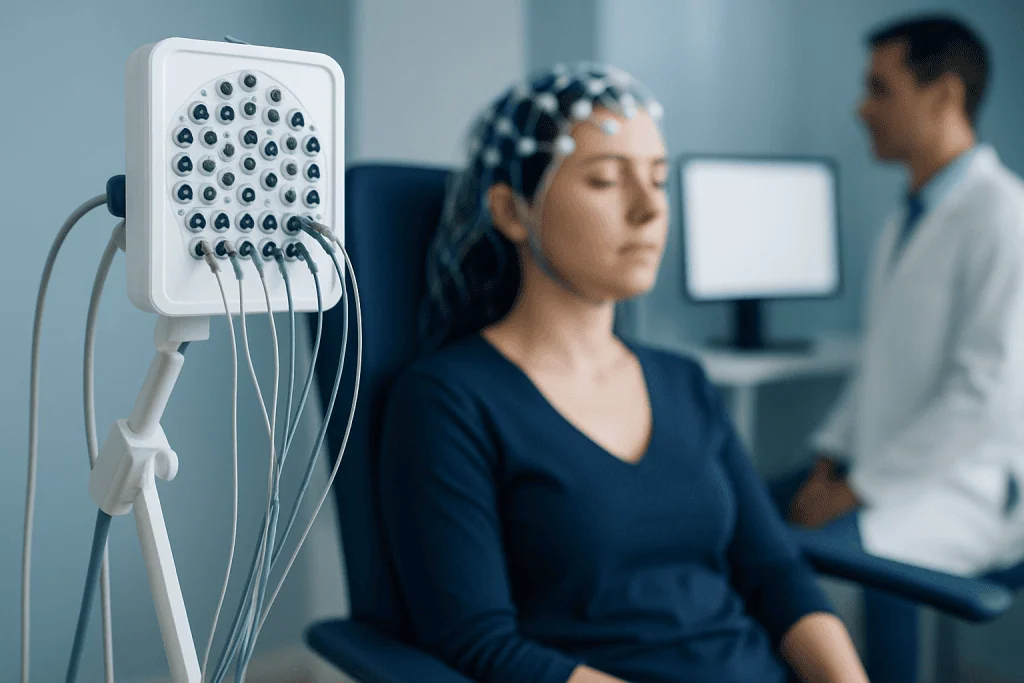
A neurological examination is usually followed by tests that help identify seizure activity or an underlying cause. An electroencephalogram, or EEG, records the brain’s electrical signals and may show patterns that support a diagnosis of epilepsy. Brain imaging, especially MRI, is often used to look for scarring, structural changes, or other abnormalities.
Depending on the situation, doctors may also order blood tests, prolonged video-EEG monitoring, or other evaluations to rule out conditions that can mimic seizures. If symptoms are uncertain, specialist assessment by a neurologist or epileptologist can be particularly helpful. In some cases, care may involve advanced neurology evaluation and imaging to better define the seizure focus.
Recording episodes in a diary or on a phone video, when safe and possible, can add useful information. The goal is not only to confirm whether the event is epileptic, but also to understand what type of seizure it is and what treatment is most appropriate.
Treatment options and long-term management
Treatment depends on how often aura epileptic seizures occur, whether they spread to other seizure types, and whether a cause is found. The main treatment for recurrent epileptic auras is anti-seizure medication. The choice of medicine is individualized based on seizure type, age, other health conditions, possible side effects, and pregnancy considerations where relevant.
If a structural brain problem is identified or seizures continue despite medication, further evaluation may be needed. Some people benefit from assessment in a specialized epilepsy center, where options can include prolonged monitoring, medication adjustments, dietary therapies in selected cases, implanted devices, or surgery. For carefully selected patients with medication-resistant focal epilepsy, epilepsy surgery may be discussed after a thorough workup.
When episodes are caused by another condition, treating that underlying problem is also important. This may involve stroke prevention, infection treatment, management of a brain lesion, or coordinated care for related neurological disease. If symptoms overlap with or coexist alongside brain tumor or another structural disorder, treatment planning is tailored to the full clinical picture.
Successful management often combines medical treatment with education and self-monitoring. Understanding personal triggers, taking medication consistently, and knowing when to seek urgent help can improve safety and quality of life. Near the end of a care pathway, some patients may also need discussion of driving, work safety, swimming, heights, and other activities where a seizure could pose risk.
Prevention, self-care, and living with recurrent auras
Not all seizures can be prevented, but daily habits can reduce the chance of breakthrough episodes. Taking prescribed medication exactly as directed is one of the most important steps. Missing doses is a common reason for seizure recurrence, even in people who have been stable for a long time.
Other helpful self-care measures include regular sleep, limiting alcohol, staying hydrated, eating consistently, and managing stress. If a person notices clear triggers such as flashing lights, sleep loss, or illness, these should be discussed with a doctor and addressed when possible. A seizure diary can help reveal patterns that are not obvious at first.
Safety planning matters even when auras are brief. If an aura usually comes before a larger seizure, the person should move away from roads, water, stairs, or machinery as soon as symptoms begin. Family members or coworkers may benefit from basic seizure first-aid education so they know how to respond calmly and appropriately.
For people needing comprehensive assessment, multidisciplinary specialists at Acibadem International and its JCI-accredited hospitals evaluate and treat epilepsy for international patients, including advanced imaging, brain MRI and specialist care pathways when appropriate.
When to seek medical care
Medical assessment is advisable for any first suspected aura epileptic seizure, any new recurrent episode, or any event that changes in pattern. Even if symptoms are mild and brief, they can signal focal epilepsy or another neurological condition that deserves attention. A doctor should also review episodes that are followed by confusion, memory gaps, collapse, injury, or unusual movements.
Urgent medical care is needed if a seizure lasts longer than about five minutes, if repeated seizures occur without recovery between them, if breathing is difficult, or if the person is injured, pregnant, or has diabetes. Emergency care is also important for a first seizure with loss of consciousness or if the episode happens in water.
It is also wise to seek care if aura symptoms are becoming more frequent, if medication side effects are troubling, or if daily activities such as driving or working safely are affected. Early assessment can help clarify the diagnosis, reduce uncertainty, and guide treatment before seizures become more disruptive.
Frequently asked questions
Is an aura epileptic seizure a real seizure or just a warning?
In many cases, an aura is a real seizure called a focal aware seizure. It may happen on its own or act as the first stage of a larger seizure. Because it reflects abnormal electrical activity in the brain, it should be medically evaluated.
What does an aura epileptic seizure feel like?
People describe many different sensations, including a strange smell or taste, a rising feeling in the stomach, déjà vu, sudden fear, tingling, or visual changes. The pattern is often brief and similar each time. The exact feeling depends on the brain area involved.
Can someone stay conscious during an aura seizure?
Yes. In a focal aware seizure, the person remains awake and aware, even though the symptoms may feel unusual or intense. However, some seizures start this way and then spread, leading to impaired awareness or convulsions.
How is an aura epileptic seizure different from a migraine aura?
Migraine aura often develops more gradually and may last longer, while epileptic aura usually begins suddenly and is shorter. The symptoms can overlap, especially visual changes, so a doctor may need to review the history carefully and order tests. Diagnosis should not rely on symptoms alone.
Do all people with epilepsy have auras?
No. Some people never experience auras, while others have them regularly. Auras are more common in certain focal epilepsies, especially those involving the temporal lobe.
What tests are usually done after suspected aura seizures?
Doctors often begin with a detailed history and neurological examination. An EEG is commonly used to look for seizure-related electrical activity, and brain MRI may help identify structural causes. Additional testing may be recommended if the diagnosis is unclear.
Can aura epileptic seizures be treated successfully?
Many people improve with the right anti-seizure medication and trigger management. If seizures continue, specialist epilepsy evaluation can help identify other options, including advanced monitoring or surgery in selected cases. Treatment is individualized and often very effective at reducing episodes.
This article is for general information only and is not a substitute for professional medical advice. Please consult a qualified doctor about your individual situation.
Persistent digestive symptoms? Get evaluated in Turkey
JCI-accredited · board-certified surgeons · reply within 24h
Add us as a Preferred Source to see more of our trusted health content across Google Search, AI Overviews and Discover.
Check your numbers in seconds
BMI, calories, due date, blood pressure and 30+ more clinical calculators — free, instant, doctor-reviewed ranges.

More from the Health Library

Tooth Pulp: An Evidence-Based Guide for Patients

Type 2 Diabetes: A Complete Medical Overview

Eye Doctor Name — Explained by Medical Evidence, Not Myths

Birth Control Patch: A Complete Medical Overview

Emotions: A Complete Medical Overview