Average Male Heart Rate: What Patients Need to Know

A normal resting heart rate for adult men is usually 60 to 100 beats per minute. Many healthy men, especially those who are physically fit, may have resting rates closer to 50 to 70 beats per minute.
Key Takeaways
- A normal resting heart rate for adult men is usually 60 to 100 beats per minute.
- Many healthy men, especially those who are physically fit, may have resting rates closer to 50 to 70 beats per minute.
- Stress, caffeine, fever, dehydration, medicines, and exercise can all affect heart rate.
- A heart rate that is persistently too high or too low, or that causes symptoms, should be assessed by a doctor.
- Heart rate should be interpreted together with blood pressure, rhythm, symptoms, and overall health.
Average male heart rate at rest is generally 60 to 100 beats per minute, although many healthy adult men fall closer to 60 to 80. What matters most is not one isolated number, but the overall pattern, symptoms, fitness level, medications, and whether the rate is measured at true rest.
Overview: what is the average male heart rate?
The average male heart rate depends on whether it is measured at rest, during activity, or during recovery after exercise. For most adult men, a normal resting heart rate is between 60 and 100 beats per minute. In everyday practice, many healthy men are often somewhere in the 60 to 80 range when they are calm, seated, and not recently active.
This number is not a score of heart health by itself. A lower resting heart rate can be normal in men who exercise regularly, while a temporarily higher rate can happen with stress, caffeine, pain, poor sleep, dehydration, or illness. Because of this, doctors look at the full picture rather than one single reading.
Heart rate also changes throughout the day. It rises with walking, climbing stairs, emotional stress, and digestion, then usually slows again during rest and sleep. That is why the most useful comparison is a resting heart rate measured in a consistent way, ideally at the same time of day.
What is considered normal, low, or high?
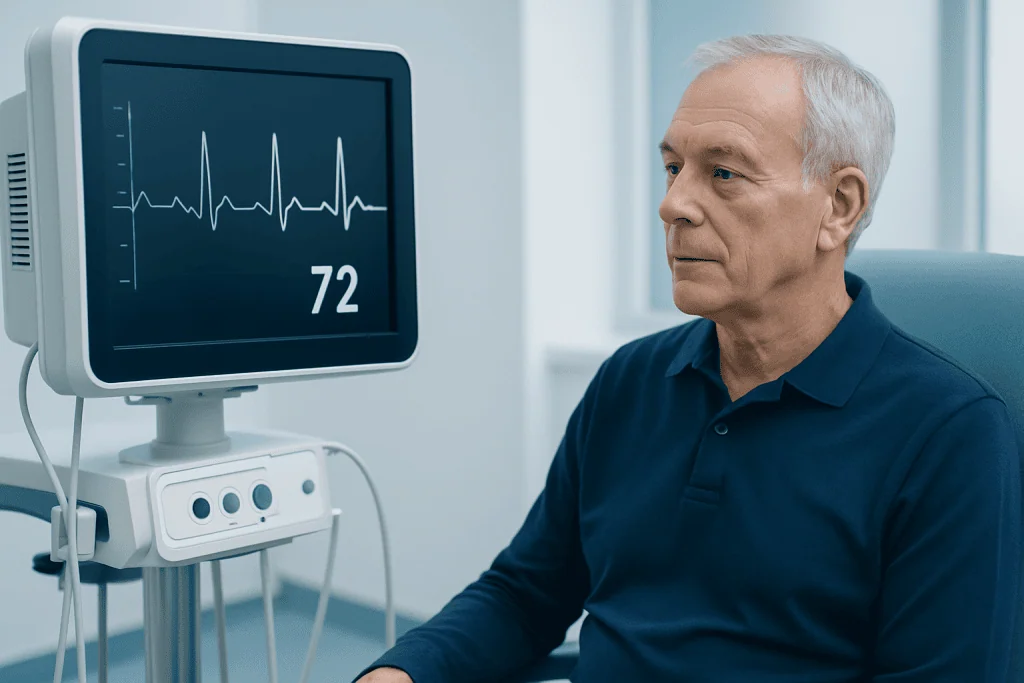
In adults, resting heart rate is commonly grouped into three broad patterns. Normal is usually 60 to 100 beats per minute. Below 60 is called bradycardia, and above 100 is called tachycardia. However, these terms describe the rate only; they do not automatically mean disease.
For example, some men with excellent cardiovascular fitness naturally have a resting heart rate below 60 and feel completely well. On the other hand, a rate in the normal range can still feel uncomfortable if the heartbeat is irregular, unusually forceful, or associated with symptoms such as dizziness or shortness of breath.
Age, physical conditioning, medications, and medical conditions all matter. Doctors may also assess rhythm, because an irregular heartbeat may need further evaluation even if the average rate seems acceptable. Conditions such as arrhythmia can affect how the heart beats, not just how fast it beats.
- Often normal: 60 to 100 beats per minute at rest
- Sometimes normal in athletes or very fit adults: below 60 beats per minute without symptoms
- Needs context: rates above 100 during stress, fever, or exercise may be expected
- Needs medical review: persistent high or low rates, especially with symptoms
What affects average male heart rate?

Heart rate is controlled by the body’s need for oxygen and blood flow. When the body needs more energy, the heart usually beats faster. When the body is resting and demand is lower, the rate typically slows. This is why exercise, anxiety, excitement, and infection often increase the pulse.
Many everyday factors can change a man’s resting heart rate. Caffeine, nicotine, alcohol, dehydration, poor sleep, emotional stress, and certain cold or asthma medicines may raise it. Prescription medications such as beta blockers may lower it. Thyroid problems, anemia, fever, and heart or lung disease can also influence heart rate.
Fitness is one of the most important long-term influences. Men who do regular aerobic activity often develop a stronger, more efficient heart that pumps more blood with each beat. As a result, their resting heart rate may be lower. Body size, genetics, temperature, and pain levels can also contribute to individual differences.
How to measure heart rate accurately
To understand average male heart rate, it helps to measure it properly. The best resting reading is usually taken after sitting quietly for at least five minutes, avoiding exercise, caffeine, nicotine, or a heavy meal beforehand. Measuring first thing in the morning can also provide a useful baseline.
A person can check the pulse at the wrist or side of the neck and count the beats for 30 seconds, then multiply by two. Smartwatches and fitness trackers may also help with trends, though they are not always perfectly accurate. Repeating readings on several different days is often more useful than focusing on a single measurement.
Doctors may recommend further testing if the pulse seems unusually fast, slow, irregular, or linked to symptoms. Depending on the situation, assessment may include an examination, blood tests, an electrocardiogram, or longer rhythm monitoring. In some cases, specialists may use an electrocardiogram or Holter monitoring to evaluate the heart’s rhythm over time.
Symptoms and signs that should not be ignored
A heart rate reading becomes more important when it is accompanied by symptoms. Men should pay attention to palpitations, dizziness, fainting, chest discomfort, unexplained shortness of breath, marked fatigue, or reduced exercise tolerance. These symptoms do not always mean a serious problem, but they do deserve medical attention.
Some people notice their heart feels as if it is racing, fluttering, skipping, or pounding. Others may not feel the heartbeat itself but may feel weak, lightheaded, or unusually tired. If symptoms appear repeatedly or last longer than expected, a doctor can help determine whether the cause is related to stress, dehydration, medication, thyroid disease, anemia, or a heart rhythm problem.
Very slow heart rates can also cause symptoms if the body is not getting enough blood flow. This may present as faintness, confusion, or exercise intolerance. A persistently elevated rate at rest can sometimes be associated with conditions such as infection, overactive thyroid, or heart strain, including heart failure in some patients.
How doctors evaluate an unusual heart rate
When a man’s heart rate seems outside the expected range, doctors usually start with the basics: when the high or low readings happen, what symptoms occur, and what medications, supplements, or stimulants are involved. They may ask about sleep, stress, hydration, alcohol, smoking, recent illness, and family history of heart rhythm problems.
The physical examination often includes pulse, blood pressure, temperature, oxygen level, and listening to the heart. An electrocardiogram can show whether the rhythm is normal or irregular. Blood tests may help identify causes such as thyroid imbalance, infection, anemia, or electrolyte problems.
If symptoms are intermittent, a wearable monitor may capture changes over a longer period. Exercise testing or imaging may be considered if there are signs of underlying heart disease. In some situations, evaluation may also include echocardiography to look at heart structure and pumping function.
Treatment, prevention, and self-care
Treatment depends on the cause, not just the number. If a fast heart rate is due to fever, dehydration, anxiety, or excess caffeine, correcting the trigger may be enough. If medications are involved, a doctor may review whether an adjustment is appropriate. Rhythm disorders, thyroid disease, anemia, or heart conditions may need specific treatment.
Self-care can support a healthy resting heart rate over time. Regular physical activity, good sleep, stress management, not smoking, limiting stimulant intake, and staying well hydrated are practical measures that help many men. Managing blood pressure, cholesterol, diabetes, and body weight also supports heart health and may reduce strain on the cardiovascular system.
Men with known heart conditions should not change medicines on their own. They should follow their doctor’s advice about exercise, monitoring, and follow-up. Near the end of a care pathway, some patients benefit from specialist cardiology assessment; Acibadem International’s multidisciplinary specialists in JCI-accredited hospitals diagnose and treat heart rhythm and cardiac conditions for international patients when needed.
When to seek medical care
Medical advice is appropriate if a resting heart rate is repeatedly above 100 or below 60 and the person is not a trained athlete, especially if symptoms are present. Recurrent palpitations, reduced exercise capacity, dizziness, or unexplained fatigue should also be discussed with a healthcare professional. The goal is not to create worry, but to identify treatable causes early.
Urgent medical care is important if a fast or slow heart rate comes with chest pain, fainting, severe shortness of breath, sudden weakness, or confusion. These symptoms may indicate a more serious problem and should not be ignored. Men with known heart disease should be especially cautious if their usual pattern changes.
It may help to bring a symptom diary to the appointment, including heart rate readings, time of day, recent activity, caffeine use, medications, and associated symptoms. This information often helps doctors decide whether reassurance, further testing, or treatment is the best next step.
Frequently asked questions
What is the average male heart rate at rest?
For most adult men, a normal resting heart rate is between 60 and 100 beats per minute. Many healthy men, especially those who are calm and reasonably fit, are often closer to 60 to 80 beats per minute.
Is a heart rate below 60 always a problem in men?
No. A resting heart rate below 60 can be normal in men who are physically fit or who take certain medications, as long as they feel well. It should be assessed if it is persistent and linked to dizziness, fainting, weakness, or other symptoms.
Why does heart rate vary from day to day?
Heart rate naturally changes with sleep, stress, exercise, hydration, body temperature, and stimulant use such as caffeine or nicotine. Temporary changes are common, which is why trends over time are more useful than a single isolated reading.
Can anxiety raise heart rate?
Yes. Anxiety, emotional stress, and panic can activate the body's stress response and increase heart rate. Even so, ongoing palpitations or repeated fast heart rates should be discussed with a doctor to rule out other causes.
How should a man check his resting heart rate?
It is best checked after sitting quietly for at least five minutes, ideally at the same time on different days. A person can count the pulse at the wrist or neck for 30 seconds and multiply by two, or use a wearable device to track patterns.
When is a high heart rate considered concerning?
A resting heart rate that stays above 100 beats per minute without an obvious reason should be evaluated, especially if it happens repeatedly. It is more concerning when accompanied by chest pain, fainting, shortness of breath, or marked dizziness.
References
- American Heart Association
- National Heart, Lung, and Blood Institute
- Centers for Disease Control and Prevention
- Mayo Clinic
- European Society of Cardiology
This article is for general information only and is not a substitute for professional medical advice. Please consult a qualified doctor about your individual situation.
Heart care in Turkey — expert evaluation and treatment
JCI-accredited · board-certified surgeons · reply within 24h
Add us as a Preferred Source to see more of our trusted health content across Google Search, AI Overviews and Discover.
Check your numbers in seconds
BMI, calories, due date, blood pressure and 30+ more clinical calculators — free, instant, doctor-reviewed ranges.

More from the Health Library

Ca 19-9: An Evidence-Based Guide for Patients

Social Anxiety: What Patients Need to Know

Waist Trainer: What Patients Need to Know

Cortisol — Explained by Medical Evidence, Not Myths

Status Asthmaticus: A Complete Medical Overview

Wall Angels: An Evidence-Based Guide for Patients
Cardiology Specialists at Acibadem

Prof. Dr. Fuat Bilgen
Cardiovascular Surgery
Asst. Prof. Dr. Funda Helvacıoğlu
Cardiology
Asst. Prof. Dr. Gökhan Arslanhan
Cardiovascular Surgery
Prof. Dr. Gültekin Karakuş
Cardiology