Bad Back Inversion Table: What Patients Need to Know
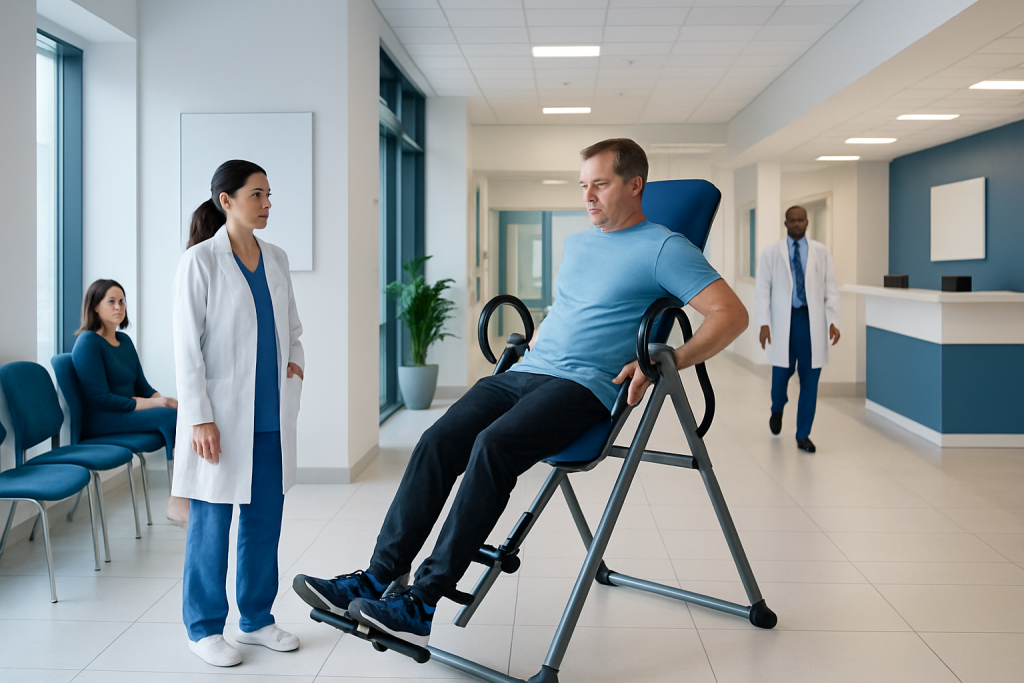
Inversion tables may provide temporary symptom relief for some types of back pain, but evidence for lasting benefit is limited. They are not appropriate for everyone, especially people with glaucoma, uncontrolled high blood pressure, heart disease, or certain spine conditions.
Key Takeaways
- Inversion tables may provide temporary symptom relief for some types of back pain, but evidence for lasting benefit is limited.
- They are not appropriate for everyone, especially people with glaucoma, uncontrolled high blood pressure, heart disease, or certain spine conditions.
- Correct setup, gradual use, and stopping immediately if symptoms worsen are important for safety.
- Back pain with weakness, numbness, fever, trauma, or bladder or bowel changes needs prompt medical evaluation.
- A full assessment can help identify whether symptoms come from muscle strain, nerve irritation, disc problems, or another cause.
A bad back inversion table may help some people feel short-term relief by reducing pressure on the spine, but it is not a cure and it is not suitable for everyone. Patients should understand when inversion may be reasonable, when it should be avoided, and how to seek medical advice if back pain is persistent, severe, or linked to warning signs.
Overview: Can a Bad Back Inversion Table Help?
A bad back inversion table is often marketed as a way to relieve pressure on the spine. For some patients, inversion can provide short-term comfort by changing posture and reducing the feeling of compression in the lower back. However, it does not treat the root cause of all back pain, and the benefit can vary depending on why the pain started.
Back pain is a symptom, not a single disease. It may come from muscle strain, poor posture, degenerative changes, irritated joints, or nerve compression. A person with a simple mechanical back strain may respond differently to inversion than someone with a herniated disc or spinal stenosis. That is why a neutral, individualized approach is important.
Inversion therapy involves tilting the body so the head is lower than the feet, usually on a padded table with ankle supports. This position may briefly reduce the load on spinal structures. Some people describe a feeling of stretching or decompression, but others may feel dizziness, pressure in the head, or increased discomfort.
For patients trying to decide whether to use an inversion table, the key question is not only whether it can help, but whether it is safe in their specific situation. A clinician can help determine whether symptoms are more consistent with a self-limited back strain or with a condition such as a herniated disc that may need a more structured treatment plan.
How Inversion Therapy Works
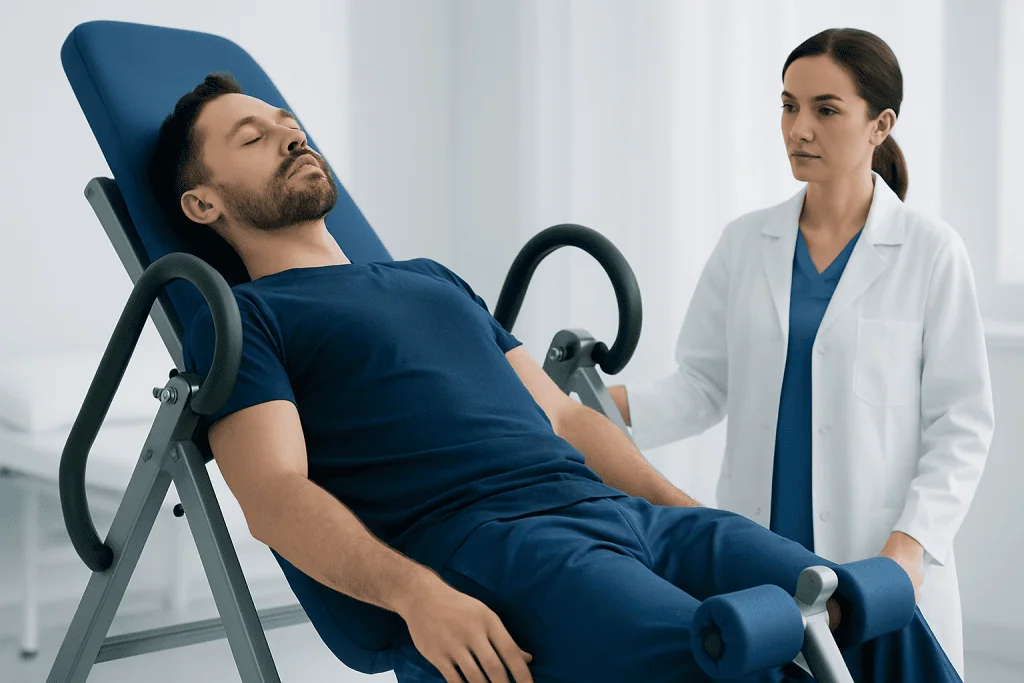
Inversion tables change the body’s alignment using gravity. When the body tilts backward, some pressure may be taken off the discs, joints, and muscles of the lower back for a short time. This can create a temporary sensation of relief, especially after prolonged sitting or standing.
That said, the body is complex. Pain relief may come not only from reduced spinal loading but also from muscle stretching, a change in posture, or a short period of rest. This means that improvement after inversion does not necessarily confirm that a person has a specific diagnosis.
Inversion should also be separated from medically supervised traction or rehabilitation. A home inversion table is not the same as a full treatment program. Depending on the cause of pain, better-supported options may include physical therapy and rehabilitation, exercise therapy, posture training, and guided strengthening.
Patients often expect inversion to “put the spine back into place,” but this is an oversimplification. Most common back pain does not result from the spine being out of alignment in a way that can be permanently corrected by hanging upside down. Relief, when it happens, is usually temporary and should be viewed as one possible self-care tool rather than a stand-alone solution.
Who Might Feel Temporary Relief

Some adults with mild, non-specific low back pain may feel better for a short period after using an inversion table. This is more likely when pain is linked to muscle tension, stiffness after inactivity, or discomfort that eases with gentle stretching. People who already tolerate position changes well may find inversion more comfortable than those who are sensitive to motion.
In some cases, patients with radiating pain from the lower back to the leg may report less pressure when inverted. Still, this should be approached carefully. Leg pain, tingling, or numbness can be a sign of nerve involvement and should not be self-managed indefinitely without assessment.
Inversion may be less helpful if the main problem is severe arthritis, marked spinal narrowing, an unstable injury, or pain caused by inflammation, infection, or internal organ disease. It is also less likely to replace a structured program that includes exercise, activity modification, and medical follow-up.
It can be useful to think of inversion as a comfort measure, not a diagnosis or a cure. If back pain continues to return, affects sleep, limits walking, or interferes with daily function, a more complete spine evaluation may be needed. In some patients, especially those with persistent nerve-related symptoms, assessment through a dedicated spine surgery service may help clarify whether non-surgical or surgical options are more appropriate.
Risks, Side Effects, and When to Avoid It
The main safety concern with inversion is that it increases pressure in the head and upper body. This can affect the eyes, blood vessels, and heart. For that reason, inversion is generally not advised for people with glaucoma, retinal problems, uncontrolled high blood pressure, significant heart disease, or a history of stroke unless a doctor specifically says it is safe.
Other people should also be cautious. An inversion table may not be suitable during pregnancy, after recent surgery, with severe osteoporosis, with balance disorders, or with joint instability. Older adults who have difficulty getting on and off the device may also face a risk of falls or ankle strain.
Possible side effects include dizziness, headache, blurred vision, reflux symptoms, facial pressure, and worsening back or leg pain. If tingling, new numbness, weakness, severe pain, chest discomfort, or faintness occurs, inversion should be stopped immediately and medical advice should be sought.
Patients with symptoms suggestive of nerve compression should be especially careful. Conditions such as sciatica can sometimes improve with conservative care, but self-treatment should not continue if pain travels below the knee, progressively worsens, or is accompanied by weakness.
How to Use an Inversion Table More Safely
For patients who have discussed inversion with a healthcare professional and have no clear contraindications, safety starts with a gradual approach. The table should be assembled correctly, adjusted to the user’s height, and checked for secure ankle support. Beginning with a small angle rather than a full inversion can reduce dizziness and discomfort.
Sessions should be brief at first. A person should stop if pain increases, if they feel pressure in the head, or if they become lightheaded. Getting upright too quickly can also cause symptoms, so returning slowly to a neutral position is important.
It is wise to have another person nearby the first few times, especially for older adults or anyone uncertain about balance. Inversion should never be used after alcohol, sedating medication, or when alone if there is any concern about getting off the table safely.
Even when it feels helpful, inversion should be only one part of broader self-care. Core strengthening, walking, guided stretching, ergonomic changes, and supervised pain management often offer more sustainable benefit than passive devices alone.
- Start with a mild angle instead of full inversion.
- Use short sessions and stop if symptoms worsen.
- Avoid use if there are eye, heart, blood pressure, or balance concerns unless medically cleared.
- Combine any home device with exercise-based care and clinical follow-up when needed.
What Often Helps More Than an Inversion Table
Many patients benefit more from active treatment than from passive stretching devices. For uncomplicated back pain, staying gently active is usually more helpful than prolonged bed rest. Walking, targeted strengthening, and movement-based rehabilitation can improve support around the spine and reduce repeated flare-ups.
Physical therapy can also identify patterns that an inversion table cannot address, such as weak core muscles, poor hip mobility, limited hamstring flexibility, or work-related posture problems. Treatment may include hands-on techniques, exercise progression, and education on lifting, sitting, and sleeping positions.
Some people need imaging or specialist review, but not every episode of back pain requires a scan. When pain lasts beyond a few weeks, keeps returning, or includes neurological symptoms, clinicians may investigate for disc disease, spinal narrowing, or other structural causes. If surgery is not needed, conservative treatment remains the first step for many patients.
Near the end of the care pathway, if symptoms remain persistent or complex, a multidisciplinary team can be helpful. Acibadem International’s specialists, working in JCI-accredited hospitals, evaluate and treat spine conditions for international patients using individualized medical, rehabilitation, and surgical approaches when appropriate.
When to Seek Medical Care
Most short episodes of back pain improve with time, activity adjustment, and simple self-care. However, medical attention is important when pain is severe, follows a fall or accident, or does not improve over several weeks. Back pain that repeatedly interrupts work, sleep, or mobility also deserves assessment.
Prompt medical care is especially important if pain comes with fever, unexplained weight loss, a history of cancer, numbness around the groin, new bladder or bowel problems, or progressive weakness in the legs. These features may point to conditions that should not be managed with home devices alone.
If inversion makes symptoms worse, that is also useful clinical information. Worsening leg pain, new tingling, or difficulty standing upright after use may suggest nerve irritation or another cause that needs examination. A doctor may recommend a physical exam, imaging, or referral to a spine or rehabilitation specialist.
Patients do not need to decide alone whether an inversion table is appropriate. A qualified clinician can review personal risk factors, existing medical conditions, and the pattern of symptoms before advising on self-care or further treatment.
Frequently asked questions
Does a bad back inversion table really work?
It may help some people feel temporary relief, especially with mild mechanical low back discomfort. However, evidence for long-term benefit is limited, and it does not treat every cause of back pain.
Can an inversion table make back pain worse?
Yes, it can in some cases. If pain increases, radiates more into the leg, or is joined by dizziness, head pressure, numbness, or weakness, use should stop and medical advice should be sought.
Who should not use an inversion table?
People with glaucoma, uncontrolled high blood pressure, certain heart or vascular conditions, some eye disorders, severe osteoporosis, balance problems, or recent surgery should usually avoid it unless a doctor approves. Pregnancy and significant frailty also require caution.
Is an inversion table better than physical therapy?
Not usually. An inversion table may be one comfort measure, but physical therapy more directly addresses strength, flexibility, posture, and movement patterns that commonly drive recurring back pain.
How long should someone use an inversion table?
There is no single best duration for everyone, and patients should follow professional advice and product instructions. In general, beginning gradually and stopping if symptoms worsen is safer than trying long or steep sessions.
Should someone get imaging before trying inversion therapy?
Not always. Many short-lived episodes of uncomplicated back pain do not need imaging, but persistent pain, nerve symptoms, trauma, or red-flag features may justify medical assessment before using home devices.
References
- National Institute of Neurological Disorders and Stroke
- American Academy of Orthopaedic Surgeons
- National Institute for Health and Care Excellence
- Mayo Clinic
- MedlinePlus
This article is for general information only and is not a substitute for professional medical advice. Please consult a qualified doctor about your individual situation.
Joint and spine care in Turkey — expert assessment & treatment
JCI-accredited · board-certified surgeons · reply within 24h
Add us as a Preferred Source to see more of our trusted health content across Google Search, AI Overviews and Discover.
Check your numbers in seconds
BMI, calories, due date, blood pressure and 30+ more clinical calculators — free, instant, doctor-reviewed ranges.

More from the Health Library



Related Specialists

Prof. Dr. Haluk Esgin
Ophthalmology
Dr. Müge Koçak
Neurology
Prof. Dr. Mehmet Cıncık
Vitro Fertilization and Reproductive Medicine Center
Dr. Murat Dutipek
Otorhinolaryngology