Bankart Lesion — Explained by Medical Evidence, Not Myths

A bankart lesion is a tear of the front-lower labrum of the shoulder socket, commonly after an anterior shoulder dislocation. Typical symptoms include instability, pain, repeated slipping out of place, and a catching or clicking sensation.
Key Takeaways
- A bankart lesion is a tear of the front-lower labrum of the shoulder socket, commonly after an anterior shoulder dislocation.
- Typical symptoms include instability, pain, repeated slipping out of place, and a catching or clicking sensation.
- Diagnosis is based on history, examination, and imaging such as MRI or MR arthrography when needed.
- Treatment may include rest, physiotherapy, and sometimes surgery if instability persists or recurs.
- Early medical assessment can help reduce the risk of chronic shoulder instability and further joint damage.
A bankart lesion is an injury to the rim of cartilage at the front-lower part of the shoulder socket, most often caused by a shoulder dislocation. It matters because this tear can make the shoulder feel unstable and increase the chance of repeated dislocations, but diagnosis and treatment are usually straightforward with proper orthopedic assessment.
What a Bankart Lesion Is
A bankart lesion is a tear in the labrum, the ring of cartilage that surrounds the shoulder socket and helps keep the ball of the upper arm bone centered. In this injury, the tear usually happens at the front and lower part of the socket after the shoulder slips out of place toward the front. In simple terms, it is one of the most common structural injuries linked to shoulder instability.
This injury is not the same as general shoulder strain or soreness from overuse. A bankart lesion involves the stabilizing tissue of the joint itself, which is why some people feel that the shoulder is no longer fully secure after the first dislocation. Without enough support from the labrum and nearby ligaments, the shoulder can become easier to dislocate again.
Bankart lesions are especially relevant in younger active adults and athletes, but they can happen at any age. Contact sports, falls, and sudden twisting injuries are frequent causes. The exact effect of the injury varies from person to person, depending on age, activity level, and whether there are related injuries such as bone loss or tendon damage.
How the Shoulder Becomes Unstable
The shoulder is the body’s most mobile major joint, and that mobility depends on a balance of anatomy and muscle control. The socket is relatively shallow, so stability comes from the labrum, ligaments, capsule, and the surrounding muscles, especially the rotator cuff. When a dislocation occurs, these structures can stretch or tear.
In a bankart lesion, the injured labrum no longer provides the same bumper-like support at the front of the socket. As a result, the ball of the shoulder may shift too far forward during throwing, reaching back, or sudden impact. This can lead to feelings of looseness, fear of movement, or repeat episodes where the shoulder partly or fully slips out.
Some patients also have associated injuries. For example, a dislocation can cause a dent in the humeral head or damage to the joint surface. These combined injuries can make instability more likely and may influence whether non-surgical care or shoulder surgery is the best option.
Symptoms and Common Signs
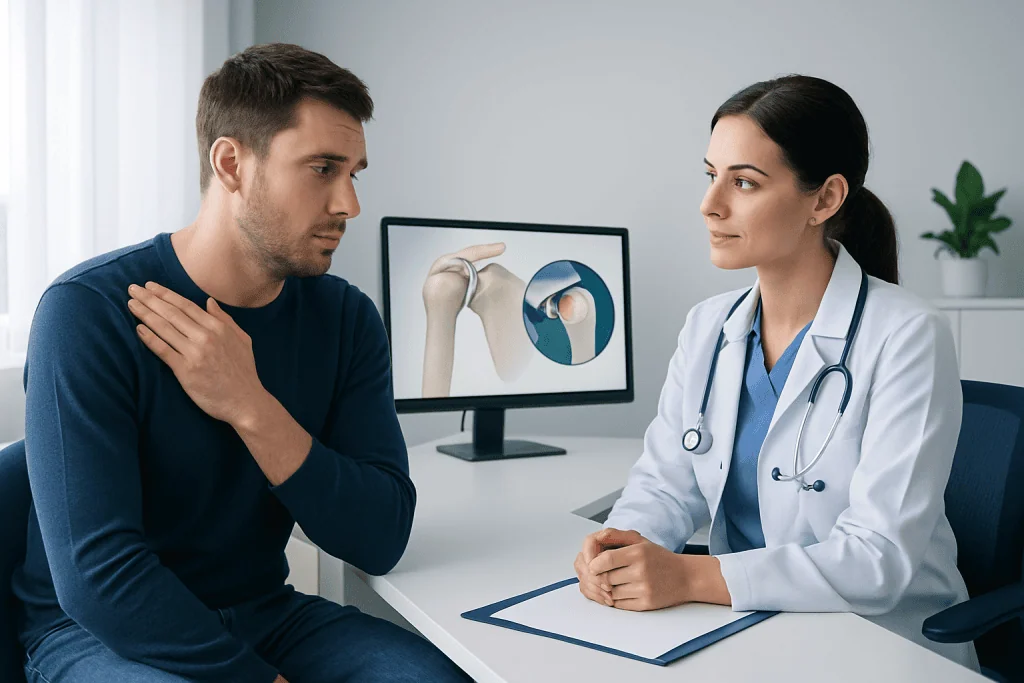
The most common clue is a history of shoulder dislocation or subluxation, which means the joint partly slips out and then returns. After that event, a person may notice pain deep in the shoulder, especially with overhead activity or when the arm is moved outward and backward. Some people describe the joint as weak, unreliable, or ready to pop out again.
Other symptoms can include clicking, catching, or a shifting sensation inside the joint. Swelling may occur early after the injury, but long-term symptoms are more often related to instability than visible inflammation. During sports or exercise, the shoulder may feel less powerful or less controlled than before.
Symptoms do not always match the size of the tear. A small lesion can still cause repeated instability, while a more significant tear may mainly present as pain. Conditions such as shoulder impingement syndrome or rotator cuff problems can also cause shoulder pain, so a careful assessment helps identify the true source of symptoms.
- Pain after a dislocation or sudden shoulder injury
- Feeling that the shoulder may slip out again
- Repeated dislocations or partial dislocations
- Clicking, catching, or shifting in the joint
- Reduced confidence with overhead or contact activities
Causes and Risk Factors
The classic cause of a bankart lesion is an anterior shoulder dislocation. This often happens during sports, a fall onto an outstretched arm, or trauma such as a road traffic injury. The position most likely to cause the problem is when the arm is lifted and rotated outward, placing stress on the front of the joint.
Younger people, particularly teenagers and adults under about 30, have a higher risk of recurrent instability after a first dislocation. Athletes who play contact sports or sports with frequent overhead movements may also be more prone to repeat episodes. In these groups, the labrum may be damaged in a way that makes the shoulder less stable even after the initial pain improves.
Joint looseness, inadequate rehabilitation after the first injury, and returning too quickly to high-risk activity can increase the chance of ongoing problems. Some people may also have bony injuries or wear patterns that contribute to instability. In these situations, a specialist may evaluate whether the issue is an isolated bankart lesion or part of the broader picture of shoulder instability.
How Doctors Diagnose a Bankart Lesion
Diagnosis begins with the story of the injury. A doctor will usually ask whether the shoulder fully dislocated, whether someone had to relocate it, and which movements now feel unsafe or painful. The pattern matters, because repeated forward slipping strongly suggests damage to the front stabilizing structures of the shoulder.
The physical examination checks range of motion, strength, joint looseness, and signs of apprehension when the arm is placed in positions that can trigger instability. These tests help identify instability, but they do not always show the exact anatomy of the injury. That is why imaging may be recommended.
X-rays are often used first to look for dislocation-related bone injury and to rule out fractures. MRI, and in some cases MR arthrography, can better show the labrum, capsule, and associated soft-tissue damage. CT may be useful if bone loss is suspected. In complex cases, MRI helps guide treatment planning by showing whether the lesion is likely to respond to rehabilitation alone or whether structural repair may be needed.
Treatment Options and Recovery
Treatment depends on age, activity demands, number of dislocations, and whether the shoulder remains unstable after the initial injury. After an acute dislocation has been treated, early care often includes a brief period of rest, pain control, and a guided rehabilitation plan. Physiotherapy focuses on restoring motion, improving rotator cuff and scapular strength, and helping the shoulder regain dynamic stability.
Non-surgical care may be appropriate for some first-time dislocations, especially in people with lower risk of recurrence. However, if the shoulder continues to slip out, if the person is young and highly active, or if imaging shows significant structural injury, surgery may be recommended. Arthroscopic bankart repair is a common procedure that reattaches the torn labrum and tightens the capsule when necessary.
Recovery takes time and usually happens in stages. Patients often begin with protection and gentle movement, then progress to strengthening and sport-specific rehabilitation. Full return to contact sports or heavy overhead work should follow the treating surgeon’s or therapist’s plan. Depending on the individual case, treatment may also involve arthroscopy to assess and repair the damaged tissue with minimally invasive techniques.
People with recurring dislocations or combined injuries may need a more specialized surgical plan. At the end of the care pathway, some international patients choose centers such as Acibadem International, where multidisciplinary specialists in JCI-accredited hospitals evaluate and treat shoulder instability and related injuries.
Self-care, Prevention, and Safe Return to Activity
Self-care starts with protecting the shoulder after injury and avoiding movements that recreate the feeling of slipping out. Ice, rest, and following medical advice about temporary immobilization can help in the early phase. As pain settles, supervised exercises become more important than prolonged rest, because muscle control is essential for shoulder stability.
Prevention mainly focuses on rehabilitation rather than a single device or exercise. Strengthening the rotator cuff, shoulder blade muscles, and upper back improves joint control during sport and daily activity. Good technique in throwing, tackling, lifting, and gym training also reduces strain on the front of the shoulder.
Returning to activity too early is a common reason symptoms come back. Before resuming sports, the shoulder should have near-normal motion, strength, and confidence under functional testing. People who have had more than one dislocation should be especially careful, because repeated episodes can increase the risk of further tissue damage over time.
- Follow the rehabilitation plan consistently
- Avoid high-risk movements until cleared by a clinician
- Build shoulder blade and rotator cuff strength gradually
- Use proper technique during sport and exercise
- Seek reassessment if instability returns
When to Seek Medical Care
Medical assessment is important after any first-time shoulder dislocation, even if the joint seems to go back into place quickly. A doctor can check for nerve injury, fracture, and labral damage, and can advise on the safest next steps. Early evaluation also helps set up appropriate rehabilitation.
A person should seek prompt care if the shoulder looks deformed, cannot be moved, becomes numb, or has severe pain after trauma. Ongoing symptoms also deserve attention, especially repeated slipping, persistent weakness, or inability to return to normal activities. These may suggest a structural problem such as a bankart lesion rather than a simple strain.
If instability continues despite exercises, orthopedic review is sensible. Recurrent dislocations can lead to more damage inside the joint, so expert evaluation may help prevent longer-term complications and clarify whether conservative care or repair is more suitable.
Frequently asked questions
Is a bankart lesion the same as a rotator cuff tear?
No. A bankart lesion is a tear of the labrum at the front-lower edge of the shoulder socket, while a rotator cuff tear affects the tendons that help move and stabilize the shoulder. The symptoms can overlap, so medical assessment is useful when pain or instability persists.
Can a bankart lesion heal without surgery?
Some people do well with non-surgical treatment, especially after a first dislocation and when instability does not return. Rehabilitation can improve muscle control and shoulder function. Surgery is more often considered if the shoulder keeps dislocating or if the person has high activity demands.
How is a bankart lesion diagnosed?
Doctors diagnose it through the history of injury, a shoulder examination, and imaging when needed. X-rays help assess bone injury after dislocation, while MRI or MR arthrography can show damage to the labrum and capsule more clearly.
How long does recovery take after bankart repair?
Recovery varies by the person, the surgical technique, and the type of activity they want to return to. Early recovery usually focuses on protection and regaining motion, followed by strengthening and gradual return to sport. Full recovery commonly takes several months rather than a few weeks.
Does every shoulder dislocation cause a bankart lesion?
No, not every dislocation causes this exact injury, but labral damage is common after anterior shoulder dislocation. The pattern can vary, and some people may have bone injury, capsule stretching, or other soft-tissue damage instead.
What happens if a bankart lesion is left untreated?
In some cases, symptoms remain mild and manageable with rehabilitation. In others, the shoulder may continue to feel unstable or dislocate again, which can increase wear and cause further injury inside the joint. A doctor can help judge the likely risk based on age, activity level, and imaging findings.
References
- American Academy of Orthopaedic Surgeons
- American Shoulder and Elbow Surgeons
- National Institute of Arthritis and Musculoskeletal and Skin Diseases
- OrthoInfo
- British Elbow and Shoulder Society
This article is for general information only and is not a substitute for professional medical advice. Please consult a qualified doctor about your individual situation.
Joint and spine care in Turkey — expert assessment & treatment
JCI-accredited · board-certified surgeons · reply within 24h
Add us as a Preferred Source to see more of our trusted health content across Google Search, AI Overviews and Discover.