Best Skincare for Oily Skin: A Complete Medical Overview

Oily skin needs balance rather than harsh stripping or repeated scrubbing. A simple routine with gentle cleansing, oil-free hydration, and sunscreen is often most effective.
Key Takeaways
- Oily skin needs balance rather than harsh stripping or repeated scrubbing.
- A simple routine with gentle cleansing, oil-free hydration, and sunscreen is often most effective.
- Ingredients such as salicylic acid, niacinamide, and retinoids may help reduce clogged pores and shine.
- Overwashing and strong alcohol-based products can worsen irritation and trigger rebound oiliness.
- Persistent acne, painful cysts, or sudden changes in oiliness should be assessed by a doctor.
The best skincare for oily skin usually combines a gentle cleanser, lightweight moisturizer, daily sunscreen, and carefully chosen active ingredients such as salicylic acid or niacinamide. The goal is not to remove all oil, but to reduce excess sebum, keep pores clear, and protect the skin barrier.
Overview: what the best skincare for oily skin looks like
The best skincare for oily skin is usually simple, consistent, and focused on balance. For most people, this means washing with a mild cleanser twice a day, using a lightweight non-comedogenic moisturizer, applying broad-spectrum sunscreen every morning, and adding one or two targeted ingredients to manage shine and clogged pores. When the skin barrier is protected, the skin often looks calmer and less greasy over time.
Oily skin happens when sebaceous glands produce more sebum than the skin needs. Sebum is not harmful by itself; in fact, it helps protect and lubricate the skin. Problems tend to develop when excess oil mixes with dead skin cells, sweat, makeup, or pollution, leading to enlarged-looking pores, blackheads, and acne breakouts.
A common mistake is trying to “dry out” the face with harsh soaps, rough exfoliation, or strong astringents. This can irritate the skin, weaken the barrier, and sometimes increase visible oiliness. A medically sound approach aims to control excess oil while maintaining hydration, reducing inflammation, and preventing pore blockage.
How to recognize oily skin
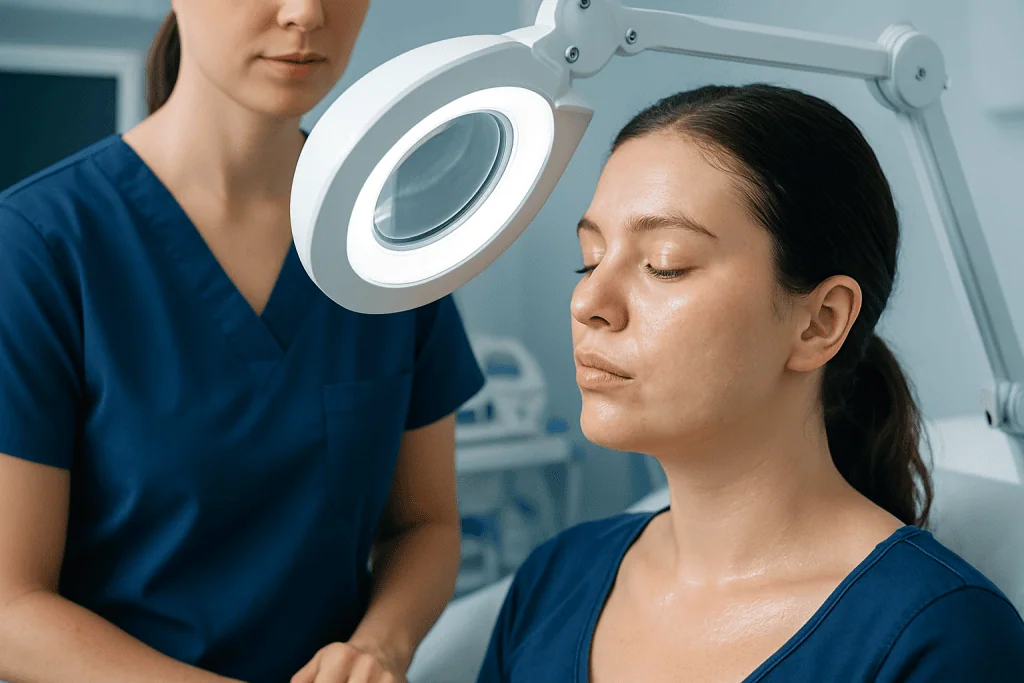
Oily skin often becomes shiny within a few hours of cleansing, especially on the forehead, nose, and chin. Makeup may slide off more easily, and pores may appear more noticeable in the central face. Some people also develop frequent blackheads, whiteheads, or inflammatory acne.
Skin can be oily, combination, or acne-prone at the same time. Combination skin usually has an oily T-zone with drier cheeks, while acne-prone skin refers more to the tendency to develop clogged pores and pimples. A person can have oily skin without acne, and dry or sensitive skin can still develop breakouts.
It is also helpful to distinguish true oiliness from dehydration. Dehydrated skin may feel tight, look dull, and still produce surface oil as a response to irritation or moisture loss. This is one reason lightweight moisturizers are important even for people who dislike the feeling of richer creams.
What causes oily skin and what can make it worse

Oily skin is influenced by genetics, hormones, age, climate, and daily habits. Many people first notice it during adolescence, when hormonal changes stimulate the sebaceous glands. It may also become more noticeable during menstrual cycle changes, periods of stress, or in hot and humid environments.
Skincare habits can either help or worsen oil control. Frequent scrubbing, cleansing too often, sleeping in makeup, or using heavy occlusive products may contribute to clogged pores or irritation. Some hair products and cosmetics can also transfer to the face and increase breakouts along the forehead, jawline, or temples.
Certain skin conditions may overlap with oily skin. For example, persistent breakouts may suggest acne, while redness and scaling around oily areas may point to seborrheic dermatitis. Less commonly, sudden changes in skin oiliness may relate to hormonal factors, medications, or an underlying medical issue that deserves professional review.
A dermatologist-informed daily routine for oily skin
A practical morning routine usually starts with a gentle foaming or gel cleanser to remove overnight oil without stripping the skin. After cleansing, many people benefit from a light serum or lotion containing niacinamide, which may help reduce visible shine and support the skin barrier. A non-comedogenic moisturizer should follow, even if the skin already feels oily.
Daily sunscreen is essential. Ultraviolet exposure can worsen post-acne marks and contribute to premature skin aging. For oily skin, many people prefer fluid, gel, or matte-finish sunscreens labeled oil-free or non-comedogenic. Sunscreen should be used every morning, even on cloudy days or when staying mostly indoors near windows.
In the evening, the skin should be cleansed again, especially if sunscreen or makeup has been worn. If makeup is heavy or water-resistant, a double-cleansing approach may help, starting with a gentle makeup remover followed by a mild cleanser. Treatment products such as salicylic acid, adapalene, or other retinoids are often introduced at night because they target clogged pores and abnormal shedding of skin cells.
Consistency matters more than complexity. A useful routine may include:
- Gentle cleanser twice daily
- Lightweight non-comedogenic moisturizer
- Broad-spectrum sunscreen every morning
- Optional niacinamide for oil control
- Salicylic acid or a retinoid if blackheads or breakouts are present
Ingredients and products that may help
Salicylic acid is one of the most helpful ingredients for oily or acne-prone skin because it is oil-soluble and can work inside the pore opening. It may help loosen dead skin cells and reduce blackheads and whiteheads. Niacinamide is another commonly used ingredient that may improve barrier function and reduce the appearance of excess sebum over time.
Retinoids can be useful when oily skin is associated with persistent clogged pores or acne. These ingredients help normalize skin cell turnover and may gradually improve texture. Because retinoids can irritate the skin at first, they are usually introduced slowly and paired with a moisturizer. People with active acne sometimes need more structured medical treatment, including acne treatment under professional guidance.
Clay masks and blotting papers can reduce surface shine temporarily, but they do not treat the cause of oily skin. Exfoliating acids such as glycolic acid may help some people, but too many exfoliating products at the same time can lead to redness and sensitivity. The most useful approach is usually to choose one main active ingredient and give it time to work.
When selecting products, labels such as “non-comedogenic,” “oil-free,” and “fragrance-free” may be helpful, especially for people with sensitive or breakout-prone skin. Thick pomades, greasy sunscreens, and heavy makeup are more likely to clog pores in some individuals.
Common mistakes to avoid
One of the most common mistakes is overwashing. Cleansing more than twice daily, unless advised otherwise after exercise or heavy sweating, may disrupt the skin barrier and increase irritation. Another mistake is using harsh scrubs or cleansing brushes too often. These can create micro-irritation and worsen redness, stinging, or breakouts.
Skipping moisturizer is also very common. Many people with oily skin worry that any moisturizer will make the face shinier, but the right lightweight formula can improve comfort and reduce the cycle of dehydration and rebound oil production. Similarly, avoiding sunscreen can leave skin vulnerable to sun damage and worsen dark marks left by pimples.
Frequent product switching may make it difficult to know what is helping or causing irritation. New products should usually be added one at a time, with a few weeks of observation if possible. Picking or squeezing spots should be avoided because it can increase inflammation, infection risk, and scarring.
When to seek medical care
Medical care is appropriate when oily skin is linked to frequent breakouts, painful nodules, scarring, or dark marks that do not improve with a basic routine. A doctor should also assess sudden severe oiliness, especially if it appears alongside irregular periods, increased facial hair, hair loss, or other hormonal symptoms. Persistent redness, scaling, itching, or burning may suggest a condition beyond simple oiliness.
A dermatologist may diagnose related concerns such as acne, rosacea, or seborrheic dermatitis and recommend personalized treatment. In some cases, office-based or prescription options are more effective than over-the-counter products. Depending on the problem, care may include a dermatology consultation or, when appropriate for selected concerns, laser treatment to address acne marks or texture changes.
For international patients who need evaluation and treatment, Acibadem International offers multidisciplinary specialist care in JCI-accredited hospitals. Professional assessment is especially useful when symptoms persist, the skin becomes painful or inflamed, or self-care products repeatedly cause irritation.
Frequently asked questions
What is the best skincare for oily skin?
For most people, the best skincare for oily skin is a simple routine with a gentle cleanser, lightweight moisturizer, and daily broad-spectrum sunscreen. If clogged pores or acne are present, ingredients such as salicylic acid, niacinamide, or a retinoid may also help.
Should oily skin use moisturizer every day?
Yes. Oily skin still needs hydration, and skipping moisturizer can leave the skin irritated or dehydrated. A light, non-comedogenic moisturizer is usually the best choice.
How often should oily skin be washed?
Most people do well with cleansing twice a day, once in the morning and once at night. Additional washing may be reasonable after heavy sweating, but frequent washing throughout the day can irritate the skin.
Which ingredients are usually helpful for oily skin?
Salicylic acid is often helpful for oily skin with blackheads or clogged pores. Niacinamide may help reduce visible oiliness, while retinoids can support clearer pores and smoother texture over time.
Can sunscreen make oily skin worse?
Some heavy formulas may feel greasy, but sunscreen itself is still essential. Many modern sunscreens are designed for oily skin and come in gel, fluid, or matte-finish textures that are more comfortable.
Is oily skin the same as acne-prone skin?
No. Oily skin means the sebaceous glands produce more sebum, while acne-prone skin means the skin is more likely to develop clogged pores and inflamed spots. Many people have both, but they are not identical.
References
- American Academy of Dermatology
- National Institute of Arthritis and Musculoskeletal and Skin Diseases
- Mayo Clinic
- National Health Service
- British Association of Dermatologists
This article is for general information only and is not a substitute for professional medical advice. Please consult a qualified doctor about your individual situation.
Explore treatments in Turkey — costs, top hospitals & a free quote
JCI-accredited · board-certified surgeons · reply within 24h
Add us as a Preferred Source to see more of our trusted health content across Google Search, AI Overviews and Discover.