Big Mac Calories: Benefits, Risks, and Safe Use

One Big Mac contains about 590 calories, plus significant sodium, saturated fat, and refined carbohydrates. A Big Mac is a food item, not a health product; there is no clinical evidence that it provides unique health benefits.
Key Takeaways
- One Big Mac contains about 590 calories, plus significant sodium, saturated fat, and refined carbohydrates.
- A Big Mac is a food item, not a health product; there is no clinical evidence that it provides unique health benefits.
- How it affects health depends on portion size, meal pattern, frequency, and a person's medical conditions.
- People with hypertension, high cholesterol, heart disease, diabetes, or kidney disease may need to limit it more carefully.
- Healthier use means paying attention to sides, sugary drinks, total daily intake, and how often it is eaten.
Big Mac calories are about 590 for one sandwich, along with notable amounts of fat, sodium, and refined carbohydrates. For most people, an occasional Big Mac can fit into a balanced diet, but regular intake may be less suitable for those managing weight, blood pressure, cholesterol, or diabetes.
Overview: How Many Calories Are in a Big Mac?
A standard Big Mac contains about 590 calories. It also provides protein, fat, carbohydrates, sodium, and several vitamins and minerals, but its nutrition profile is shaped mainly by its energy density, refined bun, processed meat patties, cheese, and sauce. In practical terms, it is a relatively high-calorie fast-food sandwich that can take up a substantial share of daily calorie needs, especially when paired with fries and a sugary drink.
From a clinical nutrition perspective, the more useful question is not only how many calories it contains, but also how those calories are packaged. A Big Mac is relatively high in saturated fat and sodium compared with many home-prepared meals. This matters because foods with this combination may be harder to fit into some eating plans, particularly for people watching blood pressure, cholesterol, weight, or blood sugar.
There is no medical evidence that a Big Mac offers special health benefits beyond providing energy and some protein. It can be eaten occasionally by many healthy adults, but it should be understood as a fast-food item rather than a therapeutic or health-promoting food. Context matters: one sandwich eaten occasionally is different from a frequent pattern of large fast-food meals.
What Is in a Big Mac Nutritionally?
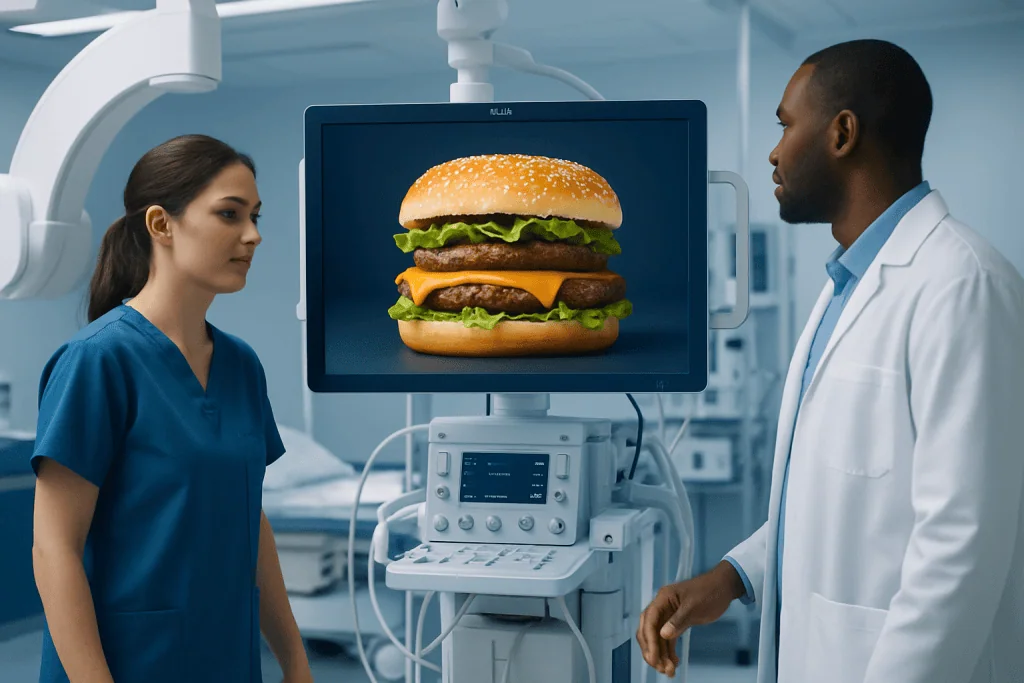
Although exact values can vary slightly by country and formulation, one Big Mac generally contains around 590 calories, about 25 grams of protein, around 34 grams of fat, and roughly 45 to 50 grams of carbohydrates. It also contains a meaningful amount of sodium and saturated fat. The protein may help with fullness, but the sandwich is not considered a lean or low-sodium meal.
Its carbohydrate content comes mainly from the bun and sauce, which are relatively refined sources. For people tracking carbohydrate intake, this may be relevant, especially when the sandwich is part of a larger meal that includes fries or sweetened beverages. The fiber content is usually modest, so it may not be as satisfying as a meal with whole grains, beans, vegetables, or fruit.
A Big Mac also contains calcium and iron from the cheese and beef, but these do not outweigh the broader dietary considerations. Looking at single nutrients in isolation can be misleading. A meal is better judged by its whole nutritional pattern, including calorie density, sodium, saturated fat, and how often it appears in the diet.
- Calories: about 590
- Protein: about 25 g
- Fat: about 34 g
- Carbohydrates: about 46 g
- Sodium: high for a single sandwich
- Saturated fat: significant for one meal item
Possible Benefits and What Evidence Does Not Support

The main benefit of a Big Mac is simple practicality: it is convenient, widely available, and provides calories and protein quickly. For someone needing a meal while traveling or during a busy day, convenience can make regular eating easier. In some situations, having access to predictable food may help avoid skipping meals and then overeating later.
However, clinical evidence does not support viewing a Big Mac as a health food, a weight-loss food, or a food with special protective effects for the heart, metabolism, or digestion. It does not have established medical benefits beyond basic nourishment. Claims that a burger meal can improve health because it contains protein, lettuce, or beef are not supported when the food is evaluated as a whole dietary item.
It is also important not to confuse “can fit into a balanced diet” with “is good for health in any amount.” Many foods can be included occasionally without being harmful on their own, yet still be less ideal than more nutrient-dense options. For patients trying to improve diet quality, foods rich in vegetables, legumes, whole grains, unsalted nuts, fish, and minimally processed proteins generally have much stronger evidence behind them.
Risks, Side Effects, and Who Should Be More Careful
For healthy adults, eating a Big Mac occasionally is unlikely to cause immediate harm. The main concerns relate to long-term dietary patterns rather than a single sandwich. Frequent consumption of calorie-dense, high-sodium, highly processed fast food may contribute to excess calorie intake, weight gain, elevated blood pressure, unfavorable cholesterol patterns, and poorer overall diet quality.
Some people should be more cautious. Those with high blood pressure may need to pay close attention to sodium intake. People living with diabetes may need to consider how the bun, sauce, and meal combination affect blood sugar, especially if combined with fries and sweetened drinks. Individuals with elevated cholesterol, coronary artery disease, heart failure, or chronic kidney disease may also need stricter limits because of saturated fat and sodium.
Short-term side effects are usually digestive or related to fullness. Some people notice bloating, thirst, heartburn, or a heavy feeling after eating a large fast-food meal. Those with reflux or indigestion may find that high-fat meals worsen symptoms. For people already being assessed for obesity, frequent intake of energy-dense fast food can make weight management more difficult.
People with food allergies or intolerances also need to review ingredients carefully. A Big Mac contains common allergens such as wheat, sesame, milk, and possibly soy, depending on local ingredients. It is not suitable for people who avoid beef for medical, religious, or personal reasons.
How to Use It More Safely in a Balanced Diet
Safe use means treating a Big Mac as an occasional meal choice, not a daily staple. The sandwich itself is only one part of the calorie total; many health concerns come from the full meal pattern. Choosing water instead of a sugary drink and skipping or sharing fries can make a large difference in total calories, added sugar, sodium, and fullness afterward.
Portion awareness is especially helpful. Some people may choose to eat the sandwich on its own and pair the rest of the day with lighter, more nutrient-dense foods such as vegetables, fruit, yogurt, legumes, or grilled protein. Others may prefer to balance restaurant meals across the week rather than focus on one food in isolation. This approach can reduce all-or-nothing thinking, which is often unhelpful in nutrition counseling.
Patients with medical conditions may benefit from structured nutrition support. A registered dietitian or physician can help place fast-food choices into an eating plan that matches goals for weight, blood sugar, cholesterol, or blood pressure. In some cases, broader evaluation through a preventive health check-up or diet and nutrition counseling may be useful.
- Choose water, unsweetened tea, or another non-sugary drink.
- Consider skipping fries or choosing a smaller side.
- Avoid making it a frequent routine meal.
- Balance the rest of the day with lower-sodium, higher-fiber foods.
- Read nutrition information if managing a chronic condition.
Consumption Context: Weight, Heart Health, and Diabetes
Whether Big Mac calories are “too much” depends on the person’s age, body size, activity level, and health status. For a smaller or less active adult, 590 calories may represent a large share of one day’s energy needs. For a highly active person, it may fit more easily, though sodium and saturated fat still remain relevant considerations.
For weight management, the key issue is total energy balance over time. A Big Mac does not directly cause weight gain on its own, but repeated intake of high-calorie fast food can make it easier to exceed daily calorie needs. People exploring medical support for weight-related concerns may discuss options such as obesity treatment and bariatric care when appropriate, though food choices remain important regardless of treatment pathway.
For heart health, the combination of sodium and saturated fat deserves attention. Patients with high blood pressure, heart disease, or fluid-retaining conditions may be advised to limit heavily processed restaurant foods more consistently. Those undergoing evaluation in cardiology care are often encouraged to shift toward heart-healthy eating patterns centered on vegetables, fruits, whole grains, legumes, and unsaturated fats.
For diabetes or prediabetes, the sandwich may fit into a meal plan occasionally, but the wider meal matters. Blood sugar effects are likely to be greater when it is eaten with fries, dessert, or sweet drinks. Monitoring portions and discussing individual targets with a clinician is the safest approach.
When to Seek Medical Care
Most concerns related to Big Mac calories do not require urgent medical attention. However, a person should seek medical advice if they regularly rely on fast food and are noticing weight gain, rising blood pressure, worsening cholesterol results, poor blood sugar control, or digestive symptoms after meals. These may be signs that the overall diet pattern needs review in the context of an underlying condition.
Urgent care is appropriate if symptoms suggest a severe allergic reaction after eating, such as difficulty breathing, swelling of the lips or throat, widespread hives, or faintness. Ongoing chest discomfort, severe shortness of breath, or severe abdominal pain should also be assessed promptly, as these symptoms should not be assumed to be simple indigestion.
Near the end of the care pathway, some patients benefit from coordinated support rather than isolated advice. Acibadem International’s multidisciplinary specialists and JCI-accredited hospitals evaluate nutrition-related concerns, metabolic risk factors, and associated conditions for international patients when further assessment is needed.
Frequently asked questions
How many calories are in a Big Mac by itself?
A standard Big Mac contains about 590 calories. Exact values may vary slightly by country or product updates, so checking the current nutrition listing is helpful if precise tracking is important.
Is a Big Mac unhealthy?
A Big Mac is not automatically harmful if eaten occasionally, but it is high in sodium and saturated fat compared with many less processed meals. Whether it is appropriate depends on a person's overall eating pattern, health conditions, and portion choices across the day.
Can a Big Mac fit into a weight-loss diet?
It can fit occasionally if total calorie intake remains within a person's plan. The challenge is that fast-food meals are often less filling per calorie than meals built around vegetables, whole grains, and lean protein, so they may make calorie control harder for some people.
Is the protein in a Big Mac a health benefit?
The sandwich does provide protein, which can support fullness and basic nutrition. However, protein alone does not make it a health-promoting food, because the meal also comes with substantial sodium, saturated fat, and calories.
What makes a Big Mac meal less healthy than just the sandwich?
The meal often includes fries and a sugary drink, which add many more calories, sodium, and sugar. For many people, the side items have a major effect on the overall nutrition of the meal.
Who should limit Big Mac consumption most carefully?
People with high blood pressure, high cholesterol, heart disease, diabetes, kidney disease, or those trying to lose weight often need to be more cautious. Individual guidance from a doctor or dietitian is best when a chronic condition is involved.
This article is for general information only and is not a substitute for professional medical advice. Please consult a qualified doctor about your individual situation.
Medical weight-loss options in Turkey — costs & eligibility
JCI-accredited · board-certified surgeons · reply within 24h
Add us as a Preferred Source to see more of our trusted health content across Google Search, AI Overviews and Discover.
Check your numbers in seconds
BMI, calories, due date, blood pressure and 30+ more clinical calculators — free, instant, doctor-reviewed ranges.

More from the Health Library

Carnosine Supplement: Benefits, Risks, and Safe Use

Q10 Health Supplement: Benefits, Risks, and Safe Use

Liver Health Supplements: Benefits, Risks, and Safe Use

Bok Choy Nutrition: Benefits, Risks, and Safe Use

Chicken Heart Nutrition: Benefits, Risks, and Safe Use