

Bindi Irwin’s Surgeries Helped Her Heal From Debilitating Endometriosis: An Evidence-Based Patient Guide
Endometriosis is a chronic condition in which tissue similar to the uterine lining grows outside the uterus. Laparoscopic surgery can diagnose endometriosis and may remove or treat visible lesions, scar tissue, and some ovarian cysts.
Key Takeaways
- Endometriosis is a chronic condition in which tissue similar to the uterine lining grows outside the uterus.
- Laparoscopic surgery can diagnose endometriosis and may remove or treat visible lesions, scar tissue, and some ovarian cysts.
- Surgery may reduce pain and support fertility for selected patients, but symptoms can return and additional treatment may be needed.
- A specialist evaluation is important when pelvic pain affects daily activities, work, sleep, bowel function, or sexual health.
- Treatment often combines surgery, pain management, hormonal options, pelvic-floor care, and ongoing follow-up.
Bindi Irwin's public experience highlights that surgery can be an important part of care for debilitating endometriosis, particularly when symptoms continue despite medical treatment or when extensive disease is suspected. However, outcomes vary, and the most appropriate plan depends on symptoms, disease location, fertility goals, and personal preferences.
What Bindi Irwin's Experience Can Teach About Endometriosis
Bindi Irwin’s surgeries helped her heal from debilitating endometriosis by addressing endometriosis found during surgery. Her experience has brought welcome attention to a condition that can cause severe pain, fatigue, digestive symptoms, difficulty becoming pregnant, and major disruption to daily life. It is important to remember that her story is personal: no two cases of endometriosis are the same, and surgery is not the right first or only treatment for everyone.
Endometriosis occurs when tissue similar to the lining of the uterus grows in areas outside the uterus, commonly on the ovaries, fallopian tubes, pelvic lining, bowel, bladder, or tissues around the pelvis. These areas can become inflamed and may form scar tissue or adhesions. Learn more about endometriosis and its effects on the body.
There is currently no guaranteed permanent cure for endometriosis. Still, a thoughtful, individualized care plan can substantially improve symptoms and quality of life. For some people, specialist laparoscopic surgery is a valuable option alongside hormonal treatment, pain care, fertility support, and emotional wellbeing support.
Recognizing Symptoms That Deserve Attention
Endometriosis symptoms range from mild to severe. Pain intensity does not reliably show how extensive the condition is: someone with relatively small areas of disease may have disabling pain, while another person with more visible disease may have few symptoms. Symptoms may change over time and can occur throughout the menstrual cycle, not only during periods.
Common symptoms include painful periods that interfere with normal activities, chronic pelvic or lower-back pain, pain during or after sex, pain when passing stool or urine during menstruation, abdominal bloating, nausea, tiredness, and heavy or irregular bleeding. Some people seek assessment because of trouble conceiving, while others have no symptoms and learn of endometriosis during investigations for another concern.
- Severe cramping that does not improve with usual measures
- Pelvic pain that causes missed work, school, social activities, or sleep problems
- Cycle-related bowel symptoms, including pain, diarrhea, constipation, or rectal bleeding
- Urinary discomfort or blood in the urine that occurs around periods
- Painful intercourse or persistent pain afterward
- Difficulty becoming pregnant after regular unprotected intercourse
These symptoms can have causes other than endometriosis, including fibroids, ovarian cysts, pelvic inflammatory disease, irritable bowel syndrome, or bladder conditions. A clinical assessment helps identify the most likely cause and the safest next steps.
How Endometriosis Is Diagnosed
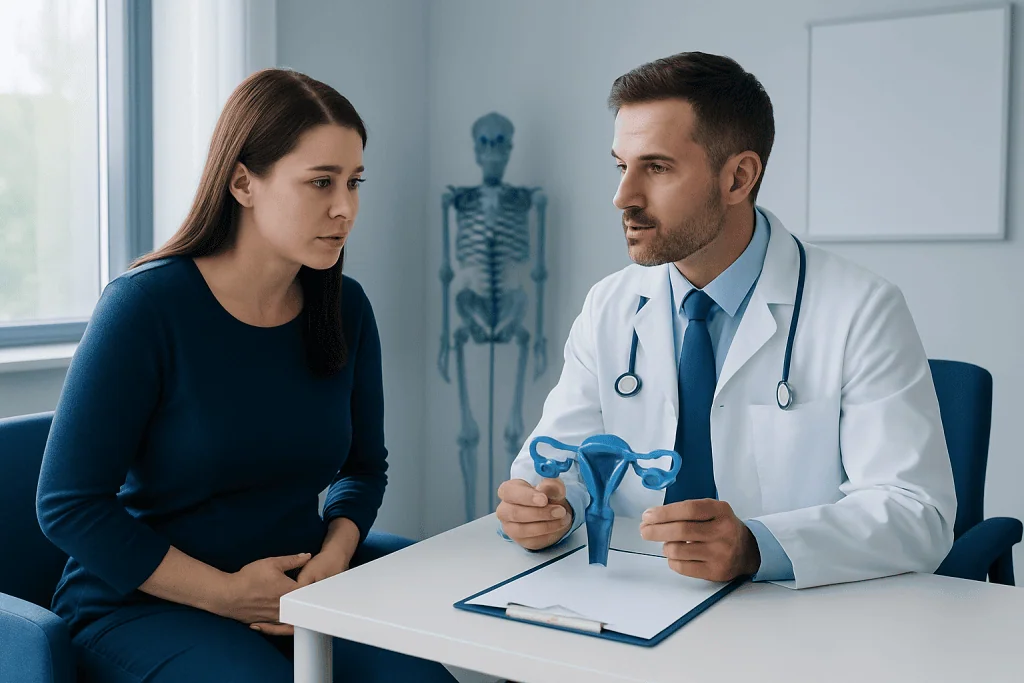
Diagnosis begins with a detailed discussion of symptoms, menstrual history, medical history, medications, fertility plans, and the effect of pain on daily life. A clinician may perform an abdominal and pelvic examination when appropriate and with the patient’s consent. A normal examination does not rule out endometriosis.
Pelvic ultrasound is commonly used to look for ovarian endometriomas, fibroids, or other possible causes of symptoms. Magnetic resonance imaging may be useful when deep endometriosis involving the bowel, bladder, or other pelvic structures is suspected. Imaging can identify some forms of disease but may not show superficial endometriosis.
Laparoscopy is the only way to confirm endometriosis by directly seeing lesions and, when needed, examining a tissue sample under a microscope. However, not every person needs diagnostic surgery immediately. In many cases, clinicians can begin symptom-directed treatment based on symptoms and imaging, reserving surgery for persistent symptoms, uncertain findings, endometriomas, suspected deep disease, fertility concerns, or a need to exclude another condition.
Endometriosis Surgery: How It Works and Who May Benefit
Most endometriosis surgery is performed by laparoscopy, often called keyhole surgery. Under general anesthesia, the surgeon makes small incisions in the abdomen and uses a camera and fine instruments to inspect the pelvis. The aim may be to confirm the diagnosis, remove visible endometriosis lesions, release adhesions, treat ovarian endometriomas, and restore normal pelvic anatomy where possible.
Excision removes endometriosis tissue by cutting it away. Depending on the lesion type and location, surgeons may also use other techniques to treat affected areas. When disease involves the bowel, bladder, ureters, diaphragm, or extensive pelvic structures, surgery may require a multidisciplinary team that includes gynecology, colorectal surgery, urology, and imaging specialists. Detailed planning is especially important for deep endometriosis.
Potential candidates include people with pain that remains significant despite appropriate non-surgical treatment, an endometrioma or adhesions, suspected deep endometriosis, infertility where surgery may improve anatomy, or a diagnosis that remains uncertain. Decisions should also consider whether pregnancy is desired now or later, the likelihood of benefit, prior surgeries, other health conditions, and the person’s own priorities. Endometriosis surgery should be discussed with a gynecologic surgeon experienced in treating the suspected type and location of disease.
Hysterectomy, with or without removal of the ovaries, is not a routine solution for all endometriosis. It may be considered only in selected circumstances, usually when other treatments have not helped and pregnancy is no longer desired. Even then, it may not remove every source of pain, particularly if endometriosis exists outside the uterus.
What Happens During Surgery, Recovery, Benefits and Risks
Before surgery, the care team reviews imaging, symptoms, current medicines, allergies, prior operations, fertility goals, and the possibility that treatment may need to be adjusted based on findings. During laparoscopy, the abdomen is gently inflated with gas to create working space. The surgeon examines the pelvis and may remove lesions, scar tissue, and cysts, while protecting healthy ovarian tissue and nearby organs whenever possible.
Many patients go home on the same day or after a short hospital stay, although more complex operations can require longer monitoring. In the first days, abdominal soreness, tiredness, light vaginal bleeding, and shoulder-tip discomfort from the surgical gas can occur. People are usually encouraged to walk gently soon after surgery, follow wound-care instructions, and increase activity gradually. Return to desk-based work may take around one to two weeks for uncomplicated laparoscopy, while recovery after extensive surgery can take several weeks.
Potential benefits include less pain, improved movement of pelvic organs when adhesions are treated, clearer diagnosis, and in some circumstances improved chances of natural conception. Benefits are not assured, and pain can have more than one cause. Hormonal treatment after surgery may be recommended for people who are not trying to conceive, as it can help reduce the chance of symptom or disease recurrence.
All operations carry risks. These include bleeding, infection, blood clots, anesthesia reactions, injury to the bowel, bladder, ureters, blood vessels, or nerves, adhesions, ovarian reserve concerns after ovarian surgery, and the possibility of persistent or recurring symptoms. The likelihood depends on the extent and location of disease and the procedure performed. A specialist team should explain individual risks and alternatives before consent.
A Long-Term Treatment Plan Beyond Surgery
Endometriosis care is often most effective when it is long-term and multidisciplinary. For people who do not wish to become pregnant immediately, hormonal therapies may reduce menstrual bleeding and suppress the hormonal stimulation that can worsen symptoms. Options may include combined hormonal contraception, progestin-based treatments, or other medicines prescribed after a careful discussion of benefits, side effects, and medical suitability.
Pain management may include non-prescription or prescription medicines, but medication should be individualized and reviewed with a clinician, particularly if pain is frequent or severe. Pelvic-floor physiotherapy can help some people with pelvic muscle tension, painful intercourse, and chronic pain patterns. Nutrition, gentle exercise, sleep support, and mental health care may also help people cope with symptoms, although they do not replace medical treatment.
For those hoping to conceive, treatment should be coordinated with a gynecologist and, when appropriate, a fertility specialist. Surgery may be useful in selected cases, but repeated ovarian surgery can affect ovarian reserve. Fertility planning should therefore be personalized, including discussion of timing, ovarian reserve testing where relevant, and assisted reproductive options when indicated.
Acibadem International’s multidisciplinary specialists and JCI-accredited hospitals diagnose and treat endometriosis for international patients, including complex cases requiring coordinated gynecologic, fertility, bowel, urinary, and pain-care expertise.
When to Seek Medical Care
Medical assessment is appropriate when period pain or pelvic pain is affecting everyday life, becoming more severe, not responding to usual measures, or occurring with bowel, bladder, or sexual symptoms. It is also sensible to seek advice when trying to conceive without success, especially when pelvic pain, painful periods, or a known history of endometriosis is present.
Urgent medical care is needed for sudden severe pelvic or abdominal pain, fainting, fever with pelvic pain, heavy bleeding, persistent vomiting, or a positive pregnancy test with pain or bleeding. These symptoms can be associated with conditions that need prompt assessment, such as ovarian cyst complications, infection, appendicitis, or ectopic pregnancy.
Preparing a symptom diary can make appointments more productive. Recording cycle dates, pain location and severity, bleeding patterns, bowel or bladder symptoms, medicines tried, and the impact on daily activities gives the clinician useful information. Patients can also ask whether referral to an endometriosis-focused gynecologist or multidisciplinary service would be helpful.
Frequently asked questions
Did Bindi Irwin's surgeries cure her endometriosis?
Her public account describes meaningful healing after surgery, but individual outcomes cannot be generalized. Endometriosis is considered a chronic condition, and surgery can remove or treat visible disease but cannot guarantee that symptoms will never return. Ongoing follow-up and, for some people, additional medical treatment remain important.
What type of surgery is usually used for endometriosis?
Laparoscopy is the most common approach. It uses small abdominal incisions, a camera, and specialized instruments to inspect the pelvis and treat lesions, adhesions, or ovarian endometriomas when appropriate. More extensive procedures may be needed for deep disease involving organs such as the bowel or bladder.
Can endometriosis be diagnosed without surgery?
A clinician may make a working diagnosis based on symptoms, examination, and imaging such as ultrasound or MRI. These tests can identify some types of endometriosis and rule out other conditions, but they may miss superficial lesions. Laparoscopy is used when direct confirmation or surgical treatment is needed.
How long does it take to recover from laparoscopic endometriosis surgery?
Recovery varies with the extent of surgery and the person’s overall health. After uncomplicated laparoscopy, many people resume lighter routines within one to two weeks, while complete recovery can take longer. Complex surgery involving deeper disease or other organs may require several weeks or more.
Can endometriosis return after surgery?
Yes. New lesions or recurrent symptoms can occur after surgery, particularly over time. If pregnancy is not currently desired, hormonal treatment after surgery may be recommended to reduce recurrence risk, but the best plan depends on personal health needs and treatment goals.
Does endometriosis surgery improve fertility?
Surgery may improve fertility for some people by removing endometriosis, releasing adhesions, or improving pelvic anatomy. Its benefit depends on age, ovarian reserve, disease severity, partner factors, and how long pregnancy has been attempted. A gynecologist or fertility specialist can help weigh surgery against other fertility options.
References
- World Health Organization
- American College of Obstetricians and Gynecologists
- European Society of Human Reproduction and Embryology
- National Institute for Health and Care Excellence
- Mayo Clinic
This article is for general information only and is not a substitute for professional medical advice. Please consult a qualified doctor about your individual situation.
Endometriosis in Turkey — costs, top hospitals & a free quote
JCI-accredited · board-certified surgeons · reply within 24h
Add us as a Preferred Source to see more of our trusted health content across Google Search, AI Overviews and Discover.

Gynecology & Obstetrics
Women’s health across pregnancy, gynecologic surgery and high-risk pregnancy care.
186 specialists in this unitMore from the Health Library


Related Specialists

Dr. Deniz Usal
Gynecology & Obstetrics
Dr. Teoman Şen
Pediatric Surgery
Prof. Dr. Süda Tekin
Infectious Diseases & Clinical Microbiology
Dr. Meliha Kovancı Bayraktaroğlu
Gynecology & Obstetrics