

Blood Pressure 116/80: Is It Normal? What This Reading Means for Your Health

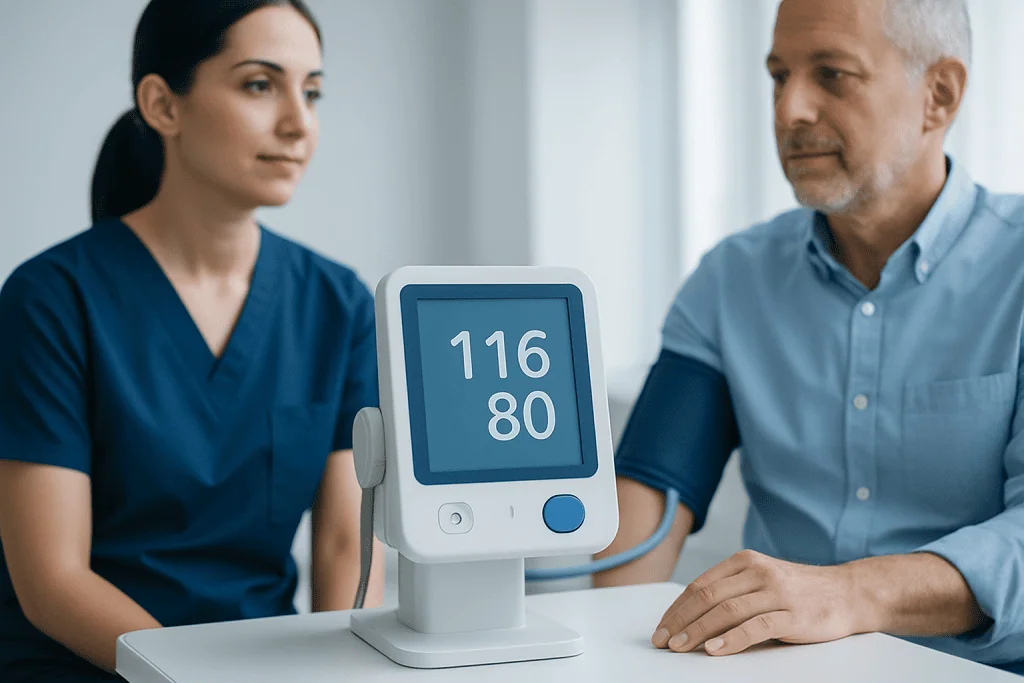
A blood pressure reading of 116/80 mmHg is usually within the normal range for adults. The top number (systolic) is clearly normal, and the bottom number (diastolic) is at the upper end of normal rather than high.
Key Takeaways
- A blood pressure reading of 116/80 mmHg is usually within the normal range for adults.
- The top number (systolic) is clearly normal, and the bottom number (diastolic) is at the upper end of normal rather than high.
- One reading alone does not diagnose a problem; trends over time are more useful than a single measurement.
- Proper measuring technique matters because stress, caffeine, movement, and cuff size can affect the result.
- Healthy habits such as regular exercise, balanced eating, good sleep, and stress management help maintain normal blood pressure.
- Medical advice is important if readings become repeatedly elevated, symptoms appear, or there are major heart risk factors.
A 116/80 blood pressure reading is generally considered normal for most adults. It usually suggests healthy circulation, but the meaning can still depend on age, overall health, symptoms, and whether the reading is consistent over time.
Overview: Is 116/80 blood pressure normal?
Yes—116/80 blood pressure is generally considered normal for most adults. The systolic pressure, which is the top number, is 116 and sits well within the healthy range. The diastolic pressure, the bottom number, is 80, which is commonly still viewed as normal in everyday practice, although some guideline frameworks use a stricter threshold and monitor readings at or above this level more closely.
Blood pressure is written as two numbers because it reflects pressure in the arteries at two points in the heartbeat cycle. The first number measures pressure when the heart contracts, and the second measures pressure when the heart relaxes between beats. Together, these numbers help show how hard the heart and blood vessels are working.
A reading of 116/80 usually does not suggest disease by itself. In fact, for many people it is a reassuring result. What matters most is whether the reading is typical over time, whether symptoms are present, and whether there are other cardiovascular risk factors such as diabetes, kidney disease, smoking, obesity, or a family history of high blood pressure.
How blood pressure readings are classified
Blood pressure categories help put a single reading into context. The American Heart Association commonly classifies blood pressure in adults using both the systolic and diastolic values, with the higher category determining the overall result.
The following table shows the usual adult categories:
- Normal: less than 120 systolic and less than 80 diastolic
- Elevated: 120–129 systolic and less than 80 diastolic
- High blood pressure, stage 1: 130–139 systolic or 80–89 diastolic
- High blood pressure, stage 2: 140 or higher systolic or 90 or higher diastolic
- Hypertensive crisis: higher than 180 systolic and/or higher than 120 diastolic
Because the bottom number in 116/80 is exactly 80, some clinicians may note that it sits right at a decision threshold used in certain modern guidelines. Even so, a single 116/80 reading without symptoms is not usually a cause for concern. Doctors typically look for repeated readings, home measurements, and the person’s overall risk profile before labeling blood pressure as abnormal.
This is one reason a blood pressure reading should not be interpreted in isolation. It is best understood as part of a pattern rather than a one-time number.
What 116/80 can mean at different ages

For most healthy adults, 116/80 is a favorable reading. In younger adults, it often reflects efficient heart function and flexible blood vessels. In middle-aged and older adults, it may be especially encouraging because blood pressure tends to rise gradually with age as arteries become less elastic.
Age can still influence how a doctor interprets the result. An older adult with dizziness, faintness, dehydration, or medications that lower blood pressure may need a broader assessment, even if 116/80 looks normal on paper. On the other hand, a young person with obesity, a strong family history of cardiovascular disease, or borderline home readings may benefit from regular monitoring despite this reassuring result.
For children and teenagers, blood pressure is interpreted differently. Pediatric blood pressure norms depend on age, sex, and height rather than a simple adult cut-off. Because of that, 116/80 may be normal for some adolescents but higher than expected for some younger children. A pediatrician can interpret the reading correctly when needed.
During pregnancy, blood pressure deserves special attention. While 116/80 is often normal in pregnancy, any concerning symptoms such as swelling, severe headache, vision changes, or upper abdominal pain should be assessed promptly because blood pressure patterns can change and may be linked to pregnancy-related complications.
When a 116/80 reading may still deserve attention
Although 116/80 is usually normal, context matters. A reading can still deserve follow-up if it differs sharply from a person’s usual blood pressure, especially if they normally run much lower or if they have symptoms such as dizziness, chest discomfort, shortness of breath, severe headache, or fainting.
It may also be worth discussing with a doctor if the reading is part of a pattern trending upward over weeks or months. For example, someone whose readings were previously around 105/70 and are now often near 116/80, 122/80, or higher may want to review lifestyle factors and cardiovascular risk. Repeated measurements are far more informative than a single isolated value.
People with certain medical conditions may need a more individualized interpretation. Those living with kidney disease, diabetes, prior stroke, or known heart disease often receive more tailored blood pressure targets. In these cases, clinicians may recommend further evaluation, home monitoring, or tests such as cardiac check-up or preventive check-up depending on the wider clinical picture.
Blood pressure should also be assessed alongside related concerns such as cholesterol, body weight, physical activity, sleep quality, and smoking status. A normal blood pressure number is positive, but it is only one part of cardiovascular health. In some patients, doctors may also look for related conditions such as arrhythmia or structural heart problems if symptoms suggest a broader issue.
How to measure blood pressure accurately
Technique can make a meaningful difference. Blood pressure may rise temporarily with stress, recent exercise, caffeine, nicotine, pain, a full bladder, or even talking during the measurement. For that reason, an occasional reading that seems unusual should usually be repeated under calmer, standardized conditions.
For a more accurate home measurement, it helps to sit quietly for about five minutes first. The back should be supported, feet flat on the floor, and the arm should rest at heart level. The cuff should fit properly, and clothing should not be bunched underneath it. It is also best to avoid caffeine, smoking, and exercise for at least 30 minutes beforehand when possible.
Taking two readings one minute apart and recording both can be helpful. Many clinicians advise measuring at the same times each day for several days, especially if there is concern about rising blood pressure or a possible diagnosis of hypertension. Home monitoring can reduce the effect of temporary anxiety sometimes seen in clinics.
If readings are unexpectedly high or low, the device itself may need checking. Validated upper-arm monitors are generally preferred over finger or wrist devices. A healthcare professional can compare the home monitor with a clinic reading and confirm that the method is correct.
Lifestyle habits that support healthy blood pressure
A reading of 116/80 is often a good sign, and healthy habits can help keep it that way. Blood pressure is influenced by everyday patterns, including food choices, movement, sleep, stress, and alcohol or tobacco use. Even people with normal readings benefit from prevention-focused habits because vascular health changes gradually over time.
Helpful steps often include:
- Eating a balanced diet rich in vegetables, fruits, legumes, whole grains, and lean proteins
- Limiting excess salt, highly processed foods, and added sugars
- Staying physically active with regular aerobic exercise and strength work as appropriate
- Maintaining a healthy weight
- Getting enough sleep and seeking care for snoring or suspected sleep apnea
- Managing stress with sustainable techniques such as walking, breathing exercises, or mindfulness
- Avoiding smoking and limiting alcohol
These strategies help more than blood pressure alone. They also support healthy cholesterol, blood sugar balance, and long-term heart and vessel function. If lifestyle changes are being started because numbers are drifting upward, a doctor may recommend structured follow-up or evaluation in a cardiology setting.
Near the end of the care pathway, some international patients may choose centers with coordinated cardiovascular services. Acibadem International’s multidisciplinary specialists and JCI-accredited hospitals diagnose and treat heart and vascular conditions for international patients when further assessment is needed.
When to seek medical care
A routine reading of 116/80 usually does not require urgent attention. However, medical advice is sensible if blood pressure readings become repeatedly elevated over time, if the number changes significantly from a person’s usual pattern, or if there are major risk factors such as diabetes, kidney disease, or known cardiovascular disease.
Prompt evaluation is important if any blood pressure reading is accompanied by symptoms such as chest pain, shortness of breath, severe headache, weakness on one side, confusion, fainting, or vision changes. These symptoms do not necessarily mean a blood pressure emergency, but they should not be ignored.
Urgent care is also recommended if repeated readings are very high, especially if they are above 180 systolic or above 120 diastolic. This is particularly important when symptoms are present. A healthcare professional can determine whether immediate treatment or further testing is needed.
For most people, the best next step after a normal reading like 116/80 is simple: keep tracking health over time, measure correctly, and review any concerns with a qualified doctor during regular preventive care.
Frequently asked questions
Is 116/80 a good blood pressure reading?
Yes, 116/80 is generally a good blood pressure reading for most adults. It usually falls within the normal range and often reflects healthy circulation. The result is most meaningful when it is consistent over time and considered together with symptoms and overall health.
Why does my blood pressure change from one reading to another?
Blood pressure naturally changes throughout the day. Stress, activity, caffeine, pain, talking, temperature, and even body position can affect the reading. This is why doctors rely more on repeated measurements than on a single number.
Is 116/80 normal for older adults?
In many older adults, 116/80 is still considered a normal and reassuring reading. However, the interpretation may depend on symptoms, medications, hydration, and other medical conditions. An older person who feels dizzy or faint should discuss the result with a doctor even if the number appears normal.
Should I worry if the bottom number is 80?
Usually, no. A diastolic pressure of 80 on a reading of 116/80 is often still acceptable, especially when the systolic number is normal and the reading is isolated. If the bottom number is repeatedly 80 or higher over time, a clinician may suggest monitoring trends more closely.
How often should blood pressure be checked if it is 116/80?
For many healthy adults, blood pressure can be checked during routine medical visits. More frequent checks may be helpful if there is a family history of hypertension, pregnancy, kidney disease, diabetes, or changing home readings. A doctor can recommend the most appropriate schedule.
Can anxiety affect a 116/80 blood pressure reading?
Yes, anxiety can temporarily raise blood pressure or make it fluctuate. Some people have higher readings in medical settings than they do at home, a pattern sometimes called white coat hypertension. Home monitoring with good technique can help provide a clearer picture.
References
- American Heart Association
- Centers for Disease Control and Prevention
- National Heart, Lung, and Blood Institute
- European Society of Cardiology
- World Health Organization
This article is for general information only and is not a substitute for professional medical advice. Please consult a qualified doctor about your individual situation.
Explore treatments in Turkey — costs, top hospitals & a free quote
JCI-accredited · board-certified surgeons · reply within 24h
Add us as a Preferred Source to see more of our trusted health content across Google Search, AI Overviews and Discover.
Check your numbers in seconds
BMI, calories, due date, blood pressure and 30+ more clinical calculators — free, instant, doctor-reviewed ranges.

More from the Health Library



Related Specialists

Prof. Dr. İsmail Çepni
Gynecology & Obstetrics
Dr. Metin Bayramoğlu
Emergency Service
Assoc. Prof. Dr. Lütfiye Uygur
Gynecology & Obstetrics
Dr. Nargiz Ibrahimli
Aesthetic Plastic & Reconstructive Surgery