Brain Parts and Functions: A Visual Guide for Patients
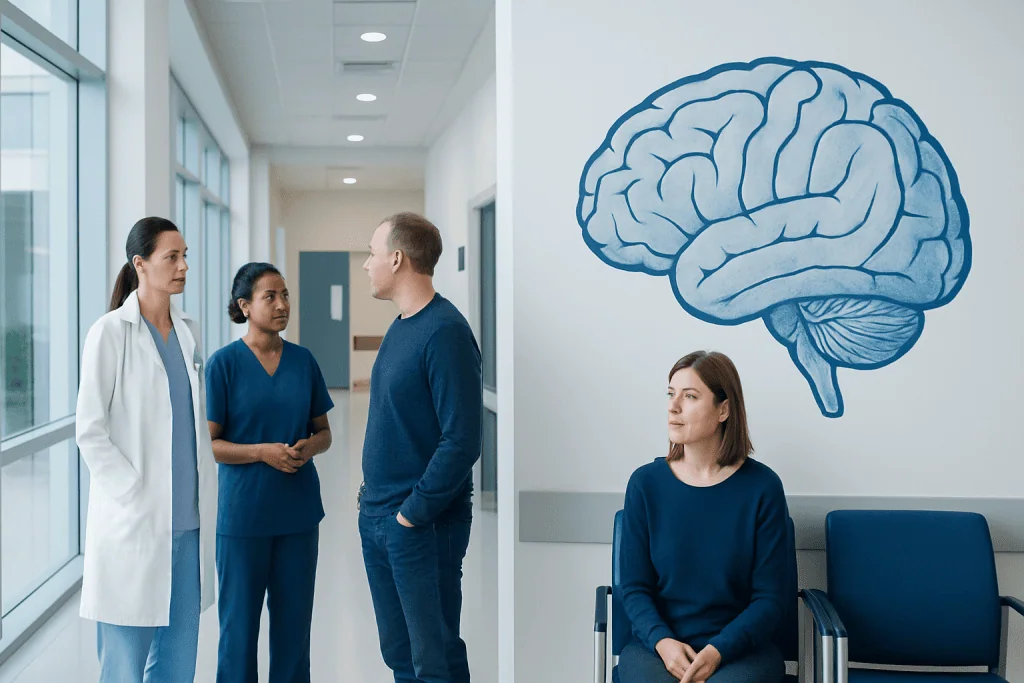
Different brain regions have different jobs, but they work together continuously. The cerebrum, cerebellum, and brainstem are the three main structural divisions of the brain.
Key Takeaways
- Different brain regions have different jobs, but they work together continuously.
- The cerebrum, cerebellum, and brainstem are the three main structural divisions of the brain.
- The left and right hemispheres each contribute to language, movement, sensation, and higher thinking.
- Symptoms often depend on which brain area is affected by injury or disease.
- Imaging tests and neurological examinations help doctors relate symptoms to specific brain regions.
The brain is the body’s control center, coordinating movement, thoughts, emotions, memory, and automatic functions such as breathing. Understanding the main brain parts and functions can help patients make sense of symptoms, tests, and treatment discussions.
Overview: What the Brain Does
The brain is a highly organized organ that receives information from the body, interprets it, and sends signals back out. It helps a person move, speak, feel, remember, learn, make decisions, and regulate emotions. At the same time, it controls automatic functions that usually happen without conscious effort, such as breathing, heart rate, sleep cycles, and swallowing.
Although many people think of the brain as a single structure, it is made up of specialized regions with distinct roles. These regions communicate through networks of nerve cells and pathways. Because of this teamwork, even simple actions such as reading a sentence, picking up a cup, or recognizing a familiar face involve several brain areas working together.
Understanding brain parts and functions can make medical information easier to follow. It may help patients understand why a symptom such as weakness, dizziness, memory change, or difficulty speaking can point to one area of the brain more than another. It can also make imaging reports and neurological exams feel less confusing.
The Main Parts of the Brain
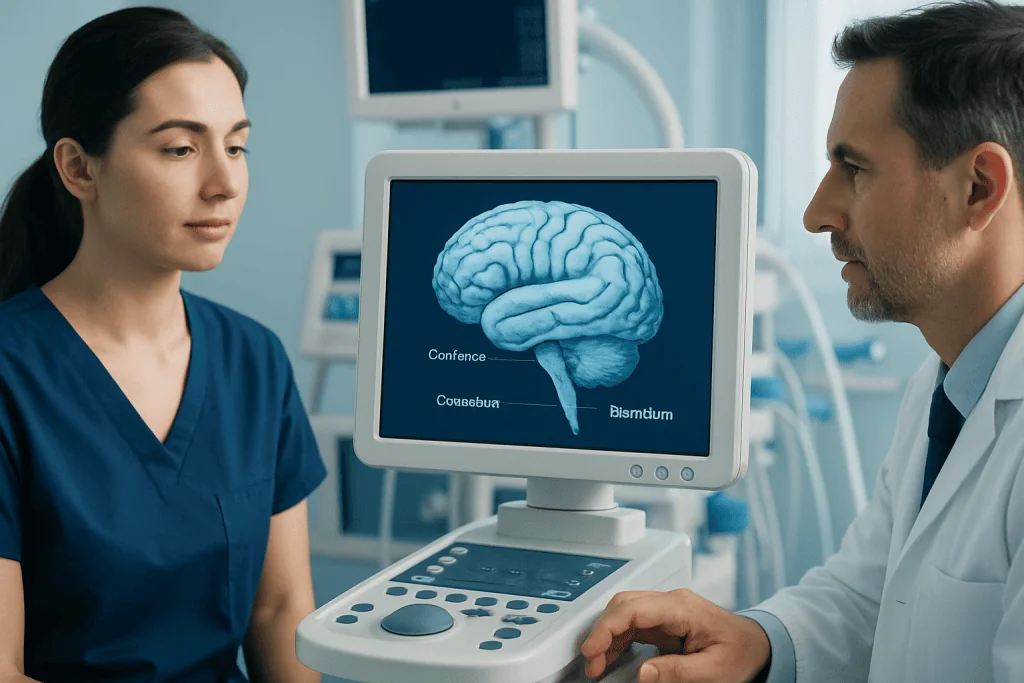
Doctors often describe the brain in three main sections: the cerebrum, the cerebellum, and the brainstem. Each section has broad responsibilities, and each also contains smaller structures with more specific jobs. In everyday medical conversations, these divisions offer a practical way to explain symptoms and test results.
The cerebrum is the largest part of the brain. It is responsible for many higher functions, including conscious thought, language, voluntary movement, sensation, memory, and problem-solving. It is divided into a right and left hemisphere, and each hemisphere contains four major lobes: frontal, parietal, temporal, and occipital.
The cerebellum sits toward the back and lower part of the brain. It helps coordinate movement, balance, posture, and motor learning. The brainstem connects the brain to the spinal cord and helps control essential life-sustaining functions such as breathing, blood pressure, alertness, and swallowing.
- Cerebrum: thinking, memory, language, sensation, voluntary movement
- Cerebellum: balance, coordination, precision of movement
- Brainstem: breathing, heart function, wakefulness, basic reflexes
The Cerebral Lobes and Their Functions
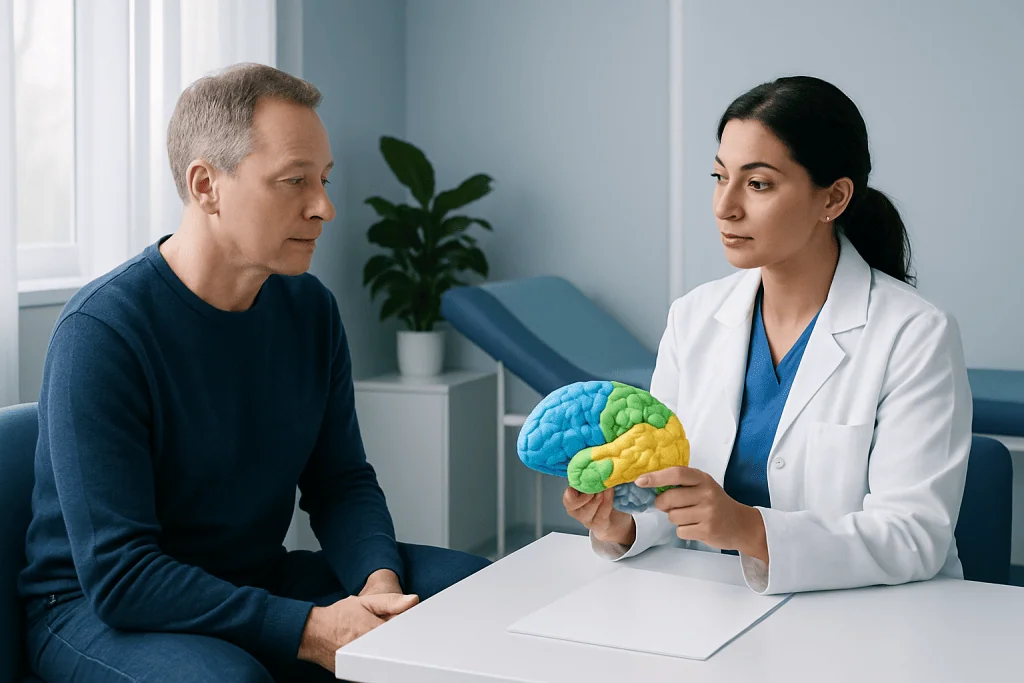
The frontal lobe is located at the front of the brain and plays a major role in planning, judgment, attention, behavior, personality, and voluntary movement. It also contains important language areas, especially in the dominant hemisphere, which is usually the left side. When the frontal lobe is affected, a person may notice weakness, difficulty organizing tasks, changes in behavior, or trouble expressing speech.
The parietal lobe helps process touch, temperature, pain, body position, and spatial awareness. It allows the brain to understand where the body is in space and helps a person interact safely with the environment. Problems in this area can lead to numbness, difficulty recognizing objects by touch, or trouble judging distance and orientation.
The temporal lobe is involved in hearing, language understanding, memory, and aspects of emotion. It helps a person recognize sounds, understand spoken words, and form certain memories. Disturbance in the temporal lobe may contribute to memory changes, language comprehension problems, or unusual sensory experiences.
The occipital lobe, at the back of the brain, is the main center for vision. It receives and interprets information from the eyes, allowing a person to recognize shapes, colors, and motion. Conditions affecting this region can cause visual field loss or difficulty processing what is seen, even when the eyes themselves are healthy.
Other Important Brain Structures
Several deeper brain structures are also important for day-to-day function. The thalamus acts like a relay center, helping send sensory and motor signals to the correct areas of the cerebral cortex. The hypothalamus helps regulate body temperature, hunger, thirst, sleep, hormone balance, and stress responses. These structures are small, but they are central to the body’s internal stability.
The hippocampus, located within the temporal lobe, is essential for forming new memories and helping with learning. The amygdala is involved in emotional processing, especially fear and threat recognition. The basal ganglia are a group of structures that help start and smooth movement. When they do not function normally, movement may become slow, stiff, shaky, or poorly coordinated, as seen in conditions such as Parkinson’s disease.
The cerebellum deserves special attention because it fine-tunes movement rather than initiating it. It helps with balance, posture, eye movements, and the smooth timing of muscle activity. Injury or disease in the cerebellum may cause unsteady walking, clumsiness, tremor during movement, or difficulty with precise tasks.
The brainstem includes the midbrain, pons, and medulla. It helps control breathing, blood pressure, heart rate, swallowing, and alertness. Because so many vital pathways pass through the brainstem, problems in this area can cause a wide range of symptoms, from dizziness and double vision to weakness, swallowing difficulty, or changes in consciousness.
How the Brain’s Left and Right Sides Work
The brain is divided into left and right hemispheres, connected by a thick bundle of nerve fibers called the corpus callosum. These connections allow information to move quickly between the two sides. Although each hemisphere has some specialization, they normally work together rather than separately.
In most people, the left hemisphere is more involved in language, including speaking, reading, and writing. The right hemisphere often contributes more to visual-spatial skills, facial recognition, attention to surroundings, and aspects of emotional expression. However, these patterns can vary from person to person, especially in left-handed individuals.
Another important concept is that each hemisphere generally controls the opposite side of the body. A problem on the right side of the brain may affect movement or sensation on the left side of the body, and the reverse is also true. This is one reason why doctors ask detailed questions about weakness, numbness, vision changes, and speech symptoms during a neurological assessment.
Why Symptoms Depend on Brain Location
When a brain problem develops, the symptoms often reflect the area involved. For example, an issue in the frontal lobe may lead to weakness or changes in planning and behavior, while a problem in the occipital lobe may mainly affect vision. Temporal lobe disturbances may influence memory or language understanding, and cerebellar problems often cause balance difficulties.
This location-based pattern helps doctors evaluate possible causes. Sudden symptoms may raise concern for emergencies such as stroke, while slowly developing changes may point toward other neurological conditions, inflammation, infection, or growths such as brain tumors. A person’s age, medical history, symptom timing, and examination findings all help place the symptoms in context.
Even so, symptoms do not always follow a perfect pattern. The brain works through networks, and one area can affect another through connected pathways. Swelling, bleeding, pressure, or seizures may also produce symptoms that involve more than one function. That is why diagnosis should always be made by a qualified clinician rather than by symptom location alone.
How Doctors Evaluate Brain Function
Doctors usually begin with a medical history and neurological examination. They ask about the onset of symptoms, whether symptoms are getting worse, and whether there are associated features such as headache, fever, fainting, confusion, weakness, numbness, speech trouble, or vision changes. The neurological exam may assess strength, coordination, reflexes, balance, sensation, eye movements, memory, language, and alertness.
Imaging tests often help show the brain’s structure in more detail. A CT scan may be used quickly in emergencies, especially if bleeding is a concern. MRI provides more detailed images of brain tissue and is often used to evaluate strokes, inflammation, tumors, multiple sclerosis, and other neurological disorders. In some situations, doctors may also recommend tests such as EEG for seizure activity or blood tests to look for infection, inflammation, or metabolic causes.
When symptoms suggest a structural problem or a condition needing specialist care, treatment planning may involve neurologists, neurosurgeons, radiologists, rehabilitation experts, and other clinicians. Depending on the situation, a patient may need an MRI scan for detailed imaging, neurology evaluation for symptom assessment, or neurosurgical care if a surgical condition is found.
Protecting Brain Health and Knowing When to Seek Help
Many aspects of brain health are supported by general healthy habits. Regular physical activity, good sleep, social engagement, mentally stimulating activities, and a balanced diet all support overall neurological well-being. Managing blood pressure, blood sugar, and cholesterol is also important because vascular health strongly affects the brain. Avoiding smoking, limiting excess alcohol, and using seat belts and helmets can help reduce risks to the brain.
People should seek prompt medical advice for new or unexplained neurological symptoms. Urgent care is especially important for sudden weakness, facial drooping, speech difficulty, severe confusion, seizure, sudden severe headache, loss of consciousness, or sudden vision loss. These symptoms can sometimes signal a time-sensitive emergency and should not be ignored.
For non-emergency but persistent concerns, such as memory changes, ongoing headaches, tremor, dizziness, numbness, balance problems, or changes in behavior, a medical assessment can help identify the cause and guide treatment. When advanced evaluation is needed, Acibadem International’s multidisciplinary specialists and JCI-accredited hospitals diagnose and treat brain and nervous system conditions for international patients.
Learning the basics of brain parts and functions can help patients ask clearer questions and take an active role in care. While educational information is helpful, it does not replace professional evaluation. Any symptom that is sudden, severe, progressive, or worrying deserves review by a qualified doctor.
Frequently asked questions
What are the main parts of the brain?
The main parts are the cerebrum, cerebellum, and brainstem. The cerebrum handles thinking, sensation, language, and voluntary movement, the cerebellum coordinates balance and movement, and the brainstem controls vital automatic functions such as breathing and alertness.
Which part of the brain controls memory?
Memory involves several brain areas, but the hippocampus is especially important for forming new memories. Other regions, including parts of the frontal and temporal lobes, also help store, organize, and retrieve information.
Does the left side of the brain control the right side of the body?
In general, yes. The left hemisphere usually controls movement and sensation on the right side of the body, and the right hemisphere usually controls the left side. This crossing pattern helps doctors relate symptoms to a possible brain location.
What part of the brain controls speech?
Speech involves more than one area, most often in the dominant hemisphere, which is usually the left side. Some regions help produce speech, while others help a person understand spoken and written language.
Can symptoms show which part of the brain is affected?
Sometimes they can. For example, balance problems may suggest cerebellar involvement, while speech difficulty may point to language areas of the cerebrum. However, symptoms can overlap, so a medical evaluation is needed for an accurate diagnosis.
When should someone seek urgent care for brain-related symptoms?
Urgent care is important for sudden weakness, facial drooping, speech trouble, seizure, severe confusion, sudden vision loss, or a sudden severe headache. These symptoms may signal an emergency and should be assessed quickly.
References
- World Health Organization
- National Institute of Neurological Disorders and Stroke
- MedlinePlus
- Mayo Clinic
- Cleveland Clinic
This article is for general information only and is not a substitute for professional medical advice. Please consult a qualified doctor about your individual situation.
Heart care in Turkey — expert evaluation and treatment
JCI-accredited · board-certified surgeons · reply within 24h
Add us as a Preferred Source to see more of our trusted health content across Google Search, AI Overviews and Discover.
Check your numbers in seconds
BMI, calories, due date, blood pressure and 30+ more clinical calculators — free, instant, doctor-reviewed ranges.