Buttock Bruising — Explained by Medical Evidence, Not Myths

Buttock bruising usually results from broken small blood vessels under the skin after minor trauma. Color changes from red or purple to green, yellow, and brown are a normal part of healing.
Key Takeaways
- Buttock bruising usually results from broken small blood vessels under the skin after minor trauma.
- Color changes from red or purple to green, yellow, and brown are a normal part of healing.
- Most simple bruises improve within days to a few weeks with rest, cold packs, and avoiding pressure.
- Medical care is important if bruising is severe, keeps recurring, follows a major injury, or comes with numbness, trouble walking, or signs of infection.
- People who take blood thinners or have bleeding disorders may bruise more easily and may need earlier evaluation.
Buttock bruising is most often a soft-tissue injury caused by a fall, bump, pressure, or exercise strain that leads to bleeding under the skin. In many cases it improves with time and simple home care, but persistent pain, large swelling, weakness, or repeated unexplained bruises should be assessed by a doctor.
Overview: what buttock bruising usually means
Buttock bruising usually means that small blood vessels in the skin, fat, or muscle have been damaged, allowing a small amount of blood to collect under the surface. This often happens after a fall, collision, pressure from sitting on a hard surface for a long time, sports activity, or intense exercise. The result may be a tender, discolored area on one or both buttocks.
In medical terms, a bruise is called a contusion. A buttock bruise can involve only the skin, but it may also affect deeper tissues such as the gluteal muscles. Deeper bruises are often more painful, may cause stiffness when walking or sitting, and can take longer to heal than a superficial skin bruise.
The color of a bruise often changes over time. It may begin red, blue, or purple, then become green, yellow, or brown before fading. These color changes are part of the body’s normal process of breaking down and reabsorbing blood.
Most buttock bruising is not dangerous and improves on its own. The main concern is identifying when a bruise is more than a minor injury, such as when there is severe swelling, a rapidly enlarging lump, repeated unexplained bruises, or symptoms that suggest a deeper muscle injury or bleeding problem.
Common symptoms and what healing looks like
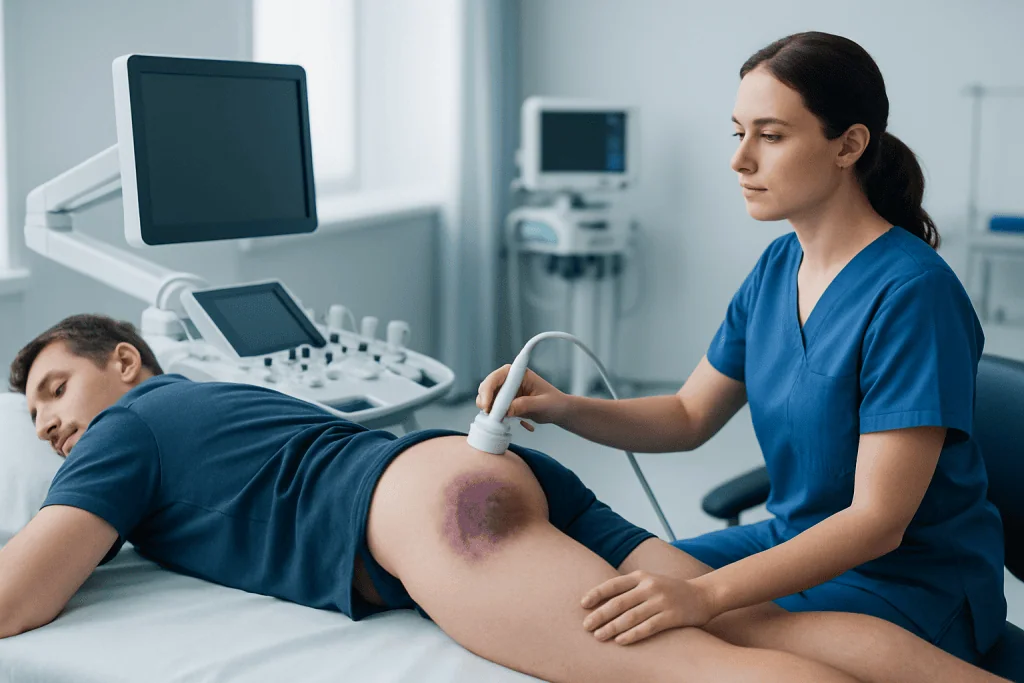
The most noticeable symptom is discoloration of the skin. Depending on skin tone and the depth of the injury, the area may look purple, blue, dark brown, or blackish at first. There may also be tenderness, soreness when sitting, and mild swelling.
If the bruise extends into the muscle, the person may feel aching, tightness, or pain during walking, climbing stairs, squatting, or getting up from a chair. A firm or soft lump may develop if more blood collects in one spot. This is sometimes called a hematoma, which is a larger collection of blood than a simple bruise.
Normal healing tends to follow a gradual pattern. Pain usually starts to improve within a few days, while the discoloration may remain visible for one to two weeks or sometimes longer. Larger or deeper bruises can take several weeks to settle.
- Mild to moderate tenderness at the site
- Color change that slowly fades
- Temporary discomfort with sitting or movement
- Minor swelling that does not continue to grow
Symptoms that do not fit a simple bruise include increasing pain after the first day or two, new numbness, marked weakness in the leg, fever, or redness and warmth that spread. These features deserve medical attention because they can point to a more significant soft-tissue problem.
Causes and risk factors beyond a simple bump

A direct impact is the most common cause of buttock bruising. Falls onto the hips or buttocks, sports collisions, slips on stairs, bicycle or exercise injuries, and accidental bumps can all damage blood vessels. Strenuous exercise can also strain the gluteal muscles and cause a deeper bruise even when there is no obvious blow.
Pressure and repetitive friction may contribute as well. Long periods on a hard saddle, rowing machine, or hard seat can irritate tissue and make mild bruising more likely, especially if there has been recent exercise or minor trauma. Injections into the buttock can also leave a temporary bruise, particularly in people with sensitive blood vessels.
Some people bruise more easily because of underlying risk factors. These include older age, use of blood-thinning medicines, corticosteroids, some supplements that affect clotting, low platelet counts, liver disease, vitamin deficiencies, or inherited bleeding disorders. Easy bruising in several body areas may need investigation as part of broader blood health concerns.
Occasionally, buttock bruising can be confused with other conditions that also cause pain or discoloration in the area. For example, a painful swollen region near the buttock can sometimes reflect skin or soft-tissue inflammation rather than a bruise. If there is a concern about another cause, a doctor may also consider conditions such as cellulitis or a deeper muscle injury.
How doctors evaluate buttock bruising
Diagnosis usually starts with a clinical history and physical examination. A doctor will ask when the bruise appeared, whether there was a fall or impact, how severe the pain is, and whether the person takes any medicines that increase bleeding risk. They may also ask about repeated bruising, unusual nosebleeds, gum bleeding, or a family history of bleeding disorders.
During the examination, the clinician will assess the size, color, temperature, and tenderness of the area. They may gently test hip and leg movement, muscle strength, sensation, and the ability to walk. This helps distinguish a simple contusion from a deeper gluteal muscle injury, nerve involvement, or a larger hematoma.
Imaging is not always necessary. However, if there has been a significant fall, severe pain, inability to bear weight, or suspicion of a deep collection of blood, doctors may request MRI or ultrasound to look at the soft tissues in more detail. If a fracture is possible after trauma, X-ray may also be used.
Blood tests may be recommended if bruising is frequent, unusually large, or unexplained. These tests can check platelet levels, clotting function, and other possible causes of easy bruising. The goal is not only to confirm a bruise but also to identify whether the bruise is part of a wider medical issue.
Treatment options and recovery
Most uncomplicated buttock bruises are treated conservatively. Early care focuses on reducing pain and limiting further bleeding into the tissues. Resting the area, applying a cold pack wrapped in cloth for short periods during the first 24 to 48 hours, and avoiding prolonged pressure from sitting directly on the bruise can help.
After the first couple of days, gentle movement is usually better than complete inactivity, as long as it does not sharply increase pain. Some people find that a cushion helps when sitting. A clinician may recommend simple pain relief if appropriate, but medicine choices should be individualized, especially for people with stomach problems, kidney disease, or bleeding risk.
If a larger hematoma forms, treatment depends on its size, location, and symptoms. Many still resolve without procedures, but a doctor may monitor them more closely. Rarely, persistent large collections, severe pain, or pressure on nearby structures can require specialist evaluation and treatment.
When buttock bruising is related to a significant muscle injury, recovery may include guided rehabilitation. In selected cases, a person may benefit from physical therapy and rehabilitation to restore mobility, reduce stiffness, and help a safe return to exercise.
Self-care, prevention, and what not to believe
One common myth is that every dark bruise means a serious internal injury. In reality, the appearance of a bruise does not always match its medical importance. A dramatic-looking bruise may still be minor, while a deeper muscle bruise may be more painful even if it is less visible on the skin.
Helpful self-care includes protecting the area from another impact, using cold packs early, then returning gradually to normal activity. Sleeping or sitting in positions that reduce direct pressure may improve comfort. It is generally best to avoid deep massage over a fresh bruise, because this can irritate injured tissue.
Prevention focuses on reducing both trauma and bleeding risk where possible. Athletes may benefit from proper warm-up, strength training, and technique. At home, preventing slips and falls, using supportive footwear, and adjusting exercise intensity after an injury can all help.
- Use caution with activities that involve falls or repeated impact
- Review medicines and supplements with a doctor if bruising is frequent
- Maintain balanced nutrition to support normal healing
- Seek medical advice rather than relying on myths if bruises recur without clear cause
If there are frequent unexplained bruises elsewhere on the body, doctors may also evaluate for general bleeding or clotting problems rather than focusing only on the buttock area.
When to seek medical care
Medical review is important if buttock bruising follows a major accident, a hard fall in an older adult, or any injury that leaves the person unable to walk normally. Care should also be sought if the pain is severe, the swelling is increasing, or a large lump develops and continues to enlarge.
Urgent attention is advisable if there is numbness, weakness, tingling down the leg, loss of bladder or bowel control, fainting, or symptoms of significant blood loss such as marked dizziness. These are not typical of a simple bruise and need prompt assessment.
It is also wise to speak with a doctor if bruising appears without a clear reason, keeps coming back, or is accompanied by bleeding from the gums or nose, heavy periods, or bruises in multiple areas. In these situations, doctors may consider a broader medical cause rather than only a local injury.
For people who need further evaluation, multidisciplinary specialists can assess the injury, arrange imaging when needed, and guide recovery. Acibadem International’s JCI-accredited hospitals care for international patients with soft-tissue injuries and related conditions through coordinated specialty services.
The outlook: what most people can expect
The outlook for buttock bruising is generally very good. Most simple bruises improve steadily with time, even if the color changes look striking along the way. Pain usually settles first, and the skin discoloration fades more gradually.
Recovery can take longer when the bruise is deep, large, or associated with muscle strain. It may also be slower in older adults and in people taking blood thinners. Even so, many of these bruises still heal without lasting problems if they are monitored appropriately.
The key is to match the response to the severity of symptoms. Minor bruises can often be managed at home, while warning signs deserve medical review. This balanced, evidence-based approach helps avoid both unnecessary worry and unnecessary delay.
If the bruise does not improve as expected, a clinician can check for a hidden hematoma, muscle tear, infection, or a blood-related condition that needs attention. With the right assessment, treatment can be tailored to the actual cause rather than assumptions or myths.
Frequently asked questions
How long does buttock bruising take to heal?
A mild buttock bruise often starts to feel better within a few days and may fade over one to two weeks. Larger or deeper bruises, especially those involving muscle, can take several weeks to fully settle.
Why is my buttock bruise painful even when it does not look very dark?
Pain does not always match the surface color of a bruise. A deeper bruise in the gluteal muscle may be quite painful even if the skin discoloration is limited or delayed.
Can buttock bruising happen without a direct injury?
Yes. Strenuous exercise, muscle strain, prolonged pressure, injections, and medicines that affect clotting can all contribute to bruising. Repeated or unexplained bruises should be discussed with a doctor.
When is a bruise on the buttocks not normal?
A bruise is not typical if it appears without a clear cause, keeps getting larger, or comes with severe pain, numbness, weakness, fever, or trouble walking. These symptoms may suggest a deeper injury or another medical problem.
Should a buttock bruise be massaged or heated?
A fresh bruise is usually better treated with rest and cold rather than deep massage. Heat may be used later in some cases, but if pain or swelling is significant, it is safest to ask a clinician before trying it.
Do blood thinners make buttock bruising worse?
They can. Blood-thinning medicines may increase the size of a bruise or make bruising happen more easily after a minor bump, so people taking these medicines should seek advice sooner if a bruise is large or unusually painful.
This article is for general information only and is not a substitute for professional medical advice. Please consult a qualified doctor about your individual situation.
Explore treatments in Turkey — costs, top hospitals & a free quote
JCI-accredited · board-certified surgeons · reply within 24h
Add us as a Preferred Source to see more of our trusted health content across Google Search, AI Overviews and Discover.

More from the Health Library
Fobia — Explained by Medical Evidence, Not Myths

Healthy Dinner Recipes for Two — Explained by Medical Evidence, Not Myths
Rope Worms: What Patients Need to Know
Poke Root: An Evidence-Based Guide for Patients

Anoxia: An Evidence-Based Guide for Patients