Can Dogs Smell Cancer? Here Is What the Evidence Says

Research suggests some dogs can detect certain cancer-related odors in breath, urine, skin, or sweat samples. Dogs are not a substitute for screening tests, scans, biopsies, or a doctor’s assessment.
Key Takeaways
- Research suggests some dogs can detect certain cancer-related odors in breath, urine, skin, or sweat samples.
- Dogs are not a substitute for screening tests, scans, biopsies, or a doctor’s assessment.
- Many odor changes and body symptoms have common non-cancer causes such as infection, diet, medicines, or skin conditions.
- Medical review is most important when symptoms are persistent, unexplained, worsening, or accompanied by other warning signs.
- Doctors diagnose cancer using history, physical examination, laboratory tests, imaging, and sometimes biopsy.
Yes, dogs may be able to detect odor changes linked to some cancers, but the evidence is not strong enough for dogs to be used as a dependable diagnostic test. Most body odors or everyday changes are harmless, yet persistent symptoms or unusual changes should still be checked by a doctor.
Overview: What the Evidence Says
Can dogs smell cancer? Possibly yes, in a limited research sense. Studies suggest that some trained dogs can detect odor patterns associated with certain cancers in samples such as breath, urine, skin swabs, or stool, but this does not mean a pet dog can diagnose cancer at home or that dog detection is accurate enough to replace medical testing.
For most people, a new body odor, a dog suddenly sniffing one area, or a change in how a pet behaves is far more likely to be harmless or related to a non-cancer cause. Skin infections, wounds, hormonal changes, medication use, diet, and everyday scent differences can all affect how a person smells. Still, if there is a persistent lump, bleeding, ongoing pain, weight loss, or another unexplained change, it is sensible to seek medical advice rather than rely on a dog’s reaction.
The reason this topic interests scientists is that cancer cells can alter metabolism. Those changes may produce volatile organic compounds, which are tiny chemicals released in breath, sweat, urine, or other body fluids. Dogs have an extremely sensitive sense of smell, so researchers are exploring whether they can detect these compounds. Even so, current medical care relies on validated tests, not canine behavior.
Why Dogs Might Detect Cancer-Related Odors
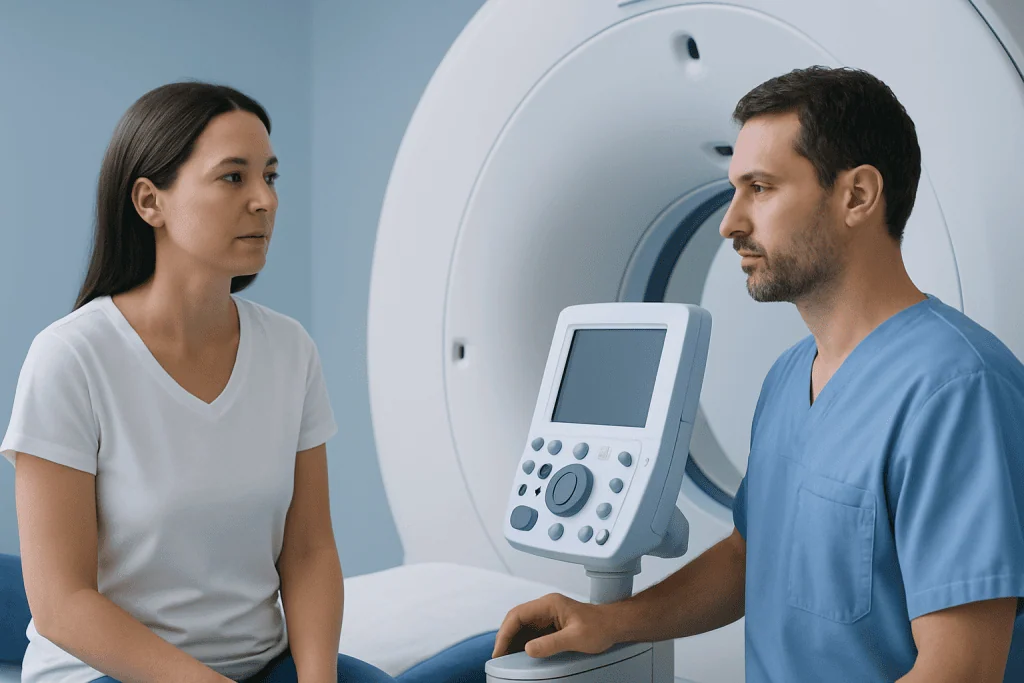
A dog’s nose is highly specialized. Compared with humans, dogs can detect much lower concentrations of odor molecules and can distinguish between very subtle scent patterns. This makes it biologically plausible that they might notice changes linked to disease.
Cancer may change the mix of chemicals the body produces. These changes can come from the tumor itself, the immune response around it, tissue breakdown, or changes in the gut and skin microbiome. Researchers have therefore studied whether dogs can tell the difference between samples from people with cancer and those from people without cancer.
It is important to understand what this means in practice. A dog is not smelling “cancer” as one single odor. More likely, the dog is detecting a complex scent profile that may be associated with a certain disease state under controlled conditions. That profile may overlap with non-cancer conditions, which is one reason dogs are not a routine clinical diagnostic tool.
What Research Has Found So Far
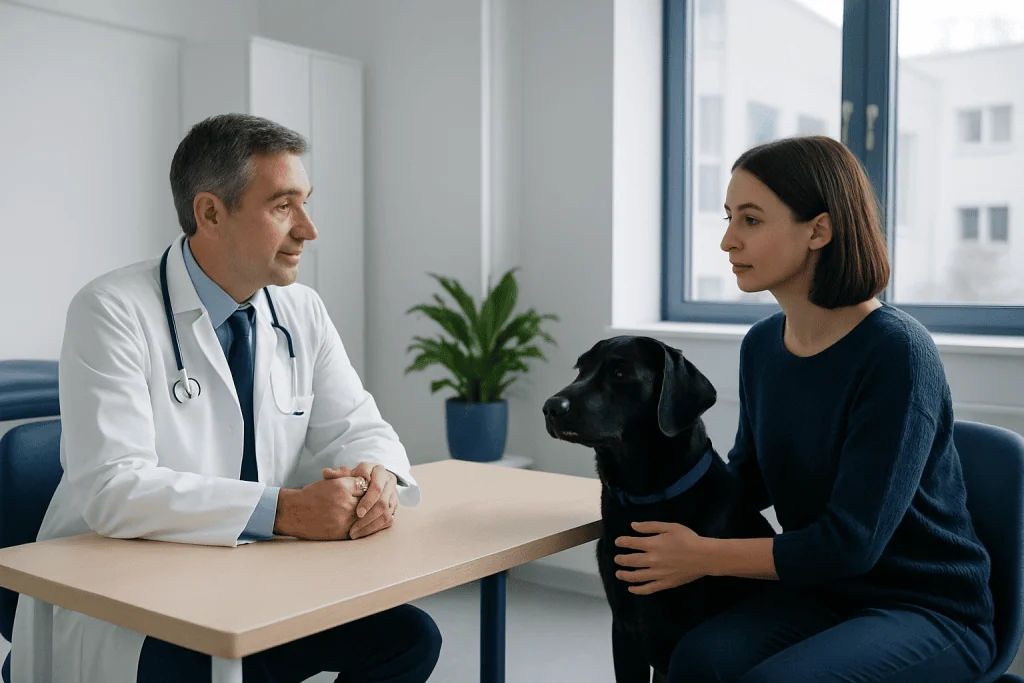
Published studies have explored canine detection for several cancers, including lung, breast, colorectal, prostate, bladder, ovarian, and melanoma. Some small studies report promising results, especially when dogs are trained intensively and tested under tightly controlled conditions. These findings are interesting and support further research into disease-related scent markers.
However, the quality and consistency of the evidence vary. Studies often involve small numbers of participants, different training methods, different sample types, and different testing conditions. Results can therefore be difficult to compare. In some studies, dogs perform well; in others, accuracy is lower or less consistent.
Another challenge is reproducibility. A method is medically useful only if it works reliably across different dogs, trainers, patient groups, and real-world clinical settings. At present, canine detection has not reached that standard. Researchers are using these studies more as a way to understand scent biomarkers and to inspire technologies such as electronic noses, rather than to suggest replacing standard screening or biopsy-based diagnosis.
In short, the evidence suggests potential, not proof of a practical diagnostic method. A dog’s response can be intriguing, but it should never be used alone to reassure someone that cancer is absent or to conclude that cancer is present.
Why a Dog’s Behavior Is Not a Medical Test
Dogs respond to many cues besides scent. They may notice changes in movement, posture, mood, routine, skin temperature, or the presence of dressings, creams, blood, or infection. Some dogs are naturally more attentive to a painful area simply because their owner protects or touches it more often.
Pet behavior is also hard to interpret objectively. One dog may repeatedly sniff a mole, scar, or breast area, while another may show no interest at all. That behavior does not reliably indicate whether a serious condition is present. It can be influenced by training, reinforcement, environment, and individual temperament.
False alarms are another issue. Benign cysts, eczema, wounds, hemorrhoids, dental problems, or urinary infections can all create odor changes or attract a dog’s attention. Likewise, a dog may fail to react to a real medical problem. This is why doctors do not use dog behavior as a screening test for cancer or any other major disease.
The safest approach is to treat a dog’s unusual interest as a reason to pay attention to one’s body, not as a diagnosis. If there is also a persistent symptom, physical change, or risk factor, proper medical assessment is the right next step.
Common Harmless Explanations and Concerning Red Flags
In many cases, the underlying explanation is not cancer. Skin irritation, infection, fungal rash, poor wound healing, hormonal changes, sweating, digestive issues, urinary problems, and new personal care products can all change body odor. Diet, smoking, alcohol, and certain medicines may also affect breath, sweat, or urine smell.
Even when there is a new lump or visible change, many findings are benign. Examples include lipomas, cysts, enlarged glands after infection, hemorrhoids, skin tags, and non-cancerous breast changes. A doctor can help determine which symptoms are low risk and which need further testing.
Red flags that deserve medical review include:
- A new lump that persists, grows, feels firm, or is fixed in place
- Unexplained weight loss or loss of appetite
- Bleeding that is not expected, such as blood in stool, urine, sputum, or after menopause
- A sore that does not heal or a mole that changes in color, shape, size, or starts bleeding
- Persistent cough, hoarseness, or trouble swallowing
- Ongoing fatigue, night sweats, or pain without a clear cause
- Changes in bowel or bladder habits lasting more than a few weeks
These signs do not automatically mean cancer, but they do justify timely assessment. If concerns involve a breast lump, skin lesion, bowel change, or another persistent symptom, a doctor may evaluate for conditions including breast cancer depending on the person’s age, history, and examination findings.
How Doctors Evaluate Possible Cancer
When a person reports a concerning symptom, doctors begin with a medical history and physical examination. They ask when the symptom started, whether it is changing, whether there are associated symptoms such as fever, bleeding, weight loss, or pain, and whether there is a personal or family history of cancer. This first step often narrows the likely causes significantly.
The next stage depends on the symptom. A breast lump may lead to breast imaging, such as mammography or ultrasound. A persistent cough may lead to chest imaging. Bowel changes may prompt stool testing, imaging, or endoscopic assessment. Blood tests can sometimes help identify anemia, infection, inflammation, or organ dysfunction, although they usually cannot confirm cancer on their own.
If imaging or examination shows an area that needs closer assessment, a tissue sample may be required. This may involve oncology evaluation, needle sampling, endoscopy, or surgery depending on the location. In many cases, only a pathology review of tissue can confirm whether cells are cancerous.
This structured approach is more reliable than scent-based observations because it identifies where the problem is, what type of problem it is, and what treatment, if any, is needed. It also helps rule out many non-cancer conditions that can cause similar symptoms.
When to Seek Medical Care
A doctor should be consulted if a symptom lasts more than a few weeks, keeps returning, or is clearly getting worse. This is especially true for a persistent lump, unexplained bleeding, an unusual skin change, ongoing abdominal symptoms, or unexplained weight loss. A pet’s repeated focus on one body area may be worth mentioning, but the clinical symptom itself is what matters most.
Urgent care is appropriate for severe shortness of breath, coughing up blood, heavy bleeding, sudden neurological symptoms, severe pain, or rapidly worsening weakness. These symptoms can have many causes, not only cancer, but they should not be ignored.
People with a strong family history of cancer, prior cancer, known genetic risk, or overdue screening should also arrange a review even if symptoms seem mild. Screening recommendations vary by age, sex, and personal risk factors, and a clinician can advise which tests are appropriate.
Near the end of the diagnostic process, some people may benefit from care in a center with coordinated specialties. Acibadem International’s multidisciplinary specialists and JCI-accredited hospitals diagnose and treat cancer-related conditions for international patients when further assessment or treatment planning is needed.
Frequently asked questions
Can pet dogs detect cancer in their owners?
Some dogs may notice scent or behavior changes associated with illness, and research suggests trained dogs can sometimes distinguish certain cancer-related samples in controlled studies. However, a pet dog’s behavior is not accurate or consistent enough to diagnose cancer.
If a dog keeps sniffing one part of the body, does that mean cancer?
No. Dogs may focus on an area because of sweat, skin irritation, infection, blood, pain, lotions, or simple curiosity. If there is also a persistent lump, skin change, bleeding, or another unusual symptom, medical evaluation is more important than the dog’s behavior.
Which cancers have dogs been studied for?
Research has looked at several cancers, including lung, breast, colorectal, bladder, prostate, ovarian, and melanoma. Results vary, and none of these uses has become a standard diagnostic test in routine medical practice.
Why are dogs not used as a regular cancer screening test?
Medical screening tools must be consistent, reproducible, and practical across many settings. Dog-based detection can be influenced by training methods, handlers, sample conditions, and individual dog differences, so it does not yet meet the reliability needed for routine care.
What should a person do if they are worried about cancer symptoms?
They should arrange a medical appointment, especially if symptoms are persistent, unexplained, or worsening. A doctor can assess the symptom, recommend appropriate screening or tests, and decide whether imaging or biopsy is needed.
Can a normal screening test rule out cancer even if a dog behaved oddly?
A dog’s behavior should not outweigh proper medical testing. While no test is perfect, validated screening and diagnostic methods are far more reliable than pet observations, and any next steps should be guided by a qualified clinician.
References
- National Cancer Institute
- American Cancer Society
- World Health Organization
- National Health Service
- Centers for Disease Control and Prevention
This article is for general information only and is not a substitute for professional medical advice. Please consult a qualified doctor about your individual situation.
Oncology care in Turkey — second opinion and treatment plan
JCI-accredited · board-certified surgeons · reply within 24h
Add us as a Preferred Source to see more of our trusted health content across Google Search, AI Overviews and Discover.