Can Wisdom Teeth Grow Back? A Doctor-Reviewed Answer

A fully removed wisdom tooth does not usually regrow. The most common reasons for a "new" tooth are retained fragments, another impacted molar, or a rare extra tooth.
Key Takeaways
- A fully removed wisdom tooth does not usually regrow.
- The most common reasons for a "new" tooth are retained fragments, another impacted molar, or a rare extra tooth.
- Mild gum changes after extraction are often harmless, but persistent pain, swelling, bad taste, or drainage should be checked.
- Dentists confirm the cause with an oral exam and dental imaging such as panoramic X-rays or 3D scans when needed.
- Treatment depends on the finding and may range from observation to removal of a fragment or extra tooth.
In most people, wisdom teeth do not grow back after complete removal. What may seem like regrowth is often a leftover root fragment, delayed eruption of another tooth, or a rare extra tooth that was not visible before.
Overview: Can wisdom teeth grow back?
Usually, no. If a wisdom tooth has been completely removed, it does not grow back. Human teeth are not designed to regenerate in the way hair or nails do, so true wisdom tooth regrowth is very unlikely.
In many cases, what feels like a wisdom tooth returning turns out to be something harmless or expected. A small bone edge, healing gum tissue, a retained root tip, or a separate tooth that was still developing can create the impression that a tooth is coming back. This is often discovered during follow-up dental imaging rather than by symptoms alone.
The practical question is not whether the same tooth has regrown, but what is causing the new sensation, swelling, or hard spot in the back of the mouth. A dentist or oral and maxillofacial surgeon can usually identify the reason with an examination and an X-ray, then explain whether any treatment is needed.
Why it may seem like a wisdom tooth is returning
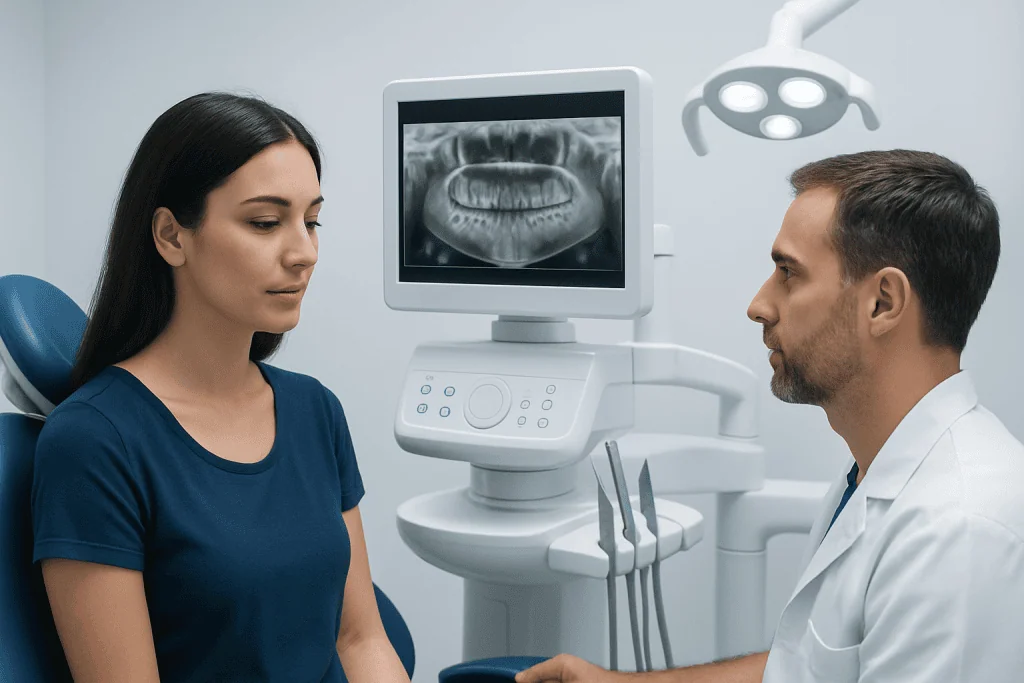
Several situations can make it seem as though a removed wisdom tooth has come back. One possibility is that a small root fragment was intentionally or unintentionally left behind during extraction. This can happen if the fragment was deeply embedded and removing it would have risked damage to nearby nerves or bone. In some people, that fragment stays quiet for years; in others, it may slowly shift closer to the gum surface and become noticeable.
Another explanation is a delayed or previously hidden tooth. Some people have an additional molar or an extra tooth behind the wisdom tooth, sometimes called a supernumerary tooth. If it was buried in the jaw and not visible at the time of the first procedure, it may only become apparent later.
Healing changes can also be misleading. Scar tissue, gum swelling, food trapped near the extraction site, or a small piece of bone working its way through the gum can feel like a tooth edge. Less commonly, symptoms in the back of the mouth may be related to nearby dental problems such as gum inflammation or a different impacted tooth, including an impacted tooth.
Common signs and what they may mean

A person may notice a hard spot, pressure in the back of the jaw, gum irritation, or the sense that something sharp is erupting through the gums. These symptoms do not automatically mean a wisdom tooth is regrowing. They simply signal that something in the area deserves a closer look.
If there is little to no pain, and the area appears to be healing normally, the cause may be minor. For example, a small bone spicule or a tiny retained fragment can sometimes work itself out or settle without causing trouble. A dental professional may recommend watching the area if symptoms are mild and improving.
However, some symptoms suggest inflammation or infection rather than harmless healing. These can include increasing pain, swelling, a foul taste, bad breath, pus, difficulty opening the mouth, fever, or pain when chewing. Gum infection around a partially erupted molar may resemble pericoronitis, which needs professional evaluation.
- Hard or sharp feeling under the gum
- Pressure or fullness at the back of the jaw
- Redness or tenderness near a prior extraction site
- Bad taste, drainage, or swelling
- Jaw stiffness or pain when biting
What causes this after wisdom tooth removal?
The most likely causes fall into a few broad groups. First are retained tissues, such as a small root tip, bone fragment, or tissue trapped during healing. Second are teeth that were not removed because they were not visible or not causing problems at the time, including a second impacted molar or a supernumerary tooth. Third are unrelated conditions that simply happen in the same part of the mouth, such as gum disease, decay in a neighboring tooth, or jaw joint discomfort.
Not every retained root fragment is a problem. In some situations, surgeons deliberately leave a tiny fragment if removing it would be more harmful than leaving it in place. Many people never notice it. Problems are more likely if the fragment becomes exposed, moves, or contributes to infection.
Age, tooth position, difficult extractions, and deeply impacted teeth can all affect what is found later. A tooth that was angled backward, very close to a nerve, or covered by thick bone may have required a more conservative approach. In some patients, follow-up care is especially important after wisdom tooth extraction to make sure healing is progressing normally.
How a dentist confirms the cause
Evaluation usually starts with a dental history and oral examination. The dentist asks when the tooth was removed, whether healing was normal, what symptoms are present now, and whether pain or swelling is getting better or worse. Looking at the gums, checking for tenderness, and feeling the surrounding tissues often provides important clues.
Imaging is the key step when the cause is uncertain. A panoramic dental X-ray can show whether there is a retained root tip, an unerupted tooth, or an extra molar in the jaw. If the anatomy is complex or very close to important structures such as a nerve or sinus, a cone beam CT scan may give a more detailed 3D view.
The goal is to identify whether the finding is harmless, needs monitoring, or should be treated. If the issue is not a wisdom tooth at all, the dentist may instead look for nearby problems such as infection, cyst formation, or another dental condition. In more involved cases, treatment planning may include oral and maxillofacial surgery.
Treatment options if something is found
Treatment depends on the cause, not on the assumption that the tooth has grown back. If the area contains a tiny bone fragment or tissue irritation, simple observation, rinses, and routine follow-up may be enough. If there is a retained root fragment but it is not infected and is not causing symptoms, a dentist may recommend monitoring it rather than removing it immediately.
If imaging shows an extra tooth, a problematic retained fragment, or another impacted molar that is causing pain, infection, or pressure, removal may be advised. The decision takes into account symptoms, tooth position, risk to nearby structures, and the person’s overall oral health. Infected areas may also need local cleaning and, when appropriate, additional medical treatment directed by a clinician.
When neighboring teeth or gums are involved, treatment may focus on those structures instead. For example, gum inflammation may improve with cleaning and better oral hygiene, while decay or crowding in adjacent molars may need separate dental care. If a specialist is needed, centers such as Acibadem International offer multidisciplinary assessment in JCI-accredited hospitals for international patients.
Self-care and what not to assume
If a person notices a new hard spot in the back of the mouth, it is reasonable to keep the area clean and avoid poking it. Gentle brushing, careful flossing of nearby teeth, and warm salt-water rinses may help if the gums are irritated. It is best not to dig at the area with fingers, toothpicks, or sharp tools, because this can injure the gum and increase the risk of infection.
It is also important not to assume that every symptom means a serious problem. Mild sensitivity or a small rough area can be part of normal healing, especially soon after extraction. At the same time, a persistent symptom should not be ignored simply because the original tooth was already removed.
Routine dental follow-up helps clarify what is happening and can prevent small issues from becoming more uncomfortable. People who have had difficult extractions, multiple impacted teeth, or unusual dental anatomy may benefit from keeping copies of previous X-rays for comparison during future visits.
When to seek medical care
Most cases are not urgent, but a dental review is wise if the area stays painful, swollen, or tender, or if a hard structure appears to be breaking through the gum weeks, months, or even years after extraction. Persistent bad taste, bad breath, bleeding, or trouble chewing are also good reasons to arrange an appointment.
More prompt medical or dental care is needed if there is fever, facial swelling, pus, worsening pain, difficulty swallowing, or trouble opening the mouth. These features can point to infection or inflammation that should be assessed quickly. Severe symptoms should not be managed at home alone.
A doctor or dentist can determine whether the issue is a harmless healing change, a retained fragment, an extra tooth, or a different dental condition entirely. That clarity is usually reassuring, and it allows treatment to be guided by the actual cause rather than the understandable fear that a removed wisdom tooth has somehow grown back.
Frequently asked questions
Can wisdom teeth grow back after they are removed?
In most cases, no. Once a wisdom tooth is fully removed, it does not regrow. If something seems to be coming back, it is more likely to be a retained fragment, a healing change, or a different tooth.
Why does it feel like a tooth is coming through after wisdom tooth extraction?
A hard or sharp feeling can come from a small bone spicule, scar tissue, a retained root tip, or an extra tooth that was not noticed earlier. These are not the same as the original tooth growing back. A dental exam and X-ray can usually tell the difference.
Is it normal to have a root fragment left behind?
Sometimes, yes. In certain extractions, a very small root tip may be left in place if removing it would create more risk than benefit. Many root fragments never cause symptoms, but they should be checked if pain, swelling, or infection develops.
Can a person have more than four wisdom teeth?
Rarely, yes. Some people develop extra teeth, called supernumerary teeth, and these can appear near the wisdom tooth area. If present, they may stay buried in the jaw for years before being found on imaging.
How do dentists check whether a wisdom tooth has really come back?
They begin with an oral examination and review of symptoms and previous dental history. Imaging, especially a panoramic X-ray, is commonly used to look for retained roots, impacted teeth, or extra teeth. In more complex cases, a 3D cone beam CT scan may be helpful.
When should someone worry about symptoms after wisdom tooth removal?
Medical or dental review is important if symptoms are persistent, worsening, or associated with swelling, drainage, bad taste, or trouble chewing. Fever, facial swelling, difficulty swallowing, or severe pain need more urgent attention. These signs can suggest infection or another complication that should be assessed promptly.
References
- American Dental Association
- National Institute of Dental and Craniofacial Research
- American Association of Oral and Maxillofacial Surgeons
- Mayo Clinic
- NHS
This article is for general information only and is not a substitute for professional medical advice. Please consult a qualified doctor about your individual situation.
Wisdom Teeth in Turkey — costs, top hospitals & a free quote
JCI-accredited · board-certified surgeons · reply within 24h
Add us as a Preferred Source to see more of our trusted health content across Google Search, AI Overviews and Discover.