Cardiac Ablation: Treating Rhythm Problems at Their Source

Cardiac ablation treats certain arrhythmias by interrupting abnormal electrical pathways in the heart. The procedure is most often performed through thin catheters inserted into a blood vessel, usually in the groin.
Key Takeaways
- Cardiac ablation treats certain arrhythmias by interrupting abnormal electrical pathways in the heart.
- The procedure is most often performed through thin catheters inserted into a blood vessel, usually in the groin.
- It may be recommended when symptoms continue despite medication, when medicines cause side effects, or for specific rhythm disorders where ablation is highly effective.
- Recovery is usually short, but follow-up is important because some patients need ongoing medication or repeat treatment.
- A cardiologist or electrophysiologist can explain the benefits, risks, and alternatives based on the exact type of arrhythmia and overall health.
Cardiac ablation is a minimally invasive procedure used to treat some arrhythmias by targeting the small areas of heart tissue that trigger or maintain abnormal rhythms. For many patients, it can reduce symptoms, improve quality of life, and decrease the need for long-term rhythm medications.
Overview
Cardiac ablation is a treatment for certain heart rhythm problems, also called arrhythmias. The heart has its own electrical system, which tells the upper and lower chambers when to beat. When electrical signals start in the wrong place, travel in an abnormal loop, or become disorganized, the heartbeat may become too fast, irregular, or occasionally too slow. Ablation aims to treat the rhythm problem at its source by carefully creating tiny areas of scar tissue that block or destroy the abnormal electrical pathway.
Most cardiac ablation procedures are performed using catheters, which are thin flexible tubes guided through blood vessels to the heart. The doctor who performs the procedure is usually an electrophysiologist, a cardiologist with advanced training in heart rhythm disorders. Depending on the arrhythmia, ablation may use heat energy, called radiofrequency ablation, or freezing energy, called cryoablation. Newer techniques, such as pulsed field ablation, may be considered in selected centers and patients.
Cardiac ablation is not the right choice for every rhythm problem, but it can be highly useful for many common arrhythmias. It is often considered for atrial fibrillation, atrial flutter, supraventricular tachycardia, some cases of premature ventricular contractions, and selected ventricular tachycardias. The goal may be to stop an arrhythmia completely, reduce how often it occurs, improve symptoms, or lower the need for ongoing antiarrhythmic medication.
Which Rhythm Problems Can Cardiac Ablation Treat?
The best results from cardiac ablation depend on correctly identifying the type of arrhythmia. Some rhythm problems come from a small, well-defined electrical pathway, while others involve more complex electrical changes in the heart. Before recommending ablation, the care team considers the rhythm diagnosis, symptom severity, heart structure, previous treatments, and the patient’s preferences.
Common rhythm disorders treated with ablation include supraventricular tachycardia, atrial flutter, atrial fibrillation, and certain ventricular arrhythmias. In supraventricular tachycardia, an extra pathway or small circuit may cause sudden episodes of a very fast heartbeat. In typical atrial flutter, a circuit in the right upper chamber may cause a regular rapid rhythm. In atrial fibrillation, abnormal signals often arise near the pulmonary veins in the left atrium, and ablation may electrically isolate these areas.
Cardiac ablation may be discussed when symptoms affect daily life or when rhythm episodes are frequent, prolonged, or difficult to control. Symptoms may include palpitations, shortness of breath, chest discomfort, fatigue, dizziness, reduced exercise tolerance, or anxiety related to unpredictable episodes. In some patients, arrhythmias can weaken heart function over time, and controlling the rhythm may help protect the heart muscle.
Symptoms and Signs of Arrhythmias

Arrhythmia symptoms can vary widely. Some people feel a clear racing, fluttering, pounding, or skipping heartbeat. Others mainly notice tiredness, breathlessness, lightheadedness, or a drop in physical stamina. In some cases, arrhythmias are found during a routine examination, an electrocardiogram, or monitoring for another condition, even if the person has few symptoms.
The pattern of symptoms can provide helpful clues. Episodes that start and stop suddenly may suggest supraventricular tachycardia. A persistently irregular pulse may suggest atrial fibrillation. A rapid, regular rhythm may be seen with atrial flutter or other tachycardias. However, symptoms alone cannot reliably identify the exact rhythm, so recording the heart rhythm during an episode is important.
Patients should describe when symptoms occur, how long they last, what triggers them, and what helps them settle. Useful details include whether symptoms happen during exercise, at rest, after alcohol or caffeine, during illness, or with stress. A list of current medicines, supplements, and any previous heart tests can also help the cardiologist choose the safest evaluation and treatment plan.
Causes and Risk Factors
Arrhythmias may occur in people with otherwise healthy hearts, but they are more likely when the heart’s electrical system or heart muscle has been affected by other conditions. High blood pressure, coronary artery disease, heart valve disease, heart failure, congenital heart conditions, thyroid disorders, sleep apnea, lung disease, and previous heart surgery can all influence rhythm stability. Inflammation, electrolyte imbalance, infection, and some medications may also contribute.
Lifestyle and general health factors can play a role. Heavy alcohol use, stimulant drugs, excess caffeine in sensitive individuals, poor sleep, dehydration, and high stress may trigger episodes in some patients. Obesity and untreated sleep apnea are particularly important in atrial fibrillation because they can increase strain on the atria and make rhythm control more difficult.
Risk factors do not mean a person will definitely develop an arrhythmia, and having an arrhythmia does not mean ablation is automatically required. The decision depends on the type of rhythm problem, the burden of episodes, stroke risk in atrial fibrillation, heart function, other medical conditions, and how well symptoms respond to simpler measures or medicines.
Diagnosis and Preparation for the Procedure
Diagnosis begins with a medical history, physical examination, and an electrocardiogram. Because arrhythmias may come and go, longer monitoring is often needed. This may include a Holter monitor worn for 24 hours or longer, an event recorder, a patch monitor, or an implantable loop recorder in selected cases. Blood tests may check thyroid function, kidney function, electrolytes, anemia, and other contributing factors.
Imaging tests may be used to assess heart structure and function. An echocardiogram can evaluate the pumping strength of the heart, valve function, and chamber size. Some patients may need stress testing, cardiac CT, cardiac MRI, or coronary evaluation depending on symptoms and risk factors. For atrial fibrillation, the team may also assess stroke risk and the need for anticoagulant medication.
Before ablation, patients receive instructions about eating, drinking, and medications. Some medicines may need to be stopped before the procedure, while others, especially blood thinners in atrial fibrillation, may need to be continued exactly as directed. Patients should not change medication on their own. The care team also explains the expected benefits, possible risks, type of anesthesia or sedation, and what recovery may involve.
Treatment Options and What Happens During Ablation
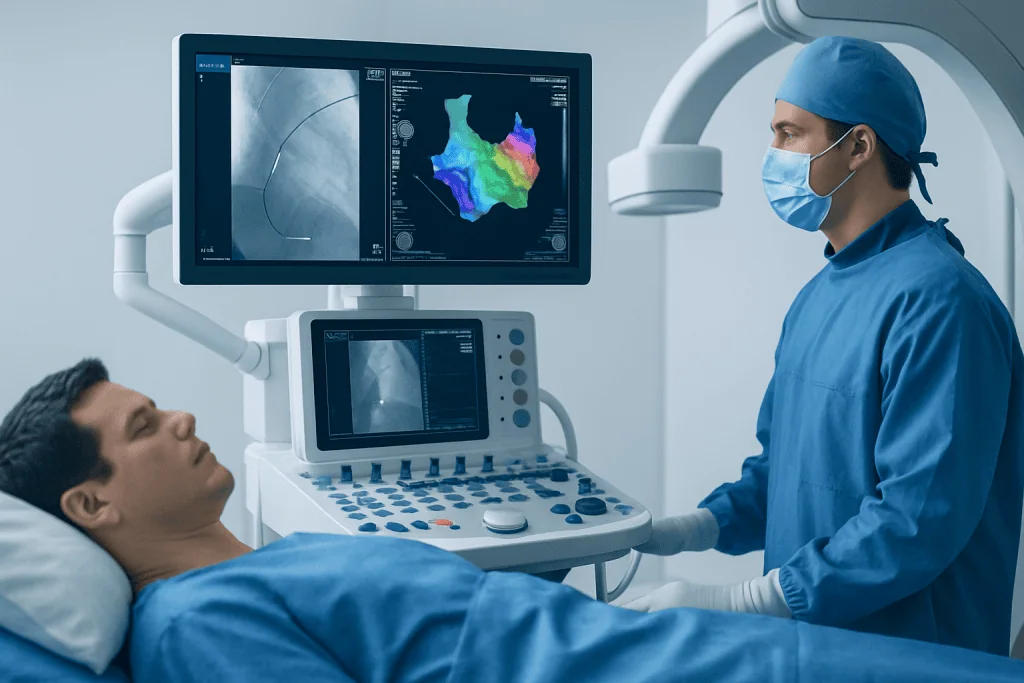
Cardiac ablation is usually performed in an electrophysiology laboratory. After sedation or general anesthesia, the doctor inserts catheters through a blood vessel, commonly in the groin, and guides them to the heart using imaging and electrical mapping systems. The mapping process identifies the abnormal signal or pathway. Once the target area is confirmed, energy is delivered to create a tiny scar that blocks the unwanted electrical activity.
The procedure can vary in length depending on the arrhythmia. Some supraventricular tachycardia or atrial flutter procedures may be relatively straightforward, while atrial fibrillation and ventricular tachycardia ablations are often more complex. After the procedure, the catheters are removed and pressure is applied to prevent bleeding at the access site. Patients are monitored for heart rhythm, blood pressure, and the puncture site before going home or staying overnight.
Potential benefits include fewer arrhythmia episodes, less reliance on rhythm medications, improved exercise tolerance, and better symptom control. However, ablation is a medical procedure and has risks. These may include bleeding or bruising, blood vessel injury, infection, blood clots, stroke, damage to the heart’s electrical system requiring a pacemaker, fluid around the heart, or, rarely, more serious complications. The specific risk profile depends on the arrhythmia, technique, and patient health.
Medicines remain an important part of arrhythmia care. Some patients continue rate-control medication, rhythm medication, or anticoagulation after ablation. In atrial fibrillation, blood thinners are usually guided by stroke risk rather than by symptoms alone, so they may still be needed even if the rhythm feels improved. Follow-up appointments and rhythm monitoring help determine the long-term plan.
Recovery, Prevention and Self-Care
Recovery after catheter ablation is often quicker than many patients expect, but the body still needs time to heal. Mild soreness or bruising at the catheter insertion site can occur. Patients are usually advised to avoid strenuous activity, heavy lifting, and soaking the puncture site for a short period, following the care team’s instructions. Driving, work, and exercise recommendations vary depending on the procedure, sedation, and individual condition.
Some people feel palpitations during the healing period. After atrial fibrillation ablation, early rhythm episodes can occur while heart tissue is inflamed and healing. These episodes do not always mean the procedure has failed, but they should be reported as instructed. Severe chest pain, fainting, increasing shortness of breath, signs of stroke, fever, or significant bleeding from the access site require urgent medical attention.
Long-term self-care can improve rhythm control and overall heart health. Helpful steps may include:
- Taking prescribed medicines exactly as directed.
- Keeping follow-up visits and rhythm monitoring appointments.
- Managing high blood pressure, diabetes, cholesterol, and thyroid disease.
- Maintaining a healthy weight and treating sleep apnea if present.
- Limiting alcohol and avoiding stimulant drugs.
- Building regular physical activity gradually with medical guidance.
Self-care does not replace medical treatment, but it can support the success of arrhythmia management. Patients should ask their doctor which lifestyle changes are most relevant to their rhythm disorder and overall cardiovascular risk.
When to See a Doctor
A person should seek medical evaluation for repeated palpitations, a racing heartbeat, unexplained fatigue, breathlessness, dizziness, chest discomfort, or fainting. Even when symptoms are brief, documenting the rhythm can help prevent uncertainty and guide treatment. People with known heart disease, previous stroke, heart failure, or significant risk factors should be especially careful not to ignore new rhythm symptoms.
Urgent medical care is needed if palpitations occur with chest pain, fainting, severe shortness of breath, weakness on one side of the body, trouble speaking, or sudden confusion. These symptoms may have causes other than arrhythmia, but they should be assessed promptly. Patients who have already had ablation should also contact their care team if they develop fever, worsening swelling or bleeding at the catheter site, or persistent symptoms that feel different from their usual episodes.
For international patients, coordinated evaluation can be helpful when rhythm testing, imaging, procedure planning, and follow-up must be organized across countries. Acibadem International’s multidisciplinary cardiology teams and JCI-accredited hospitals diagnose and treat heart rhythm disorders, including catheter ablation, with care planning adapted to each patient’s medical needs and travel situation.
Frequently asked questions
Is cardiac ablation a cure for arrhythmia?
For some arrhythmias, such as many forms of supraventricular tachycardia or typical atrial flutter, ablation can stop the abnormal pathway very effectively. For atrial fibrillation and more complex rhythm disorders, ablation often reduces episodes and symptoms, but it may not be a permanent cure for everyone. Some patients need ongoing medication, repeat ablation, or continued monitoring.
Is cardiac ablation painful?
Most patients receive sedation or general anesthesia, so they are usually comfortable during the procedure. Some may feel pressure at the catheter insertion site or mild chest discomfort afterward. The care team monitors comfort closely and provides instructions for managing soreness during recovery.
How long does recovery take after cardiac ablation?
Many people return to light daily activities within a few days, but the exact timeline depends on the type of ablation, the access site, and the patient’s overall health. Strenuous exercise and heavy lifting are usually limited for a short period. The doctor will provide specific instructions about work, travel, exercise, and medication use.
Can atrial fibrillation come back after ablation?
Yes, atrial fibrillation can return after ablation, especially in people with long-standing atrial fibrillation, enlarged atria, untreated sleep apnea, obesity, high blood pressure, or other heart disease. Early episodes during the healing period do not always predict long-term results. Follow-up monitoring helps determine whether further treatment is needed.
Will blood thinners be stopped after ablation?
Not always. In atrial fibrillation, the need for blood thinners is usually based on a person’s risk of stroke, not only on whether symptoms improve after ablation. Patients should never stop anticoagulant medication unless their cardiologist specifically advises it.
What are the alternatives to cardiac ablation?
Alternatives may include lifestyle changes, treating underlying conditions, rate-control medications, rhythm-control medications, cardioversion, or implanted devices in selected cases. The best option depends on the arrhythmia type, symptom burden, heart function, age, other medical conditions, and personal preferences. A cardiologist or electrophysiologist can explain the advantages and limitations of each approach.
This article is for general information only and is not a substitute for professional medical advice. Please consult a qualified doctor about your individual situation.
Heart care in Turkey — expert evaluation and treatment
JCI-accredited · board-certified surgeons · reply within 24h
Add us as a Preferred Source to see more of our trusted health content across Google Search, AI Overviews and Discover.

Cardiology Department
Diagnosis and treatment of heart and vascular conditions, from prevention to advanced interventional procedures.
93 specialists in this unitRelated Treatments
Related Conditions
More from the Health Library

Coronary Bypass Surgery for Triple Vessel Disease: Why Surgeons May Recommend CABG

Left Main Coronary Artery Disease: When Bypass Surgery Is Considered

Cardiology Checkup: Tests You May Need and What They Mean

Adult Congenital Heart Defect Repair: When to Seek a Second Opinion

Atrial Fibrillation: Irregular Heartbeat, Stroke Risk, and Treatment